Ccp

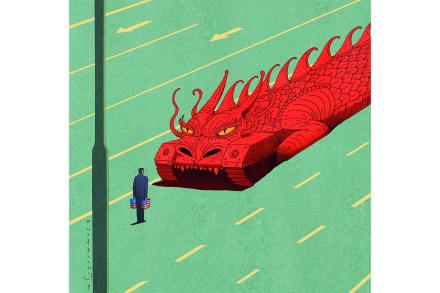
China has quietly taken over America’s food supply

For all the talk about artificial intelligence and quantum supremacy, the fate of civilizations still depends on breakfast. ChatGPT can’t grow corn. Empires rise on stomachs as much as on silicon. And America’s food system – long dismissed as safe and self-sufficient – has quietly become a front line in the US-China rivalry. We act as if lunch is inevitable, but Beijing knows that food is power. A new report from the America First Policy Institute should wake us up. Washington long treated agriculture as a post-political space where globalization could do no harm, and was therefore happy to let much of the nation ship its growth to China. As Ambassador Kip Tom and Royce Hood argue, China has thus taken over critical pieces of the US agricultural system and food supply.

china america food supply

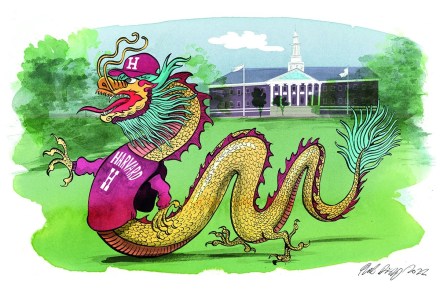
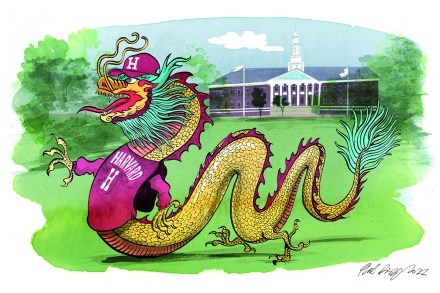
Harvard’s intricate China ties

Scratch almost any major US political story and sooner or later you’ll hit a big red nerve that belongs to the Chinese Communist party (CCP). Tariffs, energy, TikTok, the border, Fentanyl, Greenland, Panama, the Gulf of America – on all these subjects the Trump administration is, one way or another, trying to limit Beijing’s power in the West. And Donald Trump’s "war on Harvard," it turns out, is no exception. It’s clear that the President is pushing against anti-Semitism and the Diversity, Equity and Inclusion madness on America’s most famous campus, as well as in countless other colleges and universities.

Harvard

Trump must follow the law on TikTok

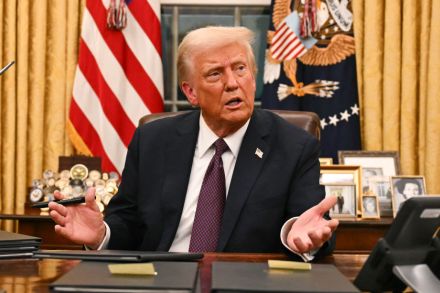
Donald Trump ended his first term in praise of Xi Jinping and China’s overall handling of a global pandemic that up-ended the world, which likely led to his opponent’s election victory over him — and now he appears to re-enter office with same kind of capitulation. It’s not a good look.Trump has attempted to insert an unconstitutional level of presidential power with an Executive Order on his first night in office by blocking the Department of Justice from enforcing a US ban on the popular Chinese spyware app, TikTok. Trump himself once called for a ban on the app, but told reporters in the Oval Office on Monday night that he had never used it before.

Is time up on TikTok?

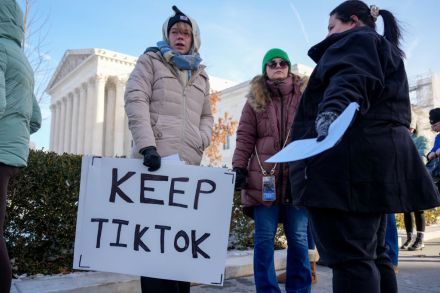
TikTok is hoping that 2025 can be its year — but what comes next for the social media company is truly anyone’s guess. Will someone buy it? Will it divest from its Chinese Communist Party ownership? Will it exist in America next week (the app is fully banned in China as is)? Stay tuned.The social-media app is seeking yet another revival at the eleventh hour. Despite a bipartisan bill signed by President Joe Biden that restricts the ability for foreign adversaries to run social-media companies in the United States, TikTok is activating its army of supporters once more (the app is presumably hoping that its child soldiers will not threaten to kill themselves or lawmakers this time)... and it just might work.

Time is running out for TikTok

TikTok’s days may be numbered in America after all. Following a presidential campaign in which both Donald Trump and Kamala Harris promoted themselves heavily on the platform, despite bipartisan national security concerns over its ownership’s ties to the Chinese Communist Party, a federal appeals court today ruled that the app must break ties with the Beijing-based ByteDance within a few weeks or be banned in the United States.Until the decision, everything was looking up for TikTok. Trump trounced Harris on the platform, and his campaign and top surrogates were active all over the popular social media app.

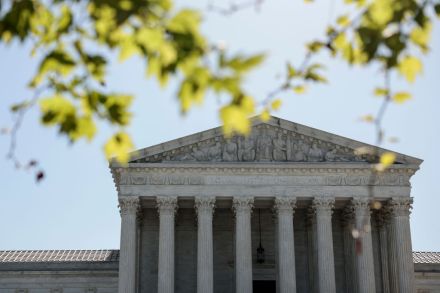
The Supreme Court is under fire — again

Some weeks it feels like the line between politics and the law has all but vanished. From Hunter Biden’s plea deal and Donald Trump’s ongoing criminal woes to the brouhaha surrounding gifts accepted by Supreme Court justices and John Durham’s appearance before the House Judiciary Committee to defend his report on the FBI and Russiagate, this is one such week.  For more on the Hunter story, check out my colleague Ben Domenech’s latest. Meanwhile, a fresh row about the Supreme Court bubbled up in an unusual way overnight.

The Baltic nations show the world how to defend freedom

It is not inevitable that the Baltic States of Estonia, Latvia, and Lithuania would be among freedom’s most potent defenders. Nestled between the Russian mainland and Moscow’s exclave of Kaliningrad, their only direct connection to their NATO allies is through the vulnerable Suwalki Gap. For its part, NATO only has small rotational forces stationed in the three countries. At first glance, one would expect these tiny nations (Lithuania is the largest at 2.8 million people) to prefer flying under the radar. Instead they have become some of the most vocal and powerful defenders of the Western way of life. Tiny though they may be, the Baltic countries have managed to stand up to the two greatest enemies of freedom at work today, Russia and China.

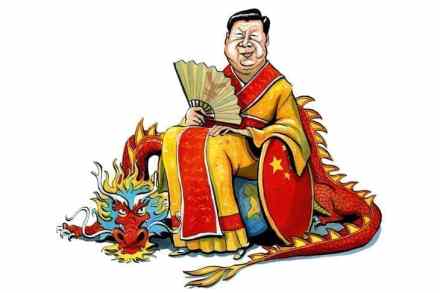
Mike Gallagher’s China challenge

Twenty-five years ago, bipartisan American consensus about China was built on hope, spin and money. Despite the trauma of Tiananmen Square and caution about China’s true economic intentions, many believed in the potential of capitalist principles to move the Chinese Communist Party into a more open, less aggressive posture. Henry Kissinger wrote books about it; pundits and think-tank scholars gave speeches about it; Republicans and Democrats alike parroted the line well into the twenty-first century. Tom Friedman even dreamed ambitiously of what the United States could accomplish if only it were willing to be “China for a day.” What followed? As Harold Macmillan put it, “Events, dear boy, events.

Gallagher china ccp confucius institutes china

How China meddles in American academia

"Congress has dropped language from a must-pass bill governing US defense policy that would have effectively prevented US scientists from participating in Chinese programs aimed at attracting foreign scientific talent,” reported Science, the journal of the American Association for the Advancement of Science (AAAS) in December. The journal cautions, however, that the provision may reappear in another bill. The AAAS is the most authoritative voice for American scientists. It has generally opposed any restrictions on relations between US academics and China, and favored the US government’s stepping back from investigating and prosecuting scientists for lying about their service to China.

china ccp

Ending our corporate dependence on China

In the toxic world of American politics, the bipartisanship showed by the House of Representatives last week in overwhelmingly passing a bill to stop the import of Chinese products made with forced labor from Xinjiang is a rarity. The 428-1 vote on the Uyghur Forced Labor Prevention Act, the second in as many years, is the clearest indicator yet of how a new era in American relations with the People’s Republic of China (PRC) is developing. It's one where national security and moral concerns find common ground in opposing the oppressive and predatory policies of the Communist Party of China (CPC).

taiwan china