


Lisa Haseldine has narrated this article for you to listen to.
Since January, Karapetyan, leader of the Strong Armenia party, has been unable to leave his hilltop mansion to campaign ahead of Armenia’s parliamentary elections on Sunday. Last year, he waded into a fight between the Armenian Apostolic Church and the country’s prime minister, Nikol Pashinyan, leader of the Civil Contract party. His call for Pashinyan to stop pursuing clergymen critical of Pashinyan’s efforts to establish peace with neighbouring Azerbaijan was interpreted as a call to overthrow the government. Karapetyan was arrested, interrogated and spent six months in pre-trial detention before his sentence was commuted to house arrest. He denies the charge.
How do you fight an election if you’re under house arrest? If you’re the Russian-Armenian businessman Samvel Karapetyan, once the richest ethnic Armenian in the world, you bring the election fight to you.
When we meet, the one topic Karapetyan wants to talk about is Nagorno-Karabakh
Karapetyan has since run Strong Armenia’s election campaign from his compound on the hill above the country’s capital Yerevan. Iron gates flanked by stone eagles open onto a driveway that leads up through an orchard of cherry trees and roses. At the top of the drive sits Karapetyan’s sandstone mansion, its front door framed by columns and an ornate semi-circular balcony.
Off to the side is the outhouse Karapetyan has converted into a conference hall – perfect for speaking to the press and (going by a cluster of miniature Armenian flags) meeting international delegations.
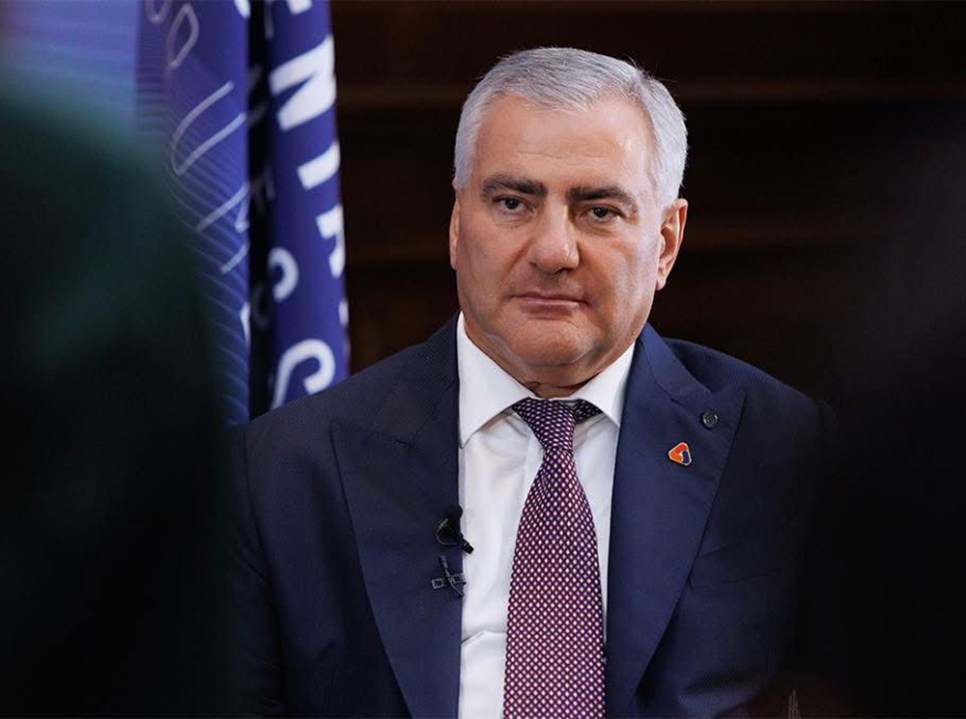
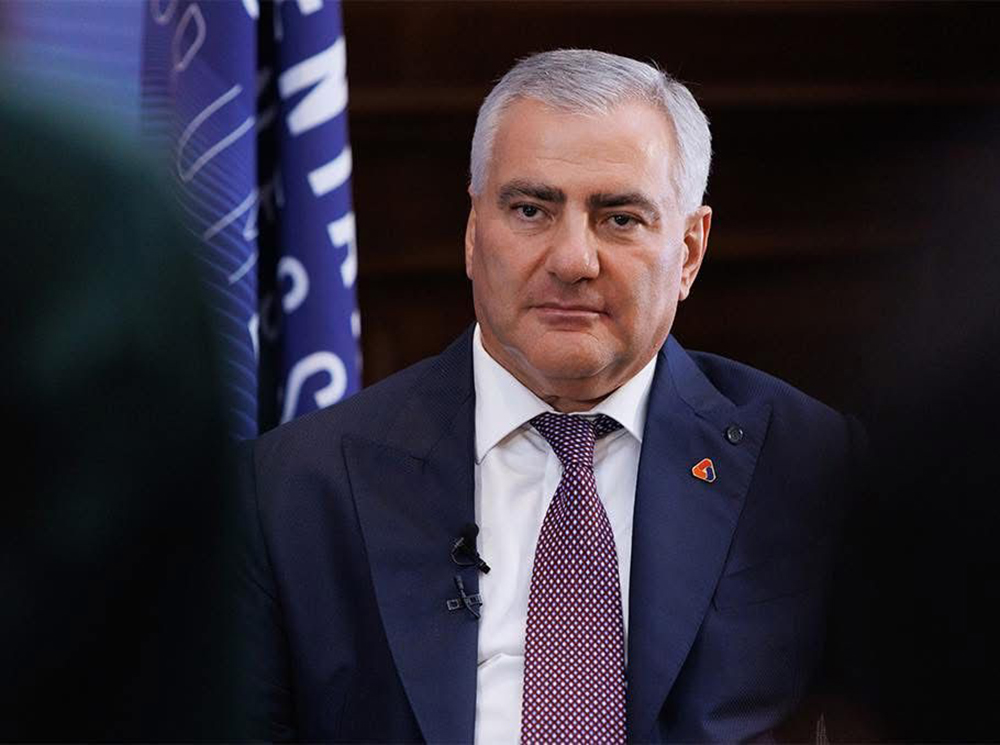
When we meet ten days before the election, Karapetyan, 60, is in a mischievous mood, even if his party is trailing in the polls with 15 per cent compared to Civil Contract’s 30 per cent. He asks that any photographs taken of him are good enough to make ‘all the girls in Europe fall in love with me’. But the conversation quickly turns serious. ‘Armenia has become the most dangerous country for doing politics in,’ he says, adding that he wants to ‘restore justice and fairness’.
Karapetyan is, to say the least, a controversial candidate. At the end of last month, western intelligence identified him as Vladimir Putin’s preferred candidate – something he denies any knowledge of. He is in the process of renouncing his Russian and Cypriot citizenships – a requirement to be eligible for the post of prime minister.
He has primarily stood on a conservative platform of strengthening Armenia’s economy (300,000 new jobs, lower taxes on small businesses, cheaper medicines). On a podcast earlier this year, his son Sargis suggested that a ‘Ministry of Sex’ should be established to tackle demographic decline. ‘Can we now actually say that in a strong Armenia there will be no unsatisfied woman?’ he asked, drawing accusations of sexism and misogyny. It is unclear whether Karapetyan senior would, indeed, introduce such an initiative.
The only topic he really wants to talk about is Nagorno-Karabakh. In 2023, more than 120,000 ethnic Armenians were expelled from the region following the latest in a series of conflicts between Armenia and Azerbaijan dating back to the 1980s. Both countries have accused the other of engaging in acts of genocide and ethnic cleansing, with the struggle to control the territory becoming a defining pillar of Armenian nationalism. Since taking control of Nagorno-Karabakh by force three years ago, Azerbaijan has encouraged its citizens to repopulate the towns and cities once occupied by Armenians.
Last year, Pashinyan agreed, with the encouragement of Donald Trump, to begin negotiations on a peace deal with the Azerbaijani president Ilham Aliyev that would see Armenia give up its claim to the region. This would require a referendum on changing Armenia’s constitution to remove references to the territory. For Pashinyan, this weekend’s election is a referendum on the terms of that peace deal. While these have not been signed, on 28 May – Armenia’s Republic Day – Pashinyan announced that ‘peace has been established between the Republic of Armenia and the Republic of Azerbaijan’.
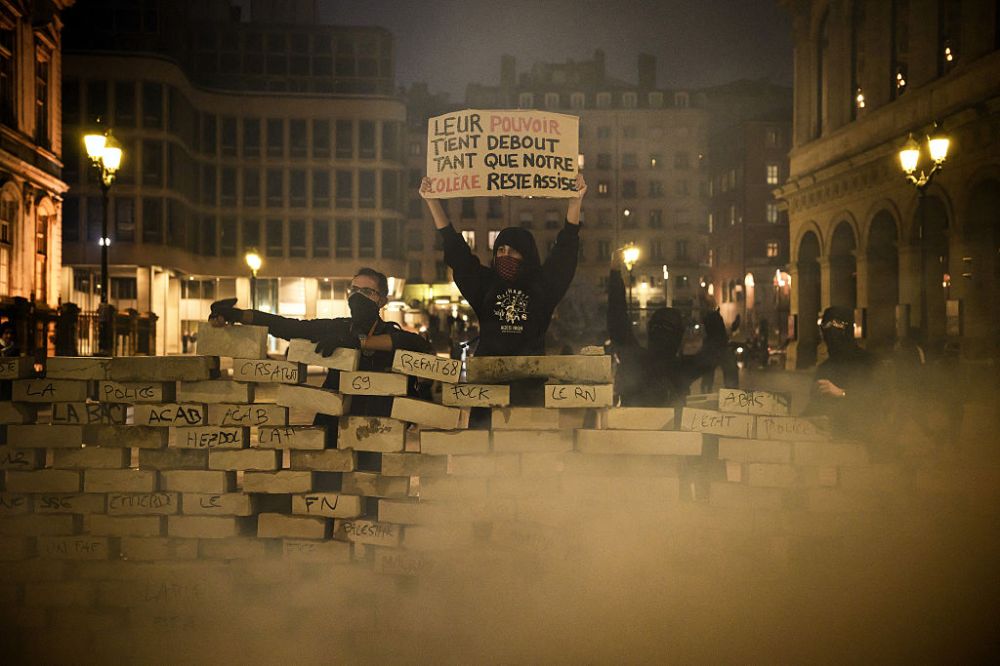
The trouble for Pashinyan, however, is that the feeling of grievance and injury felt among Armenians towards Azerbaijan over Nagorno-Karabakh runs deep. Many view the peace deal as a validation of Azerbaijan’s violence over the past four decades.
Karapetyan views the peace deal as a ‘defeatist’ policy of ‘one-way concessions’. ‘Pashinyan has delivered Armenia to a very dangerous point – to the edge of a precipice,’ he says. He holds the Prime Minister responsible for failing to defend Nagorno-Karabakh in 2023 and causing it ‘to be cleansed of Armenians’. Now he is also accusing him of attempting to, as he sees it, sell Armenia up the river with an Azerbaijani peace deal that represents few of Armenia’s interests.
Karapetyan is confident, he says, that he can negotiate a return of Armenians to what he calls ‘their native land’. Whether this would involve tearing up the peace deal – and defying Trump in the process – he doesn’t say. At the very least, he has also pledged to introduce a ban on Azerbaijani citizens purchasing real estate or receiving land as gifts in Armenia.
Nagorno-Karabakh is the subject from which the wider geopolitical significance of Armenia’s election has spread outwards. The fact that Russian peacekeepers – who were present in the territory to observe an earlier ceasefire struck in 2020 – stood by as Azerbaijani forces seized it has triggered a sharp deterioration in relations between Yerevan and Moscow in recent months.
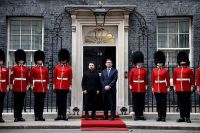
Last year, Pashinyan enshrined Armenia’s aspiration to one day join the EU in law. Last month, Yerevan hosted a summit of the European Political Community, followed days later by the first ever EU-Armenia summit, ‘reaffirming the EU’s steadfast commitment to further strengthen its relations with Armenia’. Sir Keir Starmer, Emmanuel Macron, Volodymyr Zelensky and EU chief Ursula von der Leyen were among the western leaders who visited the Armenian capital in the course of those two events – as close an endorsement for Pashinyan’s Civil Contract party as Europe was likely to give.
Days later, Pashinyan declined the Kremlin’s invitation to attend the 9 May Victory Day parade in Moscow. The official reason given was that Pashinyan would stay in Armenia to kick off his election campaign. But this also represented a convenient – and pointed – snub to Putin.
Concurrently, with his eyes still on a Nobel peace prize, Trump has doggedly pushed ahead with the peace deal between Armenia and Azerbaijan – underpinned, in typical Trumpian fashion, by the Trump Route for International Peace and Prosperity (TRIPP). A new 27-mile transit corridor linking Azerbaijan with its southern enclave via Armenia, the TRIPP will operate under Armenian law but grant the US exclusive development rights to the project for at least 49 years. With the election imminent, US Secretary of State Marco Rubio flew to Yerevan to sign a framework agreement for the deal. Clearly motivated by getting the TRIPP over the line, last week Trump threw his ‘COMPLETE and TOTAL Endorsement for Re-Election’ behind Pashinyan.
Perhaps unsurprisingly, Putin has put substantial effort into unseating Pashinyan. Last month, he made a veiled threat that Armenia would meet a similar fate to Ukraine should it gravitate further towards the EU: ‘Where did it all begin? With Ukraine’s accession, or attempted accession, to the EU.’
In the final few weeks of Armenia’s election campaign, the Kremlin has turned up the economic pressure on Yerevan, banning imports of fresh flowers, fruit and vegetables, as well as mineral water, into Russia. Moscow also threatened to reinstate export duties on oil and gas supplies to Armenia. With Russia providing approximately 85 per cent of Armenia’s gas and more than 60 per cent of its oil, such a move would put the country’s economy under serious pressure.
Reports suggest that Russian bots have been working hard to spread disinformation about Pashinyan – including that he has HIV and is planning a war with Russia. Russian dissident tech analysts behind the anonymous group Bot Blocker claim Armenia is facing the second-largest state-backed disinformation campaign in modern European history, surpassed only by Russia’s efforts to unseat Maia Sandu during the Moldovan election last year.
In the final weeks of the campaign, the Kremlin has turned up the economic pressure on Yerevan
Information leaked from the Kremlin has revealed that Russian officials have at the very least entertained the notion of paying Armenians living in Russia to travel back to vote against Pashinyan. The authorities reportedly priced up the cost of transporting 100,000 Armenians back to their homeland to be in the region of $50 million (£37 million).
Karapetyan claims the incumbent Prime Minister is pitting Armenia against Russia through his attempts to foster closer relations with the West, and the EU in particular. ‘We are being used as a platform against Russia, which is very dangerous.’ Critics of Karapetyan, on the other hand, warn that he wants to pull Yerevan closer into Moscow’s orbit. He doesn’t deny this: ‘Russia is our strategic ally,’ he says, adding that it is ‘one of the superpowers of this world. We will not become hostile with it.’ Pashinyan ‘tried to demonstrate his anti-Russianness’ by not attending Putin’s Victory Day parade; as Armenia’s leader, Karapetyan says he would have no problem going. He nevertheless insists that close ties with Moscow would not prevent him from fostering ‘good relationships’ with America and the EU.
Armenia is a country of just three million, of whom 2.5 million are believed to be eligible voters. It may well be that in a set of elections that has had historically low turnouts, 100,000 Armenians bussed in from over the Russian border are enough to sway the vote in Karapetyan’s favour. But even if Pashinyan does manage to cling on to his premiership, the tug of war between America, Europe and Russia over this tiny Caucasian country has only just begun.




Comments