So far, Labour has staged a contested leadership election in government only once – 50 years ago, in 1976. The New Economics Foundation once declared 1976 to be post-war Britain’s happiest year, judging by income equality and public spending. Cosseted by memories of a hot summer of space hoppers and Swap Shop, the left-wing thinktank brushed over strikes, stagflation and Britain going – to use the obligatory phrase – cap in hand to the International Monetary Fund (IMF).
Compared with Labour’s current phoney war, that election was enviably swift. Harold Wilson resigned on 16 March; three rounds of voting by Labour MPs later, and James Callaghan entered Downing Street on 5 April. He announced to voters that there was ‘no soft option’ and that he couldn’t promise ‘any real easement’. The pound continued to slide; inflation remained in double digits; the IMF was soon called in. Callaghan agreed to £2.5 billion in cuts, including the most stringent NHS budget reduction in its 77-year history.
Parallels between then and now must not be over-egged. Labour today has no giants of the stature of Callaghan, Denis Healey or Tony Benn; today’s trade union leaders prefer rainbow lanyards to beer and sandwiches. Yet this week the IMF issued the UK a familiar warning. A ‘set of economic realities’ limit the space to hike taxes or borrow further. Amid ‘domestic uncertainty’ and international crisis, the markets are jittery. Our long-term borrowing costs have reached their highest level for three decades. The IMF urged welfare cuts to restore the public finances – a recommendation Labour MPs are unlikely to enjoy.
Labour today has no giants of the stature of James Callaghan, Denis Healey or Tony Benn
As John Power outlines on p12, Labour’s crisis today occurs against the backdrop of a looming cost-of-living emergency. If the Strait of Hormuz remains shut, Britain faces food shortages, soaring inflation and plummeting living standards. Labour’s princelings are dancing on the edge of a volcano. Rachel Reeves’s proposed response is as quintessentially 1970s as flares or David Bowie: voluntary price caps for supermarkets.
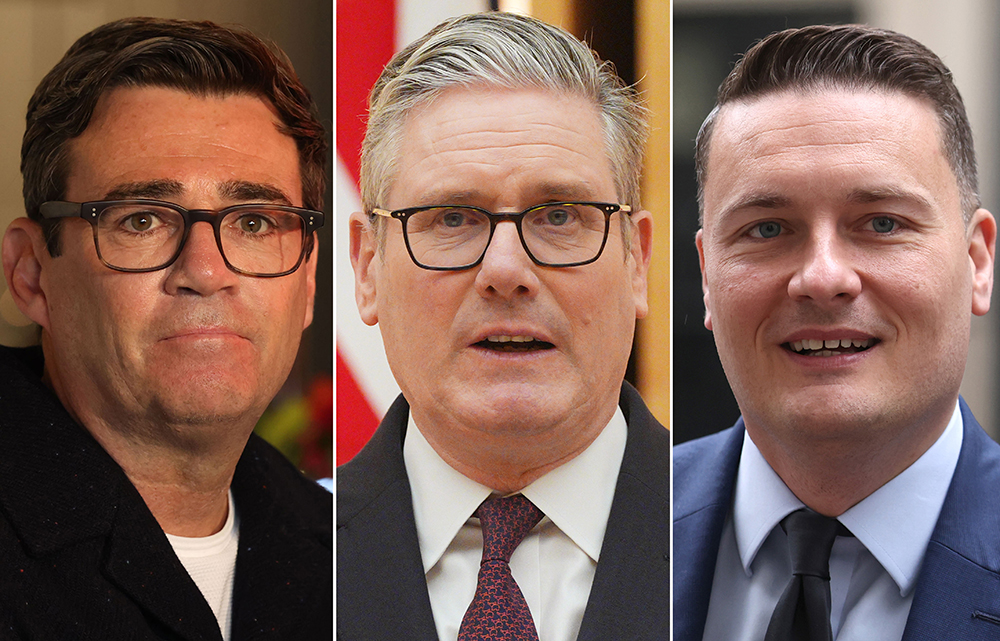
Neither No. 10’s current occupant nor his would-be replacements are willing to match Callaghan’s candour. Could Keir Starmer, Andy Burnham or Wes Streeting tell a Labour conference that ‘the option no longer exists’ to ‘spend your way out of a recession’, that Britain can only ‘become competitive’ by ‘significantly improving the productivity of both labour and capital’, and that significant expenditure cuts are needed? It’s much easier to plead with Tesco and issue sweet nothings about ‘a special relationship with Europe’.
Callaghan’s words were written by Peter Jay – his son-in-law, the Times’s economics editor, and a monetarist who cut against the flagging Keynesian consensus. In controlling spending and reducing the money supply, Callaghan’s government set a precedent for Margaret Thatcher’s. Starmer’s leading challenger shows no similar engagement with new ideas or fiscal reality. Burnham wants to ‘roll back Thatcherism’; bring buses back into public control, his logic goes, and Britain’s woes will be cured.
His initial suggestion to ignore the bond markets and embrace wealth taxes – now rowed back on following a market reaction – has something of Benn’s Alternative Economic Strategy, designed to swerve the IMF through a siege economy of bank nationalisations and squeezing the rich. But while Burnham shares Benn’s detachment from reality, he lacks his principles and eloquence. A better comparison is one that neither party will appreciate: Liz Truss.
Labour threatens to spend the summer repeating the Tories’ 2022 folly: indulging in leadership navel-gazing while voters endure a cost-of-living crisis. For Burnham’s proposed borrowing bonanza, take Truss’s unfunded tax cuts. Rather than shrink the state, Truss was bounced into a £31 billion energy price cap; her tax cuts appealed to Tory members but not to the markets. Would Burnham survive more than 49 days before his premiership imploded?
Whether or not Burnham makes it into parliament, let alone No. 10, Labour’s follies have run out of road. Youth unemployment has risen to an 11-year high amid minimum wage and national insurance hikes; borrowing has surged as attempts to curb the welfare bill have been scrapped. Without cuts, ministers lack the headroom to even consider bailing out voters. Labour may not be looking for austerity, but austerity is looking for them; our next prime minister will still be, as the saying goes, ‘in hock to the bond markets’.
After the Winter of Discontent ushered in 18 years of Tory rule, Callaghan’s stock was low among historians; recently, Dominic Sandbrook has spearheaded a re-evaluation of him as a decent man who told his party hard truths. The great villain of Labour history remains Ramsay MacDonald, the prime minister who split the party to implement spending cuts amid the Great Depression. Starmer or his successor would occupy a similar place in their party’s demonology if they followed the IMF’s prescription after promising a turn to the left.
Even if England – or perhaps Scotland – win the World Cup in July, 2026 is unlikely to be remembered as one of Britain’s happier years. But it could be one in which, looking over the abyss, we realised the perilousness of our position and acted to save ourselves. That, however, would require a leadership that Labour has been unable to provide for a very long time.

Comments