

Our esteemed editor was once excoriated for saying that the public had had enough of experts. ‘The people of this country have had enough of experts from organisations with acronyms saying they know what is best and getting it consistently wrong.’
His remark sits within a fine conservative tradition: there is William F. Buckley, who stated: ‘I would rather be governed by the first 2,000 people in the telephone directory than by the Harvard University faculty.’

If the candidate hasn’t been to university, add five points. If they’ve done a proper working-class job, add ten
There is Thomas Sowell, who wrote: ‘Intellectuals are people whose end products are intangible ideas…Whether their ideas turn out to work… is another question entirely.’ And of course there is Edmund Burke: ‘The only thing necessary for the triumph of evil is for good men to read PPE at Oxford.’
But let’s park this for a moment. The fact is that such experts aren’t even a cross-section of experts. As the economist Richard Thaler himself remarked: ‘As a general rule, the United States government is run by lawyers who occasionally take advice from economists. Others interested in helping the lawyers out need not apply.’
Both disciplines, I would argue, have their place. Large companies employ both lawyers and economists, but they don’t let them run the show. By contrast, we have a cabinet which is packed with second-rate lawyers and economists but, as far as I can see, no one who has worked in the private sector at all, except as a lawyer or an economist.
We can easily change this. All that is needed is for The Spectator to create an index by which we judge all parliamentary candidates at the next election. I am open to people improving this, but here is a first stab. You must ignore political affiliation completely.
If a candidate has studied law or economics, subtract 20. If they are married to a lawyer or economist, subtract a further 20. For a STEM qualification add ten. If in maths or engineering, add ten more.
(My brother was on the British Maths Olympiad team in the 1980s, so I grew up thinking I was rubbish at maths. I got a B at A-level. Later, on encountering the professional middle classes en masse, I discovered that having A-level maths in most professional settings practically makes you John von Neumann. Most lawyers are completely innumerate – just ask Lucy Letby.)
Here is where my ranking takes an unexpected turn. If the candidate hasn’t been to university, add five points. If he or she has done a proper working-class job, add ten. Also add ten if the candidate has been a frontline public-sector worker – e.g. a cop or nurse. If they run a business, add 20. If they have launched one, add 30.
If they have worked in the private sector at all, add ten (unless it is in HR, compliance, legal or procurement– the four horsemen of the bureaucratic apocalypse – in which case deduct five). If they have written for a tabloid, add ten. If they have written for a broadsheet, deduct ten. If they have worked in a pub, add five.
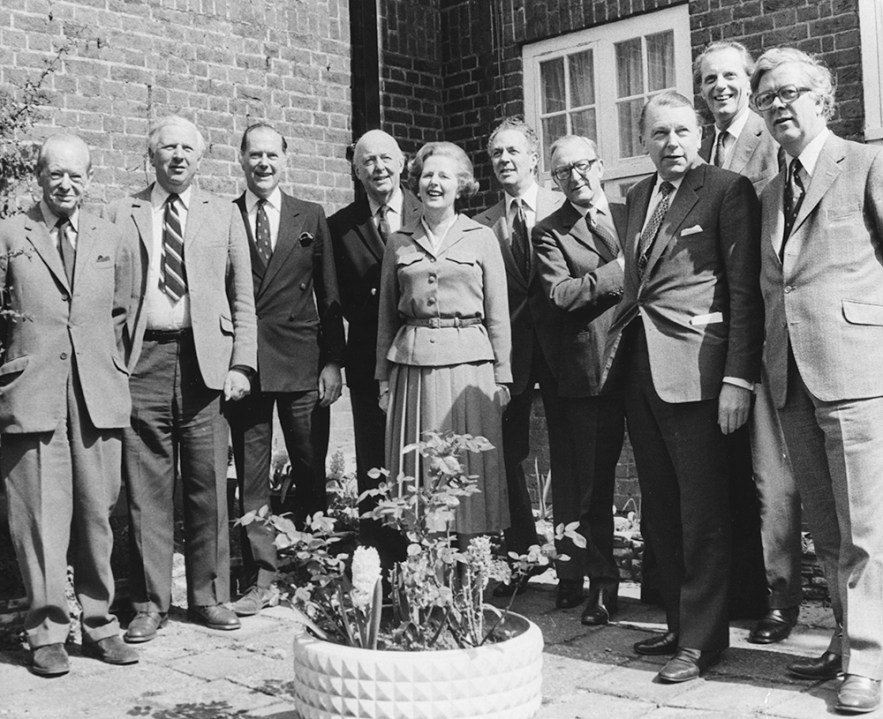
This needs further refinement. But by my calculation, the best scoring governments of the last century would have been the Attlee cabinet and the first Thatcher cabinet of 1979, so it has some empirical support.
The only problem is how to score the present Chancellor. Some assert she did not work as an economist at HBOS, but worked in customer relations (which counts as a proper job). If you want evidence of the veneration of economics in government, it’s surely that someone is alleged to have boosted their political prospects by boasting that they worked as a bank economist in 2005. This, when you think about it, is the equivalent of padding your CV by claiming to have been the lookout on the Titanic.




Comments