The 61st Venice Biennale arrived freighted with portent. To cut a long story short: Russia and Israel were invited to exhibit, and the prize jurors resigned in protest. Then, on preview day, the city was hit by a storm of biblical force. I sat in the Stansted Wetherspoons for hours, oblivious to the fact that the Ryanair ahead of mine was taking a pummelling that ultimately landed it on the wrong side of the Adriatic. ‘It was terrifying,’ a journalist colleague recounted. ‘And apparently, Bjork was on board, too.’
You’ll leave feeling that you’ve spent five hours trapped in the basement of Italy’s most patronising headshop
The bad juju had set in last May when Koyo Kouoh, the programme’s curator, dropped dead aged 57. The event was left rudderless: and with all due respect – it shows. The Venice Biennale is always a mess, vast in scale, sickeningly platitudinous and intrinsically compromised by commercial forces that blunt its aspirations to radicalism. This latest iteration ticks all those boxes, yet somehow manages to be just that bit worse.
The Biennale is supposed to gauge the zeitgeist of contemporary art, and on that level the current number is particularly depressing. The gargantuan central exhibition in the Arsenale, for instance, is a washout. Kouoh – who was born in Cameroon but had been largely based between Dakar and Cape Town – sought to banish culture-war bombast while foregrounding the work of black artists. Entitled In Minor Keys, the exhibition is supposed to be a celebration of quiet invention, a parade of reflective art that makes its point with whispers rather than yells.
In this, it partially succeeds: the vast spaces are perfumed with wafts of scent and subtle musical cadences, a generous scattering of pouffes providing a concession to art fatigue. An emblematic exhibit is Cauleen Smith’s installation, incorporating a five-channel video work displaying impressionistic footage of the artist’s native Southern California, accompanied by musical compositions set to the poems of Wanda Coleman, various of whose books are displayed in vitrines.
The mood, then, is consistent. The contents, however, are the same old mix of lame hanging textile pieces and invitations to consider the wisdom of someone else’s ancestral spirit-guardians. Yawnsome, yes, but in certain cases, the hippyish register works well. French-Algerian artist Kader Attia fields a multiscreen video installation inspired by a Vietnamese shaman who posits that computer viruses are in fact ghosts seeking to take control of the internet.
I liked this but not as much as I liked a chaos of wooden palettes embellished with wonky paintings that turned out to be Walid Raad’s recreation of a 1993 photo taken in Slovenia, to where weapons previously deployed in the Lebanese Civil War had been shipped just in time for the independence revolt that shattered Yugoslavia. Raad obligingly provides the source picture: the wonkiness, it turns out, is not contrived but transposed.
In a show heavy on emerging artists from the developing world, it’s depressing to single out established figures based in LA, Berlin and New York. But it’s that kind of exhibition. You’ll leave feeling that you’ve spent five hours trapped in the basement of Italy’s most patronising headshop; thence surmise that participants from the global periphery have been horribly let down.
If nuance was the theme of the official programme, it seems nobody got the message in the national pavilions. Russia’s lamentable contribution was a non-stop blast of turbo-folk, techno and scarcely credible patriotic fervour, the sounds of which reverberated far beyond the confines of the Giardini. However awful Russian politics got, the country’s pavilion normally offered a bracing dose of the berserk. This time, however, it’s just embarrassing.
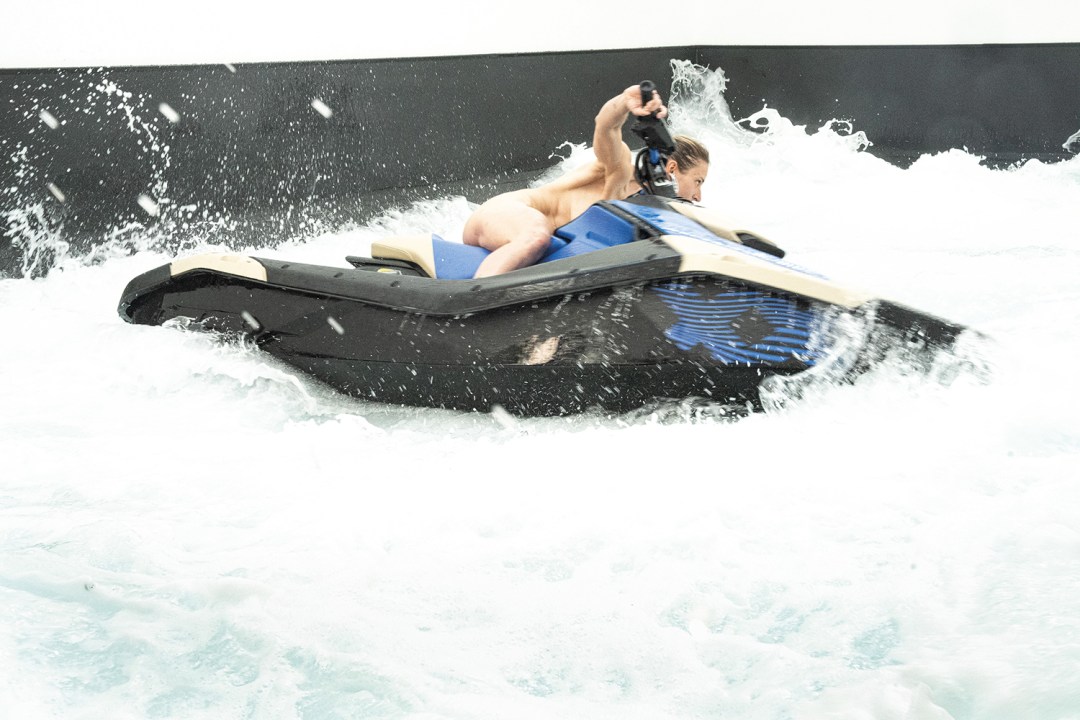
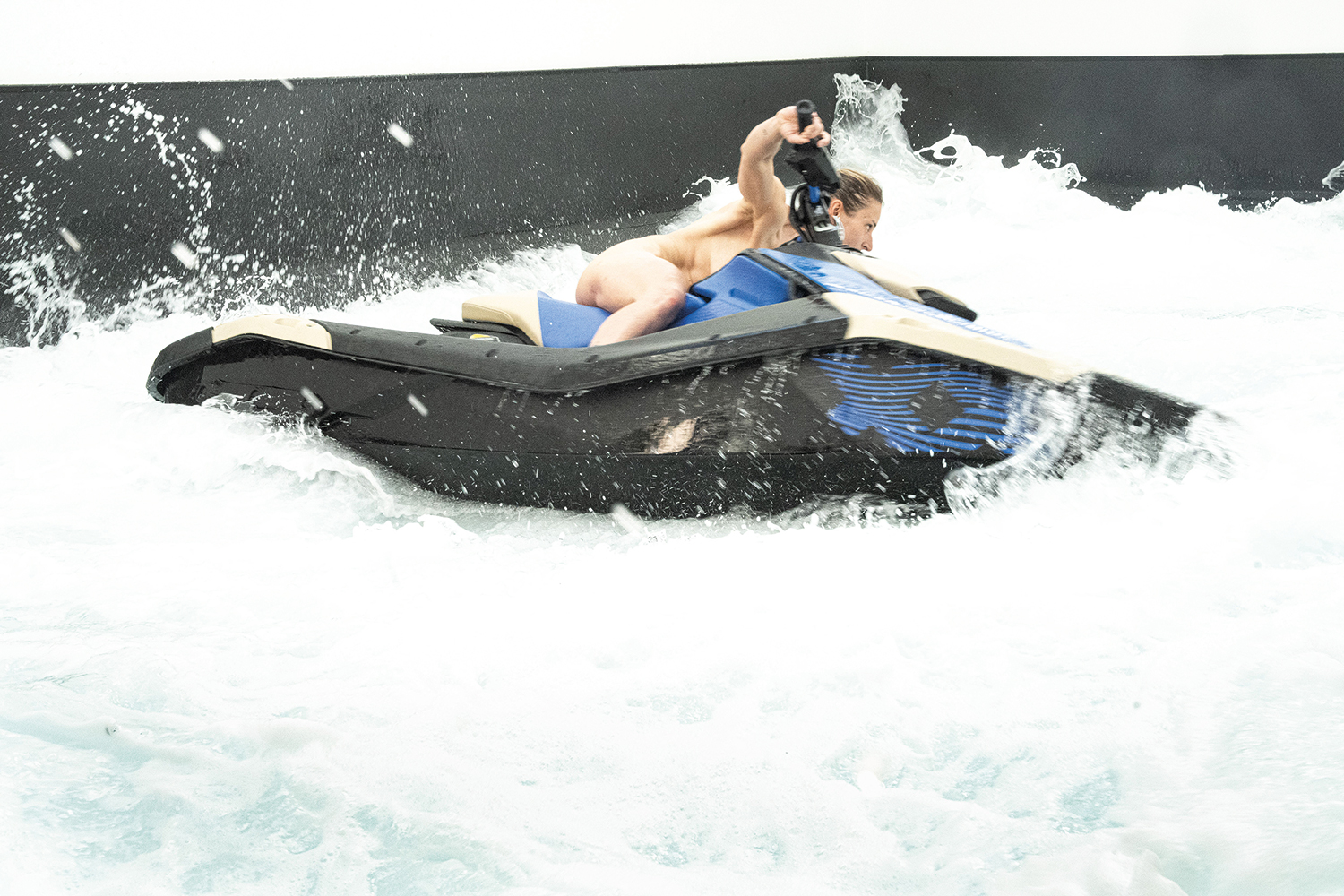
Austria’s offering – for which Florentina Holzinger has transformed the space into a fully functioning sewage plant, for some reason accessorised with naked women riding jet skis – sounded mental. But her people were on strike when I tried to visit, as were most other (supposedly) worthwhile national delegations. The general register elsewhere was one of high-minded wackiness. Denmark’s attention-grabbing show featured sperm banks and porn stars: it was awful, but entirely normative.
Denmark’s attention-grabbing show featured sperm banks and porn stars: it was awful, but entirely normative
The American pavilion was stand-out dull, while Britain fielded a typically boring show from an artist already swimming in public-art commissions – in this instance, Lubaina Himid, whose contribution betrayed nothing of her sporadic brilliance. Here, through a mix of paintings, textual interventions and barely detectable alterations to the space itself, Himid’s reflexive jabs at prejudicial British society feel inert and parochial.
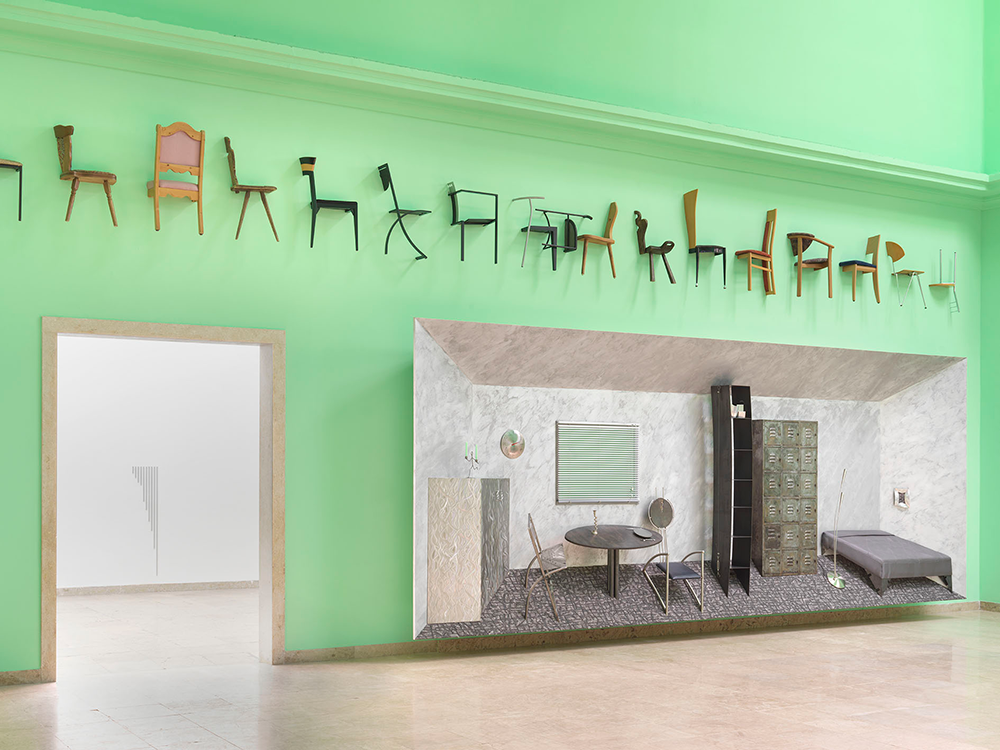
Germany, as always, approaches its recent history with self-harming emo energy. Its pavilion contained a double-header examining the complicated legacies of reunification, wherein artists Sung Tieu and the recently deceased Henrike Naumann respectively thunder out a vast mosaic of a GDR tower block and a mini-museum of emblematic objects from that defunct polity. It was much the best thing I saw in this open-goal of a shitshow; had there still been a jury, it would have surely bagged the top prize.

Comments