
Million-strong caravans of wildebeest, darkly efficient lion kills, exuberantly plumaged birds – Africa’s prolific wildlife is a consummate scene stealer. So much so that the continent’s glorious wilderness landscapes rarely earn equal billing.
Welcome to the stage Zambia and Botswana, where a two-center, dry season safari upends that formula. While the animals are many and mesmerizing – Moremi is Africa’s “Predator Capital,” the Makgadikgadi a magnet for 50,000 migrating zebra – they’re extras rather than A-list stars; tonic to the scenic gin.
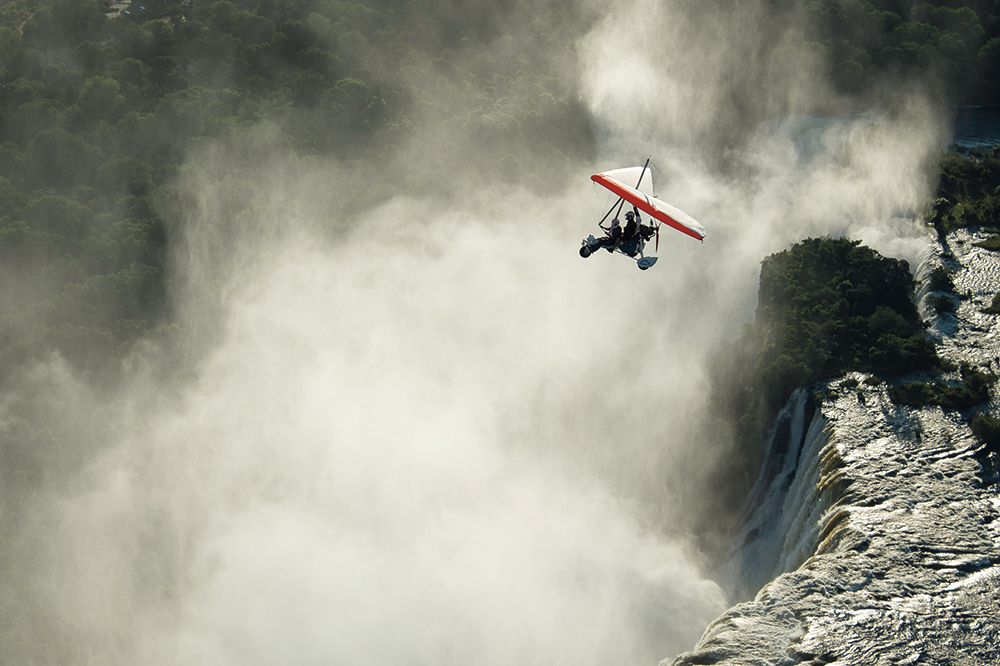
Where else to start but Victoria Falls? One of the world’s seven natural wonders, the mile-wide cascade peaks around May when each minute sees 145 million gallons of the Zambezi plunge into a boiling gorge: a multisensory spectacle of mist, noise, and tectonic rumble. To appreciate its full immensity I board a microlight, and from 1,500 dizzying feet we admire the atomic clouds of spray and dancing rainbow directly above the 355ft-deep ravine.
More water awaits 300 miles to the south-west in Botswana’s Okavango Delta. As any star knows, timing is everything, so though I arrive under relentless sunshine the globe’s largest inland delta is in full flood, fueled by 2.5 trillion gallons of water from downpours in the Angolan Highlands. The Okavango’s soaking hand grasps 6,000 square miles of the northern Kalahari, its ocher and viridian islands, ilala palms and delta trees bound by tangled ribbons of water.
It offers a unique safari drive. My Land Cruiser’s hood frequently noses beneath the flood with the gravy-hued deluge streaming through its doors. I watch elephants using their trunks to snorkel across surging rivers, skittish antelope rocketing across the plains in bursts of spray, and Cape buffalo grazing on semiaquatic grass as if in a Laotian rice paddy.
The game sighting is, of course, generous, particularly the close-quarters view of a lion tearing into a recently killed hippo, but the most memorable moment is animal-free. Our motorboat flies along papyrus-lined channels, reaching a lagoon for frosty sundowners, the palms silhouetted against a molten-gold sky.
To close my safari trilogy, I head to the Makgadikgadi, 150 miles to the east. It might as well have been designed by Salvador Dalí; vast glinting salt flats are laced with cappuccino-colored grasslands on which spiky aloe vera and baobab trees with branches resembling Medusa’s hair, skulk like B-movie aliens.
Under a shimmering heat haze, the Makgadikgadi’s two main pans, Ntwetwe and Sua – the legacy of an ancient lake larger than Switzerland – bend the mind and sear the retina. “Look at it,” urges my guide, Joshua, as we stare towards a horizon of melded salt and sky. “Your eyes scream, ‘enough, no more.’”
I’m staying at the fabulous Jack’s Camp. Founded in the 1960s by legendary adventurer Jack Bousfield, it channels explorer chic with expedition tents, antiques, and wooden Thunderbox lavatories: an atmospheric base for encounters with San Bushmen, startlingly violent meerkats, and flocks of ostriches.
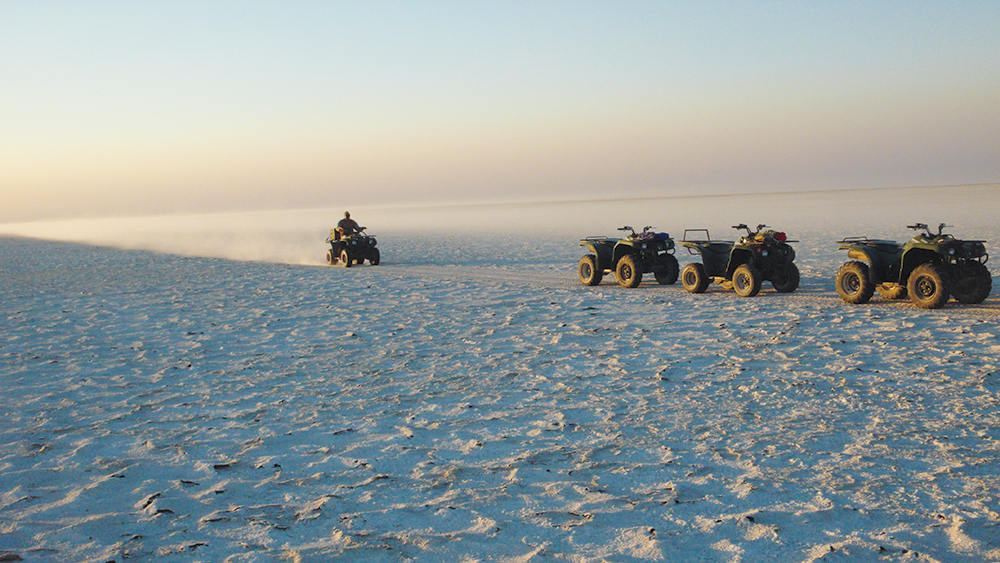
At dusk, I ride a quad bike into the Sua Pan’s “Great Nothing,” dust blossoming in my wake. In utter otherworldly silence, I dismount, lie on the white crystals, and watch an astral blizzard of stars and planets bury the pitch-black sky: the final act of a spectacular safari drama.
Serious moonlight
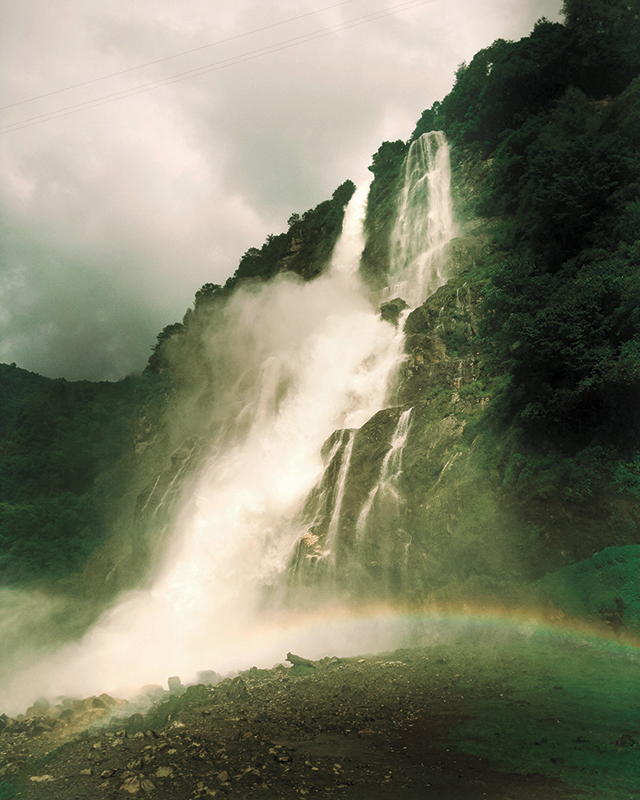
Sky tourism is enjoying its moment in the sun. Quite the travel thing, there’s now high demand for holidays offering everything from the aurora and eclipse to full-moon hikes and midnight sun. To garner serious kudos, however, one heavenly sighting sets you apart: a lunar rainbow. While certain waterfalls, including Iceland’s Skógafoss and Kentucky’s Cumberland, are famed for the otherworldly spectacle – in which spray interacts with moonlight – few offer a moonbow as reliable or dramatic as Victoria Falls.
Blame it on intelligent design. Southern Africa’s cloud-free winter skies coincide with the Zambezi’s peak flow and voluminous mist. Recognizing its allure, Zimbabwean and Zambian authorities offer unique access to the Falls on three nights over each full moon. Around 6.30pm, Zambia’s Eastern Cataract offers the ultimate viewpoint with the moon rising behind you, illuminating an unobstructed sightline along the gorge. Twenty minutes later a smoky beam appears, reaching towards the gods from the frothing torrent, slowly curving into an elegant arch across the ravine. After peaking at 8pm, it wilts, then fragments before vanishing. While not as intense as daytime rainbows, the moonbow remains a strange, slightly eerie apparition that captivated Aristotle in 350BC, and continues to silence awed spectators.
Audley Travel’s tailor-made nine-night Zambia Botswana itinerary includes three all-inclusive nights at Lolebezi, Tawana, and Jack’s Camp, transfers, domestic flights, and all activities including microlight flight, from $25,325; audleytravel.com



Comments