
What a week. A prime minister on the skids. A pretender to the throne resigning. The favourite putting his career on the line on what is likely to be, without question, the biggest by-election in British political history. Never has there been a straight-up contest to decide the next prime minister, with the most popular mayor up against the best political campaigner of the age, Nigel Farage, trying to run interference. Most of SW1 is already studying train times to Wigan.
That hurdle cleared, the only question is who will be prime minister by the time of Labour’s party conference? And I have to tell you, Keir Starmer is not the outside bet here.
ANDY BURNHAM: 48 per cent
The Manchester mayor is running – with the National Executive Committee (NEC) this evening approving him to be considered as a candidate for the Makerfield seat vacated by Josh Simons. It’s basically a coin flip, since Burnham has strong local popularity in the area and might attract Green voters who want to see a more left-wing Labour party. There might also be some Tories who would vote tactically to keep Reform out. But Farage’s party was second in 2024 and romped to victory in all eight wards of the Makerfield seat up for grabs in last week’s council elections.
The Manchester Labour party will be out in force, but Reform will chuck the kitchen sink at this. Reform had 50 activists out working the Makerfield seat today, with hundreds more expected tomorrow. The local branch is viewed as one of its stronger ones, with plenty of voting intentions collected already. Reform’s candidate is expected to have been chosen by Sunday, giving the party a head start ahead of Labour. Until we see which way the votes are breaking, it’s even money.
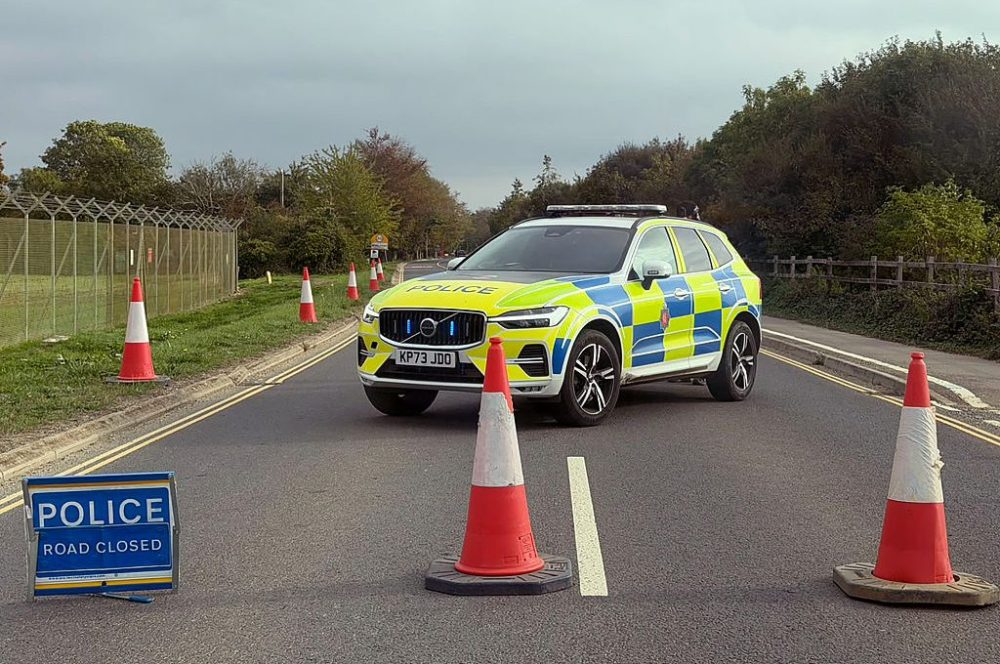
While Burnham will have problems in an area that is very Brexity and takes a dim view of immigration, extended exposure to working-class views on these matters might cause him to adopt less hard-left ones, which would put him in a better place with the country.
Since Burnham is a Remainer in a heavily Leave seat, let’s give him a 48 per cent chance of winning the by-election. If he does so – and depending on how many Labour MPs then declare for Burnham – it is likely that Starmer announces he is standing down and the other candidates rush to do a deal with him. If the PM doesn’t see the writing on the wall, expect a cabinet revolt.
If it does go to a contest, Burnham would be a huge favourite over Wes Streeting or Starmer (if he decided to contest a leadership election). Neither Ed Miliband or Angela Rayner is likely to challenge Burnham, and I can see a world in which Streeting throws in the towel and does a deal, too.
That gives us 52 per cent left to play with in the event that Burnham does not win the by-election. Here’s how I think it breaks down:
ED MILIBAND: 27 per cent
Miliband started this revolution by privately calling for Starmer to set out a timetable for his departure and he remains a key figure. The Energy Secretary has basically been working for Burnham and is keen to become his chancellor, having been a Treasury aide under Gordon Brown. However, if Burnham loses, there will have to be a left candidate for the leadership, to take on either Starmer or Streeting. All the indications are that he does not think this should be Rayner.
Friends say Miliband doesn’t crave the top job, having not enjoyed his time in charge before, but is prepared to step up if necessary – fill in your own justification about ‘the good of the party’ or ‘the good of the country’ here. Very few people presented with the premiership on a plate would turn the other cheek. If he is challenged, he is likely to get more nominations than Rayner, Streeting or Starmer, and has already won the membership once.
The downer for Miliband could be that Burnham feels the need to appoint a different chancellor to placate the markets, opening the door to Shabana Mahmood, or perhaps even Streeting.
ANGELA RAYNER: 10 per cent
The former deputy prime minister is the most talked about candidate – but she has a narrow path to victory. Not only is her own team divided about whether she should go for it, but Rayner herself exhibits all the signs (ironically like those of the early Margaret Thatcher) about whether she is right for the job.
Those who know her best say she hates that she has been talked down to and underestimated all her life, patronised as an unpolished working-class woman by the smooth metropolitan elites who now run the Labour party. On the other hand, she is highly conscious that she carries the hopes of council-house kids and single mothers on her shoulders and perhaps owes it to them – and to herself – to have a go. Farage, and a good few other observers, believe her brand of blunt speaking makes her the best candidate Labour has to defeat Reform in 2029.
Most insiders say that if she got to the membership, with whom she is hugely popular, she could beat Miliband or Streeting, but her support among MPs has fallen and there are doubts that she would muster the 81 supporters needed – unless Miliband gave her a clear run. This is, in part, due to the equivocal messages emerging from her camp about her intentions – messages which reflect the two sides of her character. Getting drunk and walking into a door in a Commons bar a couple of weeks ago has also capped her appeal.
The most likely outcome is that Rayner plays a key role in securing the premiership for one of the other left candidates and returns to the cabinet. I understand she wants a position like foreign or defence secretary. She has privately been getting briefed by retired commanders on the need to spend more on the armed forces.
KEIR STARMER: 10 per cent
Don’t laugh, it could happen. I have spoken to former ministers and cabinet ministers who think the likelihood is nearer 30 per cent. First Burnham would have to lose the by-election. Then Streeting might fail to drum up the 81 names he needs. Then the cabinet fails to move against him. Miliband has kept his criticisms largely private so far, and many think it would be better to avoid the turmoil of a leadership contest. It is possible, in these circumstances, that Starmer is able to stumble on.
One scenario that a former minister has outlined for me would see the PM quietly let it be known that he would go after the local elections next May if the results are no better. That appeals to Micawberesque Starmerites who hope ‘something will turn up’ and those who don’t want him to fight the next general election but feel there might be a bigger bounce, better timed, if they change horses closer to polling day in 2029.
Another possible outcome, if Burnham wins and wants to build a government of all talents, would be to send Starmer to the Foreign Office to handle the issues where he appears most comfortable and most competent.
WES STREETING: 4.4 per cent
This is the percentage of the vote which Liz Kendall secured in 2015, and there is little reason to believe that the right-coded candidate has much more chance of winning than she did. That does not mean, I think, that Streeting would perform that badly if he got on the ballot paper and contested the race. He’s a very good communicator and the right of the party is usually well organised. As a relatively successful health secretary, Streeting will also be able to appeal more widely than Kendall.
But when you take all the factors into account – the chance of Burnham returning, the difficulty of drumming up votes from MPs – his overall chances of emerging victorious are low. While his team says he ‘definitely’ has the votes to contest an election, Downing Street sources say they could not find more than 44 MPs prepared to back him. One ministerial aide described his effective resignation speech as him ‘styling it out’.
The more interesting prospect for Streeting is that, if he plays his cards right, he could end up as Burnham’s chancellor, since he is one of only a handful of other (Mahmood, Rachel Reeves, Pat McFadden, maybe Darren Jones) who would be trusted by the markets.
AL CARNS or NONE OF THE ABOVE: 0.6 per cent
The armed forces minister has a great social media game and is a military hero. A friend was once asked: ‘Why on earth did Al Carns do FIVE tours of Afghanistan?’ The reply came: ‘Because he was not allowed to do SIX.’ Carns has led men in battle and is regarded as doing a good job.
However, military heroism is a more Conservative-coded attribute than one which naturally appeals to Labour MPs and voters. The Tories also tend to celebrate a young challenger more than Labour does, where years of knocking on doors and attending dull committees is seen as a moral necessity before high office can be contemplated.






Comments