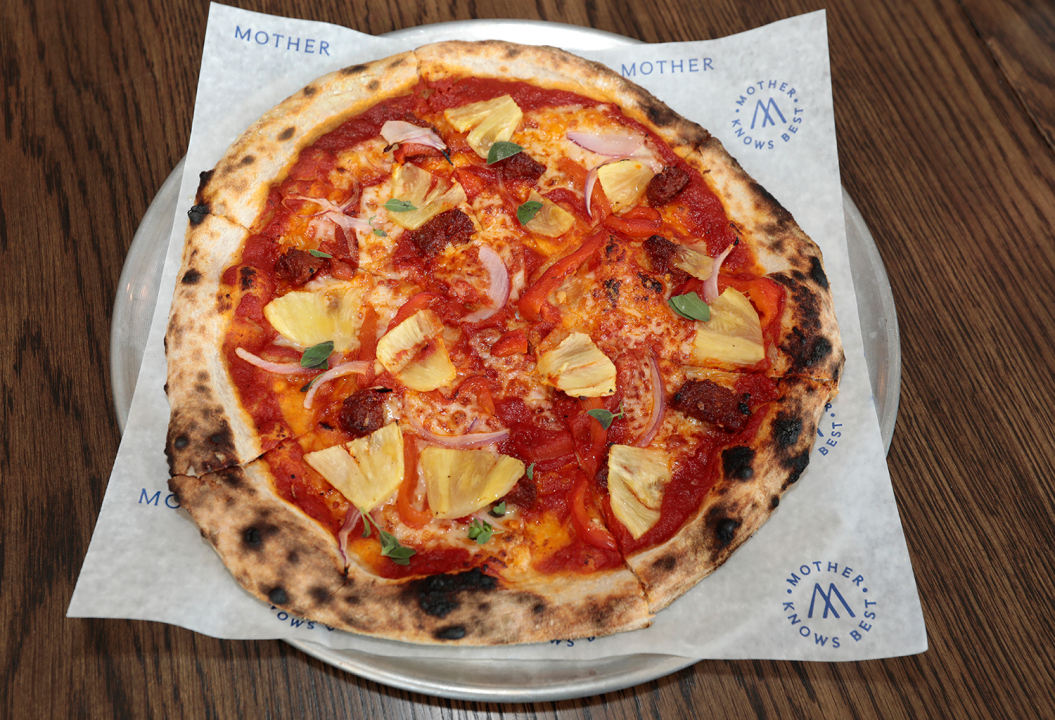
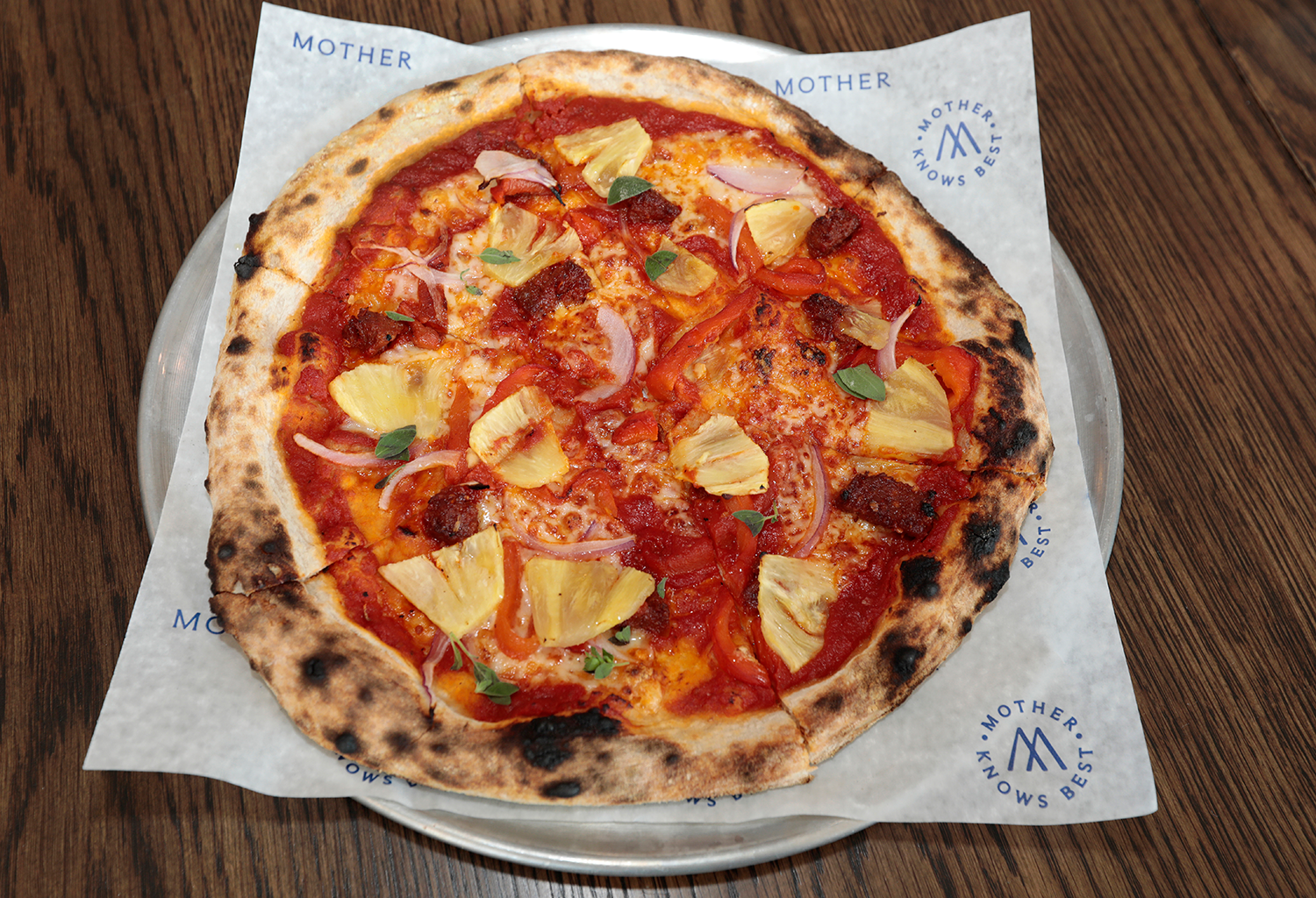
It takes some gumption to name a podcast History’s Greatest Dishes and proceed to offer episodes on pizza, blancmange, balti, gooseberry fool and Victoria sponge. Where’s the rarebit, the pottage, the pigeon pie? But the boldness of the podcast is one of its charms, and the choice of topics isn’t terribly important. Food historian Annie Gray and podcast host Emily Briffett chew over some fascinating material on each of the dishes they have selected and provoke surprisingly heated debates.
Pineapple on pizza ought to be accompanied by Spam instead of ham
It was suggested, for example, that pineapple on pizza ought to be accompanied by Spam instead of ham. Gray tells us that Hawaiian pizza was invented by a Greek restaurateur in Canada and named after Hawaii because Dole, the largest pineapple company, operated there. And when American troops were stationed in Hawaii in the mid-20th century – which was when the pizza was created – Spam was the staple food. You see the logic, but insisting upon Spam seems to me to be being rather purist about a decidedly impure creation.
Elsewhere, it’s explained that a Victoria sponge should contain no butter. This was news to me. Practically the only cake recipe I learned growing up was the Victoria sponge as a 6-6-6 mix (6oz butter, 6oz caster sugar, 6oz self-raising flour). Such is the Cordon Bleu method. I was also stunned to learn that the original cake was baked in a rectangular tin, sliced into rectangular fingers, and ‘piled like Jenga’ to serve.
I dare say that it’s better known that balti was not a direct export of Pakistan but a 1970s Brummie invention. It’s described on the podcast as ‘a gateway curry’ because it’s so mild. I’d like to have heard more about the first curry house in Britain and just how mild its offerings were. The Hindoostane Coffee House apparently opened in London in 1810 but closed a few years later when its bankrupt owner became a hairdresser on the south coast.
If, like me, you listen to podcasts while cooking, you’ll find this a gutsy and enjoyable accompaniment. For more practical inspiration, may I direct you to Good Food with Samuel Goldsmith, which has been running for some years.

The episodes alternate between interviews with chefs and five-minute walkthroughs of recipes. Last week, Goldsmith was speaking to Swedish Michelin-starred chef Niklas Ekstedt, and yes, Ikea meatballs did make an appearance. If you have visited Sweden, you will know that meatballs are often served with lingonberries, which Ekstedt cited alongside crayfish, veal and cinnamon rolls as an essential part of the national cuisine. I discovered some time ago that lingonberry jam is now exported to the UK to make your bread taste of Swedish summers. Having only visited the country around Midsommar, I was interested to hear Ekstedt speak of the excitement Swedes learn to feel about long winters, and how the darkness influences their menus.
Goldsmith usually begins by asking his interviewee what they ate for dinner the night before. Pity the poor chef who had to answer: ‘Something from M&S at the train station.’ A good-natured, softly spoken, unobtrusive host, Goldsmith pours all his energies into milking each chef for their insights and tips. Some of the more incidental revelations are the most enjoyable. If you’ve ever wondered how cooks stay slim, for example, it’s worth listening to the episode with Madrid-based cook Tamar Adler, who describes the conscious effort of eating lightly through the day when there’s a particular dish to look forward to in the evening.
The recipe episodes are easy enough to follow, though I question why some of the portions have to be restaurant- or party-sized. Summery beans and green aioli for 12, anyone? It made me think that food podcasts, like cooking documentaries on television, are mostly savoured by those who have no intention of ever stepping foot in a kitchen. With no food to see, let alone smell, it’s all about working up an appetite through images in the head.





Comments