

Yes, of course, one sometimes yearns for the old days. The friend who, appearing in court on a charge of racial hatred for having shouted ‘Pikeys!’ at some Gillingham fans, was able to produce a shirt bought in the Gillingham club shop which bore the slogan ‘Pure Pikey’. Case dismissed. And then the case that was not dismissed – another friend, his face contorted with outrage and disbelief, found guilty of violent and abusive language towards the manager of an opposing team. ‘What sort of game has this become, Rod, when you can get done for calling Russell Slade a fat c**t?’
It is hard to say even from my antediluvian standpoint, that things haven’t got better
A salient question. We are even, these days, barred from expressing homophobic slurs towards Brighton supporters (who always cheerfully responded, when inevitably going a goal to the good: ‘One-nil, to the nancy boys!’) The Den, home of Millwall FC, has become a place of civility and kindness, even if we do still refuse to take the knee. A place of success, too, finishing third in the league, the ground sold out week after week, the club extraordinarily well run, everybody happy. Some people call it the Charlton-ification of football, with clubs replicating the congenial family atmosphere you find at our unfortunate friends down the road. Others ‘blame’ Euro ’96, which is when football visibly ceased to be a redoubt of the blue-collar working class and was taken up by all kinds of previously averse and rather weird patrons, such as women. Either way, it is hard to say even from my antediluvian standpoint, that things haven’t got better. They plainly have. Football – by which I mean club football – is one of our country’s very few economic success stories. It has been phenomenally successful. Despite all the sullen criticisms I made when innovative changes were introduced – the formation of the Premier League, for example, and the live televised screening of matches – football has done exactly the opposite of what I balefully predicted. The authorities got it right and I was wrong on issue after issue.

This season, building up to a ferocious climax at the top and bottom of the Premier League, has been one of the most captivating for years. Average Premier League attendances are now almost exactly double what they were when the league was formed – and remarkably, that success has been replicated all the way down through the divisions of the English Football League and indeed way beyond. The creation of an elite tier did not have the effect of impoverishing those who were not part of it, as I had assumed: it instead brought them hitherto unheard of riches and perhaps the most competitive and thus exciting league in European football.
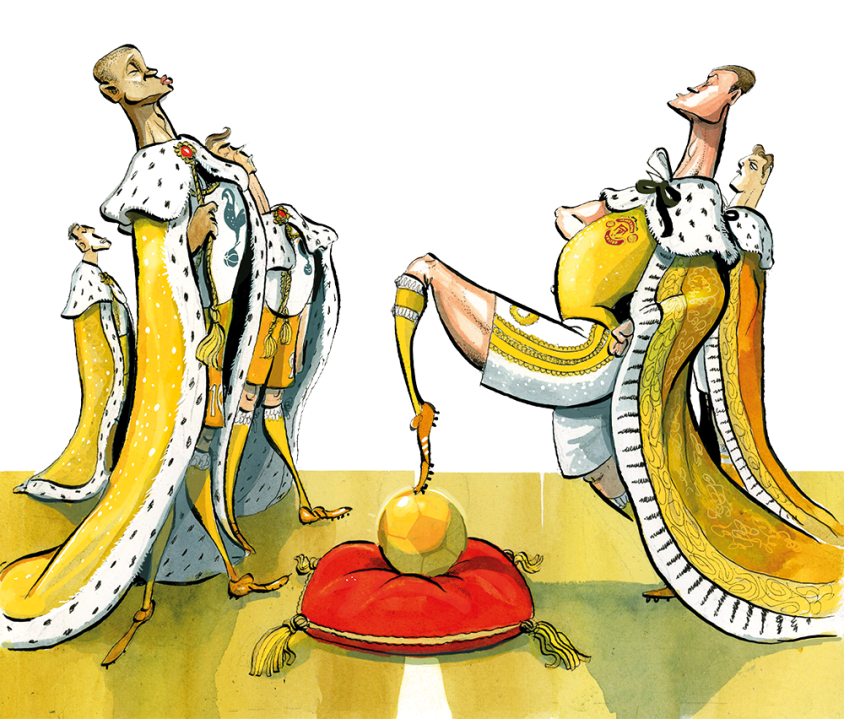
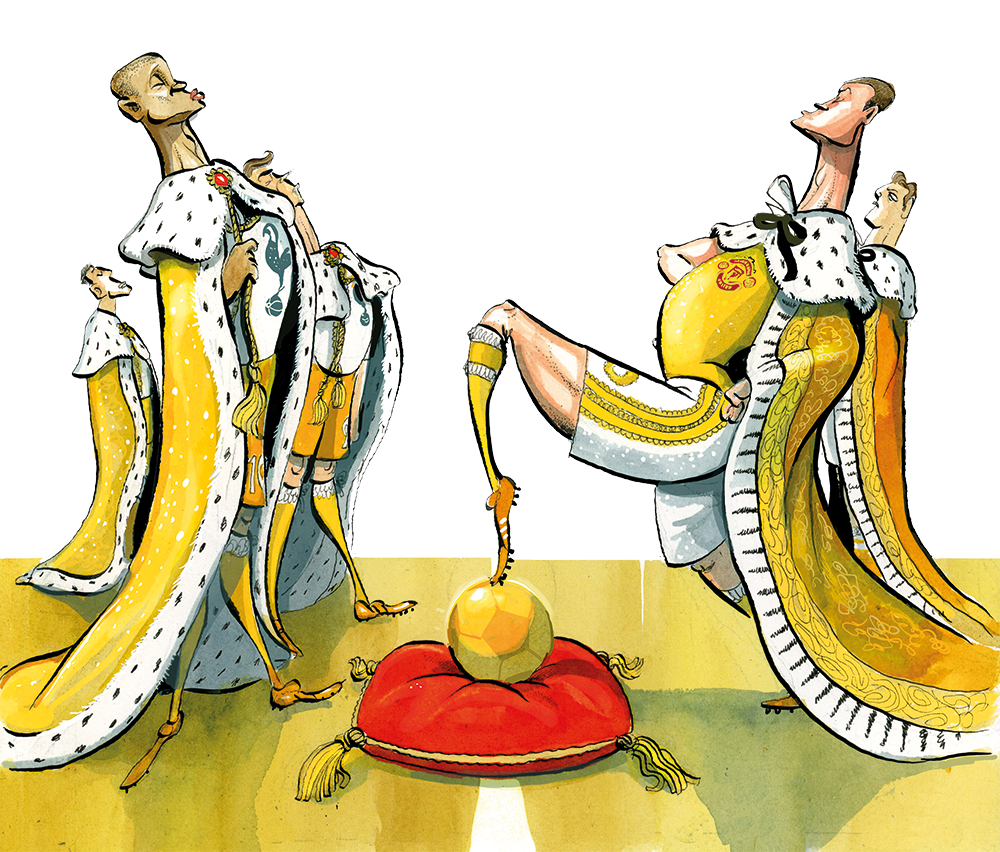
Televising matches has not reduced attendances but, improbably, boosted them. Further, in terms of viewing figures, the Premier League draws in six times the number of people than its nearest rival, La Liga, with 3.2 billion viewers. Nor has the essence of the competition been sacrificed: English football has always had six or seven big clubs who dominate the rest plus the hilarious Tottenham Hotspur who always think that they do, but very patently never have, not least right now. If that has changed it is only to let one or two others have a brief glimpse of the summit. That these newbies might include Bournemouth (average attendance not much greater than the average for League One sides) is an indication of not only the gently redistributivist leanings of the Premier League but also the demographic and geographic shift within football: away from the working-class powerhouses of the north, the people who began the professional game – Blackburn, Preston, Blackpool, Bury and so on – and towards the more affluent, largely white-collar south. Football, for reasons of good old capitalist greed, has ceased being classist. It now wishes to swallow everyone in its enormous maw, even if the fans are so respectful and constrained by social etiquette you can’t actually hear them, such as at Brentford.
However, there is a little gloom on the horizon. Given the extraordinary success of the Premier League and, below it, the EFL, you just knew that the politicians would want a piece of it. And so we now have an Independent Football Regulator, the chair of which is a former sports executive and journalist, David Kogan. Why regulate something which is coping, without regulation, rather well? Kogan is a creature with a long history of support for the Labour party. There is nothing terribly wrong with that per se – I would trust Labour more than the Tories to oversee our national sport. But the problem is one I alluded to earlier on: football has become an enormous success largely because of venality and greed, rather than in spite of it. Greed was the driver – and it worked. It does not always work, but it did with football. And the lesson for Kogan – and other members of his board such as Dame Helen Stephenson, a former boss of the Charity Commission who used to attend Millwall games dressed in a surgical mask and was famous for screaming at opposing fans: ‘Do you want me to open you up like a can of fucking peaches, you slag?’ Or I may have mistaken her for somebody else, I’m not sure. The message to the regulator is this, then: do as little work as possible. Skive. And where greed flourishes, gently encourage it. And whatever you do, don’t let the fans have a say in anything, not even the pies for sale at half-time.
The other gloom is the World Cup. The horrible familiar waiting for England to fail, for a start (which they will do). The breast-beating expansionism of the whole charade which now encompasses a ludicrous 48 teams including Curaçao, a Dutch satrapy in the Caribbean populated almost exclusively by iguanas. Heart attacks more likely as teams fly from the scorching heat of Guadalajara to the damp chill of Vancouver for successive matches. Roll on August and the start of another club season.





Comments