

Multi-sensory exhibitions are old hat, but in the case of In Bloom – How Plants Changed Our World at Oxford’s Ashmolean Museum, it feels just right to sit in a space given over to flowers with the sound of gurgling water in the background, mingled with the cries and chirrups of birds. At intervals there are scent stations where you can smell damask rose or green and black tea from flower-shaped chalices. From the ceiling hang swathes of green muslin. I could have stayed here all afternoon. Right in front of me were also two delicious studies of tulips to illustrate the Dutch craze of the 1630s. Frankly, if it came to a choice of two-tone tulips or Bitcoin as a way of squandering money, I know which I’d prefer.
Striking papier-mâché models make you realise how pornographic flowers are
There is a print of a sultan’s seraglio in this tulip section. The courtesans’ pleasure gardens, we learn, were enlivened by flowers brought from the Ottoman dominions. Tulips were in fact native to Turkey, but it was when they came to the Netherlands that the mania set in. Huge financial gains could be made from ornamental flowers. But while this rampant commodification began to warp our relationship with the natural world, at least the speculators had pleasure in their investment.
Right next to the tulips are the roses, with a heavenly painting of open-cupped blooms by Henri Fantin-Latour. The nearby painting by John Ruskin of the modest English dog rose can’t really compete. You can also smell the damask (Damascus) rose here; it’s bewitching.
But flowers weren’t the only plants to inspire devotion. The Victorians famously went wild for ferns and undertook hunting expeditions to find them. There’s a picture of a tulip fern bud which is the image of a bishop’s crozier: gorgeous.

Some of the exhibition’s other displays are of more purely utilitarian plants – there is simply nothing to be said for the rubber plant. But opium is another matter. We get to smell that too, and rather enticing it is. There’s a lovely study of a poppy by May Morris, but we could have done with Graham Greene’s description in his memoir of the uplifting effects of just the right quantity of opium in a well-run den – it made me want to give a pipe a go.
The plants are centre-stage in this exhibition, with people playing a subsidiary role: cultivating, hunting, painting, stealing and, crucially, categorising. Early in the show, we see the first gardener, Adam, in Eden, in the frontispiece to John Parkinson’s Paradisi in Sole Paradisus Terrestris (1629), which plays on one of the Latin words for a garden, paradisus. Here Adam and Eve cultivate fashionable 17th-century tulips and pineapples.
Their successors were those who set up the earliest botanical garden in Oxford and later a version at Kew. For our forefathers, gardens were a working pharmacy, which is why they were originally ‘physic gardens’. The lovely big sunflower in the botanical drawings of the Duchess of Beaufort – a keen collector – was meant as much for its medicinal potential as its peculiar charm. There was an even more peculiar item in Elizabeth Blackwell’s Curious Herbal (1737-39), in the form of a Scythian Lamb – a hairy fern that does indeed look like a little lamb. It was thought to graze on the surrounding grass, while attached to its stem.
The collection opens with portraits of the early Oxford plantsmen Jacob Bobart and John Tradescant (his framed by fruit, flowers and parsnips), and one of Tradescant’s son. What is evident from the chart showing the main horticultural players from the early modern period is the extent to which gardeners of whatever country shared their findings and research across borders.
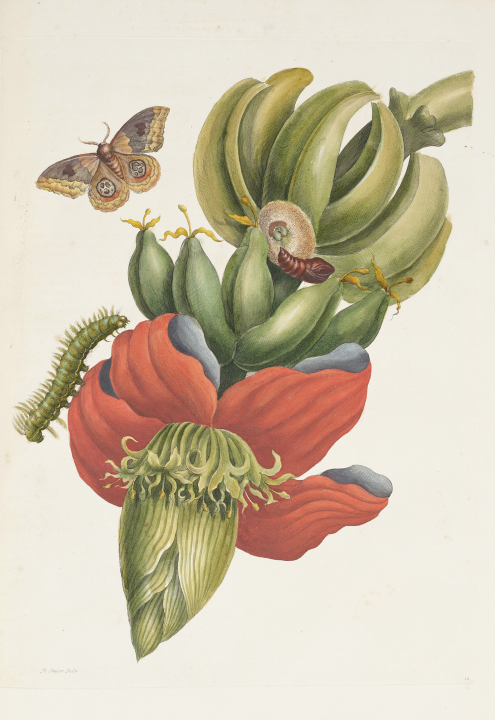
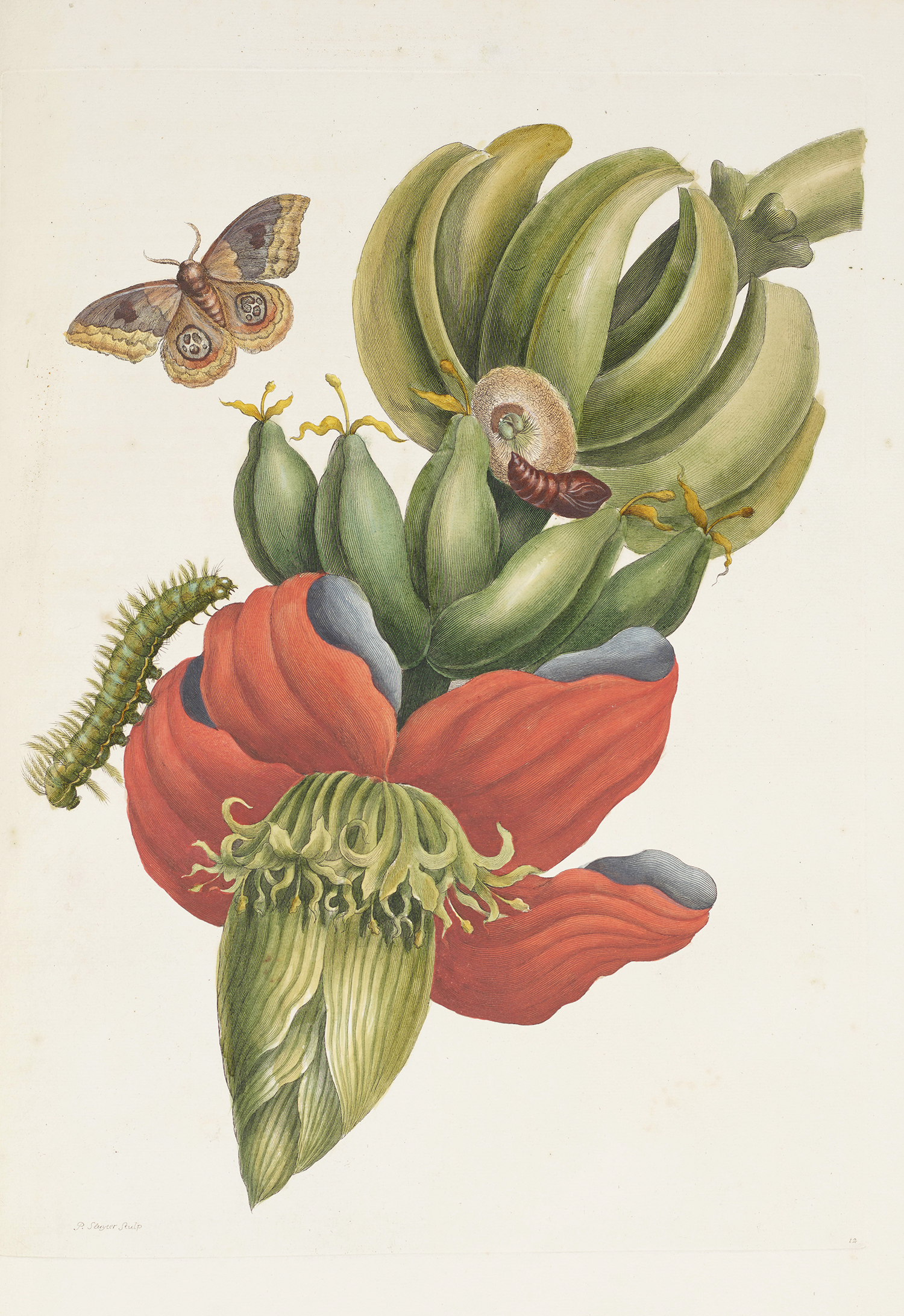
Exploring new worlds meant hunting for new plants and presenting them to an interested audience through botanical drawings of extraordinary verisimilitude and beauty. These are the highlight of the show; some massive in scale; some, like Maria Sibylla Merian’s magnificent studies in Suriname, showing insects alongside the plants. Students of botany could also study striking papier-mâché models which make you realise how pornographic flowers are; their bits are so very much out there.
The exhibition inevitably ends with some didactic accounts of the spoliation of the natural world by monocultures (most notably by rubber plantations), and concludes with more contemporary flower pictures. But all in all, it’s a treat.
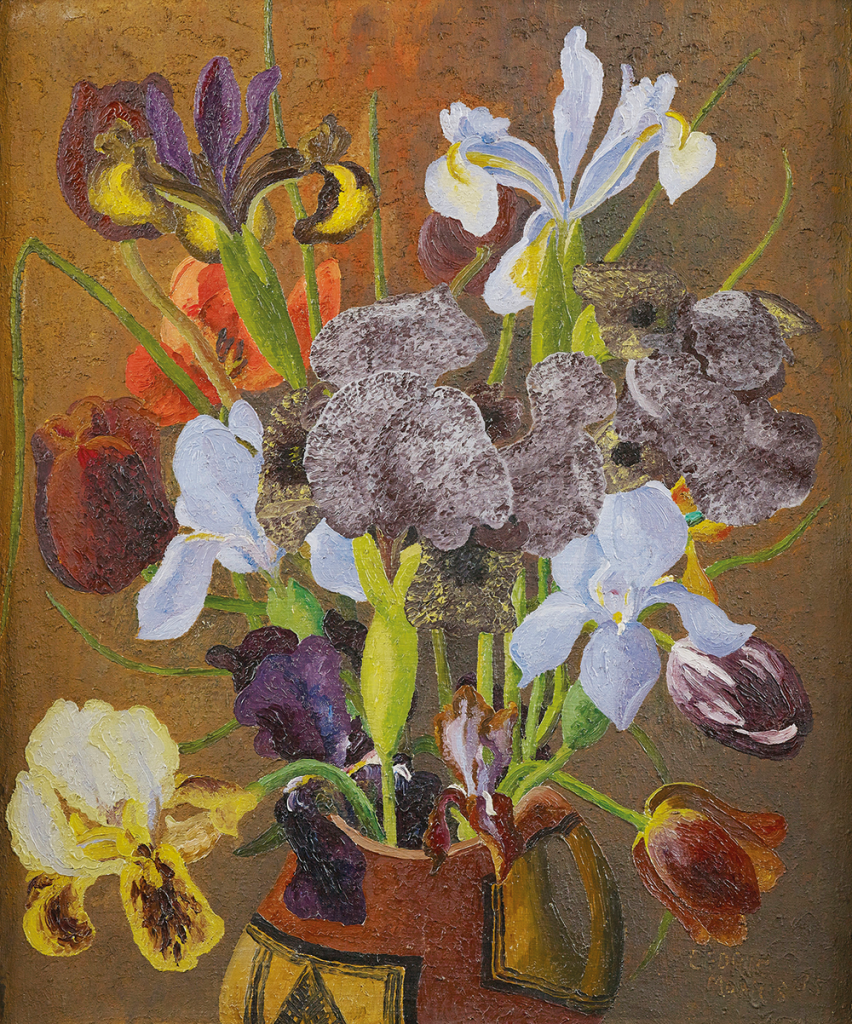
There are more fabulous flower pictures in Handpicked: Painting Flowers from 1900 to Today at the splendid Kettle’s Yard gallery in Cambridge, which have no purpose at all other than to be lovely. And so they are. We get a single flower picture from each of nearly 50 different artists. With a common genre, we can see the artists’ individual characteristics more strikingly. There are two rooms: one mostly for the 20th-century painters, the other mostly for the 21st-century ones. Both breathe harmony and stillness.
We have a beautiful bunch of peonies by William Nicholson throwing their shadow on a plain wall and a delicious bunch of wild flowers in a yellow stoneware jug by Édouard Vuillard, with flicked Renoirish brushstrokes – as much an interior as a flower study. David Jones is well represented by an untitled picture of three flower arrangements in front of a sunlit window, all spaciousness and grace.
Many of the artists were connected. Spot the flower picture within a flower picture in the work by Eric Ravilious and the fighter aircraft above the verdant spring blooms in his wife Tirzah Garwood’s finely executed painting (Eric had died in a search-and-rescue plane crash in the war). William Nicholson’s daughter-in-law, Winifred – abandoned by Ben Nicholson for Barbara Hepworth – is represented by a sweet, melancholic study of white campion in a vase against a blue Cumbrian landscape.
The first image in the 21st-century room is Alison White’s ‘Lying Down’, a strikingly lifelike oil study of three exquisitely pretty roseheads against an enormous expanse of white. Another recent work is Chris Ofili’s fantastical lily, with two black heads emerging from blooms on either side – a nice Hans Christian Anderson touch. Celia Paul’s ‘Delphinium, February 14th’ is a striking watercolour: a single stem of dark blue – for Valentine’s Day? This charming exhibition concludes outdoors with a bunch of pretty flowers in a vase.
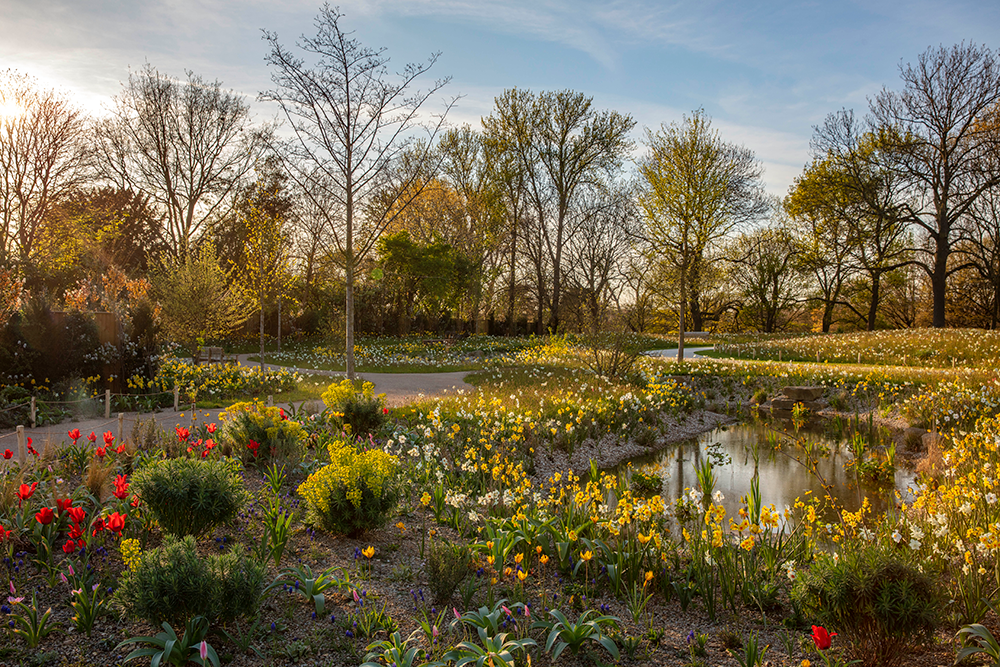
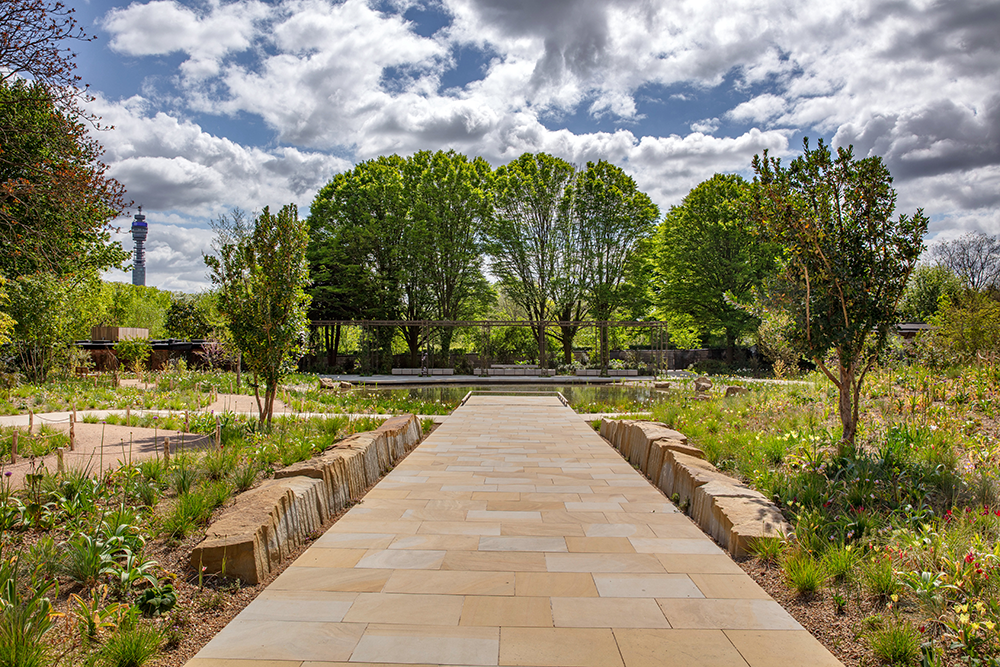
Meanwhile, in Regent’s Park in London, an entirely new garden has come into being, chockful of flowers. The Queen Elizabeth II Garden replaces a dispiriting patch of outbuildings and greenhouses with water, walkways and naturalistic planting. It’s a thoughtful design, with one straight path symbolising the late Queen’s iron commitment to duty, broken by a meandering line, which represents her life as a wife and mother.
The spring bulbs are just over and the tulips have emerged; it is, as with all the royal parks, designed for year-round interest. It was undertaken after consultation with Elizabeth’s gardeners about her interests and preferences. She was less outspoken about her horticultural interests than the present King, but she loved her gardens.
There’s a sustainable element to the project, with much of the material derived from pulverised concrete. The garden is, I would say, a better memorial to the late Queen than the bust and statue in St James’s Park. Like her, it can only get better over time.
In Bloom – How Plants Changed Our World is at the Ashmolean Museum until 16 August. Handpicked: Painting Flowers from 1900 to Today is at Kettle’s Yard until 6 September. The Queen Elizabeth II Garden is open daily from 9 a.m. to 8 p.m.



Comments