‘Modernity’ is often behind the times. On Wednesday, parliament pushed out all remaining hereditary peers, although we live in an age when scientific discovery is making us understand ever better how much heredity governs the life of each person and therefore of society. Just as the hereditary pinnacle of our constitution displays his role’s unique value in Washington DC, we stamp out the monarch’s traditional political bodyguard. The Lord Speaker, Lord Forsyth, paid generous tribute to the hereditaries at a jolly private party he gave, but his brief words of farewell at prorogation were all that were permitted in the Chamber of the Lords, although its composition was chiefly hereditary from the 14th century until 1999. Earlier, I had tabled a motion that the House should take note ‘of the contribution hereditary peers have made throughout its history’ especially of those who ‘will cease to be members at the end of this parliamentary session’. It was not accepted, however, because of lack of time. I think of Yeats’s phrase about ‘the discourtesy of death’.
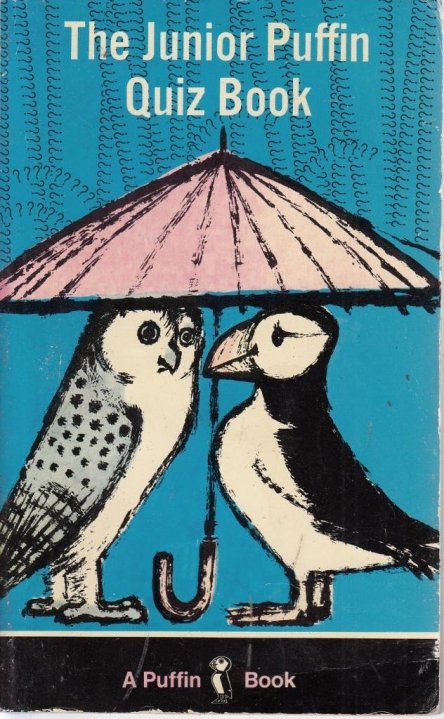
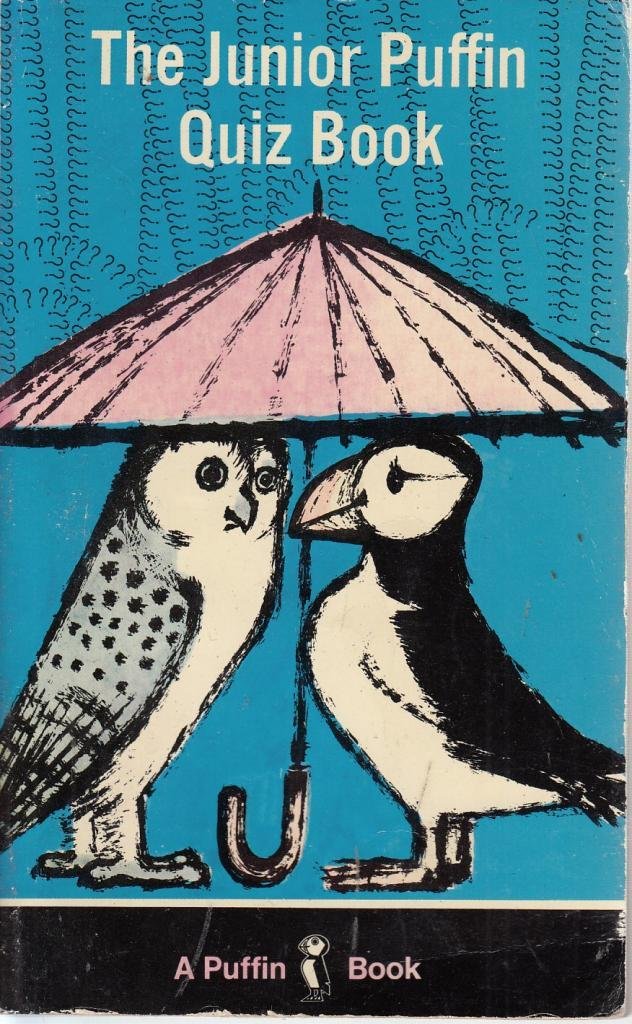
My sister has unearthed my precious copy of The Junior Puffin Quiz Book, published in 1966, when I was ten. It is the Junior version because Puffins were themselves (still are) the children’s version of Penguins. Once you were aged 12-14, you graduated from Puffins to Peacocks. So I imagine Junior Puffins were aimed at seven- to ten-year-olds. The book’s authors, Norman and Margaret Dixon, had already published The Puffin Quiz Book. The questions in the Junior one must have been easier. Which is an extraordinary thought, because they are extremely difficult. Reading the Junior now brings back to me my exciting and usually unsuccessful struggle to get the answers right. It contains a thousand unillustrated questions, grouped in tens, with all groups containing a wide range of subjects. They are the vaulting opposite of dumbing down.

Try this: ‘To what questions might these be the answers? – (a) 180 degrees; (b) 2 π r; (c) ’. Or this: ‘Which breed of cow produces milk with the highest percentage of butterfat – Friesian, Jersey or Shorthorn?’ (I have a fond/false memory of getting that one right because the cows on our farm were Friesians and I was envious of the answer, Jerseys.) Or this: ‘In many parts of England, some villages have names with two words like Ashton Keynes. What is the usual reason for this?’ )’.
There are, of course, questions whose usefulness has diminished over time: ‘Does the ash from a coal fire do good to the garden?’ Answer: ‘Very little. It has no value as a fertiliser, though it may be used to lighten heavy soils, to cover bulbs intended to grow indoors, and to prevent slugs from harming the crowns of plants.’ The only question I can find which children could perhaps answer more readily now than then is, ‘What is a hamburger?’ although they might be no better at the follow-up: ‘What connexion has it with ham?’
The answers alone succinctly convey the sort of knowledge expected. I here abbreviate one typical group of ten: ‘1. A dodo was a bird rather larger than a swan; it used to live in Mauritius…’ ‘2. An anemometer is an instrument for measuring the speed of wind…’ ‘3. A clam is a shellfish very popular in America; to be like a clam is to be silent…’ ‘4. “No Man’s Land” was a strip of territory which ran between the enemy trenches… in the first world war.’ ‘5. The Romans conquered southern Scotland but did not hold it long. They never tried to conquer Ireland.’ ‘6. On the Ganges, Calcutta…; on the Nile – Alexandria, Cairo and Khartoum.’ ‘7. Sherlock Holmes to Dr Watson…’ ‘8. (a) silver; (b) nickel.’ ‘9. The Philistines lived on the eastern coast of the Mediterranean Sea. They were the enemies of the Jews.’ ‘10. The referee, though he should take into account anything the linesman has to say.’
A single question which encapsulates, including its careful semi-colons, the lost culture The Junior Puffin Quiz Book represents: ‘Is a psaltery (a) the book of Psalms; (b) a kind of musical instrument; (c) a term used in heraldry; or (d) a kind of fossil?’ What ten-year-old today knows what a psaltery is? How many more even know what the Psalms are or a single fact about heraldry?
Recurrent themes of the questions are: geography; science in its more practical forms; mathematical calculations; weights and measures; military or naval terms; Shakespeare and once well-known novelists such as Dickens and poets such as Milton (T.H. White’s The Sword in the Stone is considered sufficiently familiar to test on); the classical world; industrial production, means of transport and inventions; naval and military terms; nature, meaning the names of plants, trees and birds, the character of the seasons, rather than ‘the environment’; British history; America, Canada and Australia. I found only one reference to television, although by the mid-1960s almost every home had a set; not a single one about a celebrity or a pop song.
What I most notice is the book’s underlying, self-fulfilling assumption that children could and should know a great deal about a wide world. The book also has the spirit of enquiry. It loves to investigate meanings in order to spread knowledge. Hence this: ‘What is the meaning of the word “quick” in the phrase “the quick and the dead”? Do you know of any other phrase in which “quick” has meaning?’ The answer says, ‘“Quick” here means “living”. The quick is the living part of the nail. And if we cut this, we are “hurt to the quick”. A quicksand is as it were a living sand; a quickset hedge is a hedge of living plants as opposed to a fence; quicksilver (or mercury) seems alive as it moves about.’ How full, how economical, yet how poetical.






Comments