
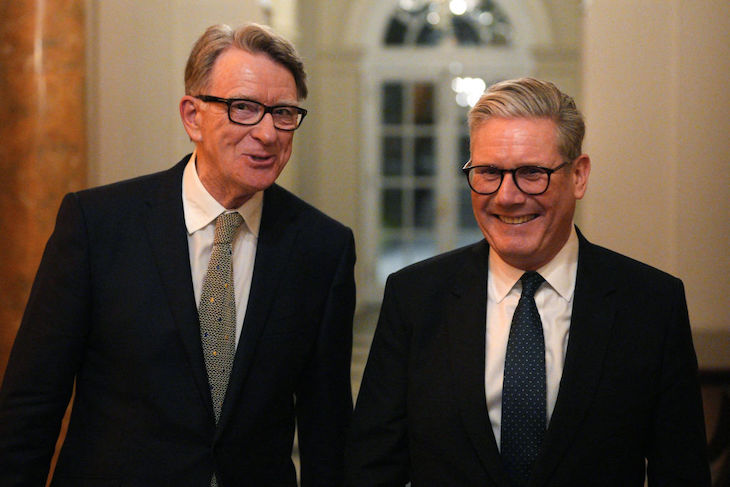
The sacking of Sir Oliver Robbins over the vetting of Peter Mandelson is a complicated affair, so I’ll try to break down what we know, what we don’t know and what conclusions we can draw.
WHAT HAPPENED
What we know:
– Keir Starmer has said he accepts responsibility for the ‘mistake’ of appointing Peter Mandelson as Britain’s ambassador to the US, and insisted that the correct process was followed.
– On 5 February, in Hastings, the Prime Minister said ‘there was then security vetting carried out independently by the security services, which is an intensive exercise, that gave him clearance for the role.’
– The Guardian reported yesterday that the independent UK Security Vetting organisation had not passed Mandelson. This information was not relayed to Downing Street by the Foreign Office at the time.
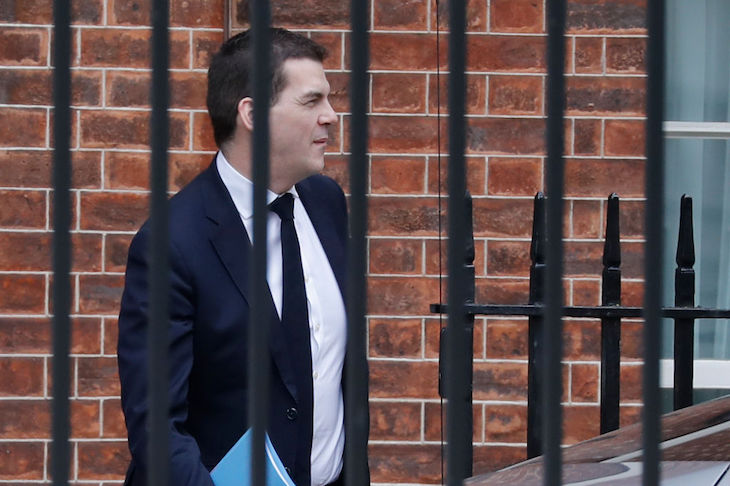
– At a select committee hearing on 8 January, Oliver Robbins, then permanent secretary at the FCDO, made clear, without admitting that he knew Mandelson had failed, that the decision to grant him developed vetting (DV) status was made because Starmer had already decided to pick him for the ambassador role. Robbins said: ‘It was clear that the Prime Minister wanted to make this appointment himself. Therefore, I understand, the FCDO was informed of his decision and acted on it… The Prime Minister took advice and formed a view himself, and we then acted on that view.’
– Mandelson was appointed before Robbins became the top mandarin at the Foreign Office, but the UK Security Vetting took place afterwards.
– Starmer was ‘absolutely furious’ that Robbins did not give him the full picture and, last night, fired him.

– Allies of Robbins hit back today, saying that the vetting process is so confidential that he had to make a decision about whether to grant DV approval to Mandelson and that, by law, he was not permitted to discuss the process with ministers.
– Other former mandarins questioned this, and said Robbins could have informed a senior minister of the fact that UK SV advised against the appointment, even if the convention was not to share the reasons why.
What we don’t know:
– On what grounds did Mandelson actually fail the vetting process? Was it to do with his former business interests in China or Russia, or his friendship with Jeffrey Epstein?
– On what basis did Starmer say, publicly, that Mandelson had passed his vetting? Did someone tell him that, or did he just make it up?
– Why did someone decide to leak the vetting outcome to the Guardian? Did they think Downing Street was in the process of covering it up?
– Did the independent vetting body simply raise red flags about the appointment, or did it provide a definitive statement explaining why Mandelson ‘failed’? The former seems more likely. Ciaran Martin, a former head of the National Cyber Security Centre said today it is wrong to portray the vetting system as a pass/fail test. It’s a ‘risk assessment’ and officials are presented with a ‘handling plan’ for that risk. Ultimately, it was up to Robbins.
– After getting his DV approval, was Mandelson granted ‘STRAP clearance’ – a high-level security clearance – for the most sensitive top secret material? It would have been impossible for him to do his job without it, but there are three levels of STRAP clearance.
– Was Mandelson in any way restricted from seeing STRAP 3 material (the most sensitive information) on any particular subjects, such as China or Russia? The clearance can be limited in certain areas, where a conflict of interest arises.
– In papers already released, Mandelson was told STRAP clearance would take six weeks to gain, but he was appointed just a few days later. Why?
– What did the Cabinet Office know? All the attention has been focused on No. 10 and the Foreign Office, but the Cabinet Office handles the government’s security apparatus and mediates No. 10’s relationship with departments. Did Robbins speak to the then cabinet secretary Chris Wormald?
Conclusions:
– There were serious red flags about Mandelson, but Starmer broadly knew about them and decided to appoint him anyway. This remains the fundamental original sin of this episode, which no amount of gabbling about process can excuse.
– The most likely explanation is that the formal vetting raised the same doubts about Mandelson which had been raised by officials (which were published earlier this year), but which had already been rejected by Starmer.
– If that is true, Robbins perhaps thought he already had the political cover he needed to agree the appointment and believed it helpful to Starmer not to cause a fuss over it.
HOW IT WAS HANDLED
What we know:
– Starmer was told that Mandelson had failed his vetting on Tuesday evening. David Lammy, who was foreign secretary at the time of the appointment, did not find out until Wednesday. Current Foreign Secretary Yvette Cooper learned of the vetting failure 3 p.m. yesterday, when the story broke on the Guardian website.
– The ministerial code of conduct says that ministers who mislead the Commons at the despatch box are supposed to correct the record at the earliest opportunity.
– David Maddox, political editor of the Independent, revealed today that he put it to Tim Allan, then No. 10’s director of communications, on 11 September last year that Mandelson had failed his vetting. Allan replied: ‘Vetting done by FCDO in normal way.’
What we don’t know:
– If Starmer, all his ministers and all his aides did not know Mandelson had failed the vetting, then who told them on Tuesday, if it wasn’t Robbins?
– On learning that the assumed facts had changed, why did No. 10 not immediately inform the Intelligence and Security Committee, which is scrutinising the documents around the Mandelson affair to decide what can be released? And why does the ISC not have the vetting file?
– Why did Starmer not correct the record at or before (or even straight after) Prime Minister’s Questions on Wednesday?
– If Starmer knew on Tuesday, why on Earth did he not call either Lammy or Cooper to ask ‘What the hell is going on here?’ (Similarly, why did he not even talk to Mandelson before appointing him?)
– If Downing Street was asked about Mandelson failing his vetting as long ago as September, why did no one in No. 10 seek to ascertain whether it was true before issuing a misleading response to the media?
Conclusions:
– There is a damaging lack of coordination and cooperation between the major players at the top of government. The centre of power is dysfunctional.
– The Prime Minister remains a semi-detached, bizarrely incurious leader who seems barely engaged with the activities of his own government.
– Robbins would have strong grounds for unfair dismissal (and a bigger payoff) if the argument that he acted within the law is accepted.
– This whole mess shows that the decision, from the Tony Blair years onwards, to take responsibilities away from ministers and hand them to unaccountable civil servants has gone too far. Whatever the rights and wrongs of who did what, it is clearly absurd that Robbins did not tell Starmer the result of the vetting.
WHAT THE PUBLIC WILL MAKE OF THIS
What we know:
– The way Starmer sees himself – as an honourable lawyer who believes in due process – versus the reality of how he is seen by others were already miles apart before this affair. A recent study of words and phrases used about the PM featured ‘liar’ as the most often-used word, according to pollsters.
– Some 53 per cent of voters think Starmer has been dishonest about the Mandelson affair, according to polling by YouGov, released today. Just 16 per cent believe him.
Robbins would have strong grounds for unfair dismissal (and a bigger payoff) if the argument that he acted within the law is accepted
– In opposition, Starmer attacked Boris Johnson and other Tory leaders for their lack of transparency and refusal to take responsibility for government failures.
– When he ran for the leadership he claimed: ‘I never turn on my staff and you should never turn on your staff.’
– In February 2020, Starmer tweeted: ‘We need a transparency revolution. There should be no power without accountability, and true accountability requires transparency.’ There’s always a tweet.
What we don’t know:
– Did Starmer offer Robbins a peerage or a payoff to go quietly? If so, how much? The public has still not been told how much Wormald was paid when Starmer forced him out.
– Has Robbins been forced to sign a non-disclosure agreement so he can never tell his side of the story?
Conclusions:
– Starmer’s No. 10 has hidden behind exactly the same excuses (‘It didn’t cross my desk’, ‘I was unaware’) as Johnson used about Partygate.
– Having a prime minister with no basic grounding in, love for, or experience of politics is a recipe for a leader who doesn’t know how things should work – and is incapable of asking the right questions to ensure that they do work.
– Sanctimony in politics usually comes back to bite the sanctimonious. When those concerned hold themselves in as high esteem as Starmer does, the fall is even further. Believing you are good does not insulate you from behaving badly.
THE IMPLICATIONS
What we know:
– Several Labour MPs and ministers, in the heat of the moment on yesterday evening, suggested Starmer’s position was becoming untenable and voiced the view that this might be ‘the end of the end’ for the PM. By today, those voices had largely melted away.
Even civil servants who don’t like Robbins believe he has been unfairly treated
– Wes Streeting is back on manoeuvres. The Health Secretary implicitly backed former defence secretary George Robertson’s criticisms of Starmer’s handling of defence spending on Monday, saying it should rise and welfare spending should fall. Yesterday, his allies appeared to question Downing Street’s handling of the Mandelson affair.
– Even civil servants who don’t like Robbins believe he has been unfairly treated, because he was seeking to ensure the appointment of an ambassador who had the public backing of his Prime Minister. ‘I hate Olly, but this is wrong,’ said one.
– Starmer has already chucked Wormald under the bus for failing to enact his wishes with sufficient vigour. Now Robbins has been fired for enforcing Starmer’s decision to appoint Mandelson too vigorously.
What we don’t know:
– Keep an eye out for the weekend papers to see whether anyone from within Labour goes on the record to call for Starmer’s resignation.
– Will allies of Streeting, Andy Burnham and Angela Rayner in particular begin briefing again about their readiness to rule, if necessary?
Conclusions:
– Civil servants will be less well disposed to want to work with the politicians and help them achieve their political goals.
– The latest twist of the Mandelson scandal is not enough to oust Starmer, but it has undermined the faith of MPs in the PM, No. 10 and removed the gloss he had accumulated with Labour left-wingers by staying out of the war with Iran.
– It makes it marginally more likely that he will be removed after May’s local elections.
Can we trust Starmer’s ignorance? Tim Shipman discusses on the latest Coffee House Shots podcast:




Comments