The Notre-Dame de Paris has had several close shaves down the years – even before the 2019 fire that nearly obliterated it. The revolutionaries temporarily turned it into a ‘Temple of Reason’, then a grain warehouse; some of it was even sold for scrap. It only became the recognisable Gothic fantasy and French national icon that we know today largely down to the efforts of architect Eugène-Emmanuel Viollet-le-Duc, who headed its definitive restoration from 1844 to 1864. Following the cathedral’s 2024 rebirth, Bard Graduate Center is now hosting the most comprehensive exhibition in the Anglosphere of the architect’s work.
Viollet-le-Duc kept superhuman working hours: 6 a.m. to midnight. And this show, spanning four floors, is testament to his prodigious use of drawing as a multi-pronged tool to observe, (re)create and seek truth.
Such was the fluency of Viollet-le-Duc’s gothicisms that they cotinue to be mistaken for medieval originals
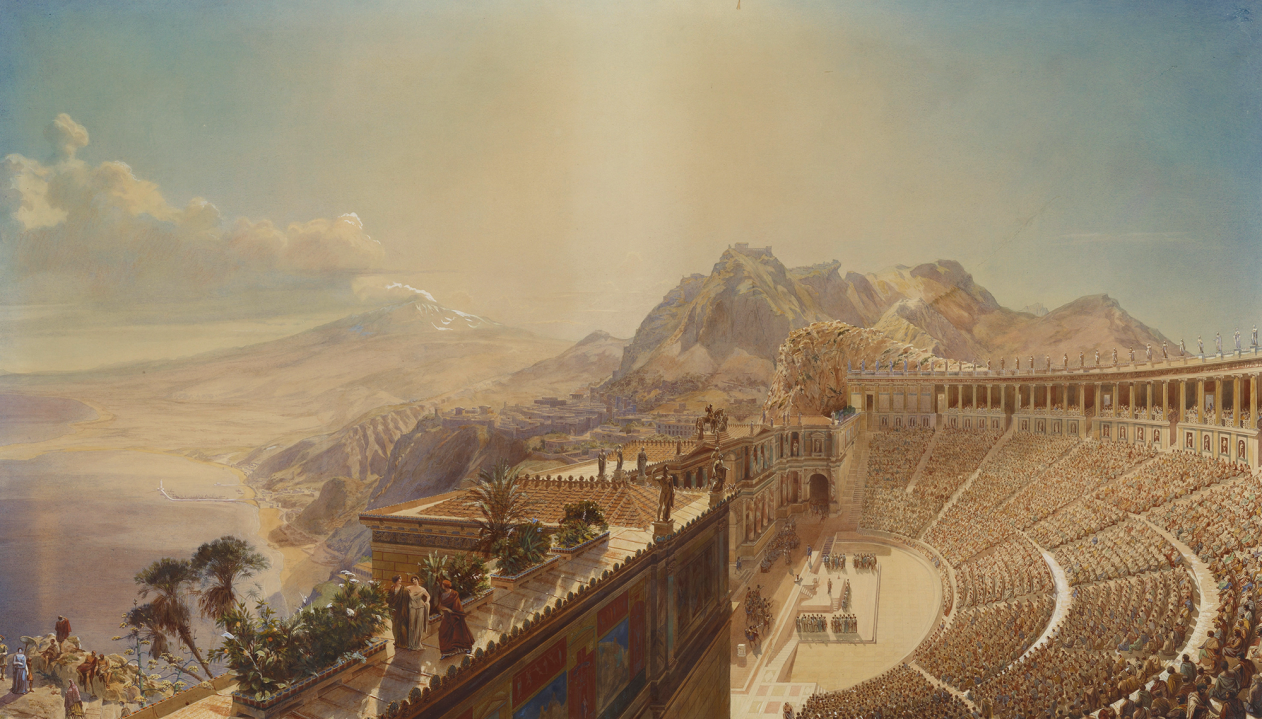
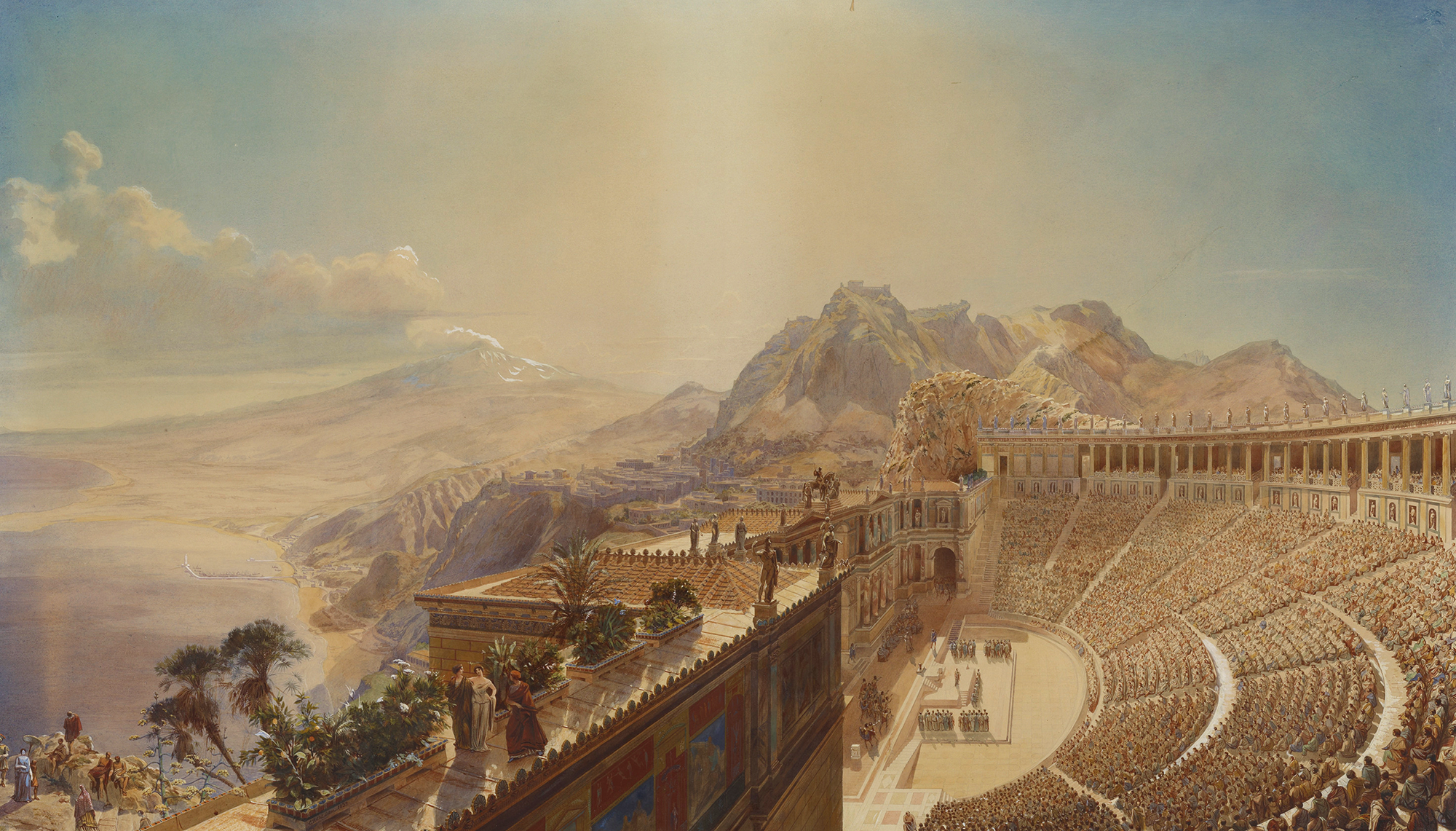
Declining to study at the prestigious École des Beaux-Arts, Viollet-le-Duc instead learned by sketching the architecture of France and Italy. Filling the first room is work from his teens and early twenties: Chartres Cathedral’s portals, ink washes of the polychromic façade of Florence’s Duomo. The Beaux-Arts school, too, had talented draughtsmen, but unlike his peers’ staid surveys of antiquity (on display for comparison), Viollet-le-Duc had an early romantic streak of restoring the activity that went on inside these structures. For example, he fills Taormina’s Greek theatre with spectators, actors and chorus, while women in classical dress cavort in the foreground.
Reviving lost glories won him and his partner Jean-Baptiste Lassus the 1843 competition to restore Notre-Dame. After decades of revolutionary desecration and mutilations by neoclassicists, the cathedral was in a dreadful state. For him, ‘To restore a building… is to reestablish it in a complete state that may never have existed at any given moment.’ This plunged his legacy into the forever-war over the philosophy of conservation. But it also brought unprecedented rigour to archaeological and structural research, as evidenced by his ‘exploded’ anatomical dissections of medieval construction in his encyclopaedic Dictionnaire raisonné on French architecture.
Notre-Dame remains his most famous case study, and its drawings dominate the show. Instead of reconstructing the original spire as planned, he proposed building an even more extravagant caprice in gothic style. A close-up drawing captures its elaborate double-tiered design, climaxing in statuary of evangelists and apostles. Initially Macron announced a competition to redesign the spire after Viollet-le-Duc’s was lost in the fire. Sagely this idea was dropped and they rebuilt his unsurpassable design, like-for-like, instead.
For Viollet-le-Duc, Notre-Dame was a Gesamtkunstwerk: no detail was too small. He drew the interior ironwork – chandeliers, grilles, even liturgical instruments – to scale to test designs before sending them to the foundry. You can see a monstrance drawn on paper and in silver gilt. Behind, there’s a whimsical bestiary of the much-loved gargoyles and grotesques, loosely sketched for sculptors to carve from. Such was the fluency of Viollet-le-Duc’s gothicisms that they continue to be mistaken for medieval originals.
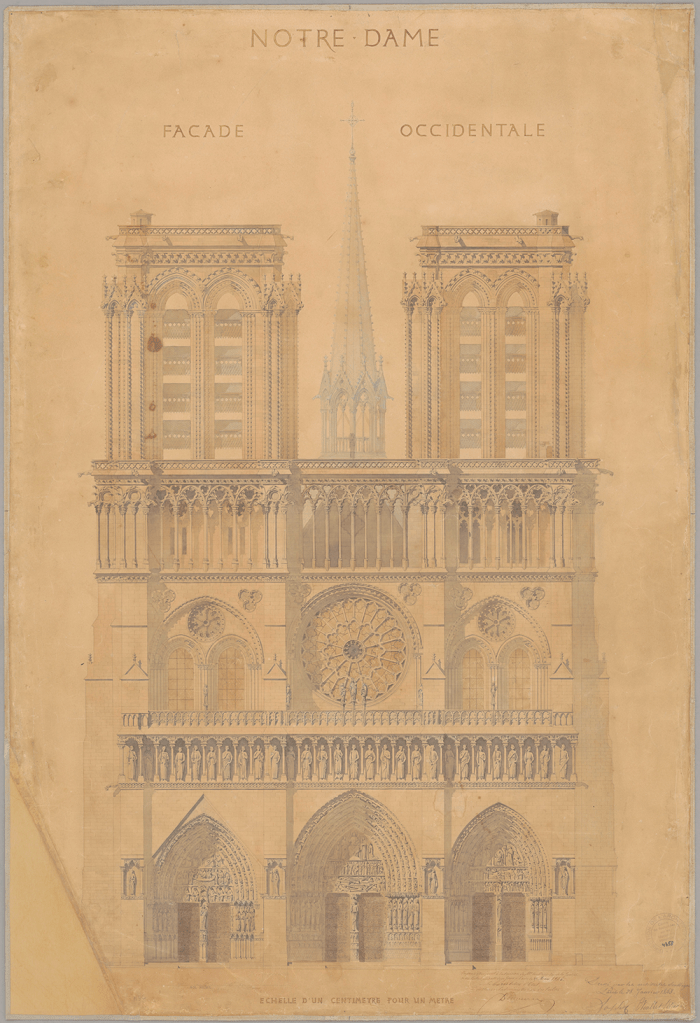
The most beautiful drawings were the most practical; construction drawings document every block of stone with absolute precision, each numbered and colourcoded to indicate whether they were to be retained or replaced. They testify to the architect’s intimate knowledge of every rib, foil and crocket – every curve traced in his own hand. These were also vital for the 2024 restoration.
After Notre-Dame, Viollet-le-Duc turned his attention from spiritual seats to temporal ones. Carcassonne’s citadel was restored to the kind of battle-readiness that repelled the Black Prince in 1355, replete with wooden hoardings to shield archers. For Napoleon III, he renovated the Château de Pierrefonds with a richly painted decor inspired by Arthurian legend, reviving myths of French power for the reborn Second Empire, and added a chapel.
Viollet-le-Duc believed a rational order had shaped Gothic architecture structure
Despite his vast output, he found time for flights of fancy. His lifelong obsession with mountains culminates in his herculean 1:40,000 survey of Mont Blanc. An accompanying diagram reveals his speculations over an underlying rational order to the peak, a geometric ‘crystalline system’ behind its supposedly organic ridges. Often claimed as a proto-modernist, the agnostic Viollet-le-Duc believed a rational order had shaped Gothic architecture, a scientific extrapolation of function and structure (his British counterpart Pugin, conversely, believed it expressed Christian truth). His thinking also crept into the realm of race. From sketches of church sculpture and ancient art he teased out physiognomic meaning and ethnic traits, and he believed his designs for wooden mountain huts echoed the primitive dwellings of the Aryans.
Viollet-le-Duc evangelised to his students about drawing: ‘One thus learns to see, and to see is to know.’ Whether or not he was right about everything he learnt through drawing, this exhibition is a memorial – in paper – to him practising as he preached.




Comments