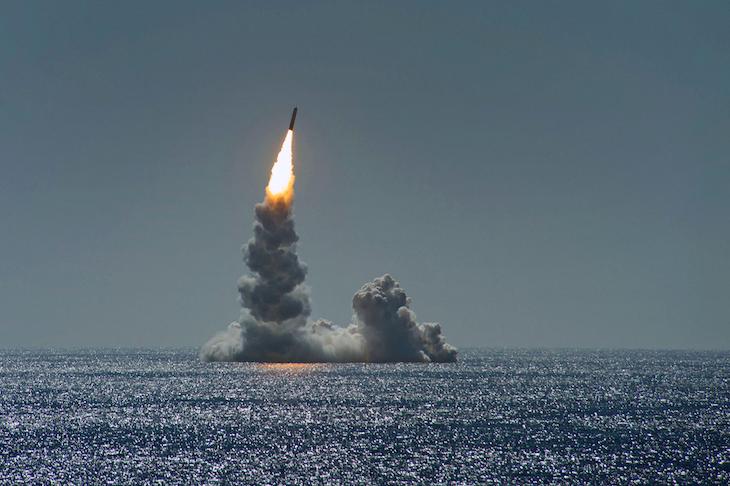
On 5 February, 2026, the last nuclear arms control treaty between the United States. and Russia expired. It was built for a different world, and its collapse cannot come as a surprise. In this new era of great power competition, it was in the interest of neither party to maintain it. Yet the problems that the international arms control treaties were set up to deal with have not gone away; in many respects they have become the issue de jour.
Nuclear weapons have returned to the centre of geopolitics
Today, two wars are being fought under the long shadow of nuclear weapons. Nuclear threats have shadowed the conflict in Eastern Europe, with Vladimir Putin even accusing Ukraine of false-flag operations to use a dirty bomb, in what many regarded as a pretext for battlefield use of Russian nuclear weapons. That month, October 2022, is the closest the world has come to nuclear Armageddon since the Cuban Missile Crisis of 1962, which kicked off the first arms control talks.
The Iran War has also been framed explicitly around nuclear issues. The high-profile U.S. strikes against Iranian nuclear facilities last year have now been followed by an extended air campaign to degrade Iranian military capabilities, preparing the ground for a potential high-stakes, special forces raid to secure Iran’s nuclear material. Amidst all this instability, one thing is certain: nuclear weapons have returned to the centre of geopolitics.
The tremors of this changing security environment have been felt in the United Kingdom and raised questions about its own nuclear arsenal – both its reliance on the U.S., and its credibility in this deteriorating international order. There have been very public splits between the U.K. and the U.S. over the conflict, reinforcing the feeling in Europe that the U.S. is not as reliable an ally as it once was. Given the state of world order and the perceived unreliability of the U.S., some have now begun to ask the question: should the U.K. consider a sovereign nuclear weapons program, and even redevelop its own sovereign airborne nuclear deterrent?

Dr James Jinks, author of the forthcoming book A Very British Bomb, notes that the British Government’s decision to purchase twelve new F-35A fighter jets last June and equip them with U.S. tactical nuclear weapons may indeed open the door to the U.K. reacquiring its own air-launched nuclear deterrent, perhaps independent of the U.S. However, such a program would be fraught with challenges, many of which are unchanged from the late 1990s when the U.K. last tried to develop a sovereign sub-strategic, or ‘tactical’, nuclear weapon.
The F-35A decision has kicked off a predictable public debate about the ‘independence’ of the U.K.’s nuclear deterrent, which is unfolding against the backdrop of a tumultuous period in Anglo-American governmental relations. While the nuclear relationship between Washington and London remains indispensable and largely undisturbed by recent frictions, critics note that U.S. unreliability – and even hostility – towards allies and partners is a threat to take extremely seriously. If the U.S. decides to turn its back on the continent this would leave the U.K. seriously exposed.
There is some merit in these concerns, as the U.K.’s four Vanguard-class, Trident-armed submarines are partially reliant on the U.S., with whom the U.K. has cooperated on nuclear capabilities since the Mutual Defence Agreement was signed in 1958. The U.K. develops its submarine force with some technological assistance from the U.S, operates its own version of the U.S. nuclear warhead, and shares the pool of U.S.-made Trident missiles. However, only the Prime Minister can launch these weapons: the U.K. deterrent remains operationally independent of Washington.
The recent F-35A decision is a different kettle of fish. The weapons aboard the aircraft are American bombs and cannot be used without U.S. permission, and the jets themselves rely on U.S. software updates and technical support. This has led some to claim that the U.K. is increasing its reliance on Washington at precisely the time it should be seeking new, more European alternatives. Yet this somewhat misses the point. The main reason the U.K. is getting back into Nato’s Dual-Capable Aircraft mission is so the RAF can relearn the processes behind nuclear weapons, and the U.K. can be involved in the command structures for sub-strategic weapons in Nato’s two main nuclear coordination groups. The more pressing question, as Policy Exchange highlights, is whether the UK should look to revive its own sovereign airborne nuclear deterrent, and the challenges it would face in doing so?
This would not be out of step, historically speaking. Rather, it would be a return to form. The UK operated the WE177 class of nuclear weapons from the 1960s until 1998, mainly from RAF jets, but the end of the Cold War brought about a rapid reduction in the U.K.’s nuclear weapons stockpiles. As Dr Jinks shows in ‘Resolution Tempered with Restraint’, his paper for the Policy Exchange Nuclear Enterprise Commission, the U.K. pursued a classified, multi-decade effort to replace these weapons. Between 1976 and 1994, the British government embarked on a highly secret programme to procure a new nuclear armed, air-launched cruise missile, developed with either the United States or France, to replace its aging WE177 weapons. If it had gone ahead, this would have been an unprecedented development in Anglo-French nuclear collaboration, and resulted in a missile designed for precisely the sort of purposes that Europe is hankering for today.
History teaches us that this is not likely to be cheap, nor an easy feat to accomplish
However, with the end of the Cold War, the high costs of the programme were not deemed justifiable to continue its development, and it was cancelled. Even at the height of the Cold War, successive governments were of the opinion that new tactical nuclear weapons were unaffordable given other defence priorities, coupled with the limited capacity of the U.K.’s nuclear weapon design and production capacity. These lessons are vital for today’s politicians and policymakers. As Sir David Omand, former Deputy Under Secretary for Policy at the Ministry of Defence, notes in his Foreword to Policy Exchange’s paper, the story of the WE177 replacement program ‘illustrates exactly the factors policymakers will need to consider should the British Government conclude that a requirement exists to reacquire a separate, distinct, sovereign UK sub-strategic nuclear weapons capability’.
If the U.K. government wants to hedge against U.S. uncertainty and redevelop a sovereign sub-strategic weapon, it is likely to be constrained by the same factors as it was in the 1990s. The main issue, as for all British nuclear capabilities, will come down to costs, defence industrial capacity, and a credible political argument. Yet despite the breakdown in international order and resurgent security threats to Europe, the U.K.’s funding for defence is increasingly being called into doubt. The U.K.’s limited ability to respond in the Persian Gulf has been evident in recent weeks, while the much-heralded Defence Investment Plan, on which future defence investment is waiting, has been delayed by many months. In a world where European security is increasingly under assault, we must recognise the costs required for properly supporting sovereign defence capabilities. If a new sub-strategic nuclear system is needed, the money will have to be found. Yet history teaches us that this is not likely to be cheap, nor an easy feat to accomplish.





Comments