

Beamish, the living history museum in County Durham, invites visitors to ‘step into the past’. It shows how people lived in the early 20th century and attracts plenty who want to see what life was like in a simpler and – in some ways – better time.
On Tuesday evening, we had a Beamish moment in the House of Commons. Sir Geoffrey Cox rose to speak on the subject of the government’s abolition of jury trials. The Tory grandee brought real expertise that is rare these days in the Commons. Unlike the numerous MPs who claim the title despite having actually just sat on HR tribunals for the Cats Protection charity or CBeebies, Sir Geoffrey is a real lawyer, a barrister with silken decades to his credit. His speech made you believe that MPs came to the House with learning, real passion and the weight of impressive lives and careers behind them. Stepping into the past, indeed.
Most people wouldn’t want the Lord Chancellor to be in charge of choosing a Boots meal deal
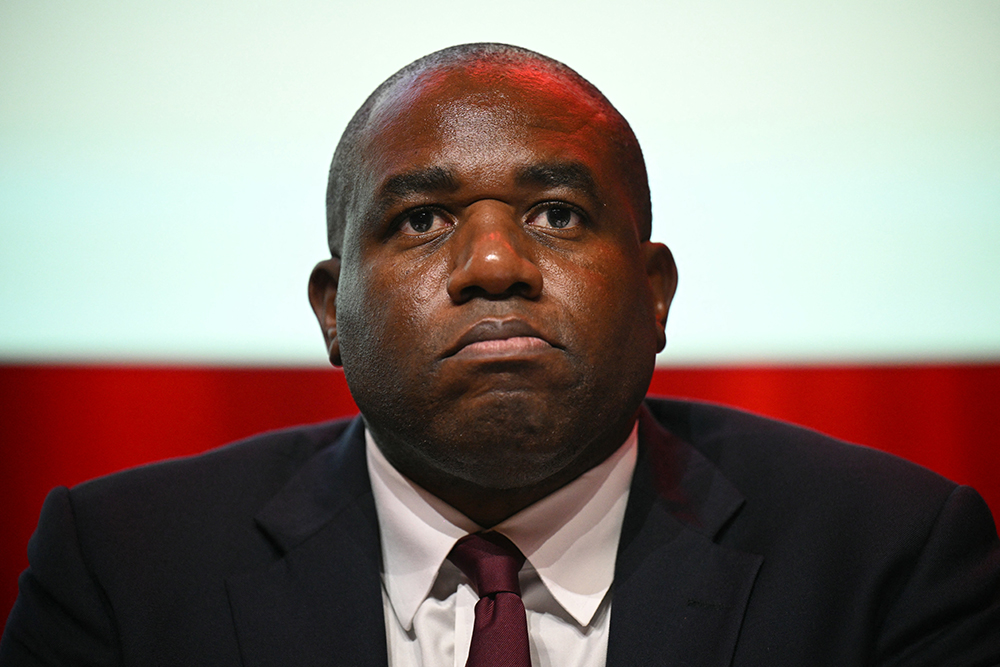
Sir Geoffrey made the longest speech against the government’s attempt to do away with jury trials for a number of offences. Knowing the parliamentary arithmetic, he tried reasoning with Labour backbenchers and tempting them to defy the whip. ‘It must be non-ideological,’ he cried, ‘there are some things that have to be above politics.’ It fell on deaf ears; worse, loyalist backbenchers began to squeal and heckle at him. Like Boxer the great carthorse in Animal Farm, Sir Geoffrey stirred himself to continue with a wounded dignity, raising the ire and contempt of the obedient party piggies opposite. ‘I will not take interventions now, and certainly not if they’re of the quality that we’ve had up till now,’ he said. Undeterred, he turned to the Lord Chancellor himself. This bill, perhaps the most serious change to the basic rule of law in centuries, has the comic fate of being piloted through parliament by the Sage of Tottenham: David Lammy.
While it would have been sorely tempting to point out that most people wouldn’t want Lammy to be in charge of choosing the constituent parts of a Boots meal deal, let alone which rights they get to keep in court, Sir Geoffrey kept things more civil. He simply pointed out the Lord Chancellor’s hypocrisy: in opposition Lammy ‘would have been saying the direct polar opposite of what he’s advancing today,’ cried Sir Geoffrey, like Falstaff betrayed by bluff Prince Hal. Lammy sat there, the light bending round him. Still the heckles came from Labour.
It must be a galling and alien experience for the average Labour MP to have to listen to somebody who actually knows what they’re talking about. They were simultaneously angry and confused, like a bed of electric eels receiving a parking ticket or a gaggle of chimps trying to decode semaphore about an upcoming banana shortage.
Lammy’s shadow counterpart, Nick Timothy, also made a powerful speech, but seemed less interested in persuading Labour MPs. He pointed out that the entire affair had in fact been a long-standing aim of the Civil Service and ‘now they have finally found a minister foolish enough to go along with it’. It must be open season for Sir Humphrey at the moment. Most cabinet ministers give the impression that they aren’t allowed to use a kettle unsupervised. No wonder so many of those mad, bad and dangerous ideas beloved of megalomaniacal mandarins are coming to fruition.
Timothy also evoked the history of parliament. He pointed out that the period allocated by the government to scrutinise the Courts and Tribunals Bill, which will strip away rights that go back to Magna Carta, is the same amount of time that the House spent discussing the Salmon Act of 1986, which outlawed ‘handling salmon in suspicious circumstances’.
However, these brief trips to the superior standards of yore were rare. The response to the abolition of jury trials has, sadly, not been one to evoke the impressive days of the Commons. Instead, numerous Labour backbenchers – knowing deep down that they are doing something craven, unpopular and, frankly, tyrannical – reached for buzzwords, fiction and self-pity in their attempts to whinge the bill into existence.
Catherine West, who gives the impression of someone whose finger has been wagged so severely and so often that it risks repetitive strain injury, told Sir Geoffrey off for being pompous. Before being gifted a London seat of North Korean safety, West was a caseworker for David Lammy. Again, we must just simply assume that these people have never encountered expertise in anything and so react to its presence with a confused incandescence. Indeed one might gently suggest to West that what better fits the definition of pomposity is someone who knows nothing about a subject, believing they can lecture someone who has given their life to it.
However, as we have seen in successive debates this parliament, the 2024 Labour intake don’t really believe experience matters. In this Brave and Stupid New World, identity is all. ‘We’ve called more barristers to speak than we have called women,’ moaned Bolsover MP Natalie Fleet, who presumably goes into hospitals and complains that people are seeking advice from consultants rather than the vending machine.
There were, however, notable exceptions to this shabby parade. Labour MP Karl Turner, who has been a thorn in the side of the bill since its inception, reminded the House that it would almost certainly have denied further justice in the Horizon scandal. Lammy glanced at him as if he were an object that had, until recent forceful excavations with a Kleenex, been blocking up his nose. Most impressive of all was Charlotte Nichols who bravely waived her anonymity to reveal that she had been raped, and chastised the government for implying that those opposing the bill lacked sympathy for victims. It was a reminder that occasionally the latter-day House of Commons can produce moments worthy of its history.
Most of her colleagues, however, shuffled their order papers awkwardly before trooping through the lobby they’d been told to go into. They will tweet support and claim respect, but few will do anything more than obey the whips’ office. Sadly, however, this form of governance, the ill-intentioned leading the ill-informed, seems to be the future. Only once in a while are we permitted, courtesy of Sir Geoffrey, to step into the past.






Comments