It was a given that the critics would indulge in emotional onanism when they covered the Tracey Emin retrospective at the Tate Modern – apt enough when you consider the sexual content of so much of it. But what surprised me was that it wasn’t just women. For the art is almost entirely about Being Tracey: her abortions, her sexual abuse as a teenager by horrible men, her diaries, her cancer with pictures of the bloody stoma, her famous unmade bed, with its used condoms, granny slippers and teddy (it sold in 2014 for £2.5 million) and her death mask, which was done in life … obviously. That, you might have thought, would put off the men.

Certainly, women rallied round Tracey, with one critic on Radio 4 recalling that Tracey’s reaction to her abortion was absolutely hers. A Times columnist observed that she was the role model Gen Z needs. The Guardian reviewer declared: ‘Parts of this show left me in bits. The painting of her carrying her mum’s ashes totally broke me and left me missing my own mum, who died just before the pandemic. I was a teary wreck, it was overwhelming. It must be exhausting being Tracey. I couldn’t feel this intensely all the time, I’ve got to function and send emails and go to Tesco.’
But it wasn’t just the women. The Sunday Times critic, Waldemar Januszczak, declared: ‘I have no time for those in the art world who have no time for Tracey Emin. Frankly, if you don’t understand the significance and import of what she has given us then you need to find yourself another cultural interest, because art is not for you. Hopefully, her unmissable ascension at Tate Modern will silence the naysayers forever.’
How do I put this, Waldemar… no; just no. That magisterial pronouncement should be treated in much the same way as the little boy did, looking at the naked, promenading emperor. The person Januszczak is actually gunning for, as with most of the critics, is Brian Sewell, the late, legendary art critic of the Evening Standard, who not only knew more about art than all the current crop put together but was utterly unafraid to part company with the herd. His finest take on Emin deserves to be reread, written in the context of her retrospective at the Hayward Gallery more than a decade ago.
‘Being Miss Emin is her core activity,’ he wrote. ‘“Look at me, look at me!” she barks to get an audience and, then, like some fraudulent medieval marketeer of relics, gulls us into venerating the trivial keepsakes of herself that she now exhibits in glass cases… Now held in awe by deluded men as sage, sibyl and Margate’s thaumaturge, most women, I am told, see her as some sort of heroic victim, raped as a child, ravaged as a teenager, sweetly sentimental towards her miserable self, yet still full of longing for the status of adored princess, part fairytale, part working-class mythology.’
The thing is, authenticity, raw emotion, grief, resentment, victimhood etc may be the stuff of our therapy culture but it’s a poor foundation for art. It is not enough in itself to have survived bladder cancer and two abortions, ostracism and rape; all this needs to be transmuted into something else and it certainly isn’t transmuted into art. Page after page of agonised and misspelled diaries, a shelf of baby shoes for the abortions, Kodak pictures of her bloody stoma, the blankets with their crude and misspelled slogans; the cloth on which she stitches ‘why be afraid’ again and again; the unmediated confessional video installations. This is self-fixation, introspection, delusional infantilism venerated as art.
It’s often not the work that the critics are in awe of; it is the experience itself
It’s often not the work that the critics are in awe of; it is the experience itself which the output represents, so remote from that of most of them. Emin has indeed had a harder life than most – under-educated, ostracised, exploited by men. Being awestruck by all that is her admirers’ way of deferring to conditions – class, race, education – they don’t share. It’s virtue-signalling by extravagant admiration for the survivor. Moreover, the admiration is proof of their own empathy (that prized modern virtue).
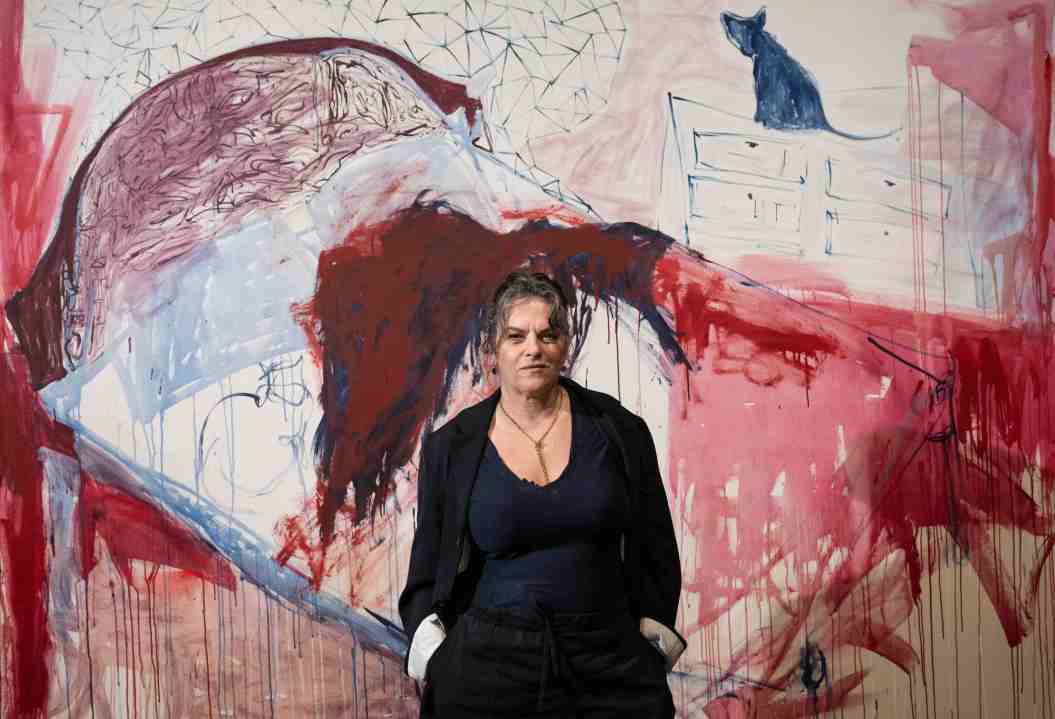
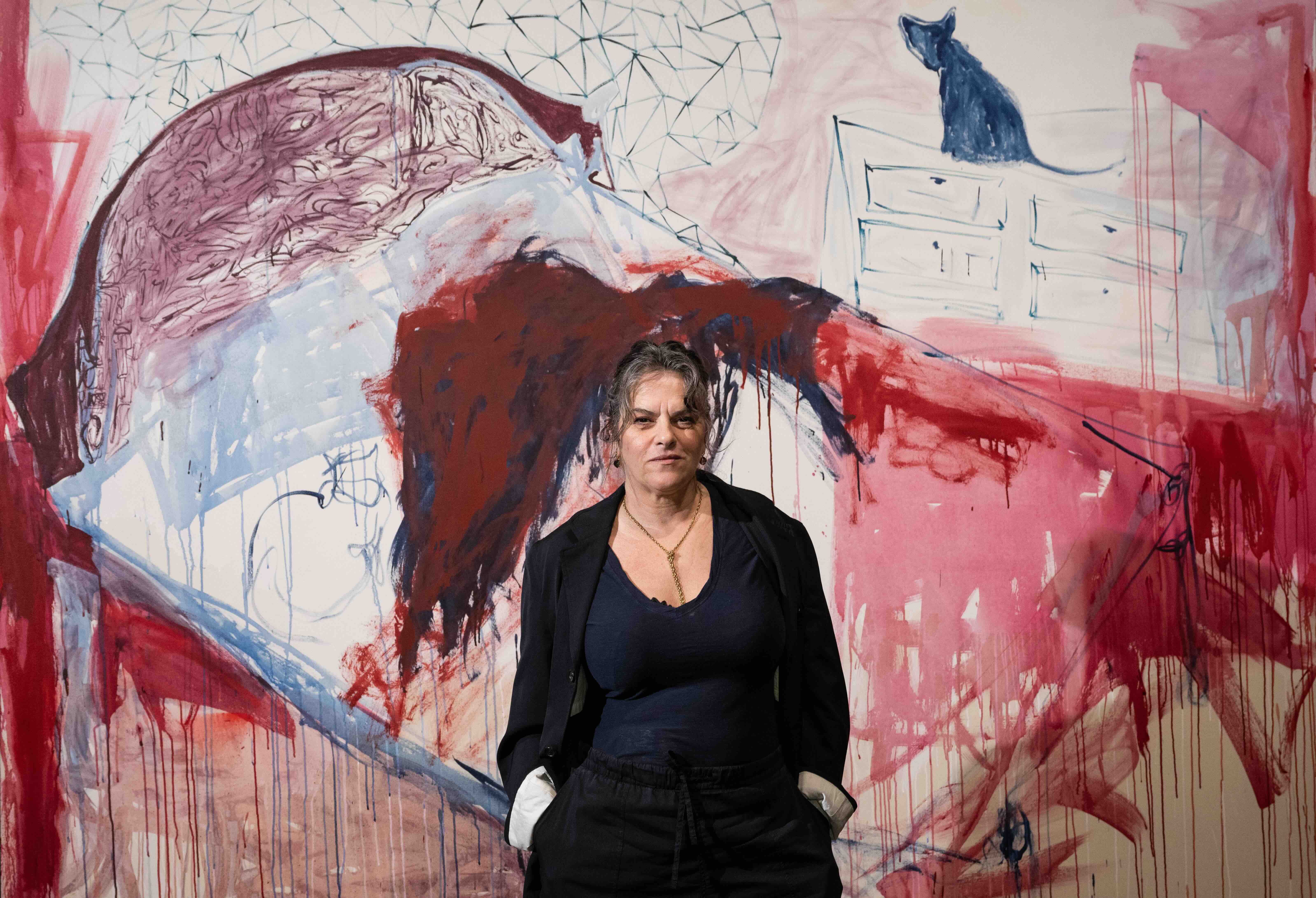
For the work itself is mostly shallow. Granted, there is something powerful about some of her acrylic on canvas studies – of herself, obviously – often savagely incoherent figure studies in black and red on white. But the formlessness serves to demonstrate that she doesn’t seem able to draw (and yes, I know that she was professor of drawing at the Royal Academy, which makes you feel for those students). I have my doubts about Francis Bacon as a draughtsman, too, but at least he had other disturbing things to offer, not just his endlessly fascinating self. Emin has nothing but herself to put on show, and the marvel is that she contains multitudes. It’s a terrible example to young people of how to get on in art – have sordid experiences, then share, any way you like.
As for the stupid neon scribbles, which are to be seen everywhere, they’re what you get when a not-very-profound individual takes herself very seriously. And she does. Trouble is, she’s persuaded the entire establishment to take her at her own estimation too. And so we have the critical fawning, the damehood, being trustee of the British Museum, the extravagant valuation of her work. Granted, she spends much of her money on philanthropy in Margate, but that’s beside the point.
For the joke is on us now. Brian Sewell was, as ever, right.






Comments