
A certain question has been hanging in the air ever since the 2024 general election, when between them the Conservatives and Labour won less than three-fifths of the vote. But following the Greens’ success in the Gorton & Denton by-election, it has now become an even more pressing issue. Can the Conservative-Labour duopoly that has dominated British politics during the post-war period survive?
Both parties received a drubbing in yesterday’s by-election. Labour’s share of the vote was nearly halved from 50.8 per cent in 2024 to 25.4 per cent, leaving the party trailing in third place behind Reform. The Conservatives fared even worse, winning just 1.9 per cent of the vote, the party’s lowest ever share in a by-election. That means that fewer than three in ten votes were cast for Britain’s two traditionally dominant parties.
Contrast that with the position in the 1990s. In the 1992 election, for example, the two parties won 87 per cent of the vote between them in the former Denton & Reddish constituency and 82 per cent in Manchester Gorton. Such figures now look like relics of a different era.
The challenge facing the Conservative-Labour duopoly extends beyond their mere unpopularity
Of course, by-elections can be the exception rather than the rule. Previous by-election victories by minor party candidates, including most notably the three secured by George Galloway, have not presaged a wider trend. But Thursday’s result is consistent with pre-existing evidence that Britain’s political duopoly is now in trouble.
Support for the Conservatives and Labour combined now stands in the polls at less than 40 per cent, an all-time low. Reform has been ahead for nearly a year, a lead amply confirmed by the results of last year’s county council elections. Meanwhile, support for the Greens in the polls has risen on average from 8 per cent last August, shortly before Zack Polanski became the party’s leader, to 14 per cent now.
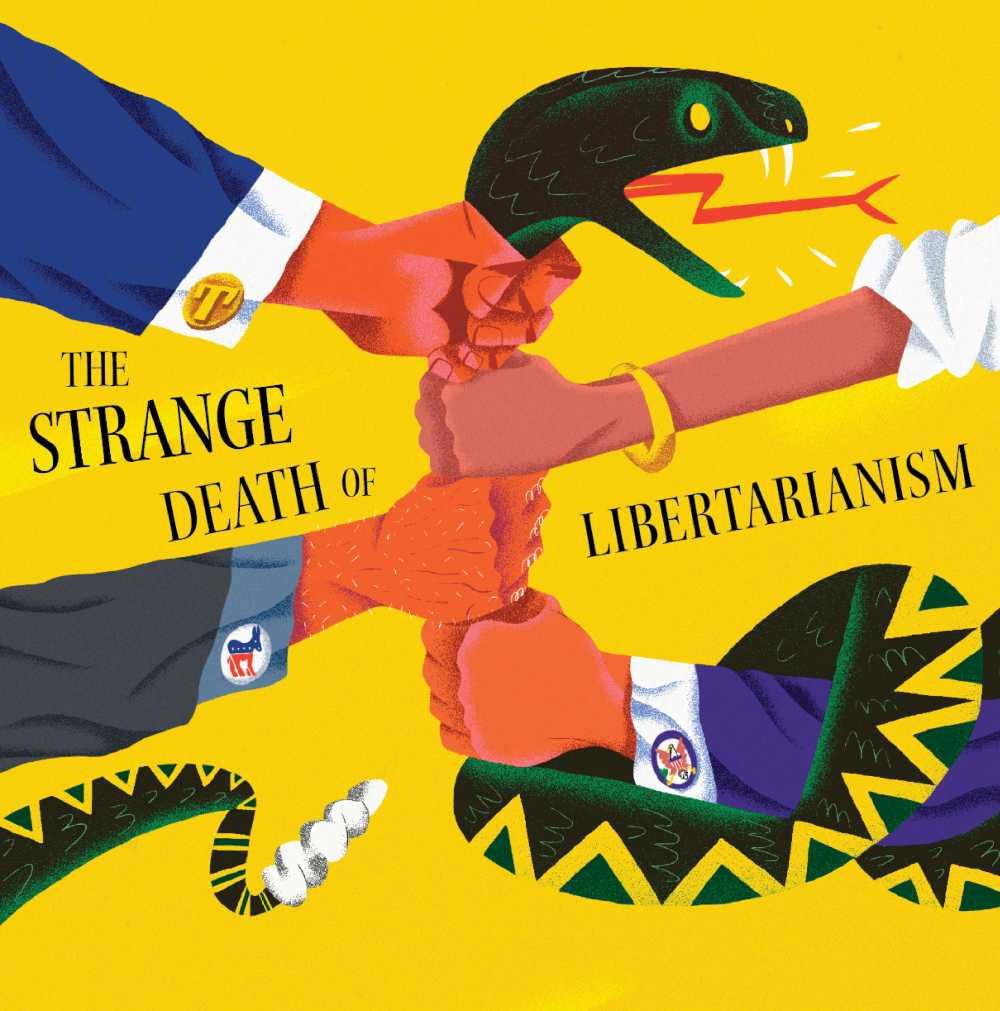
However, the challenge facing the Conservative-Labour duopoly extends beyond their mere unpopularity. At the same time, some of the traditional underpinnings of the joint Conservative and Labour dominance over British politics have been significantly weakened. For much of the post-war period, middle-class voters were markedly more likely to vote Conservative, while working-class voters predominantly voted Labour. But in the 2019 general election, that pattern disappeared entirely – and it did not return in 2024. The fundamental demographic anchor of Britain’s traditional two-party politics has gone.
For much of the post-war period, the ideological divide between Conservative and Labour supporters has primarily been one between ‘left’ and ‘right’, between those who think the government should be reducing inequality and those who believe the government should focus on trying to grow the size of the overall economic pie. That divide still matters. Those on the left are still more likely to vote Labour, those on the left, Conservative.
However, it now sits alongside a second divide: one where people take different sides on ‘culture wars’ issues, such as Brexit, immigration, and equalities policies. This dimension separates ‘anti-woke’ Reform and the Conservative supporters on the one hand from ‘woke’ Labour, Liberal Democrat and Green voters on the other.
Crucially where someone stands on the left-right divide does not necessarily tell you what view they take on culture wars issues. Consequently, the parties are now fighting over a two-dimensional terrain, making it much more difficult to sustain a wide-ranging electoral coalition as Conservative and Labour have traditionally sought to do. Rather, parties can achieve success by appealing to niche ideological markets, as both the Greens and Reform have managed to do.
These structural changes are challenging enough. Yet, in a perfect storm, other more contingent forces are also at play. Negative perceptions of the Conservatives’ stewardship of the country between 2019 and 2024 and of Labour’s tenure since then have left significant sections of the electorate with little or no confidence in the ability of either party to solve the country’s formidable economic and public policy challenges. In these circumstances, giving a new party the chance to try and do better no longer necessarily seems unattractive.
And then there is the question of leadership – or rather its absence at the top of the duopoly. Nigel Farage has long been a charismatic politician who articulates voters’ discontent effectively and communicates a clear vision of the better Britain he would like to create. Since becoming leader, Zack Polanski has demonstrated a similar ability. In contrast, after six years as leader of the Labour party, Keir Starmer still seems to lack these skills. Meanwhile, the jury is still out as to whether Kemi Badenoch can develop them.
Of course, the battle is not yet necessarily lost. Labour may be able to turn the economy and the health service around. Leadership may change or become more skillful. And Labour and the Conservatives may learn to navigate Britain’s two dimensional space more effectively. But the scale of the challenge facing them – and the potential implications of failure to meet it – should not be underestimated.





Comments