
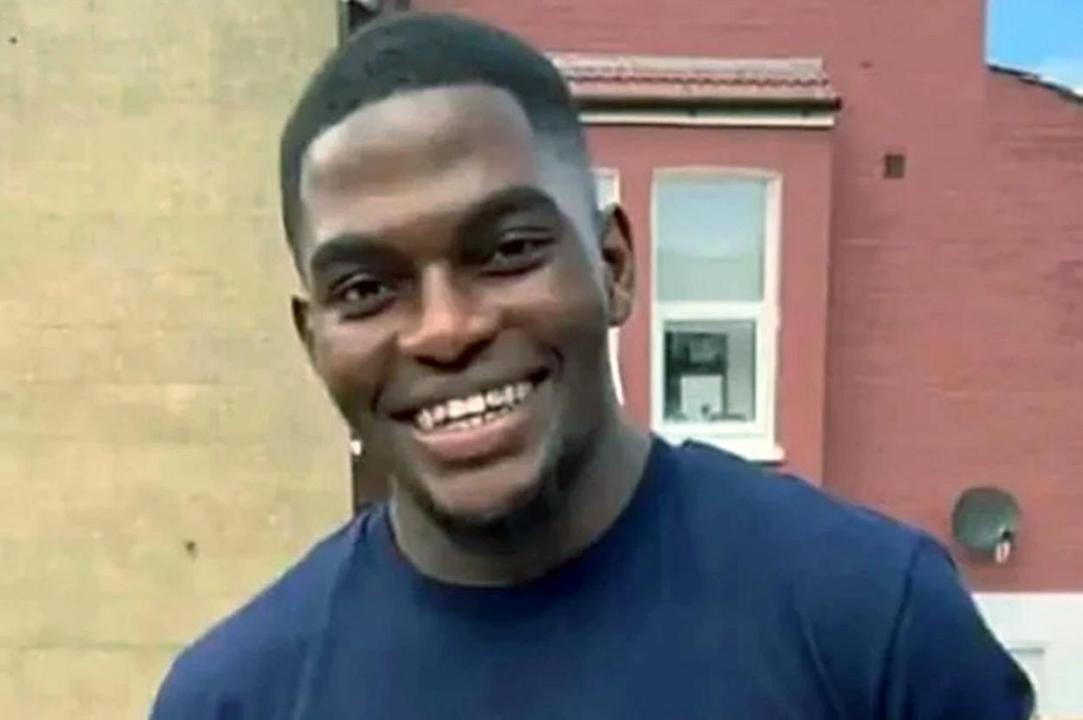
In The Bonfire of the Vanities, Tom Wolfe’s great satirical look at 1980s New York, a white Wall Street trader accidentally ends up in a hit and run involving a black teenager. The cause is taken up by a succession of activists, led by the corrupt race-baiter ‘Reverend Bacon’, all determined to make political capital of the incident.
Much of the satire is easily recognisable from real-life cases, including the way in which the biography of the black victim is turned into a hagiography, and the menacing implication that the streets might erupt in violence if the protesters don’t get what they want. This kind of politics was once distinctively American, but in recent years we’ve become used to it in London, too, and there was something distinctively Wolfian about the death of Chris Kaba.
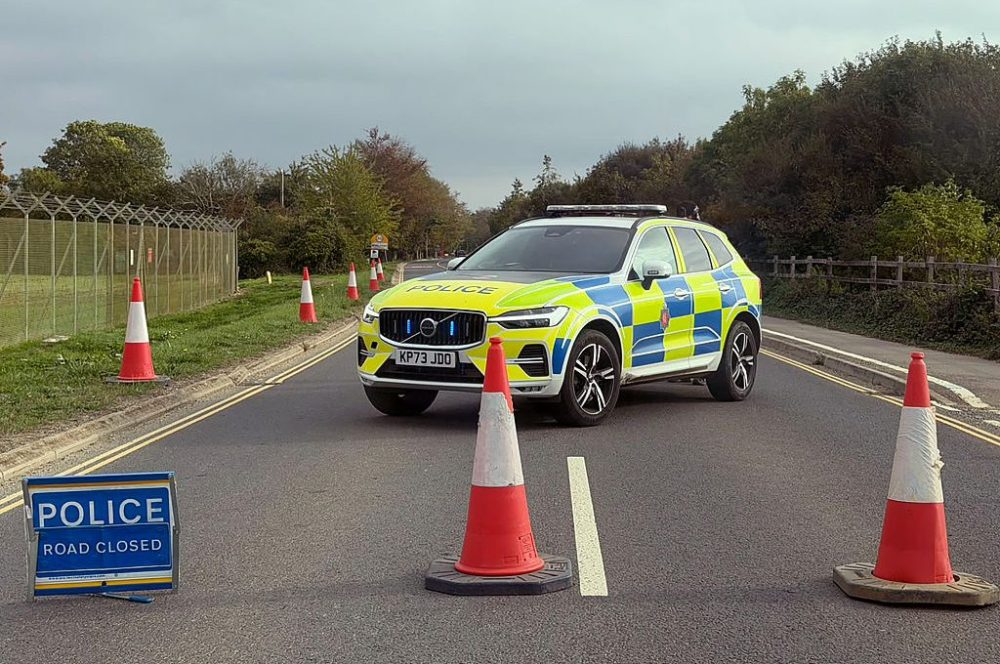
On 5 September 2022, Kaba, a 24-year-old black man, was shot dead by sergeant Martyn Blake, an officer of the specialist firearms unit MO19. Police in unmarked cars had been following Kaba in his Audi Q8, which they knew to have been used in a gangland shooting the previous day. One vehicle, a Volvo, had been following the Audi, while another, a BMW, blocked its path. Kaba was ordered to stop, but instead drove at the armed officers in his SUV. Sgt Blake fired a single shot to the head, killing Kaba.
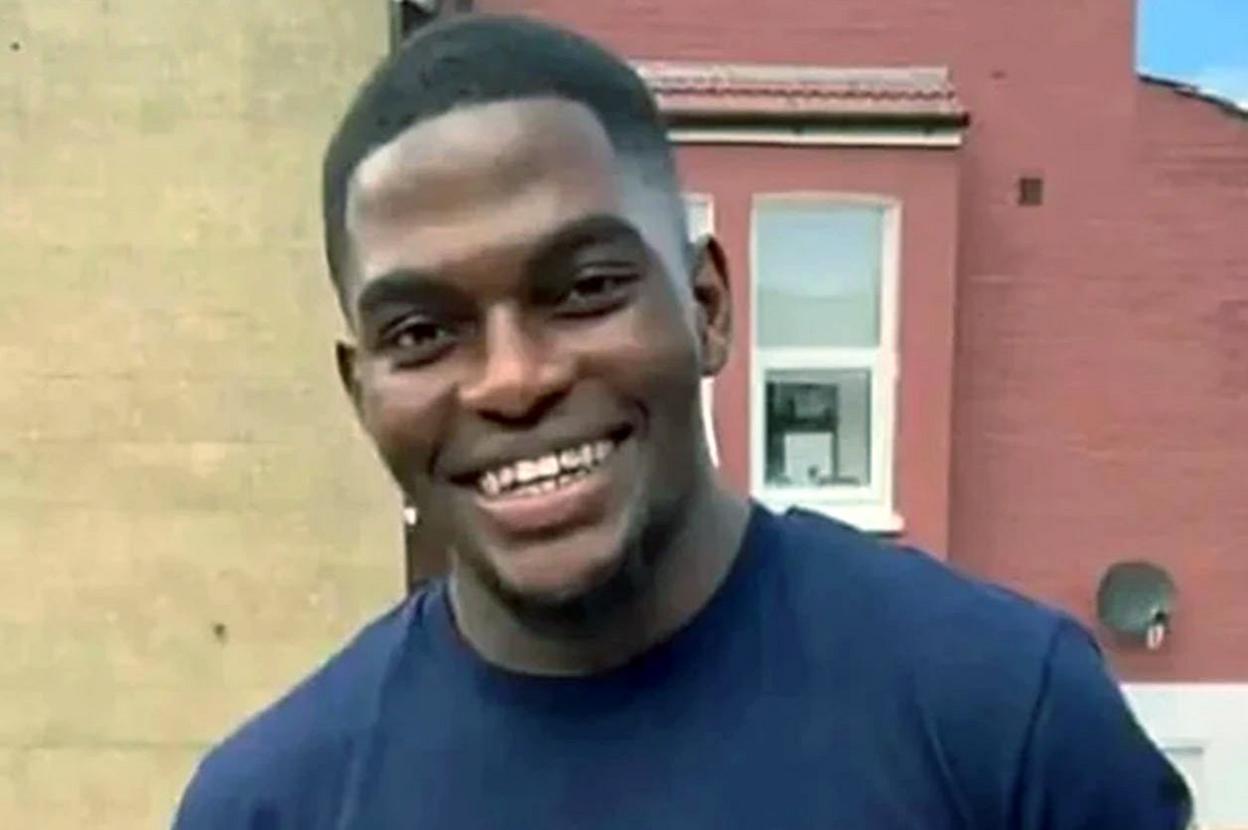
Just two years after the entire English-speaking world had been brought to the point of hysteria by the death of George Floyd, this was just the kind of event which police leaders dread and activists relish. Long before the full details of the case emerged, the Critic’s Ben Sixsmith noted, a succession of tributes poured in to Kaba, whose winning smile peered out from newspaper reports.
MP Zara Sultana posted on 14 September that ‘Chris Kaba was 24 years old. He was about to become a father. But last week he was pulled over by police officers, shot and killed. He was unarmed. This evening I attended a vigil to remember Chris, demanding justice for him and his family.’
‘No justice, no peace’, demanded her colleague Dawn Butler, while another Labour MP, Bell Ribeiro-Addy wrote: ‘The press have said he was a drill artist, as if that’s a way of justifying why he may have found himself in that situation, or that he’d been arrested before. But we have to realise that with our justice system, if you’re Black, from a working-class background, you’re more likely to go to jail.’
Writer Michael Morgan declared in the Metro: ‘God save the king; the young king. His name was Chris Kaba.’ Trade unionist Howard Beckett said: ‘His chief crime in the eyes of the British police was the colour of his skin.’ A prominent legal academic lamented that ‘Suella Braverman has not once condemned the killing of Chris Kaba. I find that shameful.’ As Sixsmith noted, it would be very odd for a Home Secretary to comment on an ongoing investigation, and bizarre that a legal academic would think otherwise.
On 14 September, a writer for the Guardian had described Kaba as an ‘aspiring architect’ and soon-to-be father, a Wolfian touch reminiscent of how the black teen in the novel is described as an ‘honours student’. The difference, however, is that the teenager in Wolfe’s story wasn’t a bad guy. Kaba was a really bad guy, an ‘aspiring architect’ who just happened to shoot up nightclubs in his spare time.
Indeed, much of the reporting described Kaba sympathetically as a ‘father to be’, while failing to mention that he had received a domestic violence protection order relating to the mother of his child, whom he had beaten up.
Many others joined in the chorus, and in March 2023 London Mayor Sadiq Khan tweeted: ‘My thoughts are with Chris Kaba’s loved ones today. His death has had a huge impact on Londoners, and in particular Black Londoners. Anger, pain and fear has been felt across communities, along with a desire for change and justice.’
In September 2023, Blake – referred to only as NX121 – was charged with murder, and would wait more than a year for the trial to come to court. Then, in March 2024, a judge lifted his right to anonymity, and the policeman had to flee his home. A bounty was placed on the officer’s life, and Charlie Peters of GB News wondered whether Sgt Martyn Blake would ‘become the policing equivalent of the Batley schoolteacher… Two public servants forced into hiding for fears of violent revenge.’ The Labour government later called for the right to anonymity for armed police officers facing charges, but it was too late for him.
The trial heard that while Blake did not know the identity of the Audi driver, he was aware that it had been used as a getaway car in the shooting the previous day. Blake stated that he’d fired in self-defence in order to incapacitate him. A fellow firearms officer told the Old Bailey that, had Sgt Blake not taken a shot, he would have, and a third reported that he was ‘fractions of a second’ away from firing. It was also noted that, in the weeks leading up to the fatal shooting, several officers had been seriously injured in a similar ramming by a violent criminal driving a car, which rather tests the definition of ‘unarmed’, since two tonnes of steel makes a pretty lethal weapon.
The jury cleared Blake after three hours of deliberations. Indeed, not only were the nine men and three women sure of a not guilty verdict, but in an unusual move they even wrote a letter and petitioned to have it read out in the court – which was refused by the judge. Although one can only speculate at what it entailed, it is thought that the statement questioned why the case even went to trial in the first place.
Kaba was a leading member of one of London’s most dangerous gangs
Blake was cleared on 21 October, 2024, and immediately following the verdict, the Mayor tweeted that ‘I understand the impact Chris Kaba’s death has had on London’s communities and the anger, pain and fear it has caused. I send my heartfelt sympathies to Chris Kaba’s family, friends and the wider community once again. There’s clearly still a wider lack of trust in the police, particularly within the Black community, that needs to be addressed.’
Anti-racism charity the Runnymede Trust tweeted that ‘The lack of police accountability perpetuates cycles of violence and impunity. Our thoughts and solidarity are with Chris’s loved ones and wider community. Chris Kaba, 23.07.1999 – 05.09.2022.’
The charity also condemned ‘racist state violence’ and then followed it with some misleading statistics, adding #JusticeForChrisKaba, before deleting them all. You’d have no idea from reading these words that they were describing a very dangerous violent criminal, or that a state denying ‘accountability’ had put one of its officers on trial for murder. Afterwards, Robert Jenrick called for the Runnymede Trust to have their charitable status removed.
The leader of Lambeth Council also issued a statement declaring that ‘the trauma in our communities remains’, and ‘we share the grief and ongoing concerns raised by Chris’ family’.
Sixsmith once again noted some of the tributes which continued to pour out: ‘Dr Shola Mos-Shogbamimu – an author, lawyer and activist – proclaims that Mr Kaba was killed “in cold blood”’… Kehinde Andrews, an academic and the author of the book The Psychosis of Whiteness, ‘has been promoting a rally against Blake’s acquittal, saying “without justice there should be no peace”.’
This ‘emergency demo’ was put together by Black Lives Matter UK, which stated that ‘the police may have been acquitted of murder by the courts… but we find them guilty of systemic racism and violence’, calling for ‘police and prison abolition to bring about the lasting change that Chris’ loved ones and many more deserve’.
As Sixsmith wrote: ‘Surely black lives mattered when a member of the 67 gang murdered 18-year-old Cheyon Evans. Black lives mattered when, several months previously, Gavin Garraway, an innocent relative of a 67 member, was murdered in his car by members of a rival gang. This is the sort of violence that police officers like Martyn Blake have to deal with on a daily basis. Yet Black Lives Matter UK are unlikely to talk about such incidents. It makes the case for “police and prison abolition” seem preposterous and offensive.’
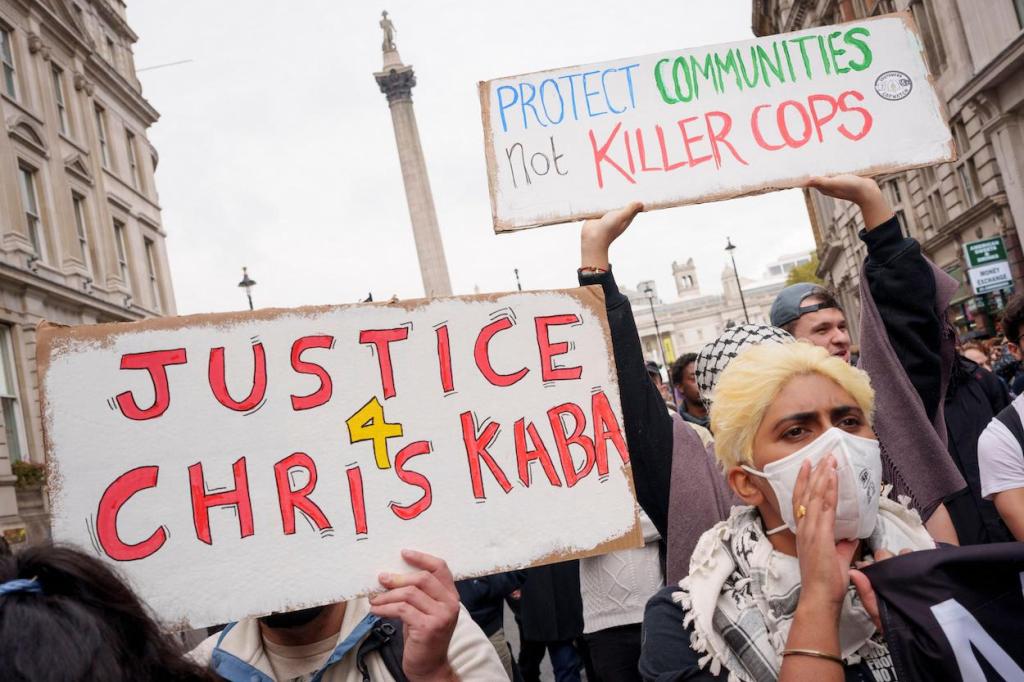
On 22 October, 2024, the Guardian reported how ‘Mistrust, disbelief and frustration is palpable on the streets around Electric Avenue. Here in Brixton, the buzzing heart of south London, news is sinking in that a police officer has been cleared of murdering an unarmed Black man in the borough.’ Kaba was ‘the fourth unarmed man to be shot dead by police in non-terrorist operations since 2005. All were Black.’
The paper quoted ‘race relations activist’ Lee Jasper, a familiar figure back in the 2000s, who called for juries in such cases to hear ‘expert evidence’ on institutional racism.
It wasn’t until 22 October that reporting restrictions on Kaba’s past were lifted, and what emerged was that Kaba was a leading member of one of London’s most dangerous gangs, the 67, and had been accused of two shootings in the week before his death. This ‘young king’ had six previous criminal convictions, having received his first aged just 13, for possessing a knife in a brawl, and then doing a four year stretch in a youth offenders institution for possession of an imitation firearm with ‘intent to cause fear of violence’. A week before his death, he shot a man in a nightclub in a gangland hit. Several members of his gang were in jail for murder and, as Sixsmith noted, they used drill music to mock the dead. Indeed, Kaba and his gang fired more shots on the streets of London in the week before his death than the Metropolitan Police fired in the previous year.
It would be surprising if none of those paying tribute or lamenting Kaba’s death were unaware of the stories concerning his previous violence. They had been widely circulated on Twitter before the trial, and I certainly knew about them. He was a dangerous man who brought about his own death, and the officer in question was entirely correct in his judgment – yet many in Britain were desperate for their own George Floyd moment.
Even after all this had been revealed, on 23 October Labour MP Kim Johnson told the House of Commons: ‘I would like to send my condolences to the family, friends, and loved ones of Chris Kaba’, and adding ‘Particularly this week while the media are using racist gang tropes to justify the killing of Chris Kaba.’ It’s hardly a ‘racist gang trope’ to point out that a man was a gangster.
That same day, the BBC reported the news with the headline ‘Kaba case traumatising, say black community leaders’. It told how ‘Black communities in south London are really traumatised and feel they have been denied justice after a police officer was cleared of murdering Chris Kaba, community leaders have said.’
It seemed that no one in public life was prepared to say that, if some people are ‘traumatised’ by the lawful and unavoidable killing of a dangerous criminal, that doesn’t mean the rest of the city has to pander to them. Metropolitan Police commissioner Sir Mark Rowley declared around the time that any fatal force is a ‘huge concern… in Black communities where trust in policing is low.’ Yet as one police officer put it: ‘In this case trust between the black community and police was damaged by Chris Kaba driving his car at officers and risking their lives.’
There were no BBC reports about the black community being ‘traumatised’ after Chris Kaba opened fire in a packed nightclub, it goes without saying.
Everyone wanted a George Floyd, but neither Kaba’s violent criminal career – now cut short – nor the underlying statistics backed the narrative. As Niall Gooch wrote following the acquittal, British police shoot dead about two people a year, these incidents being ‘vanishingly rare’, while in contrast, over 30 people each year are struck by lightning: ‘Given that almost all armed police confrontations involve known criminals, terrorists or madmen, the average sane law-abiding Briton is far more likely to be struck by lightning than to be shot by the police. Indeed, the chance of such a person encountering an armed response team is effectively zero.’
Reflecting on why Blake ended up in court on a charge that no jury was likely to accept, Gooch suggested a couple of possible explanations: ‘One of these blames good old-fashioned cowardice. In this account, no one in the Met, or the Independent Office for Police Conduct (IOPC), or the Crown Prosecution Service (CPS), wanted to take responsibility for deciding on no further action, and so the buck was passed to 12 good persons and true. If there were going to be riots or protests in response to Blake ‘getting away with it’, or career repercussions for those deemed insufficiently attentive to the alleged bogeyman of police racism, then of course offloading the decision was an extremely attractive prospect.
‘Then there is the even more worrying possibility that the Met, the IOPC and the CPS are institutionally sympathetic with the anti-policing and anti-law beliefs that animate groups like Black Lives Matter. The BLM ideology is essentially nihilistic insofar as it rejects the need for organised policing without offering any serious proposals for how to maintain public safety… Support of its agenda is clearly incompatible with serving in organisations which are meant to uphold law and order, and to monitor police integrity.’
Indeed, US-style activism has penetrated Britain’s service, pushed by a form of institutional anti-racism. The language of American progressivism is now widespread in the material and statements shared by the police, suggesting a certain degree of ideological capture. with forces encouraging reading material such as Why I’m no Longer Talking to White People About Race.
Blake was investigated by the IOPC, the Independent Office for Police Conduct, which is fundamentally different to most watchdogs in being adversarial, and the police themselves see it as the organisation’s mission to ‘get’ officers. The threat of IOPC investigations, often instigated by career criminals who know how the system works, has a demoralising effect on the force.
Wolfian politics is driven by fear
Gooch wrote that: ‘The IOPC in particular has a track record of coming down very hard on individual officers who are doing their duty in difficult situations, and giving succour to those who thrive on racialist grievances. Just in the last two months, their judgment has been called into question by two rulings. In September, Southwark Crown Court quashed the conviction of PC Perry Lathwood for assault. Lathwood was originally convicted of this offence in May, after he mistakenly arrested a woman on suspicion of fare-dodging in July 2023. The IOPC had been instrumental in persecuting Lathwood, but when you consider the details, the Met Police Federation were surely right to call the initial conviction ‘erroneous and perverse’.
Despite being cleared of murder, Blake’s ordeal did not end there. In April last year it was announced that he would now face a misconduct hearing, and IOPC director Amanda Rowe once again talked of the impact on ‘our black communities’ as well as ‘firearms officers and the wider policing community.’
It’s debatable what constitutes these communities. Writer and architect Ike Ijeh has called ‘this incessant pandering to “black communities”… toxic, divisive and insulting. My race lends me no more cultural kinship with Chris Kaba than Rowley’s does with Fred West. There are only two communities the police should be interested in, those who commit crimes and those who don’t’.
Journalist Inaya Folarin Iman compared the outrage over Kaba’s death with the shooting of Black Lives Matter activist Sasha Johnson in 2021, which left her with catastrophic brain injuries. ‘Campaigners immediately blamed racism for the attack,’ she wrote: ‘But when it became clear this was unlikely to be the motive, her fellow BLM campaigners fell silent.’
Wolfian politics is driven by fear, not just a fear of the career-ending accusation of racism, but a more literal fear of violent unrest. It was telling that a BBC Panorama documentary about the Kaba shooting quoted a former member the IOPC stating that, ‘It was fed back to us… that if we hadn’t done it at that time then it’s likely there would have been a level of disorder.’ The IOPC denied the claim, and complained to the broadcaster.
The authorities were especially motivated by a fear of a repeat of the 2011 riots which followed the shooting of crack dealer Mark Duggan. Although a cause of much less anxiety among the country’s rulers, these riots were far more lethal than those in 2024, leading to the death of six people. The Met were so stretched at the time that officers were drafted in from across the country, and I recall cycling down Old Street and seeing police vans with the word ‘Heddlu’, and realising that the situation had become dangerous for the police.
The Metropolitan Police barely contained that riot, and are conscious that they could not cope with a repeat; since then, three-quarters of London’s police stations have shut down, while police recruitment across the country has dropped significantly. As of July last year, there were 1,800 fewer officers in the Met than there were in March 2023.
Since the Kaba investigation began, London’s police have faced intense strain, often having to deal with Palestine protests, anti-migrant demonstrations and football crowds on the same day (remarkably, Premier League clubs do not pay for policing costs outside their grounds). On some Saturdays, the number of officers available in some central London boroughs is in single figures, responsible for policing a quarter of a million people. A repeat of the Duggan riots in the 2020s is a daunting prospect.
Blake’s misconduct proceedings have been paused, awaiting a legal change in the spring, although the IOPC has not given up, while Kaba’s family – the BBC headline tells us – are ‘devastated’.
It’s understandable why Kaba’s family would cherish his memory; it’s less understandable, and far less forgivable, for strangers to do so, purely out of a twisted sense of ‘racial justice’. Chris Kaba was a dangerous, violent man who certainly would have gone on to commit more violence had he not been reckless enough to drive his car at police officers. Indeed, there are likely people walking this earth now who might have been six feet under had Kaba’s criminal career not been halted in its prime. The whole charade was straight out of the world of the Reverend Bacon, the ugly, depressing display of race politics at its most opportunistic.
Wolfe’s work was a pointed look at urban America, written during New York’s 80s crime calvary, and after a disappointing film adaptation, in 2016 it was announced that a television series would be made – a much better format for the 700-page state-of-the-nation novel. Since then, nothing has been heard of it. In the age of Black Lives Matter and ‘hands up, don’t shoot’, such satire is way too close to the bone. But then, why would we need satire when real life is so absurd?
This article first appeared on Ed West’s Substack, Wrong Side of History.




Comments