Peros Banhos, Chagos Islands
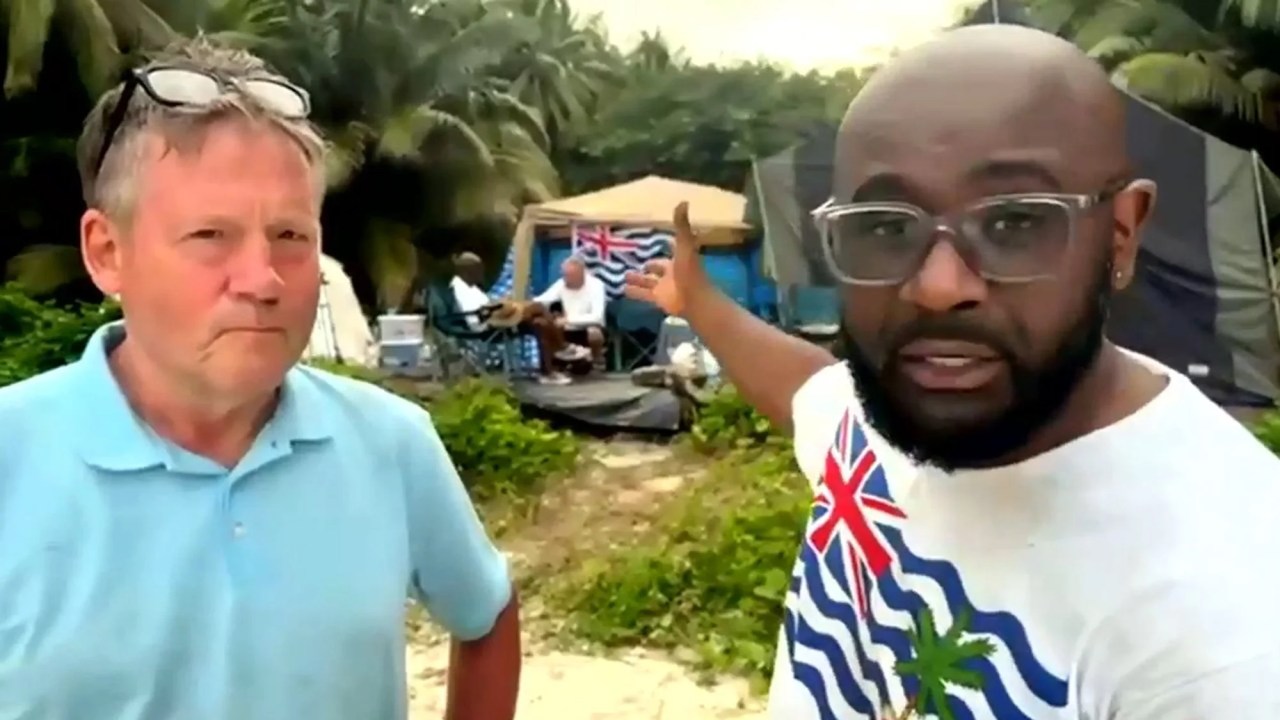
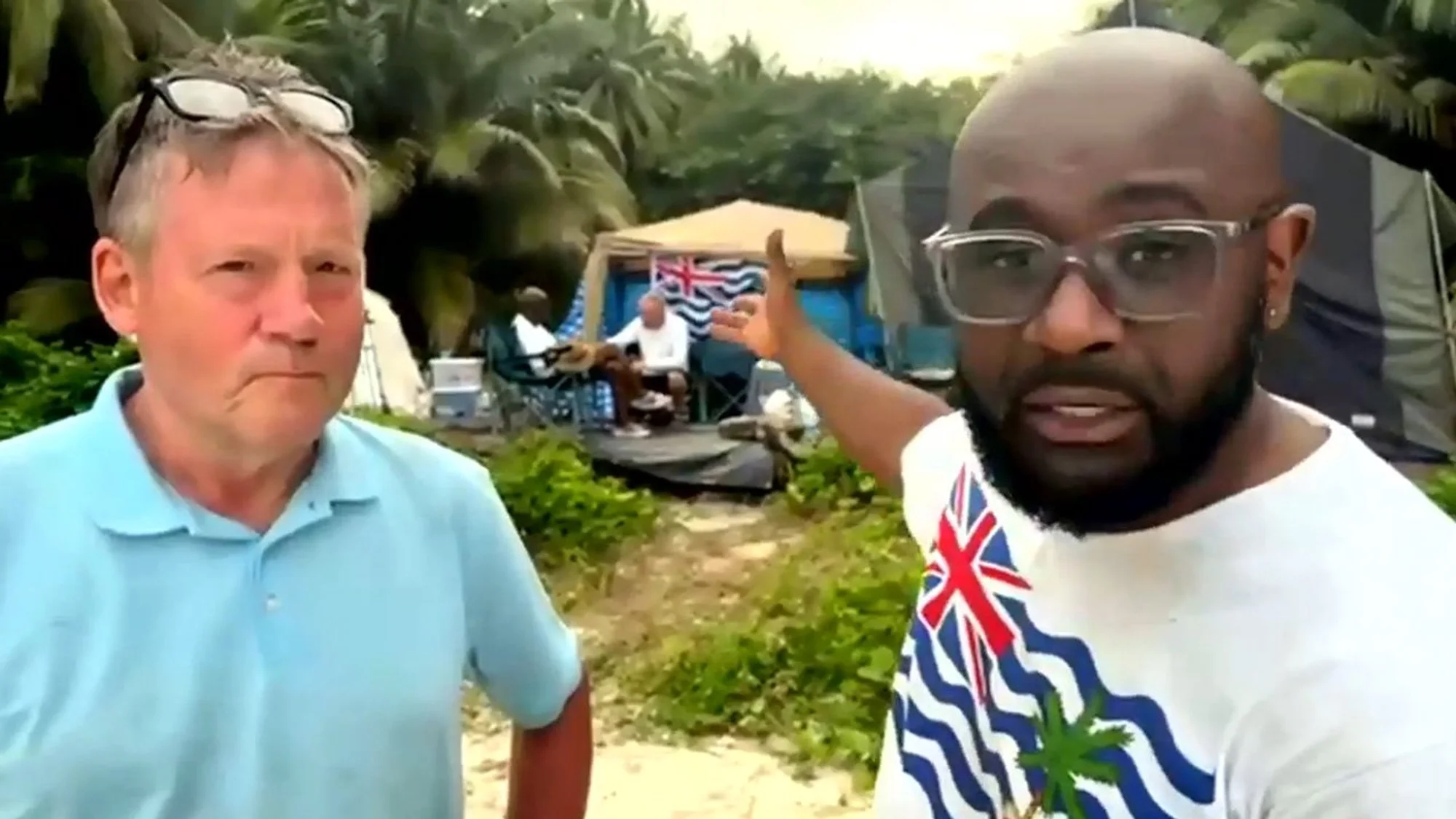
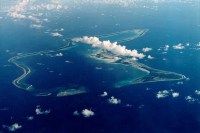
On Monday at 08.52 local time, I waded ashore to the Chagos archipelago alongside four islanders who had come to establish a permanent settlement – which they hope will make it impossible for the British government to hand the territory to Mauritius.
We had managed to come this far in absolute secrecy. We worried that our passage to the Chagos Islands might be interrupted by either a British patrol boat or even a Chinese submarine. So, we bought a boat in Thailand and provisioned it in Sri Lanka. Then we made the five-day ocean passage from the port of Galle in Sri Lanka to the northernmost islands of the Chagos archipelago.
We hope that the physical presence of Chagossians on the islands will allow them to assert rights they have always had but which have been ignored by successive British governments
When we entered the British government exclusion zone – an act that carries a theoretical three-year prison sentence – the only sign of another vessel was a wreck beached on one of the atolls. The wind was whipping through the branches of the coconut trees, and the water was choppy. But our little dinghy bobbed up and down and had no trouble navigating the coral reef. Then we were standing on surely one of the most beautiful and isolated beaches in the world.
I am writing this now on that beach, on Île du Coin, part of the coral atoll of Peros Banhos, the main inhabited island in the archipelago until, 50 years ago, British officials decided to evict the Chagossians. I first became interested in the Chagos issue because of the sheer insanity of giving away the US-British base on Diego Garcia, part of the archipelago, to an ally of China, Mauritius. But as I learned more about the history of these islands and Britain’s shameful role in it, friends and I decided to do what we could to help these people return home.
Among our party is Michel Mandarin, who, at 72, is one of only a few hundred native-born Chagossians. He was 14 at the time of the déraciné, or uprooting, forced onto overcrowded boats by British officials who told the quite deliberate lie that there was no indigenous population on Chagos, only guest workers. Michel remembers being dumped on the quayside in Mauritius, his family having to sleep on a neighbor’s floor, in a tin shack.
Another of those with us is Antoine Lemettre, aged 67. He told me as a small child he had to scavenge for rotten vegetables thrown out by a market in Mauritius to feed his family. As our sailing boat approached the archipelago, he wept as he recalled the poverty and discrimination his family endured in Mauritius. “Everyone from the Chagos Islands was suffering the same pain,” he said.
The Chagossians – the ones I have come to know – do not want to be Mauritian. They want to remain British – and we should count ourselves very lucky in that. What was done to them was a literal crime against humanity – the forcible removal of a native population. Let’s see whether or not Prime Minister Keir Starmer wants to evict them from their islands again. Let’s see whether he wants to commit another crime against humanity. You would think that, as a human rights lawyer, he might want to avoid that.
On the little dingy with me was Misley Mandarin, First Minister of the Chagossian government-in-exile – except that it’s not in exile anymore. He was brought up in Mauritius, where he was made to sit at the back of the class because he was Chagossian, but left to join the British Army as a cook. Until recently, he worked as a bus driving instructor at Transport for London, but left that job to join our very long Indian Ocean crossing to settle – permanently – in the Chagos Islands.
Misley is a natural leader. He set foot on the Chagos Islands wrapped in the archipelago’s distinctive flag – blue and white stripes, a coconut palm tree and the Union Jack – and declared in booming voice: “God save the King.” And then, “God save America.”
While planning this trip, I found several philanthropists who shared our concerns about Chagos, and we used their money to buy provisions and a lot more to give the Chagossians a toehold on the islands. We are unloading sacks of rice and lentils, fishing nets and fishing lines, solar panels and batteries, buckets, spades, hammers, nails, an enormous boom box and (my personal contribution) a gallon bottle of Ponzu sauce – fish will be their main source of food here. As we arrived, one of our party reached down and plucked a fish out of the teeming waters.
We hope that the physical presence of Chagossians on the islands will allow them to assert rights they have always had but which have been ignored by successive British governments. Enough is enough. These people must be allowed to come back.
Their presence on the island could be decisive in breaking the Starmer government’s curious obsession with handing over the islands to Mauritius. That would be a catastrophically stupid mistake. We are now in a world of great power rivalry and the base at Diego Garcia is critical to our security. We’re about to put that in danger, so we must wish the Chagossians well in their attempt to resettle these islands – and stop this crazy surrender of sovereignty to Mauritius by a generation of politicians who have no idea of what human rights really mean.

Comments