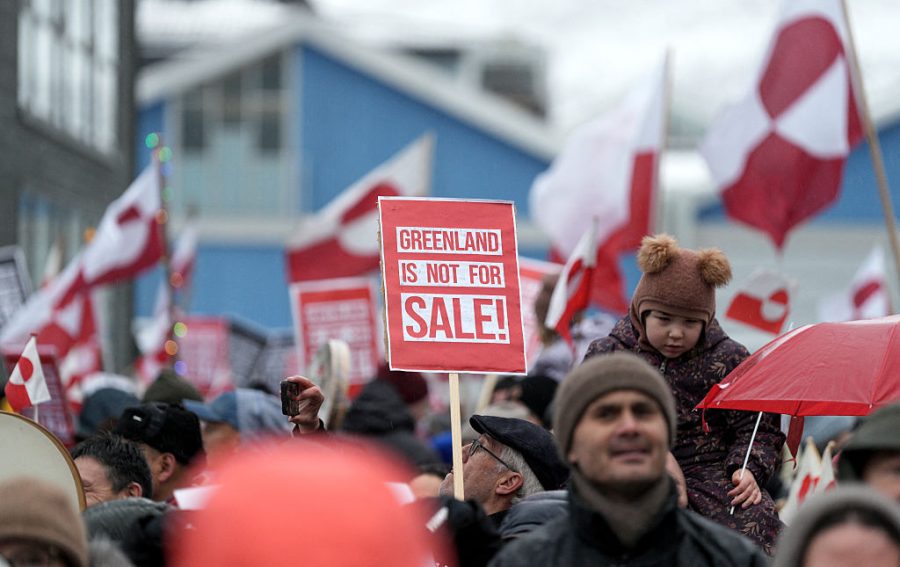
The world is in a dangerously volatile state, with multiple fires burning simultaneously. At precisely the moment when calm leadership and strategic coherence are required, one individual appears determined not to extinguish the flames but to pour petrol upon them. The most baffling and potentially destabilising of these fires is Donald Trump’s expressed desire to ‘own’ Greenland, ostensibly to protect America from Russian and Chinese threats.
This proposition is comprehensively illogical. Greenland is already protected. It is a de facto Nato territory, and the Nato alliance exists precisely to defend the North Atlantic. The clue, as ever, is in the name. Greenland sits squarely within the alliance’s defensive umbrella, and any suggestion that its current status leaves the United States exposed is strategically incoherent.
The only conceivable way the United States could ‘own’ Greenland would be to buy it, bribe Greenlanders into believing they would be better off as Americans and persuade Denmark that it is better off without it. There is historical precedent: the United States purchased Alaska from Russia in 1867 for $7.2 million (£5.4 million). While that transaction may have satisfied Moscow and Washington at the time, it proved disastrous for Alaska’s indigenous populations. The parallels for Greenland’s Inuit communities are obvious and deeply concerning.
There is no credible argument that US ownership of Greenland would make America safer
Trump has an undeniable talent for dragging obscure issues into the spotlight. As Europe increases defence spending in response to a revanchist Russia, Greenland has emerged from strategic obscurity and into the centre of the geopolitical debate. This is no barren, frozen wilderness; it is a critical node in an increasingly contested Arctic theatre.
Russia and China understand this perfectly. China’s establishment of so-called ‘scientific’ bases in Antarctica, and its growing Arctic ambitions, should concern us all. Russia, meanwhile, has decades of experience operating in the extreme cold. During the Cold War, Moscow invested heavily in its Arctic infrastructure, much of which is now being revived as climate change and geopolitics converge. The Arctic is no longer peripheral; it is a front line.
The uncomfortable truth is that the West is ill-prepared. Canada possesses a handful of icebreakers. The United States has even fewer. Russia, by contrast, operates at least 14 powerful icebreakers, some capable of punching through metres-thick pack ice all the way to the North Pole. Russian forces are extensively trained for Arctic warfare; Nato forces, largely, are not. This is Russia’s home turf.
Greenland itself is vast, roughly the size of Europe, yet sparsely populated, with fewer than 60,000 inhabitants and only 20,000 in Nuuk. The United States is no stranger to the island. During the second world war, Greenland was essential for transatlantic aircraft ferrying. American bases were built at Narsarsuaq and Sondre Stromfjord, the latter now Greenland’s international airport at Kangerlussuaq. Thule Air Base, constructed as part of the Cold War distant early warning line, remains the United States’ principal military presence and can accommodate the largest strategic aircraft.
Yet today, US troop levels in Greenland are at their lowest since the second world war. This hardly signals a serious commitment to Arctic defence, and it raises legitimate questions about intent versus rhetoric.
As global attention turns to Greenland, undoubtedly boosting its tourism industry – our concern lies firmly with its people. After four decades of travelling through Arctic communities in Russia, Alaska, northern Canada and Greenland, David witnessed first-hand the appalling treatment of indigenous populations. Multinational corporations extract wealth; local communities are left with environmental damage, social breakdown, and little else. Young people, seduced by the illusion of prosperity beamed into their villages via Netflix, drift south. Addiction and despair fill the vacuum.
The condition of First Nation villages in Alaska should be a source of national shame for the United States. They stand as a stark warning. If this is the model Greenlanders are being invited to buy into, even with the promise of generous financial inducements, they would be wise to run – or ski. Fast.
Denmark, by contrast, has taken a fundamentally different approach. It supports Greenland’s gradual move toward self-rule with sustained financial, medical and educational backing. Danes work alongside Greenlanders in hospitals, schools, government and business. Danish national service has placed thousands of young Danes in Greenlandic communities, building skills, trust and mutual respect. Two cultures, European and Arctic, coexist without one seeking to erase the other.
Greenland’s future must remain in the hands of its people. Encouragingly, they have already demonstrated sound judgement by rejecting Chinese offers of infrastructure and resource exploitation. Denmark has respected that autonomy. The United States’s record with its own Inuit populations suggests it would not.
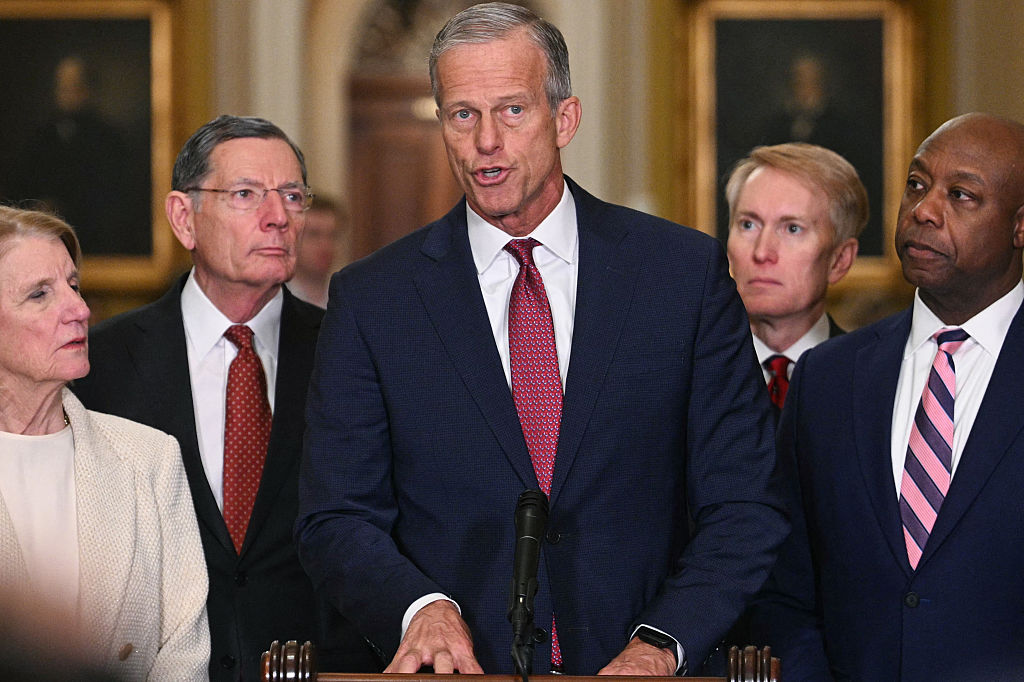
From a purely military standpoint, there is no credible argument that US ownership of Greenland would make America safer. A forced acquisition would almost certainly fracture Nato, or at the very least end America’s leadership within it. In such a scenario, it is far from guaranteed that the remaining members of the alliance would rally to Washington’s defence in a future conflict.
Geographically, Greenland offers greater strategic protection to Canada than to the continental United States. Notably, Ottawa has refrained from bellicose rhetoric. Mark Carney, unlike his southern counterpart, appears guided by analysis rather than impulse.
Greenland is not a prize to be claimed. It is a people, a culture, and a strategic responsibility. If the Arctic teaches us anything, it is that arrogance, ignorance and short-term thinking are punished swiftly, and often irreversibly.


Comments