Oscar wilde

A portrait of the fin de siècle in all its morbid decadence

From our UK edition

Everyone I have met who has read Belchamber, Howard Sturgis’s novel of 1904, would endorse Edith Wharton’s judgment that this was a book which was ‘very nearly in the first rank’. I can still vividly remember the week – half a lifetime ago – when my wife and I discovered the little blue World’s Classics edition in a secondhand bookshop and were lost to the world for days. It is Henry James with the gloves off – in some ways quite unbearably vivid. Country house adultery and the sexual mores of London society during the 1890s are upsettingly, even crudely, laid bare. ‘Sainty’ the English aristocrat, an aesthete whose favourite pastime is knitting, fails to satisfy his coarse-grained wife, who provides him with a baby even though the marriage is, of course, unconsummated.
Witches, dragons and the Terrible Deev: a choice of this year’s children’s books

From our UK edition

Now here’s a combination you never thought you’d see, not least because one of them is dead: Maurice Sendak and Stephen King. But there they are in Hansel and Gretel (Hodder Children’s, £20). Who knew that Sendak had illustrated Grimm, or that Mr Horror wrote fairy tales? It turns out that Sendak created sets for the Humperdinck opera, and King writes to these illustrations, which loom large and dramatic. King says that he has always been attracted both to fairy tales and to Sendak, and that one image especially that spoke to him was the infamous candy house becoming a terrible face. I thought: this is what the house really looks like, a devil sick with sin, and it only shows that face when the kids turn their backs...

What do Oscar Wilde, Gwen John and Evelyn Waugh have in common?

From our UK edition

Religious conversions do not, for the most part, make for good anecdotes. An exception can be found in Patricia Lockwood’s memoir Priestdaddy, which describes the author’s father Greg’s road to Damascus experience in a nuclear submarine off the coast of Norway, where he watched The Exorcist 72 times: That eerie, pea-soup light was pouring down, and all around him men in sailor suits were getting the bejesus scared out of them, and the bejesus flew into my father like a dart into a bull’s eye. It was, Greg boasted, ‘the deepest conversion on record’.

Richard Ellmann: the man and his masks

From our UK edition

Richard Ellmann’s acclaimed life of James Joyce was published in 1959, with a revised and expanded edition appearing in 1982. The first edition, the work of an ambitious young American academic, received what Ellmann’s editor at Oxford University Press described as ‘the most ecstatic reaction I have seen to any book I have known anything about’. Ellmann’s work would ‘fix Joyce’s image for a generation’ wrote Frank Kermode in The Spectator, a prediction described by Zachary Leader as ‘if anything, too cautious’. By the time of the second edition, Ellmann had become a lionised Oxford don and the image of Joyce he had fixed was starting to chafe.

The Picture of Dorian Gray is headache-inducing

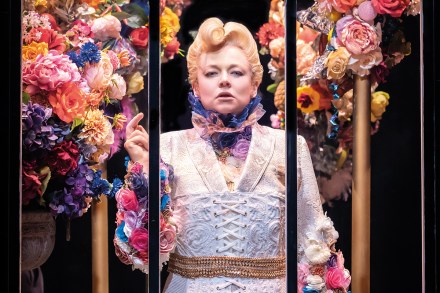
The Picture of Dorian Gray begins on an unadorned note. Sarah Snook sits alone on an otherwise empty stage, facing a camera which projects her image on to a giant vertical screen. Chameleon-like, she switches instantaneously between two characters: the awkward but sincere painter Basil and his more debonair – and dastardly – friend Lord Henry. Snook may be Australian and a woman, but borne on her considerable gifts we are transported to Victorian England. With no props save a paintbrush for Basil and a cigarette for Lord Henry, Snook chops and changes between the two men: she contorts her face into nervy, painful subservience for Basil and her voice into a high, febrile whine.

Dorian

Exquisite: Tom Stoppard’s The Invention of Love, at Hampstead Theatre, reviewed

From our UK edition

The Invention of Love opens with death. Tom Stoppard’s play about A.E. Housman starts on the banks of the Styx, where the recently deceased poet is waiting for Charon, the boatman, to ferry him across the water. Charon has been told to pick up ‘a scholar and a poet’ and he’s expecting two souls, not one. Houseman explains that he pursued both careers and is therefore a solo passenger. The play’s storyline emerges slowly and with immaculate taste. Stoppard is not one for cheap tricks This takes place in 1936, the year of Housman’s death, and we then flip back to Oxford in the 1870s. The river Styx becomes the Cherwell, where Housman and two chums are paddling upstream while discussing a flamboyant young intellectual, Oscar Wilde.

Is Paris the world’s most bookish city?

After I ventured to New York in May 2024, bound for a discerning literary journey round the city’s bookshops, libraries and hotels, I received some lively and constructive feedback from Spectator readers. Many, thankfully, agreed with my arguments about its bookish charms, but a consistent theme in the comments I received was, “How can you claim that New York is the quintessential literary city? Have you forgotten Paris?” To which my reply was reasonably simple: “What about Oxford, London, Rome, Edinburgh, Dublin, Santiago or San Francisco?” All of them hugely distinguished citadels of the written word, both present and historic alike. Yet I felt uneasy at my response.

Paris

Immateriality – or irrelevance?

From our UK edition

In The Importance of Being Earnest Jack Worthing was given his surname by Mr Thomas Cardew, who happened to have a first-class ticket for Worthing in his pocket when he found him in the cloakroom at Victoria station – the Brighton line. When told, Lady Bracknell exclaimed: ‘The line is immaterial!’ This turns out not to be true, since it emerges that Miss Prism left a baby at the cloakroom of the Brighton line. Was it immaterial that Mr Cardew (whose Christian name – ‘James, or Thomas’ – Lady Bracknell also assumes is immaterial) had a first-class ticket? Not at all, for his wealth made his granddaughter an eligible bride for Jack.

The English have always loved gossip

From our UK edition

Our national conversation is overwhelmed by tittle-tattle, rumour and gossip. Last week, a salacious email listing George Osborne’s alleged improprieties was circulated among the Westminster bubble. Inevitably, it was then circulated to everybody else, too. Meanwhile, the internet is aflutter with rumours about the identity of a BBC journalist who’s alleged to have paid a teenager tens of thousands of pounds for sordid pictures – and this isn’t even the first sex scandal involving a broadcaster this year.  Foreign visitors were amazed at this insatiable desire to ridicule the private follies and foibles of high society Some might think our modern obsession with grubby tales shows a lack of seriousness. But a love of gossip is nothing new among the English.

A literary pilgrimage to Dublin

From the lilting normcore of Sally Rooney’s Normal People to the frenetic genius of poetic, post-(post?) punk band Fontaines D.C., I’m drawn to talented Irish voices of late. Martin McDonagh’s Oscar-nominated tragicomedy, The Banshees of Inisherin, won three Golden Globes, and my heart, to boot. And quite rightly. It’s news to no one that the Irish have always been exceptional storytellers; some stereotypes stick because they are true. Plenty of the finest words ever written hail from the town of the hurdled ford, Baile Átha Cliath, Dublin. This fact was recognized by UNESCO in 2010, when they named it a City of Literature.

dublin

The best Oscar Wilde films

From our UK edition

It is 122 years this week since Oscar Fingal O'Flahertie Wills Wilde died – in exile, poverty and disgrace – at Paris’s shabby St Germain Hôtel d'Alsace. His last words were said to be: ‘My wallpaper and I are fighting a duel to the death. One or the other of us must go.’ Despite Wilde’s precipitous fall from grace and the ignominy heaped upon him (his children had to change their surname to Holland), within a relatively brief time his plays were revived and books reissued to renewed popular acclaim. And more than a century later, that appeal hasn’t faded: this year in England alone, The Importance of Being Earnest toured the north and Richard Strauss’s adaptation of Salome was performed at the Royal Opera House.

Literature reminds us that indolence is underrated

I put off writing this article for ages. Initially, I decided I would write it from bed, but the temptation of simply giving up and falling asleep again was too great. A change of tactic proved no less helpful: out of bed, it took every ounce of effort I had to avoid getting straight back in again. Not a jot was left over for the exertion of writing and typing. This isn’t the status quo for my productivity, I promise; it is more a reflection of the subject matter. It is absolutely impossible to write about indolence while running around busily ticking off a to-do list. You have to relax into it. Call it method article-writing, if you will. Indolence gets something of a bad rap these days.

A ghost at the feast: The LaLee at the Cadogan hotel, reviewed

From our UK edition

The Cadogan hotel, Chelsea, is where Oscar Wilde was arrested for sodomy and gross indecency in 1895, in Room 118, which is now memorialised as the site of the arrest. Institutional homophobia is a weird thing to commemorate in fabrics, but everything is a tourist attraction these days. The hotel is a tall red late-Victorian castle incorporating neighbouring houses, one of which belonged to the actress and mistress of Edward VII, Lillie Langtry. It was, then, a hotel for betrayal on the corner of Pont Street. John Betjeman mentions this in his poem ‘The Arrest of Oscar Wilde at the Cadogan Hotel’, and offers disaster PR of a timeless kind: ‘More hock, Robbie — where is the seltzer?/ Dear boy, pull again at the bell!

Xenophobic twaddle: Bush Theatre’s 2036 reviewed

From our UK edition

The Bush Theatre’s new strand, 2036, opens with a monologue, Pawn, which takes its name from the most downtrodden piece on the chessboard. The speaker, Jordan, is an amiable dimwit of mixed Trinidadian and South African heritage whose mother explains his background to him like a condescending anthropologist: ‘Trinidad and South Africa are countries with cultures too rich for most people to understand.’ Jordan describes his life in London which consists exclusively of battling oppression. He buys fried chicken from Yusef, a Turkish food-seller, and he learns a greeting in Turkish that Yusef recognises. So Yusef starts to slip him extra portions as a perk. A white teenager hears of this practice and orders Yusef to suspend the freebies to Jordan.

Promising material squandered: BKLYN – The Musical reviewed

From our UK edition

BKLYN — The Musical gives itself a headache for no reason. What does ‘BKLYN’ mean? Perhaps it’s a random jumble of letters caused by a muffin landing on the keyboard. A punter who sees the title once and later looks it up online is unlikely to recall the precise order of the letters, and his search will probably fail. And he’ll have trouble discussing the show with his friends because he won’t know how ‘BKLYN’ is pronounced. It turns out that the show’s heroine is called Brooklyn, and the writers decided to capitalise her name and extract three of its letters. Sensible theatre-makers don’t create problems like this for themselves.

Flower power: symbols of romance and revolution

From our UK edition

Critics have argued over the meaning of the great golden flower head to which Van Dyck points in his ‘Self-Portrait with a Sunflower’. It probably symbolises the radiant majesty of the painter’s patron, Charles I, but for Van Gogh the sunflower ‘embodied and shouted out yellow, the colour of light, warmth and happiness’. In the Victorian language of flowers the plant denoted pride or haughtiness, but its tendency to turn its head to the sun led Byron’s abject Julia to use its image on a seal for her final letter to Don Juan with the accompanying motto Elle vous suit partout.

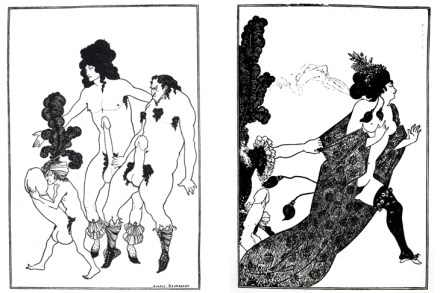
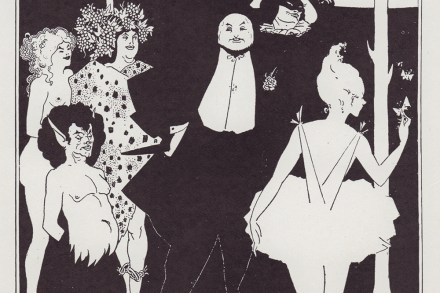
The gloriously indecent life and art of Aubrey Beardsley

From our UK edition

Picture the young aspirant with the portfolio of drawings pitching up nervously at the eminent artist’s studio, only to be turned away at the door by a servant; then the master catching up with him, inviting him in and delivering the verdict on his portfolio: ‘I seldom or never advise anyone to take up art as a profession; but in your case I can do nothing else.’ Within two short years of this fairy-tale meeting in the summer of 1891 between Edward Burne-Jones and the 18-year-old Aubrey Beardsley, the self-taught insurance clerk who had fallen under the Pre-Raphaelite spell had turned himself into the most talked-about artist in London.

The internet is taking the joy out of quotations

From our UK edition

‘Quotation (n.) — The act of repeating erroneously the words of another.’ Ambrose Bierce said that, or at least wrote it in the Devil’s Dictionary. That was in 1906, and those are words for the ages. In his Rhetoric, centuries before the birth of Christ, Aristotle identified one of the most common and effective ways of making an argument seem stronger. In his section on ‘proofs’ he talked about what he called ‘ancient witnesses’. By this he meant not only the testimony of witnesses such as you might call in court — but the witness borne by proverbs and quotations. Any speaker or writer can get an extra fillip of authority by quoting a revered forbear. Don’t just take my word for it, we say: Shakespeare or Montaigne put it best.

A fatal misunderstanding

From our UK edition

What is it about Naomi Wolf that inspires such venom? Perhaps that she’s American, brash, media-savvy and not averse to showing off her impressive embonpoint, which might go down badly in academe. But also — she makes mistakes. She made a pretty bad mistake in her very first book, The Beauty Myth, published in l990, by saying that 150,000 women died of anorexia in the US every year — whereas in fact she should have said 150,000 women suffered from anorexia. In this book, she seems to have dropped an even bigger clanger. Matthew Sweet started the ball rolling on his Radio 3 Free Thinking programme, when he told her that she was quite wrong to say that the number of executions for sodomy increased in the latter half of the l9th century.

Getting Wilde in America

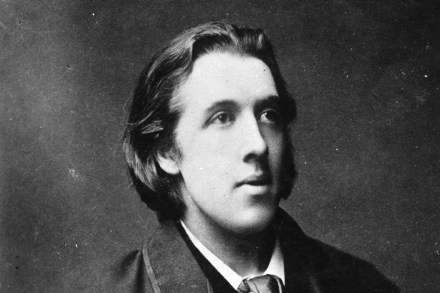
In January 1882, a still little known 27-year-old called Oscar Wilde began his year-long, coast-to-coast, 15,000-mile grueling lecture tour throughout America. The ostensible purpose was to publicise the US tour of Gilbert and Sullivan’s Patience, whose precious aesthete Bunthorne — ‘what a very singularly deep young man this deep young man must be!’ — was partly based on Wilde. The real motive was to advertise himself and become a celebrity while searching for his true sexual identity. Victorian men had to hide their homosexuality, but Wilde found a way to flaunt his real feelings. Wearing a theatrical costume while behaving outrageously on stage, he used his ambiguous sexuality to provide entertainment.

oscar wilde