Hungary

The lesson of Orbán: Trump must tackle corruption

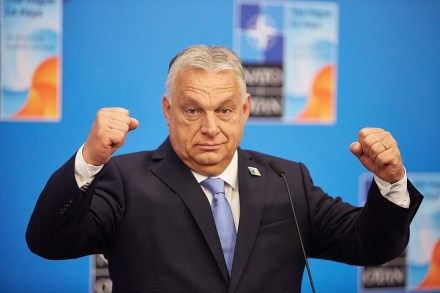
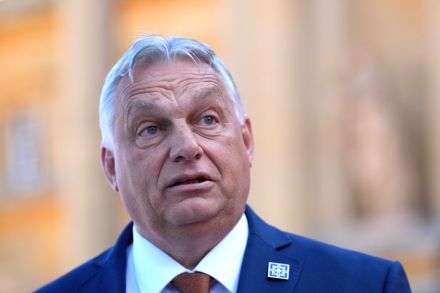
The landslide defeat of Hungarian Prime Minister Viktor Orbán carries lessons across the ocean for Donald Trump and both MAGA and non-MAGA Republicans. Trump pulled out all the stops for his ally, sending Vice President J.D. Vance to Hungary for a three-day endorsement tour and promising the day before the vote to “use the full Economic Might of the United States to strengthen Hungary’s Economy” if Orbán won. Well, he didn’t, and the Democrats are in full gloat mode after Orbán’s Fidesz party fell from 135 seats in parliament down to just 55. Senate Democratic Leader Chuck Schumer quickly made a comparison to the US, writing on X: “Pay attention, Donald Trump. Wannabe dictators wear out their welcome. November 2026 can’t come soon enough.
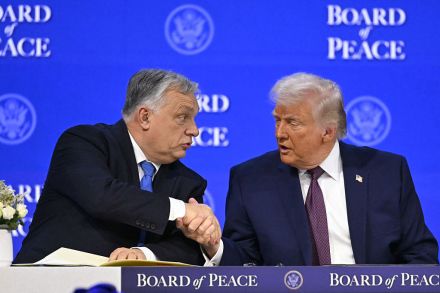
Trump Orban

Which racecourses have seen the most deaths?

From our UK edition

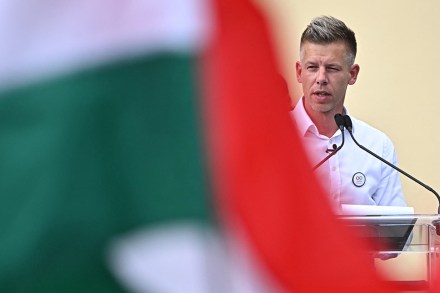
Hero worship Peter Magyar, the new PM of Hungary, has the unique distinction among world leaders of bearing the name of the country he leads. Why do we call the country Hungary when the natives call it the ‘land of the Magyars’? – ‘Hungary’ is literally, the land of the Huns. However, Middle English didn’t distinguish between them and the Magyars, a tribe which, in the 9th century, invaded and settled in what had been known as Pannonia. The Magyars themselves spoke a Uralic language related to Finnish, in which ‘Magyar’ is believed to mean ‘hero man’. Any relationship to the acronym ‘MAGA’ is purely coincidental. School starters The Scottish Green party wants to raise the age at which children start school to seven. How does this vary around the world?

Is Britain losing its sense of fairness?

From our UK edition

49 min listen

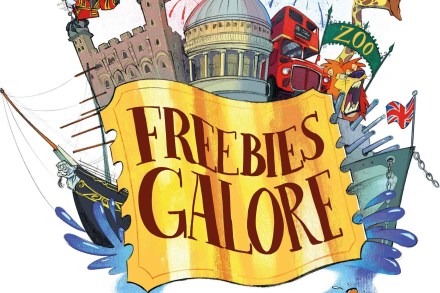
Has Britain become a freeloader’s paradise, asks the Spectator’s economics editor Michael Simmons in our cover piece this week. Michael analyses ‘the benefits of benefits’, at a time when Britain’s welfare bill is burgeoning and most households are struggling with cost of living. For example, while a family of four can expect to pay £111 to visit the Tower of London, that is just £4 total on Universal Credit (UC), and for London Zoo it is £108 compared to £26. Michael is not arguing against the idea of helping those in need, but pointing out that – as the benefits bill continues to increase – this is another case of governments prioritising ‘welfare over work’ and ultimately squeezing the working poor.

Is Britain losing its sense of fairness?

Hungary has become a tired gerontocracy

Hungary in 2026 is what most developed countries were probably on their way to becoming in the 1980s and early Nineties, had mass migration not intervened: a sleazy gerontocracy with occasional bouts of moral-majority politics and ethnic nationalism. With socialism dead, the opposition is made up of liberal parties led by equally sleazy modernizers. Crime has ceased to be an issue, partly because the population is aging. The people, like pandas, do not breed. There is boredom and ennui. There is nothing analogous to, say, the killing of Iryna Zarutska. Hungary has had a dreadful century and is now a tired sort of place Such has been the work of Viktor Orbán, Hungary’s Prime Minister since 2010, who is to face the voters again on April 12.

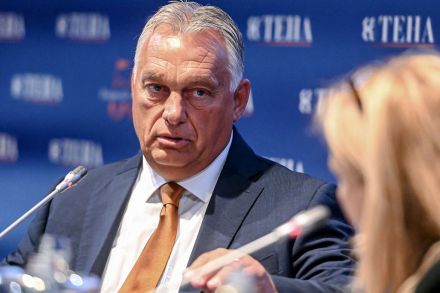
Is time up for Viktor Orban?

From our UK edition

For a country of ten million people that spent most of the 20th century occupied and impoverished, Hungary today is thriving. This, in the eyes of his supporters, is down to the 16-year rule of Viktor Orban. Hungary’s Prime Minister has, to use his phrasing, aimed to create an ‘illiberal democracy’. He has reformed the country’s judiciary, given tax breaks to mothers to increase the birth rate and zealously resisted the EU’s refugee policies. The last is illustrated by the 140-mile fence along the Serbian border constructed during the 2015 migration crisis. Proud border guards tell you that 1.1 million migrants have been kept out in a decade. Nevertheless, Orban faces his toughest election yet when Hungarians go to the polls this Sunday.

Meet the world’s finest string quartet

From our UK edition

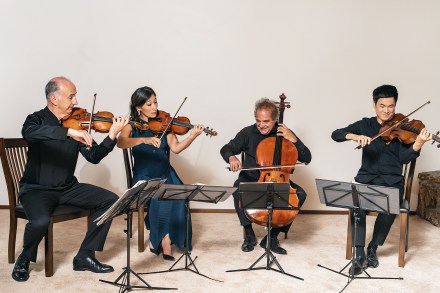
Once upon a time in communist Hungary – 1975, in fact – four students at the Liszt Academy decided to form a string quartet. That’s always an interesting choice. For a gifted and ambitious young musician, it takes a special kind of self-knowledge to pool your artistic future with three colleagues. But it’s what followed that makes the Takacs Quartet so fascinating. A relocation from the eastern bloc to the free West, the retirement of all but one of the founding members – and yet 51 years later the Takacs Quartet is still, recognisably, the same group. Some would say that it’s currently the finest string quartet in the world.  But throughout the story, there has been one constant: the group’s cellist, Andras Fejer.

How I lost 50lbs eating at McDonald’s

Eating regularly at McDonald’s over the past nine months, I have managed to lose 50lbs and ten inches off my waist, and I’m still counting. Yes, you read that correctly. Like many Americans, I have been trying to lose weight to no avail. I completely changed my diet, eating only vegetables, apples and microwavable, low-calorie, diet meals. And again, like many Americans, after months and years of discipline, restricting my portion sizes and eating like a rabbit, the scales wouldn’t budge. I had made so little progress that I had given up trying. Dieting is expensive and time-consuming and I didn’t realistically have the time or the money to do it, especially if I wasn’t seeing results. I work very odd hours and don’t have time to meal prep or cook. So I gave up trying.

The enlightened rule of the Empress Maria Theresa

From our UK edition

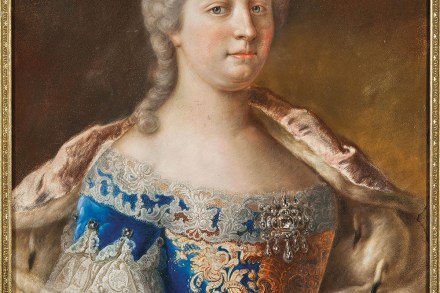
The role of personality and charm in running a state is one theme of Richard Bassett’s superb book, the first English biography of the Empress Maria Theresa since Edward Crankshaw’s in 1969. The different parts of the Habsburg monarchy – Austria, Tyrol, Bohemia, Hungary, Croatia and Milan – had little in common except dynasty, geography and Catholicism. Yet, partly owing to Maria Theresa’s force of character, this complex tapestry of nationalities remained a great power After she came to the throne in 1740, she felt ‘forsaken by the whole world’. Encouraged by France, Austria’s neighbours Prussia, Saxony and Bavaria invaded the monarchy in order to divide it between them.

The Europe of American imaginations no longer exists

Since the United Kingdom left the European Union five years ago, the pair have been in battle to prove who has performed better. But the real story of the past five years is not a stagnant UK falling behind a buoyant EU, but of Britain and Europe being trapped in the same cycle of relative decline. It’s America that has quietly raced ahead of Europe this century. Following the pandemic it has become impossible to ignore the gulf in economic vitality between the US and Europe, the former growing by 16.3 percent per capita since 2008. There are very good reasons for America’s success, or rather, Europe’s decline. The EU and the UK increasingly treat their industries as pieces of heritage which must be preserved against disruptors and foreign competition.

Europe

A ‘Trump tornado’ is about to hit Europe

There is a wind of change blowing through the West. It emanates from Washington DC, where President Donald Trump continues to dash off executive orders; more than fifty by the end of last week, the highest number in a president’s first 100 days in four decades. The liberal mainstream media is rattled. The New York Times magazine ran a piece at the weekend in which it described Trump as "the leading light of a spate of illiberal leaders and parties flourishing in democracies around the world." The paper namechecked some of them: Poland, Holland, India, France, Germany, Italy, Brazil, Hungary and Russia. What unites and motivates these "illiberal" parties is their opposition to what the NYT called "liberal creep," which they regard as a civilizational threat.

Trump

Giorgio Perlasca’s Christmas in wartime Budapest

From our UK edition

Artillery boomed over the Buda hills, the flashes of explosions slicing through the freezing winter dusk. The crack of rifle fire sounded nearby and the air was thick with the acrid stink of cordite. It was 24 December 1944 and Giorgio Perlasca was trying to get to the Spanish Legation villa to celebrate Christmas. The Hungarian soldiers at the checkpoint said it was not possible to proceed. The Russians were advancing and were now just a few hundred yards away. Perlasca explained that he was a Spanish diplomat and asked again to pass through. The soldiers reluctantly agreed. A few minutes later Perlasca was inside the Legation building. Sixty people had taken refuge there but had somehow managed to find a Christmas tree and some presents for him.

The good soldier Maczek – a war hero betrayed

From our UK edition

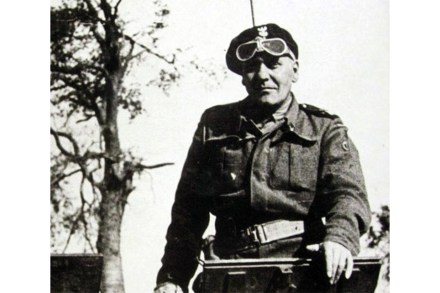
Who could forget the Polish squadrons in RAF Fighter Command when, in the 1969 film The Battle of Britain, a British squadron leader, frustrated by the excited radio chatter on being allowed into action at last, orders ‘Silence! In Polish!’ Or the Polish Parachute Brigade at Arnhem, whose commander, Stanislaw Sosabowski, played by Gene Hackman in A Bridge Too Far (1977), thinking the venture disastrous, growls ‘God Bless Field Marshal Montgomery’ as he jumps from his Dakota? Commander Eugeniusz Plawski, the captain of the Polish destroyer Piorun which first spotted the Bismarck and charged at her to draw fire, might be better known if he had featured in the 1960 film Sink the Bismarck! – but that wasn’t expedient, with the honours going instead to a Royal Navy officer.

The spy who came back from retirement: Karla’s Choice, by Nick Harkaway, reviewed

From our UK edition

Publishing is a business. Authors are its brands and books its products. When, as sometimes happens, one of the bigger brands inconveniently dies or retires, there’s an understandable desire to keep the brand going and to attach its lucrative name to new products. And why not? If it’s done well, everyone benefits – publishers, readers and authors’ estates. In the past 60 years, there have been few bigger brands than the late John le Carré, so it’s no surprise to find a posthumous outing with the words ‘A John le Carré novel’ plastered over the cover. Its author, Le Carré’s youngest son Nick Harkaway, is a well-established novelist in his own right, albeit in a different genre. He served his apprenticeship by completing his father’s last book, Silverview (2021).

Viktor Orban’s adviser has made a big mistake

From our UK edition

This week Balazs Orban, the bespectacled political director to the Hungarian Prime Minister (and of no relation to him), has found himself in trouble after a podcast interview he gave on Wednesday. He seemed to imply that Ukraine should not have resisted the Russian onslaught – and that if Hungary had been in a similar position, it would have given up without a fight.  ‘We probably wouldn't have done what President Zelensky did two and a half years ago, because it's irresponsible,’ Orban said. ‘Because obviously he put his country into a war defence, all these people died, all this territory was lost – again, it's their right, it's their sovereign decision, they had the right to do it. But if we had been asked, we would not have advised it.

The end of the Orbán era

Over the headline “Peace Mission,” a recent cover from the conservative Hungarian periodical Mandiner shows an awkwardly photoshopped Viktor Orbán mediating between a bemused-looking Vladimir Putin and a grim Volodymyr Zelensky. Behind Orbán, a map of the world connects Kyiv, Moscow, Beijing, Washington and Budapest. One of these capitals, as they say, is not like the others. Even before Ukraine’s Kursk offensive, the chances of Orbán’s July trips to Kyiv and Moscow producing a peace settlement were slim. The Mandiner cover, however, is a revealing window into the mindset of Orbán’s conservative fans. The idea of a Hungarian prime minister mediating between squabbling great powers is both attractive and plausible to many of Orbán’s fervent supporters.

Orbán

Natural wine and tacos on the Hungarian Riviera

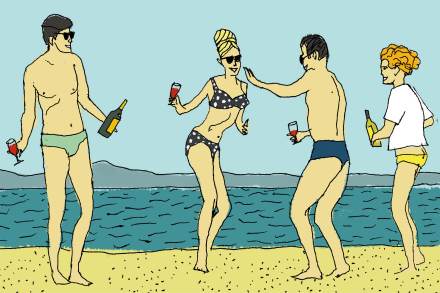
In the summer of 2020, as impatience with quarantine and the urge to get out of town gradually displaced fears of Covid, a joke circulated on Hungarian social media about Lake Balaton, a favorite destination for domestic holidaygoers. The post-quarantine stampede had driven up prices at the lake to such an extent, the joke went, that penny-pinching travelers should consider less expensive destinations, such as Monaco or the French Riviera. Until recently, Balaton had always been the inexpensive Hungarian alternative to pricier (and, during the Cold War, politically restricted) foreign getaways.

Balaton

Hungary is stretching the EU’s patience to its limit

From our UK edition

Hungary is no stranger to spats with its European neighbours. Under prime minister Viktor Orbán’s leadership, it has exercised veto rights to block Ukrainian military aid and Russian sanctions, delayed the Nato accessions of Sweden and Finland and shrugged off EU asylum regulations. For Budapest, the disputes have proven to be effective leverage in unfreezing funds — once €30million (£25 million), now some €22million (£19 million) — held by the Commission over rule of law violations and corruption concerns. For the EU, Hungary is a diplomatic headache - and one that may be about to get worse.

Remembering the Roma Holocaust, 80 years later

From our UK edition

On 16 May, 1944, as the first full trainloads of Hungarian Jews trundled towards Auschwitz, the SS decided to clear out the area known as the ‘Gypsy family camp’ to make room for the new arrivals. The family camp housed several thousand Roma and Sinti (Roma with German roots) people. Like the Jews, they were classified as racially inferior and enemies of the Third Reich. But while Jewish arrivals were immediately removed from their loved ones, Roma families were often allowed to stay together. Their numbers were much smaller and they refused to be separated. Claimant 3102250 finally received the standard compensation for her ordeal That day, the Roma and Sinti inmates, well aware of their likely fate, also refused to follow the SS’s orders.

The Orban acolyte who became his fiercest critic

From our UK edition

All sorts of people are grateful to Peter Magyar for bounding into the arena of Hungarian public life. Journalists, chiefly. Many a grizzled, lugubrious Hungarian hack had tears of gratitude welling as Magyar demolished the tedium and predictability of Hungarian party politics: Viktor Orban trampling a feeble collection of bunglers and chisellers, known as the opposition, again and again. Of course, the foreign correspondents were even more elated. Vilifying Orban? Step this way for your eulogy and hosannas, you smooth-talking cosmopolitan. Magyar is certainly deserving of attention; he’s fought a remarkable one-man blitzkrieg.

The Regime is bad eastern European pastiche

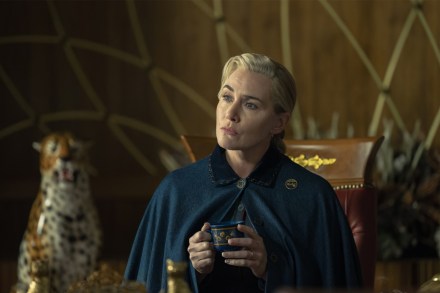
When you tire of trying to find the humor in The Regime, HBO’s new satire set in an unnamed “middle European” country, you can keep yourself occupied by trying to identify all of the historical references. The series was shot in Austria and the interiors have a dilapidated imperial feel, so perhaps we’re meant to think of one of the Visegrád countries — Czechia, Slovakia, Poland and Hungary — that inherited the heartlands of the Habsburg monarchy. The government, however, is led by a capricious and occasionally brutal authoritarian. Alexander Lukashenko of Belarus, often called Europe’s last dictator, immediately comes to mind. Chancellor Elena Vernham, played by Kate Winslet, is said to have studied medicine in Paris.

regime