Education

Will France’s school protest movement spread?

The government of France held a crisis meeting yesterday afternoon as a school protest movement intensified in violence. On Wednesday, 625 people were arrested and 83 gendarmes and police officers were injured as youths protested outside hundreds of schools nationwide. Yesterday, a school in Nantes was severely damaged after being firebombed and a fire engine was destroyed in Marseille. In the city of Reims there were fierce clashes between protesters and police, and only the use of tear gas dispersed the demonstrators. In some cities, such as Rennes, it was reported that university students were protesting alongside the high school pupils. The government claimed yesterday that the movement has been hijacked “by LFI and its far-left proxies.

I like a good hypocrite

I’ve always admired Diane Abbott, one of the most left-wing British MPs, though admittedly only for one thing. Many years ago she campaigned against private schools. As a good socialist this comes as part of the ideological package, and Abbott was more than happy to join in the class war against parents who are in a position to educate their children outside the state system. However, as some readers might remember, when it came to her own school choice Ms. Abbott looked around the local state schools and decided that none of them was good enough for her own progeny. So she sent her son to the City of London School, a private school for boys. Confronted with this hypocrisy, Abbott did the sole thing that I admire her for.

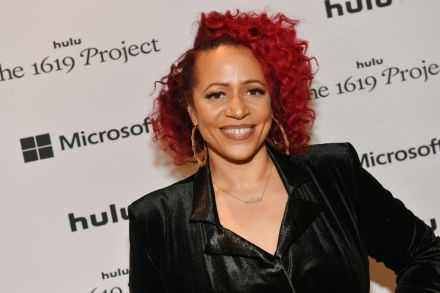
Nikole Hannah-Jones and the hard bigotry of progressives

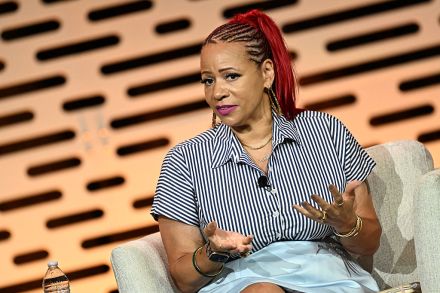
Nikole Hannah-Jones is having a moment every parent dreads: questioning whether her decisions as a parent has damaged her child. In her case, the evidence seems clear… it did. In the New York Times magazine, Jones, who makes a healthy six-figure salary, including receiving tens of thousands of dollars for paid speeches, decided to send her daughter to an economically deprived public school out of an obligation to the greater good instead of giving her daughter more advantages that could help her get into a better college and perhaps a high-paying career. Jones first wrote about choosing her daughter’s school in 2016, when she described her desire to send her child to public school but the difficulty of selecting a school in a “segregated city.

Nikole Hannah-Jones is having a moment every parent dreads: questioning whether her decisions as a parent has damaged her child

The sixth forms getting multi-million-pound glow-ups

From our UK edition

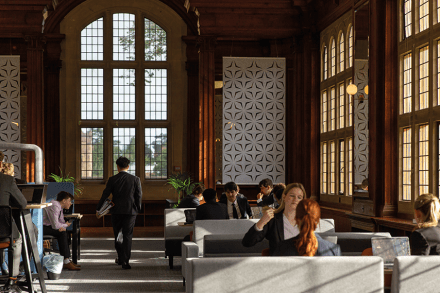
About halfway through my first term at Durham University, I made a breakthrough: I had taught myself to like coffee. And with it came the flirting, lecture decoding and friendship debriefing that could be done over a skinny latte in Caffè Nero on Silver Street. That was nearly 20 years ago. Nowadays, sixth-formers have a head start on café culture. At Canford School in Dorset, pupils slide out of A-level English and on to a bar stool in the newly opened ‘The Hub’, armed with a flat white (real-deal barista coffee, made by pupils). At Brighton College there’s ‘The Club’ – dark-green floor-to-ceiling bookshelves, Habitat-esque light fittings – and ‘Scott’s Café’ with artisan coffee.

Spare parents from overbearing school apps

From our UK edition

I was educated in the 1990s, first at a country prep school and then at Eton, and have a clear memory of how my schools communicated with my parents. Basically, they didn’t. They received a letter before the start of each term and some written reports at the end and that was it. If Eton sent your parents a letter in the middle of term it almost certainly meant you had suffered a mortal injury or been expelled. What Eton did do was publish a small pale-green pocket almanac called Fixtures which listed every sporting match in the calendar but also contained essential information such as the courtesy titles of any sons of dukes at the school and the colours of the 4th XV.

School portraits: Snapshots of four notable schools

From our UK edition

St Leonards, Scotland St Leonards is a coeducational day and boarding school for pupils aged four to 18 in the heart of St Andrews. It is Scotland’s only school to offer the full International Baccalaureate continuum, taking pupils from the primary years programme through to the diploma. The results are impressive. This year, 88 per cent of higher-level grades were awarded at 7-5, equivalent to A*-B at A-level, while pupils achieved an average diploma score of 35 points – roughly equivalent to three As. Headmaster Simon Brian says pupils leave not only with strong results but ‘the skills and attributes needed to genuinely flourish at university and in life beyond’. Fees start at £7,466 per term for day pupils and £14,933 for boarders.

How Glenalmond made me

From our UK edition

Early in 1968, when I was just 13, my father came home one evening with a letter in his hand and an uncomfortable look on his face. ‘You’ve won a big scholarship…’ Long pause. ‘…to Glenalmond.’ ‘But you promised I was going to St Edward’s,’ I protested. St Edward’s was the principal school in the scholarship scheme in which I was indeed a big winner. We had been to see its red-brick campus in Oxford and I was braced for my first boarding experience there. But Glenalmond? Where was it anyway? We had to find it in a road atlas, 300 miles away in rural Perthshire.

‘We pretend to teach, they pretend to learn’: the reality of lecturing Chinese students

Shanghaiing, the practice of drugging and kidnapping men on the US West Coast for service on ships bound for China, was made a federal offence in 1915, but every summer the university where I teach draws reverse inspiration from it when the Dean flies to China to round up students. Though it’s unlikely that he cruises the teen hangouts of Yichang or Xingtai, slipping laudanum into school leavers’ bubble teas, the demand for Chinese freshers is such that the use of press gangs by British universities would be neither unexpected nor much out of character. More than one in 20 students in Britain are Chinese. They contribute billions to the UK economy annually and without them several universities would go bankrupt and most would struggle.

Cambridge’s Farah Ahmed: study engineering ‘to produce weaponry for Jihad’

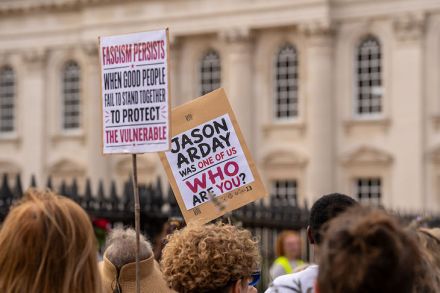
Cambridge University’s education faculty – former home of Jason Arday – has appointed as assistant research professor a woman who wrote that Muslims should study engineering and computers ‘to produce advanced weaponry for Jihad in order that the deen [Islam] may dominate over all other deens.’ This is the fourth in our series of articles about Farah Ahmed, a former activist in the racist, extremist and separatist group Hizb ut Tahrir, now banned as a terror organisation, who has been given a senior role by Cambridge training the future leaders of the teaching profession.

Inside Arizona’s battle for school choice

Arizona families won big this week. The teachers union and Save Our Schools fell short (again) in their latest attempt to roll back the universal Empowerment Scholarship Account program that helps more than 100,000 students there. The groups needed 255,949 valid signatures to place their Protect Education Act on the November ballot. They submitted 421,451, but after legal challenges and county reviews, so many proved invalid that the initiative appears to have fallen well short of the minimum number. School-choice opponents will continue to organize and spend Nearly 70,000 signatures were disqualified. The Arizona Free Enterprise Club noted that the initiative is projected to be more than 10,000 signatures short.

Letters: universities have always been a little crazy

From our UK edition

Universities’ challenge Sir: I have spent more than three decades in academia and so Lara Brown (‘Alma madder’, 15 August) struck a chord. The craziness is not a new phenomenon. In the mid-1990s my employer, Thames Valley University, offered a half-module in kite-flying. Students spent half a day each week on Hampstead Heath, learning how to fly their silk and bamboo contraptions. I have often wondered how the students used the transferable skills they gained in later life. More recently, I was taken to task by a bureaucrat for not stating my preferred pronouns in my email signature block. When informed it was ‘university policy’, I capitulated. Thereafter, my preferred pronoun was ‘Dr’. I assumed this was acceptable, as I was troubled no further.

Jason Arday wasn’t the victim of a ‘racist witch hunt’

For decades, voices on the liberal and progressive left have invariably rolled out the terror-inducing accusation of “racism” in order to get their way and silence opponents. It’s thus unsurprising to see, in the wake of British academic Jason Arday’s death, that they're still resorting to this cynical tactic, and in this case, to absolve themselves of responsibility for having exploited this vulnerable man in the first place. To call it a ‘witch hunt’ is predictable and unfounded hyperbole In response to Arday’s death, Jo Grady, general secretary of Britain’s University and College Union, said the “level of harassment he suffered and the racism he was subjected to has been sickening.

Letters: the insanity of Labour’s attack on private schools

From our UK edition

Bad education Sir: Lara Brown (‘Class warfare’, 1 August) lays bare the baleful consequences – intended and unintended – of Labour’s vandalistic attack on private schools. It borders on the insane for a government to seek to destroy a sector which is a world leader. An administration genuinely committed to economic growth would champion industries where the country retains comparative advantage. Consumed by an outmoded class ideology, and seemingly unconcerned about the effects of its policies on the educational prospects for many young people, Labour seems determined to do the opposite.

How to fix education

From our UK edition

The new prime minister’s eye catching opening announcement on education contains important truths, interwoven with equally important misconceptions. In implementing his agenda, he has the potential to do much good, but also much harm. Most fundamentally, the design of the school curriculum is not the primary cause of the rapidly expanding crisis of young people not in education, employment or training (Neet). Neither is it the key driver of youth unemployment – most recently measured at 16.4 per cent, close to the highest level since 2015. The main culprits are instead the inflation-busting rises in minimum wage and national insurance contributions, the Employment Rights Act and a buckling welfare system which incentivises inactivity.

Dear Mary: What should I do if the view’s no good with my free tickets to Wimbledon?

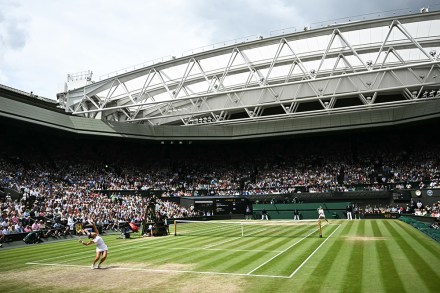
Q. Around this time of year a friend, who gets hold of tickets through an agency, usually asks me last-minute to Wimbledon. The trouble is it’s hard to know whether she has good seats. One year was perfection as we had shaded middle-tier seats, but last year we had an obstructed (pillar) view and I would rather have watched at home. I am sure there are those among her friends who would love to be there in any kind of seat so how, without sounding ungrateful or spoilt, can I ascertain what’s on offer before accepting? – H.S., London SW6 A. First familiarize yourself with the court layouts and seat numbers. Then, if she invites you, say: “What an incredible coincidence. I have just been speaking to X (a fictional friend). X has also managed to get last-minute seats.

Wimbledon

Farewell to the school I founded

From our UK edition

My son Charlie sat his final A-level paper last week and the significance of this has only just sunk in. It’s not simply that he has finished his schooling; he’s the last of my children to do so. No more PTA meetings, no more parents’ evenings, no more school runs. My kids are all grown up. I’ve fulfilled my biological duty, raising four of them to adulthood, and can now disappear over the horizon into the sunset – or, rather, the Sunset Care Home. This is particularly poignant as I helped set up the school my children went to. Between 2009 and 2011, I led a small group of parents and volunteers who founded the first free school to sign a funding agreement with Michael Gove, then the education secretary.

Let AI eat the universities

College is extraordinarily expensive and becoming less useful, and those who insist otherwise are working from a model of the labor market that stopped describing reality sometime in the 1990s. Four-year courses at private institutions often cost more than $70,000 a year, and it should come as no surprise that student debt has tipped over $1 trillion . This situation is ridiculous for a film student, but it is also ridiculous for a computer science graduate whose program could not keep pace with the industry it was preparing him for – and who learned more in four months on GitHub and dicking around on X and Repl.it than in four years of lectures. It’s sad, but how many people were attending school for “the life of the mind” to begin with?

Were Britain’s postwar dons just having too much fun?

From our UK edition

A history of academic life stands and falls by the number and quality of its anecdotes. On this count, Colin Kidd’s Twilight of the Dons unquestionably delivers. Did you know that the biologist Francis Crick wrote to Winston Churchill suggesting that an educational institution named after the statesman would be better off with a college brothel than the proposed chapel? Or that Eleanor Plumer, an early principal of St Anne’s College, Oxford, told the fellows of her fledgling institution that if they simply must have children, could they ‘kindly ensure’ they had them ‘in the University vacation’? At times, the book can seem to be an anthology of such anecdotes, combining, often in the same story, the world-historic and sociologically significant with the gossipy and trivial.

In praise of uncertainty over hollow conviction

From our UK edition

When I met Brian Dillon in February 2023, he seemed to have a lot on his mind. We had arranged to speak about Affinities, the newly published final instalment of Essayism, his sprawling three-part survey of literature, art and aesthetics. That morning, as he sipped decaf coffee in a quiet corner of the Barbican Kitchen café in London, he still didn’t know what his book was about. ‘At this point you don’t,’ he confessed. But even though he hadn’t made up his mind about Affinities, Dillon had already begun to think about his next project. It was to be a memoir of his education, called Ambivalence. This has now come to fruition.

White working-class boys are being left behind

This week marks the fifth anniversary of the publication of the report of Lord Sewell’s Commission on Racial and Ethnic Disparities (CRED). In spite of a suitably diverse group of commissioners (or perhaps because of that), it refused to blame ‘systemic racism’ for the underachievement of certain ethnic minorities. It didn’t dismiss that hypothesis entirely, but concluded that other factors, particularly class, geography and family background, were more important. This analysis – supported by lots of data – did little to protect the commissioners from the fury of the woke left, who denounced them for ignoring historical injustices. Exhibit A in the report’s argument was the poor educational performance of white working-class boys.