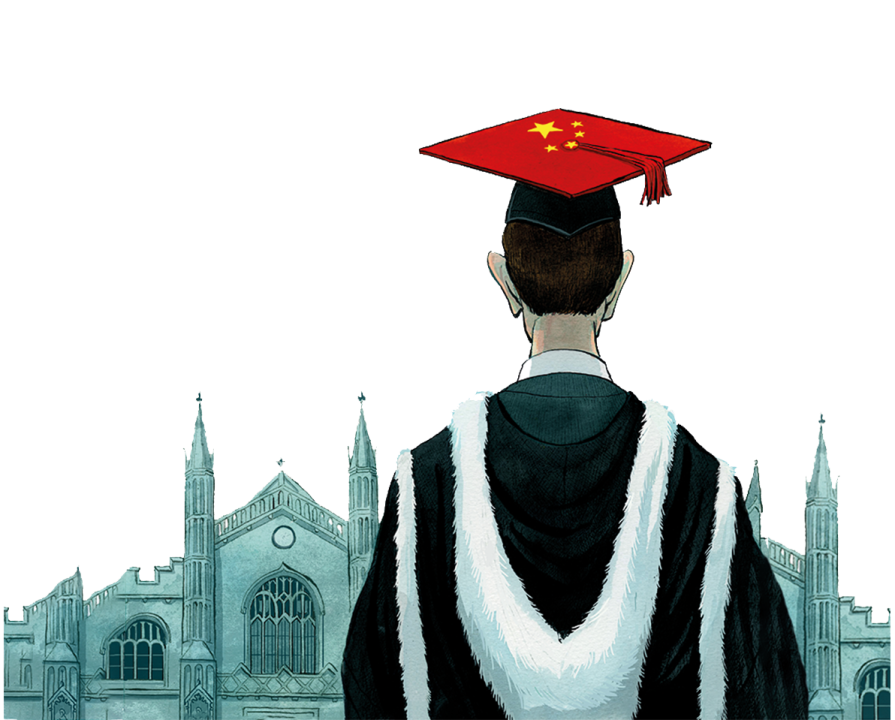
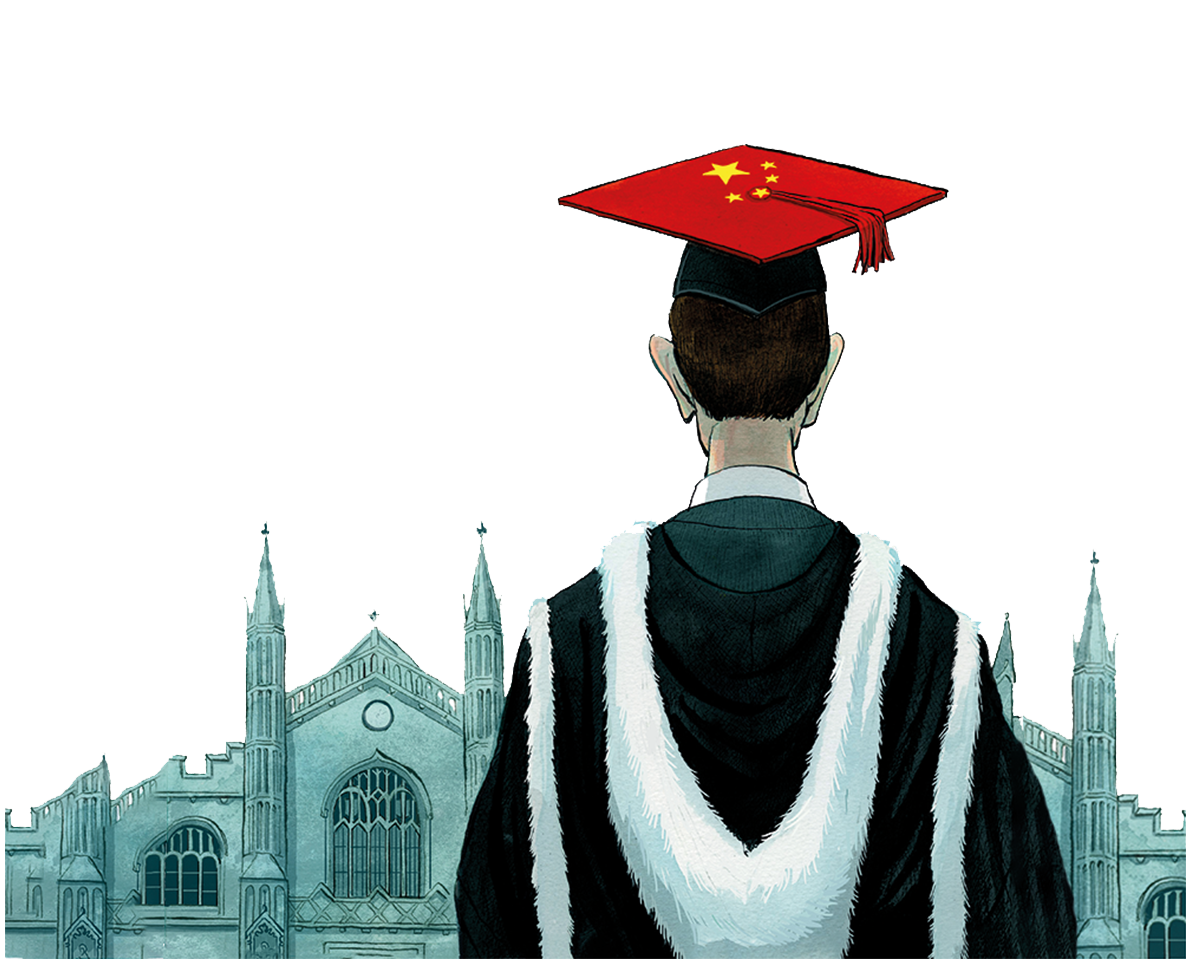
Shanghaiing, the practice of drugging and kidnapping men on the US West Coast for service on ships bound for China, was made a federal offense in 1915, but every summer the university where I teach draws reverse inspiration from it when the dean flies to China to round up students. Though it’s unlikely that he cruises the teen hangouts of Yichang or Xingtai, slipping laudanum into school leavers’ bubble teas, the demand for Chinese freshers is such that the use of press gangs by British universities would be neither unexpected nor much out of character.
More than one in 20 students in Britain are Chinese. They contribute billions to the UK economy annually and without them several universities would go bankrupt and most would struggle. The real earners are MAs, with fees of more than £30,000 for some one-year courses. University administrators secretly wish that all students were Chinese and on MA courses. Chinese students pay punctually, rarely complain and generally seem to go along with the “we pretend to teach and they pretend to learn” model favored by university management.
Chinese students are much like any others. Most are lively, cheerful and surprisingly funny, knowing about their own society and its discontents, while also sometimes being very acute about their hosts. But the language and cultural differences are wide, many vastly exaggerate their ability to speak and understand English, and there is little incentive to learn.

Outside of the classroom, there is no real need to speak more than a few words of English. The city where I teach has Chinese restaurants, supermarkets, hairdressers, student accommodation and more. Translation apps fill the gaps. It’s not the students’ fault, but it results in trying to teach people who often don’t understand at least 80 percent of what they’re hearing.
It’s probably lucky that I teach filmmaking. Until boredom can kill, unleashing a few more incompetent filmmakers on the world will not have life or death consequences. But sometimes I wonder about courses like medicine or nuclear engineering. In filmmaking, seminars begin with me working out which student speaks the best English. I then deliver the key information to them and they explain to the others, or so I hope. They could be saying anything: “Just keep nodding and smiling at the stupid Englishman, tonight we film the air base.” In truth, the topics of their films suggest most are very lukewarm supporters of the Chinese system. Corruption and the CCP manipulating everything from education through to jobs and housing are frequent topics for scripts, in spite of writers knowing that some of their colleagues are probably party informants.
The scripts are almost invariably written in Mandarin and then run through a translation app, but they give a better idea of the concept than the excruciating verbal pitches students are forced to do. There are many films about relationships, though mainly intergenerational ones. While British student filmmakers massacre fictional parents in car crashes and then write about themselves, Chinese parents and grandparents are all too present and demanding. There are always food scenes. Sex is rare, and what sex there is leans toward coming out but is occasionally deeply bizarre. I once had to explain to a student with almost no English why he could not film a scene where a child was abused by a man dressed as a sheep. Luckily, miming handcuffs instantly bridges cultural gaps.
Mime, sign language and Google Translate are essential – John Woo DVDs with Mandarin dialogue and English subtitles are there when all else fails. Some teaching is effective, but only for a minority, and every now and then a great script results. There are other compensations. The miscommunication and typos can be very funny: “Alarm sounds, Mary wake from sleep suddenly. She gasp for breath. She reaches for nearby cock.”
Assessment is designed to flatter, deceive and recruit. Reports that Chinese students refer to UK courses as “easy in, easy out” are not unexpected. It is very difficult to fail. Grade inflation is rampant and both plagiarism and use of AI are largely overlooked. Ironically, plagiarism is becoming less of a problem because AI cheats more effectively. It is still easy to spot as monoglot students suddenly write perfect English, but challenging it means an academic misconduct case, which takes time and effort and might not succeed. What if the lawyers get involved – and if you feel that strongly why don’t you just knock 10 percent off their final mark?
The use of AI is easy to spot as monoglot students suddenly write perfect English
University authorities know all this but are trapped by finance. In David Lodge’s Nice Work, Vic Wilcox, a businessman, warns that a university can’t play at capitalism; but the universities don’t listen and now market logic has them in thrall. If they enforced realistic grading, paper exams and expulsions for use of AI, students would go to universities that didn’t. What we are really selling is the remnants of our national integrity. At times you feel like some corrupt imperial functionary handing out colonial sinecures in return for bribes: this certificate bears His Majesty’s head. BACs or check?
There is little chance of change. Chinese students may be difficult to teach and losing their illusions about the value of British qualifications, but there is no substitute. Our future demographics are terrifying and universities collapsing would bring down towns and cities with them, so academics will continue to be censored, security guards set on campaigners for Chinese democracy and blatant cheating ignored. Our universities are addicted to Chinese students and – like most junkies – can’t even begin to think of life without the hit. It has taken almost 200 years, but the gods are just and the Opium Wars have come back to bite us.






Comments