Wynn Wheldon

Things to do: read this book

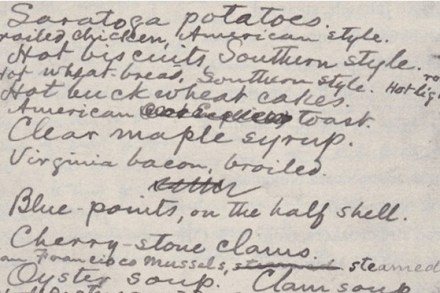
It would be perverse not to succumb to the temptation to write this review as a list. So, the first item is how very handsome an object this book is: sturdy and smooth and substantial and full of white space and full-page illustrations (my favourite is Nick Cave’s homemade dictionary, which has two full pages). How much less satisfactory it will be in its e-form. This is somewhat ironic, as it had its genesis as a website, being a companion to the equally splendidly produced Letters of Note, such a hit last Christmas. Item two is that it is just as engrossing as that former volume. Indeed, judging from the number of shared contributors — F. Scott Fitzgerald, Leonardo da Vinci, Einstein, Vonnegut — it is less a companion, more an offspring of the first.

Kafka goes to Dubai

‘X’ is in ‘the Situation’: Joseph O’Neill, author of the clever and superb Netherland, hereby lets us know that his new novel is a riff on Kafka’s The Castle. Kafka’s ‘K’ has become X, struggling for recognition by his lover, by his employer, by the world. The Situation is a residential block in Dubai (desert sand for Kafka’s snow). X is a corporate lawyer who has been invited there by an old college friend, a dodgy Lebanese billionaire, to handle the family’s personal financial affairs. The burdens of this job constitute the first of the three threads that bind the novel together. The second is the story of X’s relationship and break up with his high-powered girlfriend, Jenn, of whom he is terrified.

Sorbet with Rimbaud

The Bloomsbury of the title refers to the place, not the group. The group didn’t have a poet. ‘I would rather be a child and walk in a crocodile down a suburban path than write poetry, I have heard prose writers say,’ wrote Virginia Woolf, albeit tongue-in-cheek (maybe). Nonetheless, unsurprisingly, these non-poets steal the first chapter of this amuse-bouche of a publication. They are allowed to so that the author, or rather his sources, may describe the rather dull area of London that abuts the eastern end of the Euston Road to the north, and to the south High Holborn. ‘A cold grim house in a cold, grim district,’ wrote Harold Nicolson of Virginia and Vanessa Stephens’s house in Gordon Square.

The Zone of Interest is grubby, creepy – and Martin Amis’s best for 25 years

‘Everybody could see that this man was not a “monster”, but it was difficult indeed not to suspect that he was a clown,’ wrote Hannah Arendt of Adolf Eichmann, in Eichmann in Jerusalem. Indeed, Eichmann was certified as ‘normal’ by half a dozen psychiatrists. On more than one occasion in Martin Amis’s troubling new novel one of its main characters, the fictionalised commandant of a thinly disguised Auschwitz, declares himself ‘completely normal’. He also happens to be an oaf, a clown. We are dealing, then, with the banality of evil. Set in the months from August 1942 to April 1943, when it became clear that the Germans were going to lose the war and that the Final Solution had better be hurried up, the story is told in three voices.

Nature inspired P.J. Kavanagh – but so did ghosts, dreams, grief and God

P.J. Kavanagh, if not dismissed or relegated, is often shall we say bracketed, as a ‘nature poet’. The truth is, he’s as much of a nature poet as William Cowper was: in other words a good deal more than ‘a man who woos a rural muse’. While Kavanagh is also mentioned as a successor to Louis MacNeice and Edward Thomas, and is known for his portraits and tips of the hat to many other poets, such as Robert Lowell, Ivor Gurney and Yeats, it is, in fact, Cowper whose echo I myself hear most clearly.

Half-poetry, half-prose, half-Belgian – and not half bad

Patrick McGuinness’s prose trembles on the edge of poetry, occasionally indeed tipping gently over into it. This is thoroughly characteristic of a book that does sometimes feel as though it might be an abandoned sequence of poems, reconfigured in often spell-binding prose. The title itself is poetic: who the ‘other people’ are and which ‘countries’ they come from is never wholly clear. However, perhaps this cavil is unjustified. Poetry, after all, inhabits a literary space in which fact and fiction merge or dissolve into one another, as they do in (or are made to by) memory, so the subtitle hints at what is to follow, which is an attempt to describe the act of remembering.

A master craftsman of the anecdote

One of the many charms of this book is its sheer unexpectedness, which makes it hard to review, for to reveal the brilliancies too fully would spoil their effect. My copy is splattered with exclamation marks. For example, on page 65 the author is working on a piece of delicate silver jewellery that will become the ‘Two Turtle Doves’ of the title while singing along to ‘Hersham Boys’ by Sham 69, a punk band of the 1970s associated with skinhead violence. Exclamation mark. Two pages later, and years earlier, he is playing ping pong with Benjamin Britten. Two exclamation marks.

Deserter, wifebeater, great poet: the shame and glory of Vernon Scannell

Vernon Scannell was a thief, a liar, a deserter, a bigamist, a fraud, an alcoholic, a woman-beater and a coward. Plenty of material for a biography, then, especially given that he was also a novelist, a critic, a memoirist, a boxer, a teacher, a broadcaster, a loyal friend, a passionate lover and ‘a fun grandfather’. Most of all, he was a poet. Walking Wounded was the title of a Scannell poem and collection published in 1965, and James Andrew Taylor is right to use it as the title for this biography. Beaten viciously by a thug of a father, uncomforted by an unloving mother, by the time he was 19 he was himself a father (of a son he never met) and a soldier, and soon to be a deserter, wounded chronically in mind if not in body.

A Strong Song Tows Us, by Richard Burton – review

How minor is minor? ‘Rings a bell’ was more or less the response of two English literature graduates, now successful fifty-somethings, when asked what the name Basil Bunting meant to them. It is, after all, a good name, a memorable name. I asked a younger friend, about to start his Eng. Lit. degree at Keble: ‘Nothing.’ I asked a former literary publicist: ‘No, nothing.’ I quizzed a chap from the FCO: ‘Nothing, I’m afraid. Sorry.’ Perhaps not deep research, but I’d be surprised if Basil Bunting’s work was familiar to anyone not a poet or scholar of English modernism. Is this as it should be? Does he deserve a 600-page biography (any more than any other minor poet)? As a matter of fact he does. Tehran, 1951, the Ritz.

Six Bad Poets, by Christopher Reid – review

Is poetry in good enough health to be made fun of in this way? The irony is that this long, funny poem describing the incestuous peccadilloes of contemporary poetry’s social purlieus deserves to be read, and almost certainly will be read — and purchased — by far more readers than all but a few collections of poetry, even those by rather good poets. Christopher Reid was known originally as a poet of the ‘Martian’ school, which sought to find new ways of looking at the familiar: ‘Splitting an apple, / I find a cache of commas.’ More recently he gained wider attention as the author of the award-winning A Scattering, a moving collection of poems about his wife in her last illness and his own life as an ‘inhabitant/ of an empty house’.

There and Then: Personal Terms 6, by Frederic Raphael – review

Frederic Raphael is forensic in his description of the failures of successful people. He is enviously superior and he is partial to the clever oxymoron: ‘predatory caution’, ‘reticent curiosity’, ‘intimidating reassurance’. It is as though he cannot see an abstract noun without qualifying it with a contradictory adjective. It is a kind of shorthand cleverness, but a cleverness nonetheless. For Raphael is undoubtedly clever, and intelligent, and knowledgeable and smart (and, we learn, good at football, tennis and bridge). It is hard not to envy his certainties. This is a thoroughly enjoyable read. Diaries promise indiscretions, and the joy of gossip.

Country Boy, by Richard Hillyer – review

Under his real name, Charles James Stranks, the author of this little masterpiece wrote on a number of ecclesiastical subjects: the Venerable Bede, Jeremy Taylor, Durham cathedral, where he was a canon. He died in 1980. Country Boy was originally published in 1966. It is a memoir of the author’s childhood, and there is no reason to doubt the truth of its salient events. However, using a pseudonym, and changing the name of the Buckinghamshire village in which he grew up from Hardwick to Byfield (even giving us the proper pronunciation — ‘Biffield’) and presumably the names of the people characterised so brilliantly, perhaps accounts for the book’s coherence and heft. It reads like a novel.

A Slap in the Face, by William B. irvine – review

A friend of mine who works for the NHS has been told recently by a superior that his ‘attention to detail is bordering on the obsessive’. Aside from observing that an obsessive attention to detail might serve the health service well, this is an example of the kind of insult that Professor Irvine would ascribe either to low self-esteem or to narcissism (high self-esteem with no self-knowledge). The speaker wasn’t offering constructive criticism (my friend had been praised for his attention to detail only days before, by a perhaps less negligent superior) but rather emphasising her superiority, something she had no need to do, unless she felt it threatened. My friend’s attention to detail is clearly her problem rather than his. Irvine begins with examples of insult.

Z, by Therese Anne Fowler, Beautiful Fools, by R. Clifton Spargo, Careless People, by Sarah Churchill – review

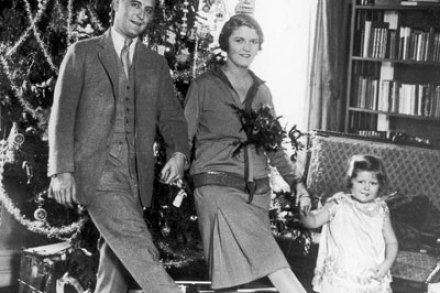
The Great Gatsby is one of those great works of literature, like Pride and Prejudice, that appeals as much to the general reader as to the literary bod. It’ll always be around, if not as a movie (there have been five since its publication in 1926) then as an opera or a ballet. Last year a staged reading ran for weeks in the West End, to critical acclaim. It is a short book — a long short story really — about wealth and sex and hope and disillusion and partying. These are the themes, too, of the lives of its author and his wife Zelda. Theirs was a relationship that continues to fascinate as powerfully as any fiction, and so has produced fictions to investigate it.

Holloway, by Robert Macfarlane – review

This is a very short book recording two visits to the hills around Chideock in Dorset.In the first Robert Macfarlane and the late Roger Deakin, author of Waterlog, go searching for the ‘holloway’ in which Geoffrey Household’s hero holes up in Rogue Male. A holloway (not to be found in the OED) is, in Macfarlane’s words, ‘a sunken path, a deep & shady lane’ and, according to Household, ‘a lane not marked on the map’. The second trip, made with Macfarlane’s co-authors after Deakin’s death, revisits the holloway, and the hill-fort at the top of Pilsdon Pen.

‘Let’s Explore Diabetes with Owls’, by David Sedaris – review

David Sedaris writes principally for The New Yorker. Urbane, then, American, smart. But is he a memoirist, a fabulist or an essayist? He is most often described as a humorist, but he’s not funny like, say, Woody Allen. He’s no Stephen Leacock. The aim of his writing is not to make the reader laugh. Which is not to say that there isn’t at least a chuckle or two and usually a guffaw in each of the 26 pieces that comprise this book. While studying Life in the UK in order to apply for Indefinite Leave to stay here, Sedaris learns much that the rest of us do not know: ‘I learned that people below the age of 16 cannot deliver milk in the UK, but I don’t think I learned why. It was just one of those weird English injustices.

I Know You’re Going to be Happy: A Story of Love and Betrayal, by Rupert Christiansen – review

This is an unsettling book. On the face of it a memoir by the opera critic of the Daily Telegraph, it veers from social history to intimate confessional, from objective understanding to subjective contempt, with strong elements of hatefulness. In the summer of 1959 the author’s father, a prominent journalist and son of Arthur Christiansen, Beaverbrook’s great editor of the Daily Express, left the family to live with (and eventually to marry and have a family with) his secretary. What Christiansen describes in his book is the fall out from this act of betrayal. The subtitle includes ‘love’, which must refer to the son’s love for his mother.

What dogs know about us

In Aesop’s fable of the Dog and the Wolf, the latter declares that it is better to starve free than be a fat slave, but the fact is that, without man, there would be no dog at all. When people eventually began to form permanent settlements, a new food source appeared: waste. Wolf packs, less fearful of man than others, less aggressive too, took advantage, and turned themselves into dogs. Natural selection works in mysterious ways. Years ago, before the gender police were on the prowl, this book’s top title would have been Man’s Best Friend, for the ‘genius’ that it describes is the dog’s talent for inter- action with humans. Neither a teaching manual nor an anthology of heroic dog stories, this is a work of scholarship. It has 67 pages of notes.

Redemption through rock and roll

‘I’m the President, but he’s the Boss’, Barack Obama declared a couple of years ago, and most Spectator readers will know Bruce Springsteen as the President’s celebrity pop star friend. (One of the first of the many pleasures Peter Ames Carlin’s book affords is the story of how Springsteen came byhis nickname: he was a ruthless player of ‘Cut-throat’ Monopoly.) Bruce Springsteen is much more than a celebrity, and Carlin’s book far from a dispiriting celebrity hagiography. Although written with the full co-operation of Springsteen himself, it pulls no punches in describing the singer’s faults and weaknesses, cruelties and mistakes.

Little boxes, all the same

This book purports to be a history not of London but of its suburbs. In the end this amounts to much the same thing, because the author is referring not to the present suburbs but to all the suburbs of London that have ever been, from Southwark onwards.  After Boadicea sacked their original wooden settlement, the Romans rebuilt it using stone, putting up walls that lasted for almost 2,000 years. Within these walls was the city, and ‘without’ were the suburbs. This book, then, is a history of London minus the Square Mile (in other words of the 599 other square miles). The epithet ‘suburban’ has tended in latter years to be used snootily by those who regard themselves as fully-detached cosmopolitans.