William Newton

Barcelona rising

From our US edition

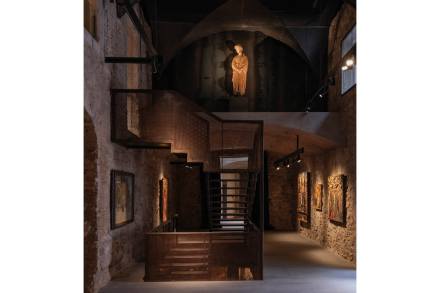
Barcelona is one of the world’s great cities; happily, it seems to be waking up from a lengthy nightmare of its own conjuring. During the anti-everything leadership of its previous mayor, failed actress Ada Colau, empty storefronts, open-air drug markets and sidewalks reeking of urine proved unconducive to outside investment. A deal to establish a local branch of the Hermitage Museum fell through, thanks to political virtue-signaling by local officialdom. Anti-tourism campaigners stepped up their activities over a period of years, even as cities such as Madrid and Málaga began to boom with historic renovations, new luxury hotels and cultural projects designed to attract visitors. Fortunately, things seem to be turning a corner.
Barcelona

Guiding young minds through the National Gallery of Art

From our US edition

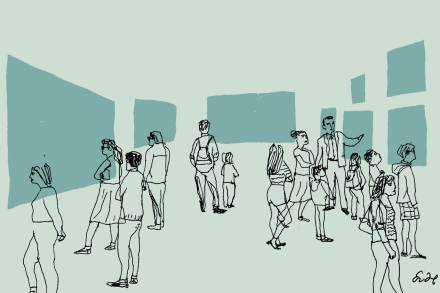
"Are there any more questions?” I asked loudly. I was struggling to make myself heard above about thirty seventh-graders, whom I was leading on a tour of the National Gallery of Art. There had already been many questions that morning, even before we began looking at objects in the museum’s permanent collection. We had just finished an analysis and discussion of techniques and symbolism in a seventeenth-century sculpture from Seville, so I took advantage of the momentary lull in the hand-raising and was walking toward the next work on our itinerary when I heard an unexpected sound. Thud. Turning, I saw that one of the students had fainted, practically at my feet. Teacher and chaperones rushed in, and after a few moments the student was fine.

tour

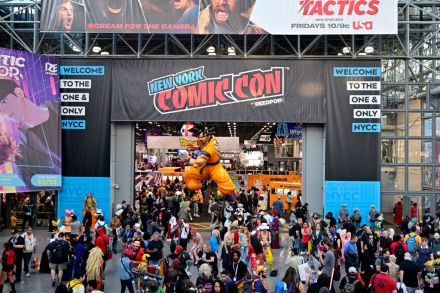
Return to Comic Con

From our US edition

A year ago I wrote about the experience of attending New York Comic Con for the first time. This type of entertainment convention, which has its equivalents in cities all over the world, brings together fans of superheroes, science fiction, fantasy and beyond. Along with the elaborate cosplay beloved of attendees, Comic Cons also feature a great variety of visual artists. This year, it happened that the Con fell in the same week the Metropolitan Museum of Art opened its first-ever exhibition of Quattrocento Sienese painting, placing a particular emphasis on storytelling. What if there were a connection between the highbrow exhibition uptown and the popular convention downtown?

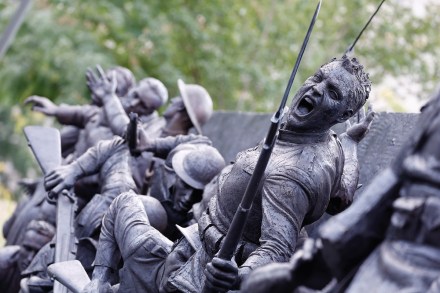
A classic monument for World War One

From our US edition

I was standing in front of “A Soldier’s Journey,” the centerpiece of the new National World War One Memorial in Washington, DC, chatting with its creator, sculptor Sabin Howard, when I raised a question. “So, are you the new Saint-Gaudens?” I asked. “No! No, God no!” exclaimed Howard. “That guy sucks.” Sabin Howard is nothing if not direct in expressing his opinions, which are refreshingly free of the artspeak that saturates most of the contemporary art world. It’s a frankness that is best appreciated by examining his current commission as well as trying to understand the artist himself.

Memorial

Böcklin brings out the dead

From our US edition

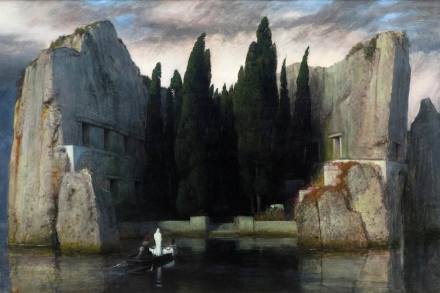
In the fall, a middle-aged man’s fancy turns to thoughts of death. As shadows lengthen, decay takes root in the raised beds, and the “spooky season” recalls the shortening of our days. It also provides an opportunity to reflect on how one artist embraced this time of year. Much of the life of the Basel-born Symbolist Arnold Böcklin (1827-1901) was haunted by the specter of death. His first fiancée died before they could marry; he himself nearly died of typhus. Of his fourteen children, five died in childhood; three others predeceased him. His daughter Maria was buried in the English Cemetery in Florence, where Böcklin spent much of his life. Scholars believe that the cemetery partly inspired Böcklin’s most famous work, 1880’s eerie “The Isle of the Dead.

Böcklin

In the studio with Merche Gaspar

From our US edition

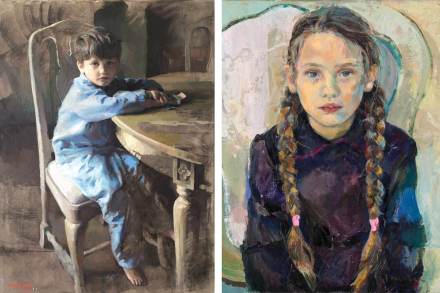
I was sitting cross-legged on the floor of artist Merche Gaspar Caro’s studio in Barcelona on a rainy Monday morning when I asked myself, “Why isn’t this artist better known?” We had met by chance some months earlier, when I passed by the Galeria Subex, which at the time was hosting a show of her recent work. I was initially drawn in by the exhibition poster, which displayed a stunning image of a young woman wearing a dark-blue dress and a white apron. Once inside the gallery, I was enthralled by canvases of mothers and daughters, drawings of birds and paintings of children playing or curled up in bed reading stories. Many featured a wonderfully cool, contemporary palette of mauve, gray and sapphire.

A beginner’s guide to buying art

From our US edition

Perceived barriers to entry often keep potential art collectors from taking the step beyond admiration to acquisition. Sometimes this results from neither liking nor understanding what’s available, but basic hurdles can involve learning how best to source and price what you are collecting — and the terminology can be daunting too. In his latest book, How to Collect Art, art-market expert Magnus Resch puts forward the most comprehensive, clearly explained guide to art collecting that I’ve ever read. A best-selling author, an entrepreneur and an art collector himself, Resch not only teaches art management at Yale, but has written and commented on the art market for years.

Resch

CreatiVets and the art of war

From our US edition

On Independence Day, Americans recall not only the ideals that led to the founding of the United States, but the sacrifices of those who have made our unique experiment into an ongoing reality. Recognizing the challenges that affect many who have been in the military, CreatiVets, founded in 2013, provides help to disabled veterans through engagement with the arts. Program participants learn how to address and share their experiences through studio arts, music, songwriting and creative writing. The organization’s goal is to help these veterans “transform their stories of trauma and struggle into an art form that can inspire and motivate continued healing.

CreatiVets

The digital Ozymandias: Egyptologist Peter Der Manuelian on his mission to make Giza last forever

From our US edition

The Giza Plateau is perhaps the first location that springs to mind when we think about Ancient Egypt. With its collection of pyramids, temples and monuments, all watched over by the Great Sphinx, the area has fascinated visitors for thousands of years. Its structures, often decorated with magnificent inscriptions, paintings and sculptures, have been around for so long that it’s only natural to assume that they always will be. Yet the years have not always been kind to Giza. The challenge of preservation has become even more critical than back in Percy Bysshe Shelley’s day when he wrote “Ozymandias,” his contemplative poem about the passage of time.

Giza

Sotheby’s latest gamble

From our US edition

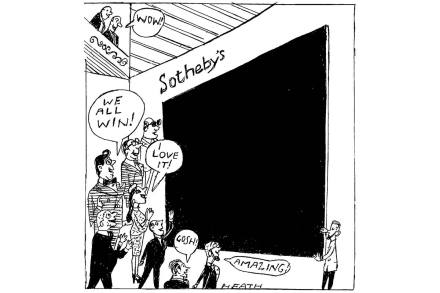
On February 1, 2024, Sotheby’s auction house announced a new fee structure that came as something of a surprise to the art world. For decades, Sotheby’s and its competitors have been one-upping each other with respect to the fees charged to buyers and sellers. While these fees have unquestionably increased the profitability of the auction houses themselves, in their complexity they have often bewildered auction participants and market observers alike. In theory at least, that may be about to change. Beginning this spring, Sotheby’s new fees will be both lower and potentially easier for all parties to understand. They apply to sellers consigning lots for auction after April 15, and to buyers beginning on May 20.

Sotheby's

Notre-Dame rising

From our US edition

Five years have passed since a major fire swept through the Cathédrale Notre-Dame de Paris on April 19, 2019, bringing down the church’s roof but sparing the rest of the building. In response, French president Emmanuel Macron immediately promised that the structure, which is owned by the state, would be rebuilt quickly, and more beautiful than before. He further promised that the cathedral would be ready to receive worshipers and visitors in time for the 2024 Paris Summer Olympics. Since his announcement, however, things have not gone entirely to plan. Notre-Dame will not be finished in time for the Olympics; as of this writing, completion has been pushed off to December 2024.

notre-dame

The divine Dalí and his ‘Christ’

From our US edition

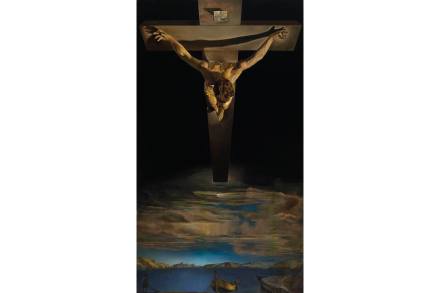
I arrived in the city of Figueres early one January morning to visit one of the most popular, and bizarre, art museums in the world, the Teatre-Museu Gala Salvador Dalí. It houses a dreamlike picture that, for the first time since it left over seventy years ago, has made a temporary return journey to Spain. Originally simply titled “The Christ,” the 1951 canvas depicting the giant figure of a man on a cross, shown at an overhead angle hovering over a moody seascape, was painted by the most famous son of Figueres, Salvador Dalí. Through April 30, it forms the centerpiece of a show exploring its creation, history, local connections and symbolism.

Dalí

How does the global art market move?

From our US edition

Art market reporting tends to be more sensationalist than, say, the news about corn futures. Breathless accounts of high-stakes bidding abound, remarkable discoveries of forgotten treasures in thrift shops get big headlines, and who’s up or down and how much money the fluctuation involves become fodder for salacious gossip. Interesting though these tales undoubtedly are, though, they don’t provide a realistic picture of the art business. While they may be less gossipy, some nuts-and-bolts stories away from the headlines can be just as compelling for those with an interest in the art market, and how what we see displayed in our homes, public spaces and cultural institutions depends upon very practical considerations to get there.

art market

Radical in the Rotunda

From our US edition

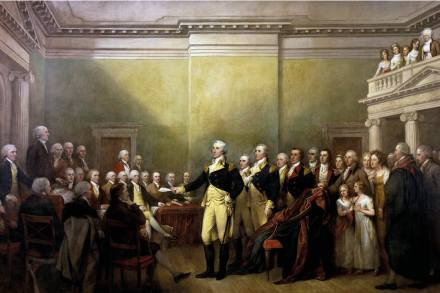
In a recent Saturday Night Live sketch, comedian Nate Bargatze portrayed General George Washington addressing his troops around a campfire in 1777, as they ask themselves what the Revolution is for. Washington shares some of his dreams for the new American republic — though he dodges difficult questions about slavery — in an effort to inspire his men to fight on. The writers take full advantage of the fact that a number of peculiarly American things, such as our version of football (in which feet rarely figure) or our complicated system of weights and measures, seem rather odd to the rest of the world. “We will be free to measure liquids in liters and milliliters, but not all liquids,” the general explains. “Only soda, wine and alcohol.

Trumbull

Comic Con with a Shakespearean twist

From our US edition

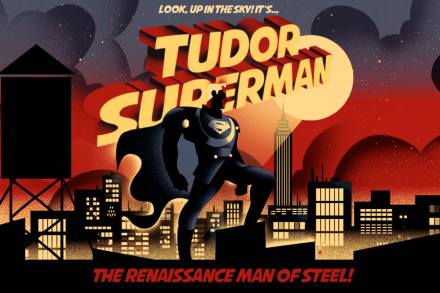
Recently, when I shared that I would be attending New York Comic Con in cosplay, I was met with a mixture of applause and derision. Why would an art critic want to participate in such an activity, let alone write about it? To me the appeal was obvious, since cosplay stems from the same impetus to tell tales, share values and dazzle the spectator that can be found throughout thousands of years of artistic expression. The first comic book conventions, popularly known as “comic cons” or simply “cons,” began as get-togethers for comic book aficionados to share their love of illustrated popular storytelling. Over time, cons absorbed other genres and forms of entertainment to become major social events and trade fairs.

comic con

Understanding museum theft with best-selling author Kirk Wallace Johnson

From our US edition

The recent events at the British Museum in London will probably prove to be the museum scandal of the year, if not the decade. It was revealed over the summer that hundreds, perhaps thousands, of items had gone missing from its collections in storage, with suspicion directed toward a now-former member of staff. We still don’t know exactly what was stolen, and no one has been formally charged — authorities are still investigating. Nevertheless, the British Museum’s director has stepped down and the press has had a field day generating outrage, albeit with coverage based largely upon speculation and opinion. Amid all the finger-pointing, however, no one seems to be asking why someone would even consider taking property from a museum in the first place.

museum

The value — and worthlessness — of contemporary art

From our US edition

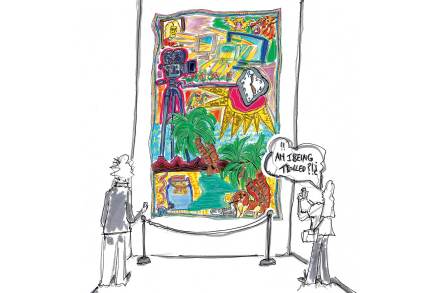
“This is why I hate art.” “Why, because this is pants?” A friend and I were at a contemporary art show, standing before a mixed-media work featuring trite sayings, glittery flowers and a spaniel. A few days earlier I had suggested to her — once rather ominously described to me as an “art philistine” — that a visit to a few local galleries might provide an opportunity to acquire art for the new home that she and her fiancé recently purchased in the area. Somewhat to my surprise she agreed, so one evening we trundled along to some exhibition openings, to see what we might find. Our first venue, housing three exhibition under one roof, was quite crowded when we arrived. The works ran the gamut from installations and video art to painting, drawing and collage.

art

The demands and joys of contemporary art 

From our US edition

The career of artist Alberto Guerrero has been driven by an overarching desire to look for what is behind everything that we merely, and only dimly, perceive at present. The work of the forty-something Madrid-based Guerrero ranges from abstract, highly textured canvases and three-dimensional images which he calls “spherical paintings” to realistic presentations of daily life — such as his illustrated book Diary of a Quarantine showing life in the Guerrero household during Covid — and deeply reflective images of sacred art. There are few contemporary artists who have such a broad range and vision.

Guerrero

What the Old Masters can teach us about contemporary life

From our US edition

The seventeenth-century Dutch painter Johannes Vermeer is certainly having a moment, thanks to the enormous popularity of the retrospective of his work that concluded at the Rijksmuseum in June. Demand to see the gathering-together of twenty-eight of the thirty-seven currently known paintings by the Old Master far outstripped supply; the show sold out within two days of opening, and scalpers were allegedly reselling tickets online for hundreds, even thousands, of dollars. It’s certainly not difficult to understand why people would flock to see Vermeer’s work, thanks to his beautiful brushwork and sensitively lit compositions.

old masters

What museums can learn from contemporary technology

From our US edition

"I grew up wanting to be an astronaut,” Robert Stein, the National Gallery of Art’s recently appointed chief information officer, tells me. “I studied electrical engineering, and I got a job doing high-performance computing. And then one day, I did a project with an art museum, and I thought, ‘Wait a second, this is an area of the world that needs more technology in order to connect more people together.’ And the rest was kind of downhill from there.” The National Gallery of Art in Washington, DC — the NGA — is now ranked the most popular art museum in America.

museums