William Newton

Why are there no paintings in Star Wars?

From our US edition

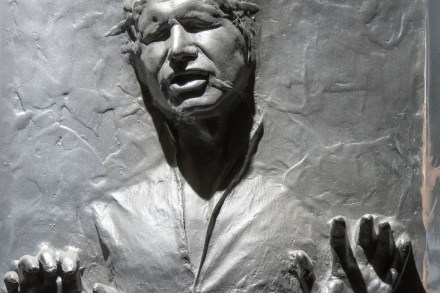
Why are there no paintings in Star Wars movies? The question occurred to me recently, rewatching The Rise of Skywalker. I’m old enough to recall seeing A New Hope in a drive-in in summer 1977, as well as the infamous Star Wars Holiday Special on television in 1978. Over time, my interest in Star Wars has shifted into something akin to nostalgia, so it may not be surprising that this question never struck me before. What is surprising, however, given their glaring omission from the films, is that the man who created the Star Wars universe happens to be a major collector of art — including paintings — and is due to open the Lucas Museum of Narrative Art in Los Angeles by 2025.
Star Wars

Drinking with Picasso

From our US edition

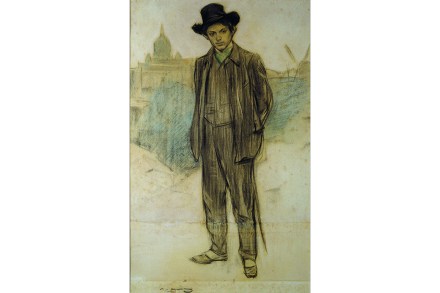
In February 1900, a critically acclaimed art exhibition went up at a Barcelona café called Els Quatre Gats. It was neither the first nor the last show mounted at the establishment, a popular drinking spot for avant-garde artists, writers and others. It was, however, the very first solo outing for one of the café’s regular patrons: a brash nineteen-year-old local art student named Pablo Ruiz Picasso. It has now been fifty years since Picasso died, on April 8, 1973, and even as that anniversary is being commemorated worldwide with new exhibitions and publications, he has never really faded from public consciousness. His art and even personal objects associated with him are avidly collected, and he continues to inspire filmmakers, musicians and other artists.

picasso

Greg Lansky: the artist with a scandalous past

From our US edition

St. Paul points out that “all have sinned and fall short of the glory of God.” Despite that inclusive “all,” human nature inclines toward exclusion of the “other,” which is a very difficult thing for many of us to overcome — me included. Enter Greg Lansky, pornographic-film producer. Perhaps no one in recent memory has made a greater profit from the highly lucrative commerce paradoxically known as “adult entertainment” than Parisian-born entrepreneur Lansky. Within the span of about fifteen years, he went from dropping out of school and having few realistic prospects to making fortunes from adult media, partying with celebrities and receiving glowing profiles in magazines such as Forbes, GQ and Rolling Stone.

greg lansky

Edward Hopper’s America

From our US edition

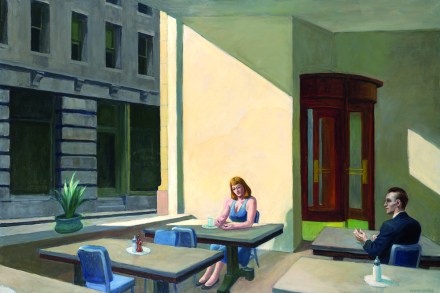
With a new show at the Whitney, Edward Hopper’s New York; a new documentary film from director Phil Grabsky, Hopper: An American Love Story; and a recent exhibition organized by the Virginia Museum of Fine Arts and the Indianapolis Museum of Art, the work of one of the most popular yet seemingly inscrutable American artists of the twentieth century is receiving a great deal of renewed attention. In his paintings, Hopper’s hard-edged realism, impressionistic plays of light and passages of intensely saturated color compete for attention. What has always captured the public imagination is the relative isolation of the figures that appear in his work. Search for articles about Edward Hopper online, and many will describe his art as an exploration of loneliness.

hopper

The buildings Richard Nickel championed

From our US edition

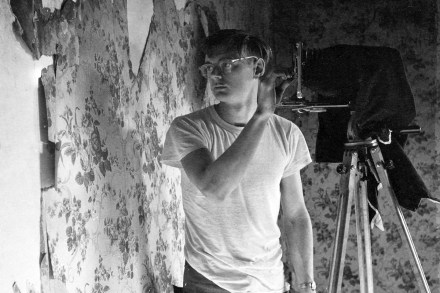
Perusing the listings of a recent auction, I noticed an intriguing, relatively flat piece of copper-plated cast iron featuring intricate foliate and geometric designs. It was a baluster designed by the firm of Adler & Sullivan in 1893 for the old Chicago Stock Exchange. The 1972 demolition of that building, thanks to the “urban renewal” undertaken by many progressive American cities during the mid-twentieth century, led to this bit of architectural salvage coming up at auction many years later. It also led to the death of an idealistic photographer and activist named Richard Nickel. When Nickel (born in 1928) was killed on April 13, 1972, his body was not recovered for weeks.

nickel