William Moore

William Moore

William Moore is features editor of The Spectator

Keeping the peace: the politics of policing protest

41 min listen

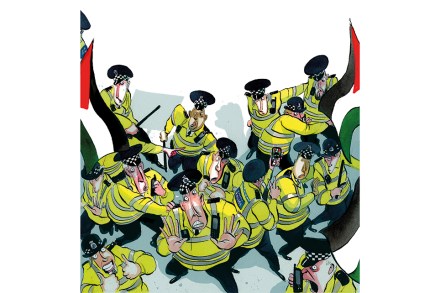
On the podcast: In his cover piece for The Spectator Ian Acheson discusses the potential disruption to Armistice Day proceedings in London this weekend. He says that Metropolitan Police Chief Mark Rowley is right to let the pro-Palestine protests go ahead, if his officers can assertively enforce the law. He joins the podcast alongside Baroness Claire Fox to discuss the problems of policing protest.  Next: are smartphones making us care less about humanity?  This is the question that Mary Wakefield grapples with in her column in The Spectator. She says it’s no wonder that Gen Z lack empathy when they spend most of their lives on social media. She is joined by Gaia Bernstein, author of Unwired: Gaining Control over Addictive Technologies.
The Covid farce

38 min listen

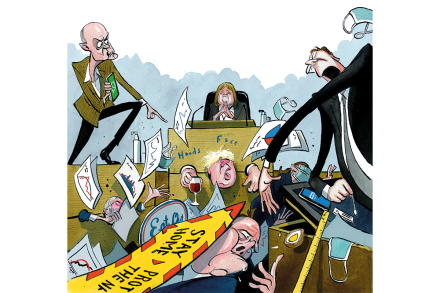
This week: The Covid Inquiry has reached its more dramatic stage this week with the likes of Domic Cummings, Lee Cain and Martin Reynolds giving evidence. But in his cover piece for the magazine Carl Heneghan, professor of evidence-based medicine at the University of Oxford and director of the Centre for Evidence-Based Medicine, says that the Hallett Inquiry is asking all the wrong questions, and is preoccupied with who said what on WhatsApp. He joins the podcast alongside Tom Whipple, science editor at the Times to go through this week's revelations. (01:43).  Also this week: will Israel succeed in its stated aims?

New world disorder

38 min listen

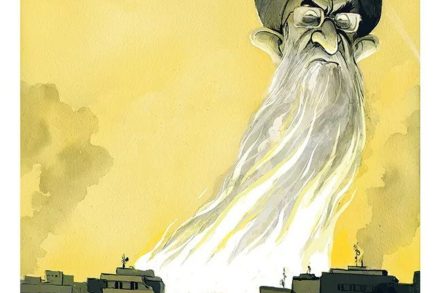
On the podcast: In The Spectator's cover piece Jonathan Spyer writes that as America's role in international security diminishes history is moving Iran’s way, with political Islam now commanding much of the Middle East. He is joined by Ravi Agrawal, editor in chief of Foreign Policy and host of the FP Live podcast, to discuss whether America is still the world's policeman.  Also this week: In the magazine this week, The Spectator’s literary editor Sam Leith speaks to Jacques Testard, publisher at Fitzcarraldo Editions, the indie publishing house which has just won its fourth nobel prize in under ten years.

Unholy war

53 min listen

This week: Paul Wood writes for The Spectator about the role that Iran potentially played in the Hamas attack on Israel over the weekend. He says that it is unlikely that the proscribed terrorist group acted alone and joins the podcast alongside Uzi Arad, former national security advisor to Israeli prime minister Benjamin Netanyahu. (01:22) Also this week:  Labour conference in Liverpool has come to end and, as always with conference season, the best events took place on the fringes. Katy Balls our political editor spoke to London mayor Sadiq Khan and they have kindly allowed us to hear a section of their discussion, where they cover anti-seminitism, ULEZ and the upcoming mayoral election in May.

Battle begins

40 min listen

This week: Katy Balls writes in her cover piece that after Tory conference the battle lines have now been drawn between the two main parties. She says we should prepare for a 'presidential campaign' ahead of the 2024 election and joins the podcast alongside The Spectator’s editor Fraser Nelson to discuss the dividing lines between Labour and the Conservatives. (01:17).  Also this week: In her column Lionel Shriver says that she is leaving the UK for the sunnier climes of Portugal. She argues that Britain has lost its way both economically and culturally and is joined by another American expatriate Kate Andrews, The Spectator’s economics editor. (15:37).  And finally: Matt Ridley writes that we are entering a new age of gullibility.

Judgment call: the case for leaving the ECHR

42 min listen

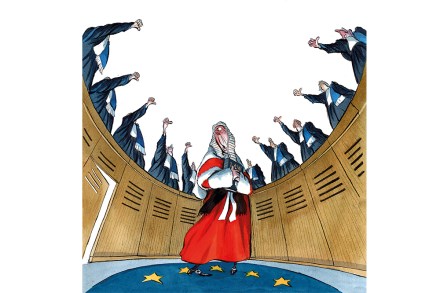
On the podcast this week: Lord Sumption makes the case for leaving the ECHR in The Spectator's cover piece. He says that the UK has strong courts and can pass judgement on human rights by itself and joins the podcast alongside Dr Joelle Grogan – legal academic and head of research at UK in a Changing Europe – to discuss whether the Strasbourg has lost its appeal. (01:22). Also this week:  Rory Sutherland takes a look at the rise of dynamic pricing in the magazine, a new trend where prices can surge at peak times and a phenomenon which has now made its way into pubs. He says that it’s not necessarily the cost that matters, but the way it is framed and is joined by Times business columnist Ryan Bourne to debate.

Italy’s new wave: Europe’s escalating migrant crisis

45 min listen

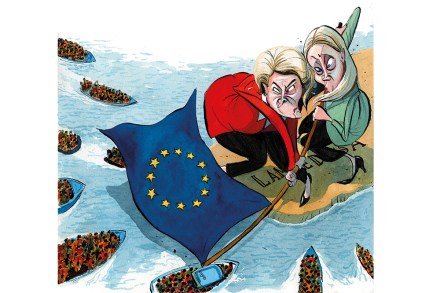
This week: Christopher Caldwell writes The Spectator's cover piece on Italy’s new wave of migrants. This is in light of the situation in Lampedusa which he argues could upend European politics. Chris joins the podcast alongside Amy Kazmin, Rome correspondent at the Financial Times, to debate Europe’s escalating migrant crisis. (01:23) Also this week: In his column, Matthew Parris writes about Australia’s Voice vote, a yes/no referendum being held on whether to establish a new body which will advise parliament on matters relating to Aboriginal and Torres Strait Islander peoples.

Bombshell: Why aren’t we giving Ukraine what it needs?

36 min listen

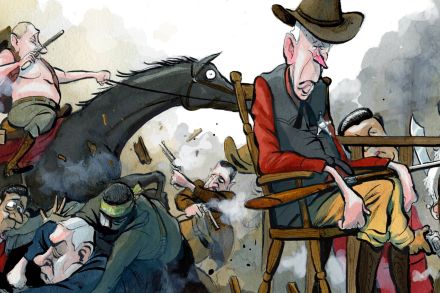
On the podcast this week: Boris Johnson writes The Spectator’s cover piece, urging the West to supply more military assistance to Ukraine, in order to bring a swift end to the war. Former commander of the joint forces Sir Richard Barrons and The Spectator’s Svitlana Morenets join the podcast to ask why aren't we giving Ukraine what it needs? (01:21) Also on the podcast:  Charlie Taylor, His Majesty’s chief prisons inspector, writes in the magazine about the state of crisis in British prisons. This is in light of Daniel Khalife's escape from Wandsworth prison last week. Charlie is joined by David Shipley, commentator and former inmate at Wandsworth to discuss the state of crisis in British prisons.

Broken Britain: what went wrong?

34 min listen

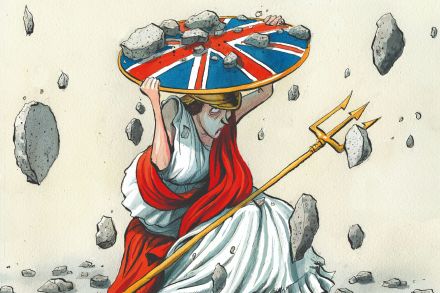
On the podcast:  In her cover piece for the magazine, The Spectator’s economics editor Kate Andrews writes that political short termism has broken Britain. She joins the podcast alongside Giles Wilkes, former number 10 advisor and senior fellow at the Institute for Government, to ask what went wrong? (01:12) Also this week:  In his column Douglas Murray writes about Burning Man, the festival which has left Silicon Valley’s finest stuck in the mud. He is joined by David Willis, who has been covering the festival this year for the BBC, to discuss the schadenfreude of Burning Man.

Trumpvision: he’s making America watch again

27 min listen

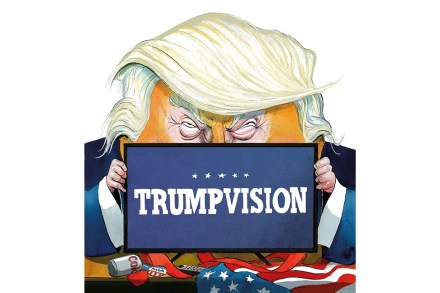
On the podcast this week:  In his cover piece for the magazine, The Spectator’s deputy editor Freddy Gray says that he was hardly surprised that Donald Trump chose not to participate in last night’s Republican candidates debate. He argues that Trump no longer needs the TV networks and joins the podcast alongside Douglas Murray, who profiles the no-hoper Republican candidates looking to pip Trump to the nomination in his column. (01:21) Also this week:  Mark Millar, the comic book writer and producer behind Hollywood hits such as Kingsman, Kick Ass and a host of Marvel films, writes The Spectator’s notebook.

Degrees of failure: is university still worth it?

33 min listen

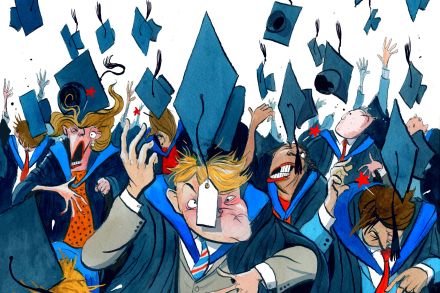
This week:  The cover of The Spectator magazine looks at whether after years of Covid-based disruption, rising cost and lecturer strikes, university students are getting what they paid for. The Spectator’s data editor Michael Simmons writes a sidebar in which he rails against some of the changes that are happening to university freshers’ week and joins the podcast alongside Emma de Saram, Guild president at the Exeter University Student’s Guild. (01:26)  Also this week: In the magazine we are running an interview by The Spectator's special projects editor Ben Lazarus with professor Jim Skea – the new head of the UN intergovernmental panel on climate change (IPCC) and arguably the most important man in climate science.

Country strife: the covert campaign against field sports

41 min listen

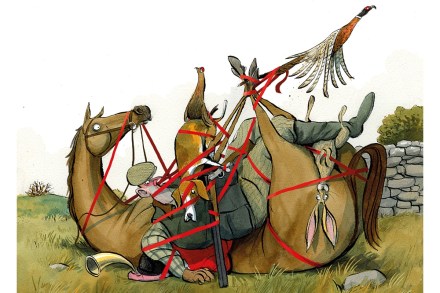
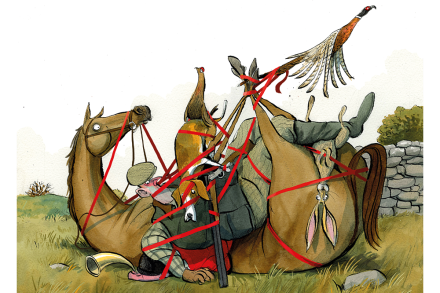
This week:  It’s a special episode of the Edition podcast because our very own William Moore writes The Spectator’s cover piece, on how rural pursuits are being threatened by lawfare from countryside groups. Jonathan Roberts, who leads the external affairs team at the Country Land and Business Association, joins us to discuss whether disillusioned rural Tories could look to Labour at the next election.  Also this week:  In his piece in The Spectator, journalist Andrew Kenny writes about the rise of Julius Malema and his Economic Freedom Fighters.

The covert campaign against field sports

If a general election is held, as is rumoured, in November next year, Labour could return to power exactly 20 years after the Hunting Act was passed, and there is the very real possibility of field sports being finished off altogether. Then, the government’s assault on hunting was a long, bloody, open conflict. Today, the campaign against countryside pursuits is more covert – a gradual process of lawfare. Over the past two decades, more and more regulation has crept in. Field sports and the rural economy that surrounds them are suffering. The groups set up to protect rural England often now work against the interests of both gamekeepers and farmers, with the result that the countryside is being drained of the people who understand and can conserve it best.

Supercops: the return of tough policing

40 min listen

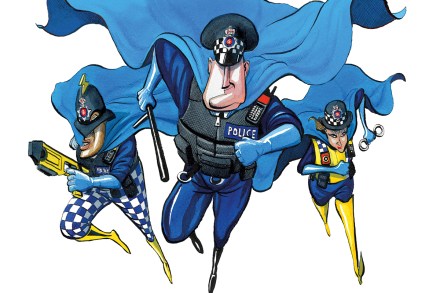
In this week’s cover article, The Spectator's political editor Katy Balls takes a look at the bottom-up reform that’s happening in some parts of the country, and asks whether tough policing is making a comeback. Katy joins the podcast together with Kate Green, Greater Manchester's Deputy Mayor of Crime and Policing. (00:50) Next, the war has finally gone to Moscow. Recently, a number of drone strikes have hit targets in the Russian capital. Though Ukraine hasn’t explicitly taken responsibility, in the magazine this week, Owen Matthews writes that it’s all a part of psychological warfare. Owen is the author of Overreach: The Inside Story of Putin and Russia’s War Against Ukraine and he joins the podcast.

Bankrolled: Labour’s new paymasters

36 min listen

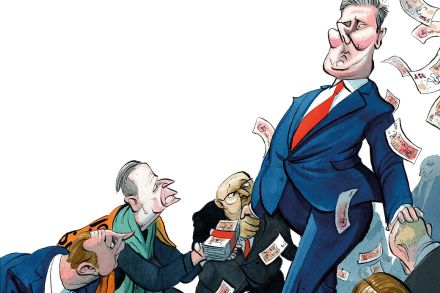
In this week’s cover story, The Spectator’s political editor Katy Balls writes about Labour’s new paymasters – Keir Starmer’s party now receives more money from private donors than it does from trade unions. What do the new donors want, and what does Starmer want from them? Katy joins Will and Lara alongside the writer and Labour supporter Paul Mason. (01:00) Next up, Webb Keane, from the University of Michigan, and Scott Shapiro, from Yale, write in the magazine this week about the dawn of the godbots – you can now chat online to an artificial intelligence that pretends it’s god. Might people soon start outsourcing their ethics to a chatbot? We're joined by Webb and The Spectator’s commissioning editor Mary Wakefield.

Road rage: the great motorist rebellion has begun

38 min listen

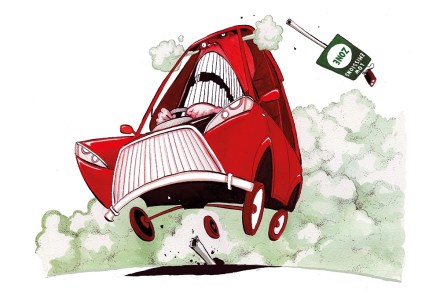
This week:In his cover piece for the magazine Ross Clark writes about ‘the war on motorists'. He argues that the backlash against London Mayor Sadiq Khan’s expansion of Ulez is just the beginning, as motorists – and Labour MPs – prepare to revolt. He joins the podcast alongside Ben Clatworthy, transport correspondent at the Times, to discuss whether the Ulez expansion is just a money-grab. (01:11).  Also this week: In his piece for The Spectator, journalist Ian Williams compares both Labour and Conservative policy on China. He says that Labour is gearing up to take a much more hawkish stance on China. He is joined by Charles Parton, senior associate fellow at RUSI, who worked as a diplomat in China for over two decades.

Barbie’s world: the normalisation of cosmetic surgery

39 min listen

This week: Ahead of the release of the Barbie movie, Louise Perry writes in her cover piece about how social media is fuelling the cosmetic surgery industry. She argues that life in plastic is not, in fact, fantastic. She joins the podcast alongside the Times’s Sarah Ditum, author of the upcoming book: Toxic: Women, Fame and the Noughties, to discuss the normalisation of plastic surgery. (01:11) Also this week: In anticipation of the BBC Proms Philip Hensher writes in The Spectator that classical music has gone from being a supreme cultural statement, to just another curious musical genre.

Why Europe riots

36 min listen

This week: In the magazine we look at the recent protests in France. The Spectator's Douglas Murray argues that racism is not the problem but that a significant chunk of the unintegrated immigrant population is. He is joined by Dr Rakib Ehsan, author of Beyond Grievance: What the Left Gets Wrong about Ethnic Minorities, to investigate why Europe riots. (01:16) Also this week: Journalist Ivo Dawnay and The Spectator’s associate editor Toby Young discuss the plight of 'politically exposed persons' in the magazine this week. This is of course in light of the news that Nigel Farage has had his bank account closed, with many speculating he has been 'debanked' simply because of his political views and associations.

After Putin: how nervous should we be?

37 min listen

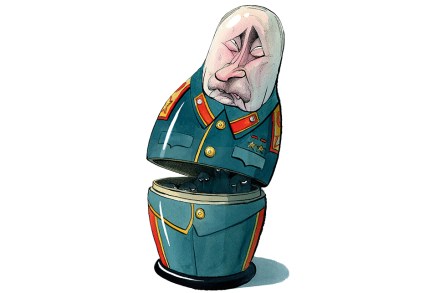
This week: In the magazine we look at the Wagner Group’s failed coup and its implications for Putin’s reign. The Spectator’s Russia correspondent Owen Matthews examines why the Kremlin permits the existence of private armies such as Prigozhin’s Wagner Group, and joins the podcast alongside Jim Townsend, former deputy secretary of defence for European and NATO policy under the Obama administration. (01:15) Also this week: The Spectator’s special projects editor Ben Lazarus writes this week about the claims made in the recent Mirror Group phone hacking trial, and the man orchestrating many of the accusations, Graham Johnson.