William Moore

William Moore

William Moore is features editor of The Spectator

Degrees of failure: is university still worth it?

From our UK edition

33 min listen

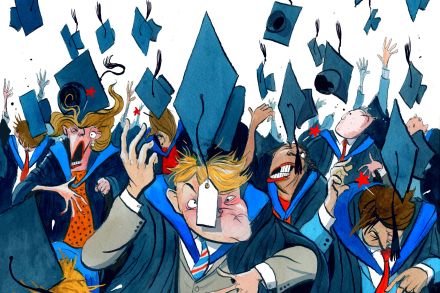
This week:  The cover of The Spectator magazine looks at whether after years of Covid-based disruption, rising cost and lecturer strikes, university students are getting what they paid for. The Spectator’s data editor Michael Simmons writes a sidebar in which he rails against some of the changes that are happening to university freshers’ week and joins the podcast alongside Emma de Saram, Guild president at the Exeter University Student’s Guild. (01:26)  Also this week: In the magazine we are running an interview by The Spectator's special projects editor Ben Lazarus with professor Jim Skea – the new head of the UN intergovernmental panel on climate change (IPCC) and arguably the most important man in climate science.

Country strife: the covert campaign against field sports

From our UK edition

41 min listen

This week:  It’s a special episode of the Edition podcast because our very own William Moore writes The Spectator’s cover piece, on how rural pursuits are being threatened by lawfare from countryside groups. Jonathan Roberts, who leads the external affairs team at the Country Land and Business Association, joins us to discuss whether disillusioned rural Tories could look to Labour at the next election.  Also this week:  In his piece in The Spectator, journalist Andrew Kenny writes about the rise of Julius Malema and his Economic Freedom Fighters.

The covert campaign against field sports

From our UK edition

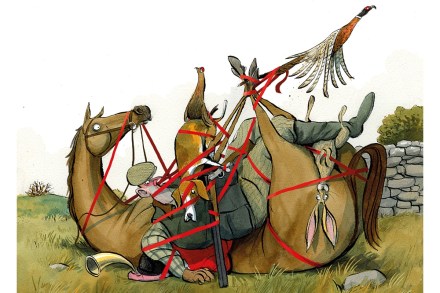
If a general election is held, as is rumoured, in November next year, Labour could return to power exactly 20 years after the Hunting Act was passed, and there is the very real possibility of field sports being finished off altogether. Then, the government’s assault on hunting was a long, bloody, open conflict. Today, the campaign against countryside pursuits is more covert – a gradual process of lawfare. Over the past two decades, more and more regulation has crept in. Field sports and the rural economy that surrounds them are suffering. The groups set up to protect rural England often now work against the interests of both gamekeepers and farmers, with the result that the countryside is being drained of the people who understand and can conserve it best.

Supercops: the return of tough policing

From our UK edition

40 min listen

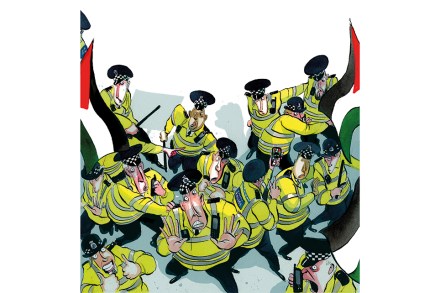
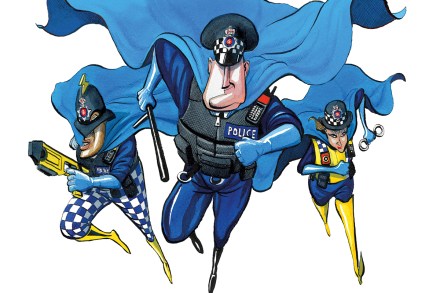
In this week’s cover article, The Spectator's political editor Katy Balls takes a look at the bottom-up reform that’s happening in some parts of the country, and asks whether tough policing is making a comeback. Katy joins the podcast together with Kate Green, Greater Manchester's Deputy Mayor of Crime and Policing. (00:50) Next, the war has finally gone to Moscow. Recently, a number of drone strikes have hit targets in the Russian capital. Though Ukraine hasn’t explicitly taken responsibility, in the magazine this week, Owen Matthews writes that it’s all a part of psychological warfare. Owen is the author of Overreach: The Inside Story of Putin and Russia’s War Against Ukraine and he joins the podcast.

Bankrolled: Labour’s new paymasters

From our UK edition

36 min listen

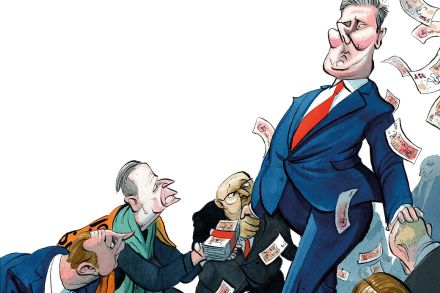
In this week’s cover story, The Spectator’s political editor Katy Balls writes about Labour’s new paymasters – Keir Starmer’s party now receives more money from private donors than it does from trade unions. What do the new donors want, and what does Starmer want from them? Katy joins Will and Lara alongside the writer and Labour supporter Paul Mason. (01:00) Next up, Webb Keane, from the University of Michigan, and Scott Shapiro, from Yale, write in the magazine this week about the dawn of the godbots – you can now chat online to an artificial intelligence that pretends it’s god. Might people soon start outsourcing their ethics to a chatbot? We're joined by Webb and The Spectator’s commissioning editor Mary Wakefield.

Road rage: the great motorist rebellion has begun

From our UK edition

38 min listen

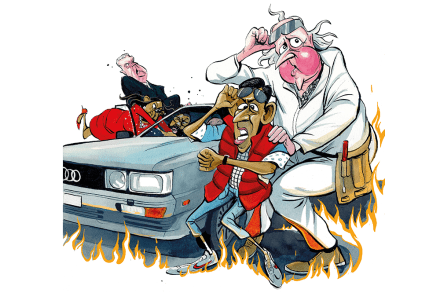
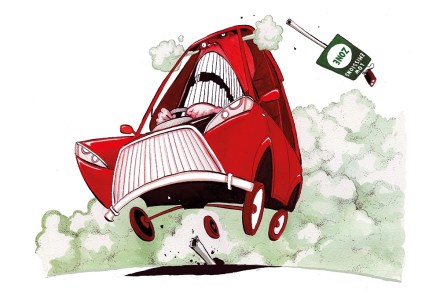
This week:In his cover piece for the magazine Ross Clark writes about ‘the war on motorists'. He argues that the backlash against London Mayor Sadiq Khan’s expansion of Ulez is just the beginning, as motorists – and Labour MPs – prepare to revolt. He joins the podcast alongside Ben Clatworthy, transport correspondent at the Times, to discuss whether the Ulez expansion is just a money-grab. (01:11).  Also this week: In his piece for The Spectator, journalist Ian Williams compares both Labour and Conservative policy on China. He says that Labour is gearing up to take a much more hawkish stance on China. He is joined by Charles Parton, senior associate fellow at RUSI, who worked as a diplomat in China for over two decades.

Barbie’s world: the normalisation of cosmetic surgery

From our UK edition

39 min listen

This week: Ahead of the release of the Barbie movie, Louise Perry writes in her cover piece about how social media is fuelling the cosmetic surgery industry. She argues that life in plastic is not, in fact, fantastic. She joins the podcast alongside the Times’s Sarah Ditum, author of the upcoming book: Toxic: Women, Fame and the Noughties, to discuss the normalisation of plastic surgery. (01:11) Also this week: In anticipation of the BBC Proms Philip Hensher writes in The Spectator that classical music has gone from being a supreme cultural statement, to just another curious musical genre.

Why Europe riots

From our UK edition

36 min listen

This week: In the magazine we look at the recent protests in France. The Spectator's Douglas Murray argues that racism is not the problem but that a significant chunk of the unintegrated immigrant population is. He is joined by Dr Rakib Ehsan, author of Beyond Grievance: What the Left Gets Wrong about Ethnic Minorities, to investigate why Europe riots. (01:16) Also this week: Journalist Ivo Dawnay and The Spectator’s associate editor Toby Young discuss the plight of 'politically exposed persons' in the magazine this week. This is of course in light of the news that Nigel Farage has had his bank account closed, with many speculating he has been 'debanked' simply because of his political views and associations.

After Putin: how nervous should we be?

From our UK edition

37 min listen

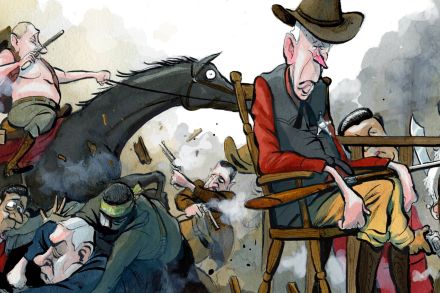
This week: In the magazine we look at the Wagner Group’s failed coup and its implications for Putin’s reign. The Spectator’s Russia correspondent Owen Matthews examines why the Kremlin permits the existence of private armies such as Prigozhin’s Wagner Group, and joins the podcast alongside Jim Townsend, former deputy secretary of defence for European and NATO policy under the Obama administration. (01:15) Also this week: The Spectator’s special projects editor Ben Lazarus writes this week about the claims made in the recent Mirror Group phone hacking trial, and the man orchestrating many of the accusations, Graham Johnson.

Get Rishi: the plot against the PM

From our UK edition

35 min listen

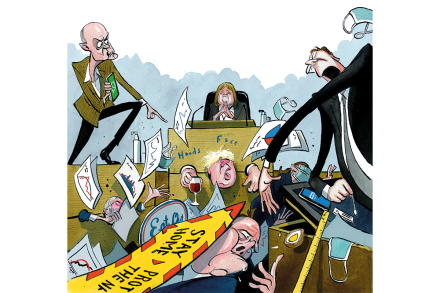
This week: For her cover piece, The Spectator’s political editor Katy Balls writes that Boris Johnson could be attempting to spearhead an insurgency against the prime minister. She joins the podcast alongside historian and author Sir Anthony Seldon, to discuss whether – in light of the Privileges Committee's findings – Boris is going to seriously up the ante when it comes to seeking revenge against his former chancellor. (01:02) Also this week: In The Spectator journalist Paul Wood writes about how Saudi Arabia is buying the world, after the Saudi Arabia Public Investment Fund negotiated a controlling interest in the main US golf tournament, the PGA. This took many people by surprise.

Harry’s crusade: the Prince vs the press

From our UK edition

31 min listen

This week:  Prince Harry has taken the stand to give evidence in the Mirror Group phone hacking trial which The Spectator’s deputy editor Freddy Gray talks about in his cover piece for the magazine. He is joined by Patrick Jephson, former private secretary to Princess Diana, to discuss whether Harry's 'suicide mission' against the press is ill-advised. (01:22) Also this week:  In The Spectator professor Robert Tombs details the trouble with returning the Benin Bronzes back to Nigeria, arguing that their restitution is more complicated than some claim.

Red Rishi

From our UK edition

39 min listen

On this week’s episode: Price caps are back in the news as the government is reportedly considering implementing one on basic food items. What happened to the Rishi Sunak who admired Margaret Thatcher and Nigel Lawson? In her cover article this week, our economics editor Kate Andrews argues that the prime minister and his party have lost their ideological bearings. She joins the podcast, together with Spectator columnist Matthew Parris, who remembers the last time price caps were implemented and writes about it in his column. We also take a look at the experience of being addicted to meth. What is it like, and is it possible to turn your life around after that? The translator Eva Gaida has managed it, and writes powerfully about her experience in this week’s issue.

Ukraine’s next move

From our UK edition

39 min listen

This week: In his cover piece, journalist Mark Galeotti asks whether Putin can be outsmarted by Zelensky’s counter-offensive. He is joined by The Spectator’s own Svitlana Morenets to discuss Ukraine's next move. (01:08) Also this week:  Journalist David Goodhart writes a moving tribute to his friend Jeremy Clarke, The Spectator’s much-missed Low Life columnist who sadly passed away earlier this week. David is joined by Cass Pennant and Freddy Gray, The Spectator’s deputy editor, to remember the life and writing of Jeremy Clarke. (12:52)  And finally: The Spectator’s deputy features editor Gus Carter writes this week about the curious business of fertility.

Migration nation: Brexit has meant more immigration than ever

From our UK edition

45 min listen

This week: Spectator editor Fraser Nelson writes in this week’s cover story about how Brexit has led to Britain having more, not less, immigration – Rishi Sunak’s government is masking dysfunction in the welfare system by bringing in people to fill vacant jobs. To make his case, Fraser joins us alongside our economics editor Kate Andrews. (01:04) Also this week: Novelist Elif Shafak writes about the Turkish elections in the diary for this week’s magazine. Ultranationalism and religious fundamentalism were the real winners in last Sunday’s poll. To tell us all about it. Elif joins us alongside Spectator contributor Owen Matthews. (23:18) And finally: Is reality television ruining sport?

Trump’s second act: why he can still win, in spite of everything

From our UK edition

47 min listen

This week: Having been found guilty of sexual assault, is Donald Trump still in the running for the White House? In his cover piece, Niall Ferguson says he could still defy gravity. He joins the podcast alongside Jacob Heilbrunn, editor of The National Interest. (01:00)  Also this week: Journalist Andrew Watts interviews the Reverend Canon Dr Jason Bray, the Bishop of St Asaph’s ‘deliverance minister’, or the Anglican priest charged with exorcising evil spirits. They both join the podcast. (17:50).  And finally: Author and journalist Sophia Money-Coutts writes about the British women opting for Danish sperm donors to conceive. She joins us on the show, along with Annemette Arndal Lauritzen, CEO of the European Sperm Bank.  (34:07).

William Moore, Katy Balls, Dan Hitchens and Ysenda Maxtone Graham

From our UK edition

31 min listen

This week: William Moore recalls the 1953 coronation with those that were there (01:02), Katy Balls reads her politics column (10:13), Dan Hitchens discusses the art of coronation (16:20) and Ysenda Maxtone Graham reads her review of The Seaside by Madeleine Bunting (25:20).  Produced and presented by Oscar Edmondson.

A King in a hurry: what will Charles III’s reign look like?

From our UK edition

38 min listen

This week: In his cover piece for the magazine, Daily Mail writer, author of Queen of Our Times and co-presenter of the Tea at the Palace podcast, Robert Hardman looks ahead to the reign of King Charles III. He joins the podcast alongside historian David Starkey, who is interviewed in the arts pages of The Spectator by Lynn Barber (01:10)  Also this week: Sean Thomas writes about generational reparations, that is: whether families with murky pasts should pay compensation for their ancestors’ wrongdoings. He is joined by Professor Christine Kinealy, historian and author This Great Calamity: The Irish Famine 1845-52, to ask whether generational reparations are simply a token gesture (20:58).

Vials of ammonia, shaky scaffolding and sword fights: memories of Elizabeth II’s coronation

From our UK edition

Lady Rosemary Muir was 23 when she received a letter from the Duke of Norfolk, the Earl Marshal, informing her that she had been chosen as one of the six maids of honour to assist the Mistress of the Robes in the coronation of Elizabeth II. That was in January 1953. From then until the coronation day in June, the maids of honour were the subject of many excited articles. The press dubbed them ‘the Lucky Six… envied by every other woman in the land’.  Envied they certainly were, but luck had little to do with it. Lady Rosemary tells me it was no surprise to her that she was appointed to be a maid of honour. ‘I was a duke’s daughter,’ she says as we look through her hefty album of coronation photographs and cuttings. ‘Why shouldn’t I be?

The Starmtroopers: Labour’s new recruits

From our UK edition

43 min listen

This week: In her cover piece for the magazine, The Spectator’s political editor Katy Balls writes that as Labour prepares for government, Keir Starmer is rooting out the far left sections of his party and replacing them with moderates. She is joined by John McTernan, former political secretary to Tony Blair, to discuss the return of the Blairites (01:06). Also this week: The Spectator’s Russia correspondent Owen Matthews writes about Putin's three most prominent political prisoners. He joins the podcast alongside The Spectator’s assistant online editor Lisa Haseldine to consider the cost of speaking up against the regime (17:50).