William Moore

William Moore

William Moore is features editor of The Spectator

Is Donald Trump now unstoppable?

37 min listen

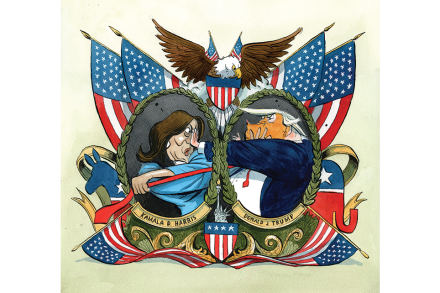
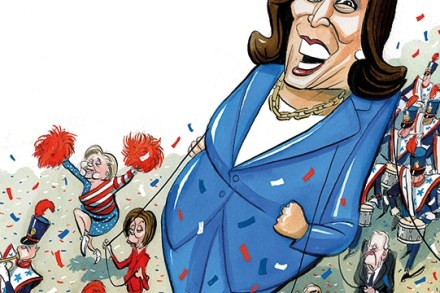
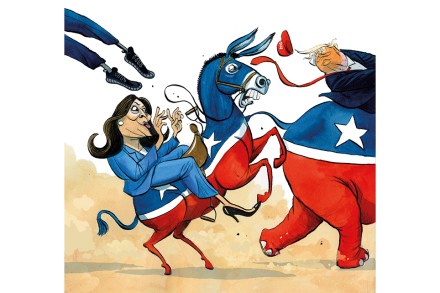
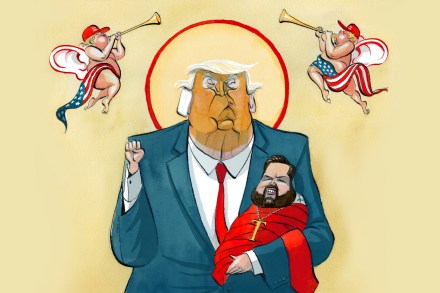
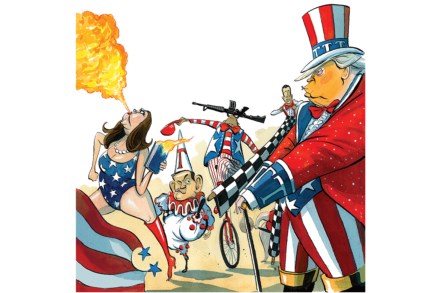
This week: bulletproof Trump. The failed assassination attempt on Donald Trump means that his supporters, more than ever, view him as America’s Chosen One. Joe Biden’s candidacy has been falling apart since his disastrous performance in the first presidential debate last month. Trump is now ahead in the polls in all the battleground states. The whispers in Washington are that the Democrats are already giving up on stopping a second Trump term – and eyeing up the presidential election of 2028 instead. Freddy Gray, deputy editor at The Spectator, and Amber Duke, Washington editor at Spectator World, join the podcast to discuss. (02:45) Next: meeting the mega MAGA fans.

The reckoning: it’s payback time for voters

39 min listen

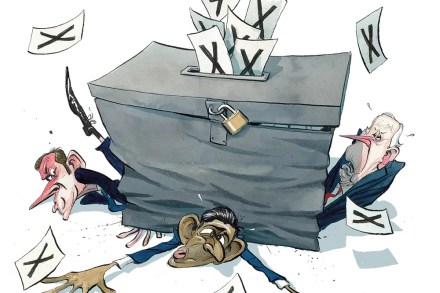
This week: the reckoning. Our cover piece brings together the political turmoil facing the West this week: Rishi Sunak, Emmanuel Macron, and Joe Biden all face tough tests with their voters. But what’s driving this instability? The Spectator’s economics editor Kate Andrews argues it is less to do with left and right, and more a problem of incumbency, but how did this situation arise? Kate joined the podcast to discuss her argument, alongside former Cambridge Professor, John Keiger, who writes in the magazine about the consequences that France’s election could have on geopolitics (2:32).  Next: what role does faith play in politics?

Downfall: how Nigel Farage became the left’s greatest weapon

44 min listen

This week: Downfall. Our cover piece examines Nigel Farage’s role in the UK general election. Spectator editor Fraser Nelson argues that Farage has become the left’s greatest weapon, but why? How has becoming leader of Reform UK impacted the campaign and could this lead to a fundamental realignment of British politics? Fraser joined the podcast to talk through his theory, with former UKIP MEP Patrick O’Flynn (02:10). Next: Spectator writer Svitlana Morenets has returned to Ukraine to report on the war, which is now well into its third year. How are Ukrainians coping and what is daily life like? Svitlana joined the podcast from Kyiv with Ukrainian author Andrey Kurkov (21:53). And finally: has ‘cancel culture’ been cancelled?

Lawfare: how Starmer will govern through the courts

40 min listen

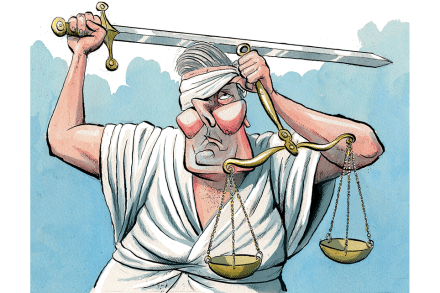
This week: Lawfare Our cover piece examines how Keir Starmer’s legal experience will influence his politics. Ross Clark argues that Starmer will govern through the courts, and continue what he describes as the slow movement of power away from elected politicians. As poll after poll predicts an unprecedented Labour majority, what recourse would there be to stop him? Ross joined the podcast to discuss alongside solicitor and commentator Joshua Rozenberg (02:15). Next: we’ve become accustomed to the police wearing cameras, but what’s behind the rise in bodycams in other industries? In her article this week, Panda La Terriere highlights the surprising businesses that have begun using them, but what are the implications for daily life and how concerned should we be?

Macron’s game: can he still outplay Le Pen?

45 min listen

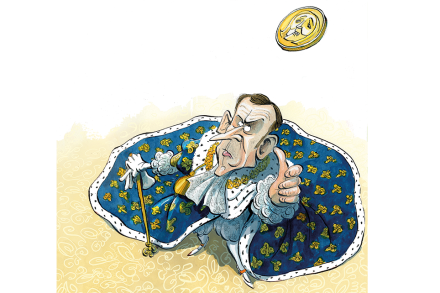
This week: Macron’s game. Our cover piece looks at the big news following the European elections at the weekend, President Macron’s decision to call early parliamentary elections in France. Madness or genius, either way the decision comes with huge risk. And can he still outplay Le Pen, asks writer Jonathan Miller. Jonathan joins the podcast to analyse Macron’s decision alongside Professor Alberto Alemanno, who explains how the decision is realigning French politics, and argues it must be seen in its wider European context. (01:58) Then: Will and Gus take us through some of their favourite pieces from the magazine, including Catriona Olding’s Life column and Sam McPhail’s notes on Madri.  Also on the podcast: who decides how we see the past?

The deluge: Rishi Sunak’s election gamble

53 min listen

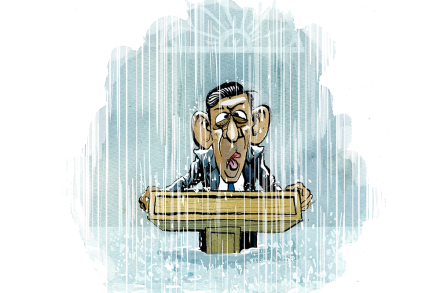
It’s a bumper edition of The Edition this week. After Rishi Sunak called a surprise – and perhaps misguided – snap election just a couple of hours after our press deadline, we had to frantically come up with a new digital cover. To take us through a breathless day in Westminster and the fallout of Rishi’s botched announcement, The Spectator’s political editor Katy Balls joins the podcast. (01:35) Next: Our print magazine leads on the electric car bust. Ross Clark runs through all the issues facing electric cars today – from China flooding the market with discounted EVs to Rishi Sunak dropping the unrealistic target of banning new petrol car sales by 2030. ‘Could the outlook suddenly improve for British EVs?’ asks Ross. ‘It’s hard to see how.

Veep show: who will Trump pick for his running mate?

47 min listen

This week: Veep show: who will Trump pick for his running mate? Freddy Gray goes through the contenders – and what they say about America (and its most likely next president). ‘Another thought might be buzzing around Trump’s head: he can pick pretty much whoever he wants because really it’s all about him. He might even choose one of his children: Ivanka or Donald Junior. What could sound better than Trump-Trump 2024?’ Freddy joins the podcast. (02:10) Next: Will and Lara take us through some of their favourite pieces from the magazine, including David Shipley’s piece on the issues in the criminal justice system and Patrick Kidd’s article on the C of E’s volunteering crisis.  Then: Everest.

Drama students: how universities raised a generation of activists

39 min listen

This week: On Monday, tents sprung up at Oxford and Cambridge as part of a global, pro-Palestinian student protest which began at Columbia University. In his cover piece, Yascha Mounk, a professor at Johns Hopkins University, explains how universities in both the US and the UK have misguidedly harboured and actively encouraged absurdist activism on campuses. Yascha joined the podcast to discuss further. (01:57) Next: Bugs, biscuits, trench foot: a dispatch from the front line of the protests. The Spectator’s Angus Colwell joined students at tent encampments this week at UCL, Oxford and Cambridge. He found academics joining in with the carnival atmosphere. At Cambridge one don even attended with their baby in tow. ‘Peaceful protest?

Will Biden support Ukraine’s attacks on Russia?

46 min listen

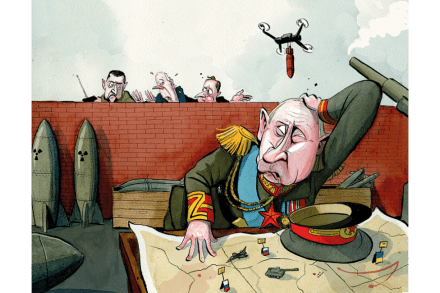
This week: will Biden support Ukraine’s attacks on Russia? Owen Matthews writes the cover piece in light of the Zelensky drone offensive. Ukraine’s most successful strategy to date has been its ingenious use of homemade, long-range drones, which it has used to strike military targets as well as oil refineries and petrol storage facilities in Russia. The strikes are working but have alienated the US, who draw a red line when it comes to attacks on Russian soil. Owen joins the podcast alongside Svitlana Morenets, author of The Spectator’s Ukraine in Focus newsletter to debate what comes next.

James Heale, Madeleine Teahan, Tanya Gold and William Moore

23 min listen

On this week’s Spectator Out Loud: James Heale suggests that the London mayoral race could be closer than we think (1:02); Madeleine Teahan argues that babies with down’s syndrome have a right to be born (6:15); Tanya Gold reports from Jerusalem as Israel’s war enters its seventh month (12:32); and William Moore reveals what he has in common with Kim Jong Un (18:25). Produced and presented by Patrick Gibbons.

Why I’ll never own a pair of jeans

North Korea has a problem with Alan Titchmarsh’s crotch. Last week a 2010 episode of Garden Secrets was aired on state television, but the network blurred Titchmarsh from the waist down. The offence was his gardening trousers – a pair of jeans. For the Workers’ Party of Korea, jeans represent an ‘invasion of capitalistic lifestyles’. They must be resisted. In a sense, Kim Jong-un is right that jeans are a sign of American dominance. In 1986 the philosopher Régis Debray declared there was ‘more power in blue jeans and rock ’n’ roll than the entire Red Army’. Communist states agreed. Western-produced jeans were banned in the Soviet Union and Maoist China.

Easter special: how forgiveness was forgotten

36 min listen

This week: how forgiveness was forgotten, why the secular tide might be turning, and looking for romance at the British museum.  Up first: The case of Frank Hester points to something deep going on in our culture, writes Douglas Murray in the magazine this week. ‘We have never had to deal with anything like this before. Any mistake can rear up in front of you again – whether five years later (as with Hester) or decades on.’ American lawyer and author of Cancel Culture: the latest attack on free speech, Alan Dershowitz, joins the podcast to discuss whether forgiveness has been forgotten.

War on words: is Scotland ready for its new hate crime law?

51 min listen

On the podcast: Scotland’s new hate crime law; the man who could be France’s next PM; and why do directors meddle with Shakespeare?  First up: Scotland is smothering free speech. Scotland is getting a new, modern blasphemy code in the form of the Hate Crime and Public Order (Scotland) Act, which takes effect from 1 April. The offence of ‘stirring up racial hatred’ will be extended to disability, religion, sexual orientation, age, transgender identity and variations in sex characteristics. The new law gives few assurances for protecting freedom of speech writes Lucy Hunter Blackburn, former senior Scottish civil servant. Lucy joins the podcast, alongside Baroness Claire Fox, unaffiliated peer and founder of the Academy of Ideas think tank.

William Moore, Sean Thomas, Matt Ridley, Lionel Shriver and Kate Andrews

41 min listen

On this week’s Spectator Out Loud: William Moore questions if the Church of England is about the apologise for Christianity (1:19); Sean Thomas recounts his experience taking ayahuasca in Colombia (8:13); Matt Ridley argues that private landowners make better conservationists (16:40); Lionel Shriver warns against pathological niceness in the debate about immigration (28:37); and, Kate Andrews reviews a play at the Olivier about Nye Bevan (36:57). Presented by Patrick Gibbons.

How the Church of England patronises African Christians

17 min listen

In this episode of Holy Smoke, I'm joined by The Spectator's features editor William Moore, who asks in this week's issue of the magazine whether the Church of England is 'apologising for Christianity'. A report by the Oversight Group, set up by the Church Commissioners to make reparations for African slavery, not only wants to see unimaginable sums transferred to 'community groups' – its chair, the Bishop of Croydon, thinks a billion pounds would be appropriate – it also deplores the efforts of Christian missionaries to eradicate traditional religious practices. But, as Will's article points out, those traditional practices included – at their most extreme – idol-worship, twin infanticide and cannibalism.

Will the Red Wall revolt split the right?

48 min listen

On the podcast this week: is Rishi ready for a Red Wall rebellion?  Lee Anderson’s defection to Reform is an indication of the final collapse of the Tories’ 2019 electoral coalition and the new split in the right, writes Katy Balls in her cover story. For the first time in many years the Tories are polling below 25 per cent. Reform is at 15 per cent. The hope in Reform now is that Anderson attracts so much publicity from the right and the left that he will bring the party name recognition and electoral cut-through. Leader of Reform UK Richard Tice joins Katy on the podcast to discuss.

Is the C of E about to say sorry for Christianity?

Is the Church of England going to apologise for Christianity? A report by something called the Oversight Group has declared that the Church should say sorry publicly, not just for profiting from the evils of slavery (through investment in the South Sea Company) but for ‘seeking to destroy diverse African traditional religious belief systems’. And having apologised, it recommends the Church ‘reach beyond theological institutions’ and ‘enable all Africans to discover the varied belief systems and spiritual practices of their forbears and their efficacy’. What would such an apology say about the Ugandan Martyrs executed in the 1880s by King Mwanga II?

Trump II: Back with a Vengeance

47 min listen

On the podcast: what would Trump’s second term look like?  Vengeance is a lifelong theme of Donald Trump’s, writes Freddy Gray in this week’s cover story – and this year’s presidential election could provide his most delectable payback of all. Meanwhile, Kate Andrews writes that Nikki Haley’s campaign is over – and with it went the hopes of the Never Trump movement. Where did it all go wrong? They both join the podcast to discuss what to expect from Trump’s second coming. (03:11) Then: Will and Gus take us through some of their favourite pieces from the magazine, including Michael Hann’s Pop review and Cosmo Landesman’s City Life column. (16:38) Next: Flora Watkins writes in The Spectator about on private schools.

Plan Bibi: stalemate suits Netanyahu

48 min listen

Welcome to a slightly new format for the Edition podcast! Each week we will be talking about the magazine – as per usual – but trying to give a little more insight into the process behind putting The Spectator to bed each week. On the podcast this week: plan Bibi In the early hours of Friday morning, Benjamin Netanyahu leaked his ‘Day after Hamas’ plan for post-war Gaza. But the plan is not a plan, writes Anshel Pfeffer – it is just a set of vague principles that do not stand up to the slightest scrutiny. Its sole purpose is rather to keep the ministers of Netanyahu’s fragile cabinet together to ensure his political survival.

Why Britain stopped working

50 min listen

Welcome to a slightly new format for the Edition podcast! Each week we will be talking about the magazine – as per usual – but trying to give a little more insight into the process behind putting The Spectator bed each week. On the podcast this week: the cost of Britain’s mass worklessness. According to The Spectator’s calculations, had workforce participation stayed at the same rate as in 2019, the economy would be 1.7 per cent larger now and an end-of-year recession could have been avoided. As things stand, joblessness is coexisting with job vacancies in a way that should be economically impossible, writes Kate Andrews in the cover story.