William Leith

Chaos and the tidy mind

From our UK edition

In this book, Alexander Masters, the unusual biographer, is living in Cambridge, having written Stuart: A Life Backwards, the story of a homeless man with a disordered mind. Masters lives on the ground floor of a house on Jesus Green; below him, in the basement flat, is Simon Norton, who owns the building. Norton’s flat is so incredibly untidy, so absolutely revoltingly messy, that I can’t go into it now; I’ll spend a couple of paragraphs on it in due course. More importantly, Norton is one of the cleverest mathematicians in the world. Possibly the cleverest. So Masters decides to write his biography. Stuart, who lived his life backwards, had a messy mind; Simon Norton has a messy flat. This flat, as Masters tells it, looks like a total disaster.
Speak, Memory

From our UK edition

One day, the American journalist Joshua Foer is surfing the net, trying to find the answer to a specific question: who is the most intelligent person in the world? He can’t find a definitive answer. One day, the American journalist Joshua Foer is surfing the net, trying to find the answer to a specific question: who is the most intelligent person in the world? He can’t find a definitive answer. But he sees that a man called Ben Pridmore is the world’s ‘memory champion’. Foer is instantly intrigued. He himself has, he says, an average memory. He forgets lots of things — where he put his keys, for instance. And his girlfriend’s birthday. And Valentine’s day. Foer wonders what it would be like to be a memory champion.

Trouble and strife | 4 June 2008

From our UK edition

William Leith on Dietmar Rothermund's account of India If anybody knows about modern India, it’s Dietmar Rothermund. He’s the Professor Emeritus of South Asian history at the University of Heidelberg. He is, as he puts it himself, ‘a witness who has watched India for nearly half a century’. He first visited the place in 1960, and managed to interview Jalaharlal Nehru, India’s first prime minister, twice. ‘I am convinced that India has a great future,’ he says. I’ll get back to that in a minute. In contrast to Rothermund, I knew virtually nothing about modern India until I opened his book. I’d seen the Attenborough film, with Ben Kingsley as Gandhi.

Don’t sleep on blocks of ice

From our UK edition

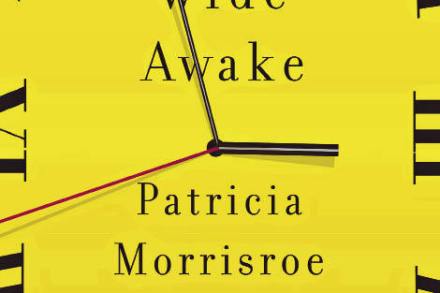
I’ve only ever read one other book about sleep — the brilliant Counting Sheep, by Paul Martin, which collates and describes everything we know about sleep in a way that is succinct and peerless. I’ve only ever read one other book about sleep — the brilliant Counting Sheep, by Paul Martin, which collates and describes everything we know about sleep in a way that is succinct and peerless. So this book is up against stiff opposition. Patricia Morrisroe, who has trouble sleeping, examines the science of sleep in the course of trying to find a cure. She goes to doctor after doctor. She tries everything — this drug and that drug, tapes, meditation, different mattresses, sleeping on blocks of ice, moving from Manhattan to the country.

Brutal and brutalising

From our UK edition

In this book, Jonathan Safran Foer, the American novelist, tries to make us think about eating meat. He ate meat, then became a vegetarian, then ate meat again, then got a dog, then started to worry about eating animals, and didn’t stop worrying. This book is the result of what happens if you start to worry about eating animals, which is what most of us do, but then carry on worrying, which is what most of us don’t do. It’s horrifying. He starts off by thinking about why we don’t eat dogs. Well, we’d hate to do that, wouldn’t we? They’re dogs, for God’s sake. They are ‘companion animals’. We love them, in the same way that the Indians love their cows. But the Indians eat dogs, don’t they? And Koreans eat dogs.

Behind the net curtains

From our UK edition

Waking Up in Toytown, by John Burnside The Freedoms of Suburbia, by Paul Barker Finding himself in a lunatic asylum, and then at a meeting of Alcoholics Anonymous, John Burnside has an idea. He wants a normal life. His idea is to move to the suburbs, because it is there, he feels, that he might become ‘a regular, everyday sort of guy. The next-door neighbour whose name you can never remember, the one who keeps himself to himself, but is basically OK.’ Does he really want a normal life? I’m not so sure. In any case, he arrives in Surrey, seeking ‘a Surbiton of the mind’, and ends up on the edge of Guildford, in a shared flat, with an addiction counsellor and a determination to give up drinking. Pretty soon, though, he is beginning to waver.

Gut instincts

From our UK edition

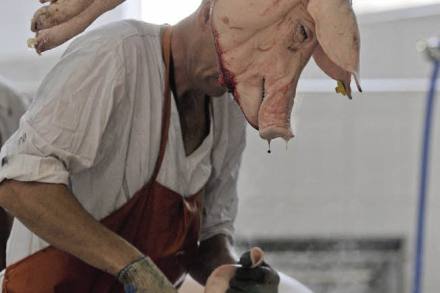
Julie Powell wrote Julie and Julia, a book (and now a film) in which she described her attempts to cook a huge number of recipes by the cookery writer Julia Child. I haven’t read that book, but I get the impression that Powell, 30-ish and married to her childhood sweetheart, was going nuts, and used the cooking as a sort of therapy. Well, here she’s going nuts again, and it’s pretty serious. This time, she decides to become a butcher. At the start of the book, we find her slicing up a piece of liver and getting blood on her face. She tells us her troubles, which amount to the fact that, while she’s still married to Eric, and still loves him, she’s having a mad affair with someone else. She is comfortable with Eric.

Not so special

From our UK edition

Alain de Botton recently said that he’d been congratulated on his prescience for writing a book about the nature of work in these times of economic woe. But he wasn’t prescient, he said — just interested in the subject. He has been pondering it for several years now, in his specific, de Botton-esque style, which is calm and leisurely, and sometimes faux-naif; a killer combination when it works. Here it works; he has pretty much got to the bottom of the subject. In his time, Alain has got to the bottom — or close to the bottom — of several subjects. Love, travel, Marcel Proust, and happiness, to name a few. As a writer, he can be attracted to the paradoxical and the counter-intuitive.

Beyond the wildest dreams

From our UK edition

Collections of Nothing, by William Davies King At the start of this memoir, the author, a college professor in California, describes a scene from his divorce. He walks into the garage of his former family house, and looks at his possessions, which his wife has put there. He sees the stuff you’d expect — the shirts, the tools, the ‘bags of shoes’. And he also sees his collection. This is the subject of this book, and it’s pretty weird, because this guy is a ‘collector of nothing’. He’s an obsessive collector of junk. And when he looks at this junk, in this garage, he has a moment of clarity. He realises how weird he is. ‘These things looked like signs of hoarding,’ he says, ‘which is a diagnosis, not a hobby.

Dark and creepy

From our UK edition

The Folio Book of Historical Mysteries, edited by Ian Pindar This book, which is a collection of 20 essays on events and people from history, first seriously caught my attention when I started reading the piece about Shakespeare. Of course, I’d always had the nagging sense, on the fringes of my mind, that some people questioned Shakespeare’s authorship. Eccentrics and attention-seekers, I’d always assumed. And here, I saw that they refer to themselves, rather grandly, as ‘anti-Stratfordians’. So, why do these people think that the man named William Shakespeare, who was born in Stratford-upon-Avon in 1516, and who died there in 1564, did not write the plays and the sonnets, then? Well, say the anti-Stratfordians, Brenda James and William D.

Through the keyhole

From our UK edition

Here are two books by anthropologists — Sam Gosling, from the University of Texas, and Daniel Miller, from the University of London. Both are British. Both set out to explore one of anthropology’s central questions: what is the relationship between people and their possessions? At the start of his book, Gosling says, more or less, that if you look at people’s stuff in the right way, you can find out what makes them tick. Miller, on the other hand, is more tentative. He doesn’t want to generalise. But then, the people he studies seem much weirder than the people Gosling studies. Or maybe Miller is weirder than Gosling. As with all anthropological matters, it’s hard to know for sure.

Sounding a false note

From our UK edition

In this book John K. Cooley, who has spent a lifetime writing about international intrigue, investigates the subject of forgery. More specifically, he looks at the way people have tried to use forgery as a way of waging war or seizing power. It seems like a terribly dry subject at first — lots of stuff about currency and exchange rates and the gold standard. You need to concentrate. But it’s a fascinating subject, and by the end, this book really made me think. First of all, I had the impression that counterfeit money is quite a rare thing. Not so, says Cooley. As long as currency has existed, people have been forging it. For instance, early pilgrim settlers in America traded with native Americans in their currency of seashells.

The line of least resistance

From our UK edition

This is a book about drugs, drug addicts, and the people who try to help drug addicts — and the author, a prison doctor, thinks we’ve got it all wrong. For instance, most people think of heroin addiction as something like a terrible disease. We also tend to think that withdrawal from heroin is an appalling physical ordeal. Not so, says Theodore Dalrymple. ‘Addiction to opiates,’ he tells us, ‘is a pretend rather than a real illness, treatment of which is pretend rather than real treatment.’ This is a bold assertion, and I know some people who find it offensive, but it’s worth following Dalrymple’s logic.

Man’s craving for spirits

From our UK edition

When I finished this book I asked myself why, considering its undoubted qualities, I found it so difficult and strenuous. Reading it, I felt like a man inching up a sheer rock-face. Sometimes I would get to the top and take a peek at the view. But then I’d come crashing down again, and wonder what it was I’d actually seen. But I didn’t give up. I got to the end, and lay down on my bed, and began to wonder what it was all about. There were times when, briefly, I believed I had grasped what Marina Warner, the exceptionally well-informed author, was trying to tell me. But her subject is immensely difficult, at times impossible. The subject is phantasmagoria — or, more precisely, that which does not exist, but appears to.

All the fun of the fair

From our UK edition

In this chunky book, Joanna Pitman tells us something we already suspect to be true, and she does it beautifully. We are, she says, obsessed with blonde hair. For instance, even though only one in 20 of us is naturally blonde, a third of women lighten their hair. Why? Because blonde hair gets you more attention. Blonde hair is a magnet for sex and money. When she bleached her own hair, Pitman tells us, the change was dramatic. People stared. 'The way they looked,' she says, 'it felt as if my head was radiating some kind of spectral glow.' As a blonde, she got 'preferential treatment'. Men gave her 'wolfish looks'. 'I wondered,' she says, 'whether I could afford not to be blonde.' Pitman takes us on a blonde history of the world.