William Leith

Your immune system’s war isn’t Saving Private Ryan — it’s Homeland

From our UK edition

Before I read this book, I imagined the immune system as a defensive force, like the Germans on the beaches at Normandy on June 6 1944. When you’re young and vital, your immune system is the Germans in the early morning — scanning the horizon for movement, with plenty of ammunition in reserve. But life is a process of attrition; as you get older, you become like the Germans later that afternoon — your machine guns get jammed up, and then you use rifles, and pistols, and eventually bayonets, until the invaders finally destroy you — just like the first 20 minutes of Saving Private Ryan. That’s what I used to think. Now I’ve read this book, I see things a bit differently.

The hell of being Michael Palin

From our UK edition

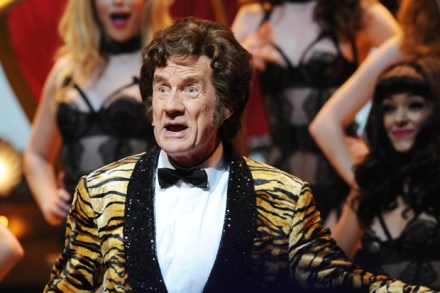
In these diaries, which I found excellent in a very specific way, Michael Palin tells us about his life between the late 1980s and the late 1990s. At the start of this period, he was about to become a hugely successful presenter of travel programmes. Ten years later, he was wondering if this was, in fact, what he wanted to be. ‘Should I accept that this is what I’m best suited for?’, he writes. Or should he try to do something else, like be an ‘arts presenter’ or a novelist? His own verdict: ‘I don’t know.’ Palin is obviously a man of great qualities. For instance, he’s almost always an optimist, but never a bore. He’s clever, he’s charming, he has good taste.

A book about human nature that makes your head spin – in a good way

From our UK edition

Vincent Deary is a therapist, and this book is the first part of a trilogy. How We Are is about human nature. Books two and three will be called How We Break and How We Mend. Three serious tomes, backed by a serious publisher. You open it thinking: this is not going to be an easy self-help book where everything is mapped out for you. It won’t be a walk in the park. In fact, pretty much the first thing Deary does is to examine the concept of walking in a park. ‘“A walk in the park” is a synonym for ease,’ he tells us, ‘because the park knows how to walk.’ In other words, when you enter a park, you don’t have to make any decisions, because the park has already made them for you. The paths are marked out. All you have to do is follow them.

Having a moral compass just gets in the way of being smart

From our UK edition

Steven D. Levitt was a Harvard economist who specialised in politics and spent a lot of time watching cop shows on TV. Then he had an idea: why not switch from politics, which he found dull, to crime? Soon he was studying the crack cocaine economy. Stephen J. Dubner was the guitarist in a rock band called the Right Profile. But he didn’t like the rock’n’roll lifestyle; he was a bookish type. So he became a journalist, got a job at the New York Times, and found himself interviewing a go-ahead Harvard economist who had written interesting stuff on the crack cocaine economy, among many other fascinating things. This, of course, was Levitt. Dubner made a suggestion: why not write a book together, based on Levitt’s work?

The thrill of cutting into a human brain

From our UK edition

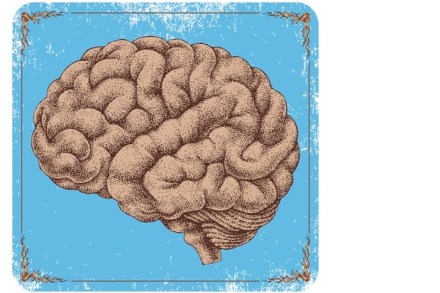
In the first sentence of the first chapter of this book, Henry Marsh, a consultant brain surgeon, says, ‘I often cut into the brain and it is something I hate doing.’ What a compelling start! Marsh takes us through an operation. First, he looks at a scan. A middle-aged man has a tumour of the pineal gland, which means a very tricky operation. Brain surgeons, says Marsh, look at pineal tumours ‘with both fear and excitement, like mountaineers looking up at a great peak they hope to climb’. And with this, he sets the tone for the book, which is excellent. For Marsh, brain surgery is terrifying, but also addictive. You become obsessed. Cutting people’s heads open, it turns out, really does your head in.

Why you shouldn’t keep elephants

From our UK edition

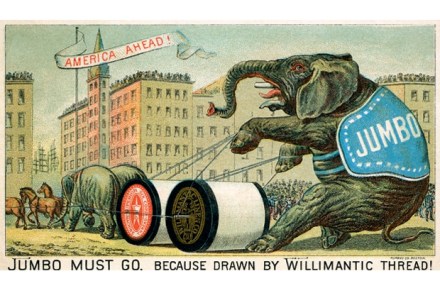
On 15 September 1885, the world’s most famous elephant, Jumbo, was killed by a train. Jumbo, the star attraction at P.T. Barnum’s travelling circus, was crossing the track at a station in Ontario, Canada. His handler, Matthew Scott, saw the danger. But ‘the elephant, fatally confused, trumpeted wildly and ran towards the oncoming train’. The force of the locomotive crushed Jumbo’s skull and drove one of his tusks ‘back into his brain’. But was this really an accident, or had Barnum, or Scott, or both, committed  elephanticide? When the engine hit him, Jumbo was dead within minutes. A bull African elephant is no match for a freight train.

Why worship Prince Philip?

From our UK edition

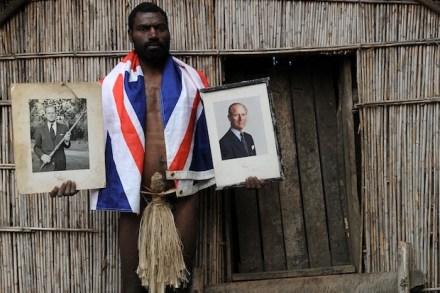
In this travelogue, Matthew Baylis, the novelist and TV critic and former Eastenders screenwriter, goes to Tanna, a Melanesian island, where, he believes, the locals worship Prince Philip. This sounds weird — to worship a man from far away, who knows little about them, about whose life they weave complex myths. But then again, some Melanesian people worship Christ, and yet others follow an American who might or might not have existed and who might or might not have been called John Frum. Baylis sets out to investigate. Prince Philip, he says, has interested him since he was a boy. Growing up in Southport, near Liverpool, the 11-year-old Baylis was aware of Philip’s visit to Salford university in 1982 and one of his reviled gaffes.

Clumsy and heavy, Goliath never stood a chance

From our UK edition

When we think of David and Goliath, we think of a young man, not very big, who has a fight with a terrifying opponent, and wins. We think of David as puny and Goliath as towering and strong — not to mention heavily armed. We see David’s victory as something that happened against all odds. The story of David and Goliath is, as Malcolm Gladwell puts it, ‘a metaphor for improbable victory’. Well, that’s how we think about it, anyway. But the thing is, apparently, we’ve got it all wrong. Gladwell, one of the most influential non-fiction writers in the world, often asks his reader to take a closer look at things. In The Tipping Point, his subject was epidemics.

Sane New World, by Ruby Wax – a review

From our UK edition

Ruby Wax, who is best known as a comedian, dedicates this book ‘to my mind, which at one point left town’. She says: ‘I am one of the one in four who has mentally unravelled.’ She tells us what it’s like to fall apart, why she thinks so many people fall apart, and what you can do if you start to fall apart yourself. ‘The feeling is that of being a corpse,’ she says. It happens because our brains are not adapted to live in the relentless global village we’ve created. And: ‘YOU CAN CHANGE YOUR MIND AND HOW YOU THINK.’ More on this last bit later.

Consolations of the Forest, by Sylvain Tesson – review

From our UK edition

In this book, the French writer Sylvain Tesson spends six months, mostly alone, in a log cabin in Siberia. ‘Cold, silence and solitude are conditions that tomorrow will be more valuable than gold,’ he tells us. So, Tesson grabs these things while they are still relatively cheap. He is, you might say, a modern-day Whitman with the soul of a speculator. He escapes into discomfort, and finds it bracing and thought-provoking. In the end he’s quite sad to leave. But you never get the impression he wants to stay for ever. He packs vodka, cigars and ten boxes of painkillers to deal with his hangovers. He also takes along a mini-library — Tournier, Lawrence, Camus, Sade, Casanova, Mishima. Uh-oh. Required reading for the young man in crisis, you think.

The Society of Timid Souls, by Polly Morland – review

From our UK edition

In this book about courage, Polly Morland talks to lots of people who should know what it is. She talks to soldiers, surfers, a matador, firefighters and professional daredevils. She interviews a man who fixes the upper sections of skyscrapers, and is afraid of heights. She meets people who have been diagnosed with terminal diseases. She quizzes a former armed robber. It’s well worth reading. Morland is slightly more humanistic than scientific; she wonders what courage is, without being absolutely determined to come up with a definition. I started the book thinking that courage is the ability to do something you think is right, even when you’re scared. It means not wavering from your core beliefs, or feelings, when things get difficult or dangerous. Think of the word core.

Destroying angel in the ether

From our UK edition

A few years ago, James Lasdun wrote The Horned Man, a novel about Laurence Miller, an English lecturer in an American college who descends into paranoia. At first, he thinks someone is tampering with things in his office, and making calls from his phone. Then he thinks his colleagues are spying on him, and, perhaps worse, that they think he is spying on them. He worries that someone might think he is trying to plagiarise their work; that people can read his lascivious thoughts; that, whatever he says or does, he is leaving a damning trail of evidence against himself. Meanwhile, he is part of a sinister academic committee devoted to policing the behaviour of others.

Safety in danger

From our UK edition

In his book The Black Swan, Nassim Taleb told us that the world is a much weirder place than we can bear to believe. It is full of occult forces and strange events. If we think we can control or predict these forces and events, we’re sorely mistaken. One minute, we think we’ve mastered the business of lending money and hedging our bets; the next, the economy crashes. One minute, we invent a way to send a message on a computer; the next, porn is everywhere and the music business is finished. One minute, we’re a bit plump; the next, we’re obese, and heading for a diabetic meltdown. We always think we know what will happen next. Get real, said Taleb; the world is non-linear. It’s a stranger place than we want it to be.

An exercise in torment

From our UK edition

In this intense, painful, excellent war novel, former Private John Bartle, a young man from rural Virginia, looks back on his tour of duty in northern Iraq in 2004. He tries to explain what it was like to kill, and what it was like to be under fire. He tries to make sense of the relationships he had with other soldiers. His brain is full of lurid visions, the memories he is constantly attacked and ambushed by. But he can’t make sense of them, because he can’t find a way back to the person he was before the war. His story is an exercise in torment. Why did he join the army? Why did his friend Daniel ‘Murph’ Murphy, who did not come back, join the army?

Torn in two by Tuggy Tug

From our UK edition

This is a book about what we, as a society, should do with hoodies — the familiar hooded young men, black and white, who rob, stab, shoot and sell drugs. Its author, Harriet Sergeant, is a middle-aged woman who works for the Centre for Policy Studies, a right-wing think tank. Should we hug these people? Or should we punish them? If I’ve understood her correctly, Sergeant thinks we hug them too much when they’re young, which means we must punish them for the rest of their lives when they get older. Actually, that’s not quite right. As a society, we don’t exactly hug young hoodies — we just don’t have the collective will to give them a structured, disciplined life. When they don’t do their homework, we don’t make them.

Who needs money?

From our UK edition

I was racking my brains, trying to understand money, trying to grasp exactly what it is, when I came across these two books. One is written by Aaron Brown, who is the risk manager of a large Wall Street hedgefund. The other is by David Graeber, the anarchist who has been called the leader — and, sometimes, the anti-leader — of the Occupy Wall Street movement. Both have written brilliant books about the history of money. As you’d expect, Brown thinks that money, in its various forms, has made the world a prosperous and interesting place, and Graeber thinks that money has divided the world into two tribes — a tiny, and shrinking, number of very rich people (like Brown), and a vast, and growing, army of debtors. In a way, they’re both right. So what is money?

A gruesome sort

From our UK edition

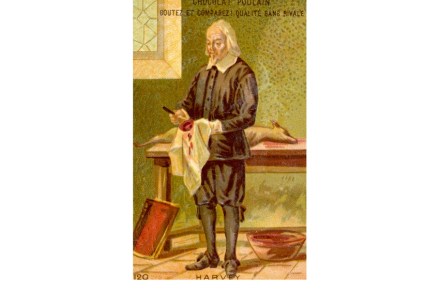
Everybody knows that the heart pumps blood around the body, and that a man called William Harvey somehow discovered this fact. Before Harvey, people thought that blood moved around the body in a sluggish fashion. But then Harvey — who was born 14 years after Shakespeare — noticed that, actually, blood shoots out of the heart with great force, travels through the arteries, and then makes its way back to the heart through the veins. To find this out, in an age before X-rays, sonograms or heart monitors, you would, if you think about it, have had to be a pretty gruesome sort of person. As soon as I started this book, I was gripped with a curiosity I should, I realised, have had all along. How did Harvey make his discovery?

The view from the top

From our UK edition

Halfway through this book, the veil lifted, and I thought: ‘I see! I see what he’s trying to do!’ Pickering gets his characters, and moves them along, and then, after 150 pages, he manages to convey a really powerful sensation of something; you might call it amorality, or nihilism, or the sense of the pointlessness of it all. For the first 12 chapters, you are walking uphill, and then you get the view. For the hero, there is horror, and a Graham Greene-like sense of things not being what they seem. Before this moment, it’s a strange set up. I suppose it’s meant to be. Malone, our Greene-ish hero, is an American airman in his late twenties. He’s in Afghanistan, but not with the military — he flies supplies around.

The Devil in the mirror

From our UK edition

As a kid growing up in Scotland in the 1950s, Dennis O’Donnell was aware of ‘loonies’, and the men in white coats who were supposed to take them away. Then, as a student, he became one of the men in white coats. At first, he thought he’d find himself in a world of Beckettian absurdity and insight. But it was grim. One man believed he was the King of Egypt. Another man smoked rolled-up bits of lavatory paper. One poor soul spent his time waiting for a visit from his daughter, who never came. When a patient died, O’Donnell was on hand to carry out official procedure: ‘Orifices have to be plugged — need I say more?’ He went back to university, where he was studying English literature.

Just One Catch by Tracy Daugherty

From our UK edition

In the second world war, Joseph Heller was an American airman based in Corsica. He flew 60 missions over Italy and the south of France. He was the guy who pressed the button to release the bombs. Sometimes, he was terrified; at one point, he had a kind of existential crisis at the thought that the Germans were trying to kill him. Many years later, he wrote Catch-22, a brilliant novel about Yossarian, a terrified American airman in the throes of an existential crisis. Catch-22 was published 50 years ago, and here are two books to commemorate the anniversary — a long one by a Texan biographer, and a short one by Heller’s 59-year-old daughter. Both of these books are good.