Ursula Buchan

A tribute to the grandes dames of gardening — Beth Chatto and Penelope Hobhouse

There is no longer much point buying strictly practical gardening books, such as were a staple of the publishing industry in years gone by. Those colourful, cheery, cheap volumes have been superseded by trustworthy websites, such as that of the Royal Horticultural Society, which can quickly answer any query you have about cultivation, plant identification or pest damage. Gardening books these days must offer something not to be found online, if readers are to shell out their precious British pounds: deep, hard-earned knowledge, elegant writing, attractive illustrations and, preferably, all three. This year, at least, there are a number that pass the test.
Chelsea Flower Show

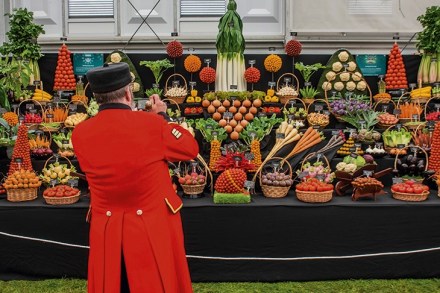
Chelsea, the most famous flower show in the world, pulled in its devotees once more this week, with its accustomed mixture of colour, scent and glamour. The continuing success of the Royal Horticultural Society’s ‘flagship’ show has much to do with the BBC’s need to fill schedules, the foreign media’s enduring fascination with ‘Englishness’ and royalty, and the desire of committed gardeners to worship in the company of their co-religionists. It cannot be any kind of fun for plant nursery people, who stage the exhibits in the Great Pavilion, since the logistical difficulties are fearsome, but they mostly cannot resist the buzz.

Gardening books: Other men’s flowers

There are probably no more gifted professional gardeners in England than Jim Buckland and Sarah Wain, husband and wife and joint head gardeners at West Dean in Sussex. On the verge of their retirement, after 27 years of effecting a renaissance in the gardens and grounds of this country house arts centre (bequeathed by Edward James), the couple have described their work and achievements in At West Dean: The Creation of an Exemplary Garden (White Lion, £40).

A choice of gardening books | 1 December 2016

Garden design usually breaks out of its confines to become part of the general consciousness only in Chelsea Flower Show week, but this year there have been so many events to mark the tercentenary of the birth of Lancelot ‘Capability’ Brown — the most prolific and talented designer of the 18th-century landscape garden — that even the general public has noticed. Most events have occurred under the umbrella of the Capability Brown Partnership, the brainchild of a landscape historian called John Phibbs, who has spent several decades studying Brown’s 170-odd landscapes and advising some of the owners on their recovery, care and conservation.

The real gardeners’ questions answered

Why is it that gardening in the public prints is so often treated as a fluffy subject for fluffy people? Writing that a plant is ‘incredibly beautiful’ or that everyone is ‘really passionate’ about their allotment/community garden/windowbox doesn’t seem to me to be an adequate substitute for telling thoughtful gardeners something they didn’t know already. The trouble is that there is a shortage of trained gardeners and horticultural scientists who both have something interesting to say and can write engagingly, and of these only one can make me laugh out loud. His name is Ken Thompson, and he was for many years a lecturer in the Plant and Animal Sciences faculty at the University of Sheffield.

Top tips for gardeners — from stroking seedlings to stacking logs

I spent the summer of 1976 working as a trainee gardener at the Arboretum Kalmthout in Belgium. My employer was charming and kind, but I could not suppress a prickle of shame-faced irritation every time she mentioned a former student called Susan Dickinson. Whenever I leant on my hoe for a moment in the pelting heat, I was reminded how accomplished and hardworking this horticultural superheroine had been. For the past 25 years, Sue Dickinson has been head gardener at Eythrope in Buckinghamshire, owned by Lord Rothschild, and she is widely acknowledged to be the finest gardener in the country. I need never have wasted finite energy on envy. The four-acre walled garden at Eythrope is the subject of Paradise and Plenty, published by Pimpernel Press (£50).

The many lives of John Buchan

Up the stairs with flying feet, You would burst upon us, cheering Wellington’s funereal street. Fresh as paint, though you’d been ’railing Up from Scotland all the night, Or had just returned from scaling Some appalling Dolomite… Pundit, publicist and jurist: Statistician and divine; Mystic, mountaineer and purist In the high financial line; Prince of journalistic sprinters — Swiftest that I ever knew — Never did you keep the printers Longer than an hour or two… Still I hope with kindly feeling You recall the days of yore, When I watched you gaily reeling Off your folios by the score; Self-effacing, self-suppressing When your elder took the reins, Though at half his age possessing Twice and more than twice his brains.

Tree devotion

I have never written much about the one-acre shaw of native trees I planted in 1994, even though it is the delight of my heart, especially when the wild cherries flame in autumn. That’s because I am well aware that en masse tree-planting is a niche activity, open only to the fortunate few. But no one can have envied Thomas Pakenham when, in 1961, he unexpectedly inherited Tullynally Castle in County Westmeath in central Ireland, with its 1,500-acre ‘demesne’ — a third of it park and garden — since he was heavily burdened with death duties. It took nearly 30 years to pay off the debts, before he could begin to concentrate on the delight of his heart, which is planting, caring for and observing the ways of trees as well as travelling the world to look at them.

Calm after the storm

I hesitate ever to criticise an author for the inappropriateness of a book’s title, since it’s more likely the fault of someone in marketing, who’s had a Bright Idea. But whoever is the culprit, the omission of the dates ‘1650–1800’ from the dust jacket certainly risks annoying the bookshop browser, who may grumpily set the book to one side in a huff. This would be a pity, since there is a great deal of value in Mark Laird’s exposition of his multifarious research projects. He is senior lecturer in landscape architectural history at Harvard Graduate School of Design, but probably best known this side of the Atlantic for the leading part he took in the restoration of Painshill, that most delightful of 18th-century gardens, near Cobham in Surrey.

Behind (almost) every great writer is a great garden

It is a truism that writers of all kinds often find inspiration and solace in their gardens, as well as protection from the outside world and its demands. After all, writing is a supremely solitary business and outside influences must be subtle and uplifting, not noisy and distracting, if writers are to flourish. The Writer’s Garden is an attempt to explore this appealing idea by describing the gardens of 20 well-loved British writers, including Jane Austen, Beatrix Potter, Walter Scott and George Bernard Shaw.

Beauty in beastly surroundings

The vast majority of books written about British gardens and their histories are concerned with large ones, made and maintained, sometimes over several centuries, by people with money. ’Twas ever thus. In this country, recognisable gardens began in monasteries, as well as the surroundings of palaces and noblemen’s houses, and it is only in the last couple of centuries that the middle classes have got into the act. As for the poor and dispossessed, theirs has been a very different story, too rarely told.

The most important gardening book of the year

I’ll own up at once. Tim Richardson and Andrew Lawson, the author and photographer of The New English Garden (Frances Lincoln, £40, Spectator Bookshop, £30), are friends of mine — no very unusual circumstance in the small world of garden writing. Moreover, I wrote this book’s forerunner, The English Garden, also in collaboration with Andrew Lawson. However, my reputation would falter if I sold you an expensive pup so, if I tell you that The New English Garden is one of the more important and interesting gardening books published this year, you may believe me. The book looks at 25 innovative gardens or public spaces that have either been made, or re-made, since 2000.

A churchwarden’s lament

When I take the dogs into the garden last thing at night, a dark shape looms up just beyond the garden wall. It is a 12th-century stone building, with a square tower, leaded and stone-tiled roofs, and large plain windows. It looms even larger in my imagination, since I am one of the two churchwardens (Bishop’s or People’s Warden, I never can remember which), so this building is in my charge. I feel as if I have a second home — with all the anxieties of owning an Umbrian farmhouse or Alpine chalet but none of the amenities — since I involve myself with the minutiae of its upkeep quite as much as I do with my own house. I worry all the time about the church’s fabric, graveyard and congregation, and the parish which supports it.

To pastures new

If you like to pass an idle half-hour, as I do, reading random entries in Who’s Who, you will be struck by how many distinguished people include gardening among their recreations. If you like to pass an idle half-hour, as I do, reading random entries in Who’s Who, you will be struck by how many distinguished people include gardening among their recreations. Indeed, it is the second most popular pastime — after golf, bizarrely — in the book. To pick just a few: the Duchess of Buccleuch and Queensberry, Lord Justice Goldring, Susan Hampshire, Mark Damazer, Maeve Binchy, Lord (Chris) Patten and Crispin Blunt MP all own up to spending their spare time gardening.

Family friendly

‘Can we go to Alton Towers? Please?’ Is there any request that strikes more gloom into the heart of a parent during the half-term holiday than that? The idea of spending an expensive day queuing for terrifying rides, in an environment of tacky, non-sustainable and old-fashioned consumerism, ensured that I steadfastly deprived my children of this ‘fun day out’ throughout their childhood. ‘Can we go to Alton Towers? Please?’ Is there any request that strikes more gloom into the heart of a parent during the half-term holiday than that?

Our avian friends

Several new facts have rocked me back on my heels recently: Alastair Cook garnered more runs at the Gabba in Brisbane than Don Bradman; there are 100,000 miles of blood vessels in your brain; more people in this country can recognise Simon Cowell than Pope Benedict; and we spend as much annually on ‘wild bird care’ — £200 million — as we do on peat and potting composts, and rather more than on fertilisers.

Gardens: Beguiled by olive trees

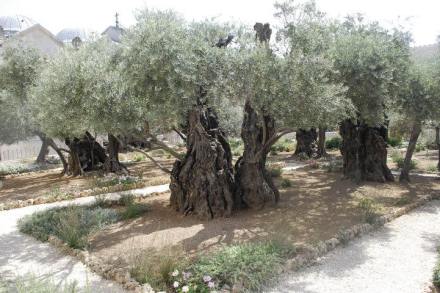
Fashion may be Folly’s child, but that never stopped gardeners, when the urge was on them, from planting something à la mode. Fashion may be Folly’s child, but that never stopped gardeners, when the urge was on them, from planting something à la mode. That must be why olive trees (Olea europea), natives of the rocky dry soils of the eastern Mediterranean, are now so widely planted in British gardens. Prince Charles has them at Highgrove and they can be seen each year at Chelsea Flower Show so, hey, we all have to grow them, don’t we?

Gather ye roses

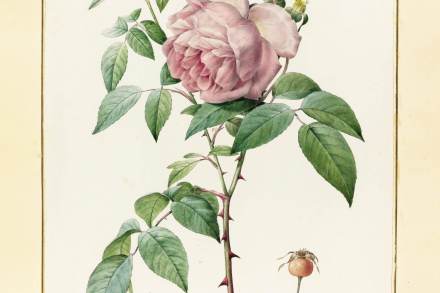
Can there be many spare bedrooms in the country that do not have at least one, and probably four, prints of Redouté rose engravings hanging on the walls? I know ours does. Can there be many spare bedrooms in the country that do not have at least one, and probably four, prints of Redouté rose engravings hanging on the walls? I know ours does. People who do not think they know the name of a single botanical artist will have heard of Pierre-Joseph Redouté, the 19th-century Belgian-born artist who did so much to instil the French (and later the English) with an enduring love for the rose. He did this by painting roses most faithfully and sensitively, in watercolour on vellum.

French foray

One surefire sign of maturity is the acceptance that you have friends who are more talented than you are. I learnt that lesson early, which, considering my manifold shortcomings, was just as well, frankly. I have mates who are better practical gardeners than I am, and ones who are more creative garden designers. I like to think that this is not so much a source of deflation or envy as a spur to my ambition. The spur pricked recently in France. I had been invited by Clare Whateley, of French Gardens Today, to join a very jolly small party of knowledgeable gardeners who were visiting gardens in northern Brittany. I was particularly pleased because I had worked with two of them at the Royal Horticultural Society’s garden at Wisley in 1975.

Buzz words

It is not unusual to hear older people complain about how little botany is taught in schools these days, a serious deficiency where young would-be gardeners are concerned. As serious, however, is the longstanding general ignorance of entomology, the study of insects. I count myself among the ignorami. From pretty well a standing start, I have spent my gardening life trying to discover more about this enormous, and hugely influential, phylum of the animal kingdom. Only recently, for example, have I begun even vaguely to understand the biology of Vespidae or social wasps. This is shameful, I know, considering what an impact they have on the garden and those who work or relax in it.