Tom Goodenough

Tom Goodenough

Tom Goodenough is online editor of The Spectator.

What the papers say: Ministers must take a Brexit ‘no deal’ seriously

From our UK edition

Deal or no deal? Whatever type of Brexit Britain ends up with, the government should take the prospect of walking away with nothing seriously, says the Daily Telegraph. Yet the postponement of the EU withdrawal bill, which may not now come before Parliament for several weeks because of a looming Tory rebellion, does not bode well. The Telegraph stops short of echoing the warning of Labour’s Keir Starmer that the delay sums up the “paralysed” state of the current administration. But there remains ‘a palpable sense...of a catastrophe in the making’. With the Brexit stalemate unlikely to be broken this week, a Brexit no deal could end up as the ‘default’ option – making ‘proper preparations’ vital, says the Telegraph.
What the papers say: Theresa May’s Brexit delusion is coming unstuck

From our UK edition

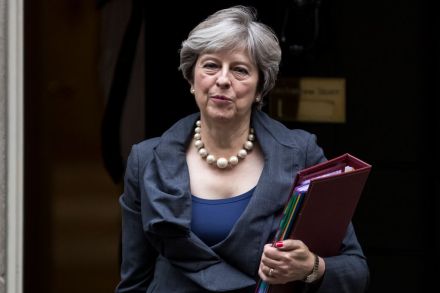
Monday night’s Brexit dinner was ‘constructive and friendly’, both sides have insisted. Yet it’s hard to tell what purpose the discussions involving the Prime Minister and Jean Claude-Junker actually served, says the Daily Telegraph. The ‘deadlock’ remains firmly in place, and ‘the best Mrs May managed to extract was that negotiations would “accelerate” in the coming months’. So what’s the hold-up? The answer lies with Brussels, says the Telegraph, which argues that ‘citizen’s rights could be sorted out tomorrow’ if the EU wanted to move things on.

Hate crime is up – but it’s not fair to blame Brexit

From our UK edition

Hate crime is up – and Brexit is to blame. It’s a familiar story and one doing the rounds again today following the publication of Home Office statistics on the level of hate crimes last year. The numbers do seem troubling: these offences rose by a third last year, and there was a spike in hate crimes around the time of the EU referendum, as this graph shows: But can this rise really be blamed on Brexit? Did people really turn on each other in the heady days after the referendum? There are a number of reasons to think not. Firstly, a rise in hate crime wasn’t isolated to last year. In 2015/16, hate crime was up by 20 per cent on the previous year. In 2014/15, it rose by 18 per cent; and in 2013/14, it also increased.

What the papers say: The EU’s absurd Brexit bill demand

From our UK edition

Theresa May is under pressure from the European Union to spell out more details on what Britain will pay as part of its Brexit divorce bill. The PM has said the UK will honour its commitments – but the EU wants more meat on the bones about what this actually means. So far, the Prime Minister has refused to spell this out – and she’s right not to, says the Sun. The paper describes May’s Florence speech as ‘open and generous’ and says it is ‘absurd’ for the EU to demand even greater clarity. After all, ‘we cannot possibly offer billions..without knowing what, if any, deal Brussels will agree in return’, says the Sun. It’s true that no one – including the Government – wants to walk away with no deal come March 2019.

What the papers say: A bungled Budget could pave the way for a Corbyn government

From our UK edition

No deal is better than a bad deal – and it’s also better than a Corbyn government, says the Daily Telegraph in its editorial this morning, in which the paper says that if Labour oust the Tories, Britain would 'become an inward-looking, statist, high-taxing country that would scare away international investors’. The ‘historic opportunity’ gifted by Britain’s departure from the EU would ‘be rendered nugatory’ under Corbyn, whose plan for government is a 'recipe for impoverishing the nation’. The claims of the Shadow Chancellor, John McDonnell, that PFI contracts can be binned with equanimity are for the birds’, the paper says.

What the papers say: Ministers must publish their Brexit impact papers

From our UK edition

‘It is now blindingly obvious’, says the Sun, ‘that the EU is making impossible demands.’ Just consider how Brussels is pointing the finger at Britain for the lack of progress in Brexit talks. ‘Anyone can see’ that this standstill is more to do with the EU wanting a ‘monstrous’ payment up front without ‘anything firm in return’, argues the paper – and ‘David Davis would be out of his mind to buckle’. It's clear, too, that the EU’s chief negotiator, Michel Barnier, ‘must regret the untenable position ­Germany and France have put him in’. It's true that the deadlock could break by next week and Barnier and Britain will finally be allowed to talk trade.

What the papers say: Britain’s chaotic approach to Brexit is helping the EU

From our UK edition

Britain will now almost certainly have to wait until Christmas for the start of trade talks with the EU. This wasn’t the original plan, with the initial timetable suggesting these discussions could start in October. So what’s going wrong? Some are blaming the EU - and it’s true that the leaders of France and Germany are ‘behaving mulishly’ and ‘irrationally’, says the Daily Telegraph. But maybe the blame also lies closer to home. Deputy PM Damian Green has said he would still back ‘Remain’ if the referendum took place today, Theresa May ‘refused to say whether she would now vote for Brexit’ and the Chancellor is saying he won't commit funds to prepare for a Brexit ‘no deal’.

Philip Hammond’s Brexit no-deal bind

From our UK edition

Philip Hammond has got himself into something of a bind over planning for a Brexit ‘no deal’. The Chancellor has ruled out - at least for the time being - spending money on contingency plans for a scenario in which Britain walks away from the EU without an agreement. The problem with this strategy is that it undermines Theresa May’s ‘No deal is better than a bad deal’ approach. Put simply, how credible is the government’s line on being ready to walk away empty-handed if planning for such an outcome takes a back seat for now? It’s also surprising for the Chancellor to rule out preparing for a scenario seen as being a 50-50 bet by some of his colleagues in the Cabinet.

What the papers say: A Brexit transition deal is a necessary evil

From our UK edition

Theresa May’s admission that the European Court of Justice could continue to play a role during any Brexit transition deal has not gone down well with some Leave supporters. Jacob Rees-Mogg suggested that the Prime Minister had gone too far in trying to appease Brussels. But the Sun doesn’t see the PM’s comments as anything to be worried about. ‘Most sensible Leavers accept the need for a limited Brexit transition’, the paper says, even if this means a role for the ECJ. Such a transition will ensure that the impact on the economy will be minimised, the Sun says. It will also ‘buy businesses time to adjust’. But May must remember her pledge that the UK will be out of the EU by March 2019.

Brussels is warming to the British government’s approach to Brexit

From our UK edition

Ministers had been holding out some faint hope (at least publicly) that Brexit trade talks could start this month. It was an unlikely prospect. Jean-Claude Juncker warned only a few weeks ago that it would take a ‘miracle’ for that to happen. Now, it’s official that a Brexit miracle hasn’t take place: Donald Tusk, the president of the European Council, has said Brussels’ new timetable is based on the ‘hope for sufficient progress’ to be made by the end of this year, rather than in October. This makes it clear the EU is determined to milk its trump card - stalling on talking trade - for all its worth: hardly much of a surprise. But Tusk’s message today also hints at a softening of tone in Brussels.

What the papers say: Why we must prepare for a Brexit ‘no deal’

From our UK edition

Theresa May’s ‘I’m in charge’ message she delivered to Parliament wasn’t only aimed at MPs - it was also directed at Brussels, says the Daily Telegraph. After all, there’s little doubt that Michel Barnier will have looked at Theresa May’s disastrous Tory party conference performance and have concluded ‘she is hanging onto power by her fingertips’. Surely he will have thought, says the paper, Britain’s PM is ‘not in a position to play tough’. If so, Brussels' politicians would be wise to ‘think long and hard about what life might be like if the negotiations go wrong’.

Theresa May’s disastrous conference speech: the newspaper verdict

From our UK edition

Theresa May’s Tory party conference speech was a memorable one if only for all the wrong reasons. A prankster, her faltering voice and a broken sign meant the Prime Minister’s reboot did not go to plan. Here is the newspaper verdict on May’s nightmare speech: The luck that all leaders need has ‘deserted Theresa May’, says the Times. The Prime Minister’s speech was undoubtedly a ‘presentational disaster’. Yet while ‘there will be many who see this ill-starred speech as the last straw’, whether the PM survives ‘cannot be decided on the basis of optics’.

Conservative party conference, day three: The Spectator guide | 3 October 2017

From our UK edition

All eyes will be on Boris Johnson when he takes to the stage in Manchester this afternoon. The Foreign Secretary isn't the only big fixture at the Conservative party conference though. Here is the pick of the action from the conference and the fringes: Party conference: 10.00 - 12.30: Fighting injustices: Secretary of State for Health; Secretary of State for Justice; Home Secretary 14.00 - 14.50: Securing the best Brexit deal for Britain: Co-Chairman of the European Conservatives and Reformists; Secretary of State for International Trade; Secretary of State for Exiting the European Union 14.50 - 16.

Conservative party conference, day two: The Spectator guide | 2 October 2017

From our UK edition

Philip Hammond probably wouldn't be in the Cabinet if Theresa May had won the thumping majority she was widely predicted to. Instead, Hammond will be taking centre stage on day two of the Tory party conference. Here are the highlights to watch out for: Party conference: 10am: David Mundell, Secretary of State for Scotland 10.40am: Alun Cairns, Secretary of State for Wales 11.15am: David Gauke, Secretary of State for Work and Pensions 11.40am: Philip Hammond, Chancellor of the Exchequer 2.30pm: Karen Bradley, Culture Secretary  3.05pm: Michael Gove, Environment Secretary 3.40pm: Chris Grayling, Transport Secretary 4.05pm: Greg Clark, Energy Secretary 16.30 - 17.30: Campaign 2018. Exchange Auditorium Fringe events: 8.

Conservative party conference, day one: The Spectator guide | 1 October 2017

From our UK edition

The Conservative party conference is underway. In the days after the doomed snap election, Theresa May didn't look as though she would make it this far. But the Prime Minister has clung on. Here are the highlights to look out for on day one: Party conference: 10.30 - 12.30: Meeting of the National Conservative Convention. Alexandra Suite, Midland Hotel  14.00 - 14.50: Welcome to Conference: Conference Chairman; Conservative Party Chairman; First Secretary of State 14.50 - 15.45: Delivering a fairer future for young people: Secretary of State for Education; Secretary of State for Communities and Local Government 15.45 - 16.

What the papers say: Don’t be fooled by Corbyn’s ‘socialist snake-oil’

From our UK edition

Finally, Theresa May has – in her speech marking the Bank of England's independence – offered the defence of capitalism ‘that the country has been waiting to hear’, says the Daily Telegraph. It’s about time, argues the paper, which accuses Jeremy Corbyn of ‘selling a vision of socialism’ to an audience too young to remember the 'grim' seventies. This makes it vital that the Tories fight back. The ‘intellectual case’ for capitalism is an ‘easy’ one for the party to make. But what about the moral argument? Margaret Thatcher spoke with a ‘deep confidence’ in the free market. And while it’s true that May is no Thatcher, our current PM could still learn a thing or two from her predecessor.

Donald Tusk’s Brexit warning shows the EU is confident it has the upper hand

From our UK edition

Only last month, the Government was still keeping up the pretence of being optimistic that Brexit trade talks with the EU could start by October. Now the hope of doing so is fading fast. The European Council president Donald Tusk used a trip to Downing Street today to deliver a stark message: ‘there is not sufficient progress yet’. "No sufficient progress yet but we'll work on it" - @eucopresident Donald Tusk on #Brexit talks with PM @theresa_may https://t.co/02trD6qbWH pic.twitter.com/M0VzhWyDIp — BBC News (UK) (@BBCNews) September 26, 2017 This is a blow to the Government, with ministers now resigning themselves for the next phase of trade talks being pushed back, possibly until Christmas or beyond.

Labour’s conference, day three: The Spectator guide

From our UK edition

It's Tom Watson's turn to address Labour's party conference today. Last year, he said it was 'time to get the band back together' – earning himself a standing ovation from delegates and a somewhat muted response from Jeremy Corbyn. Here are the highlights we can look forward to on day three: Labour conference:  9.30am: Financial reports; NEC and CLP constitutional amendments 10.30am: Rebecca Long-Bailey 12.30pm: Angela Rayner 2.30pm: Jon Ashworth 5pm: Tom Watson Fringe events: Midday: Repowering Britain: Building a progressive truly-left vision for England that doesn’t reinforce racist values Buddies Cafe Bar. Speakers: Lisa Nandy; Clive Lewis, Naz Shah 12.

Ignoring Brexit to spare Corbyn’s blushes is a price worth paying for some

From our UK edition

Labour’s Brexit row rumbles on. While the issue won’t be the subject of a vote at the party’s annual gathering, that isn’t stopping delegates from tearing scraps out of each other in the conference hall over the issue. This morning’s session was dedicated to giving delegates a chance to talk shop on Brexit. It’s true that much of it was good natured. But some of those who took to the stage were booed for their troubles. One such delegate earned the disapproval of the audience for accusing Labour delegates of doing nothing to stop the Tories pursuing their Brexit agenda. He told those in the hall: 'We will be remembered as the opposition that let the Tories do what they want on Brexit’.