Tom Goodenough

Tom Goodenough

Tom Goodenough is online editor of The Spectator.

Spain terror attacks: what we know so far

From our UK edition

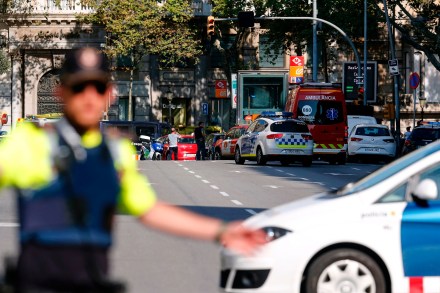
14 people have been killed and more than 100 injured after a van ploughed into pedestrians on Las Ramblas in a suspected jihadist attack Five suspected terrorists were shot dead by police in Cambrils, a coastal resort near to Barcelona, after a second vehicle attack was foiled It is believed the incident in Cambrils - in which six pedestrians and a police officer were injured - is linked to the earlier attack Isis has claimed responsibility for the Barcelona atrocity. Spain's PM has referred to it as a 'jihadist attack' Four people have been arrested in connection with the attack on Las Ramblas.
What the papers say: The Brexit cynicism is getting predictable

From our UK edition

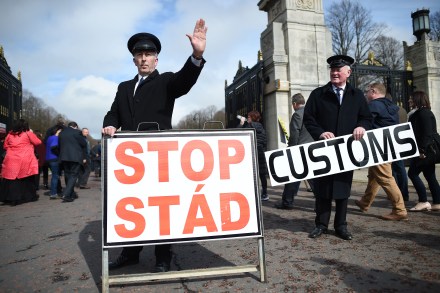
‘Here we go again’, says the Sun, which criticises the ‘chorus of doom-mongers’ who pop up whenever the government proposes a ‘sensible, serious suggestion for moving towards Brexit’. On Tuesday, this reaction was sparked by details setting out plans for a customs union after Brexit. Now, a fresh wave of cynicism has greeted the idea of a ‘frictionless’ border between Northern Ireland and Ireland. “It can’t be done,” they groan,’ says the Sun - expect, according to the paper, it already is. Take the border between Norway and Sweden, for example, which has ‘almost exactly the same arrangement that is being proposed for Ireland’.

Sarah Champion’s resignation over grooming gang comments bodes ill for state of debate in Labour

From our UK edition

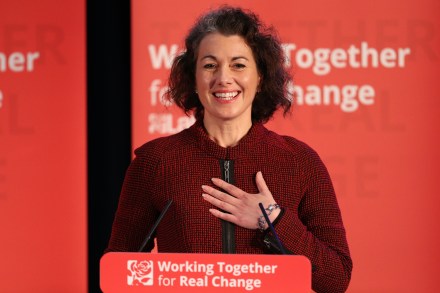
Since Jeremy Corbyn became Labour leader, resignations from the shadow cabinet have been ten-a-penny. The latest Labour MP to quit hasn't done so over Brexit or Corbyn though - and the reason for her departure doesn't bode well for the state of debate within the top ranks of the party. Sarah Champion has stepped down as the shadow women and equalities minister as a result of an authored piece which appeared in the Sun last week, following the conviction of a grooming gang in Newcastle. The passage which appears to have landed Champion in hot water came right at the start of the article: Britain has a problem with British Pakistani men raping and exploiting white girls. There. I said it. Does that make me a racist?

The government’s Brexit Irish border plan is lacking in detail

From our UK edition

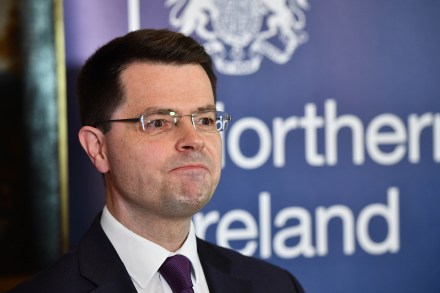
Avoiding a hard border between Ireland and Northern Ireland is the government’s top aim in Brexit talks. Brussels wants much the same: the EU Parliament’s chief Brexit negotiator Guy Verhofstadt has insisted that there should be no return to a fixed border. This is an aspiration shared by the EU, which makes the issue one of its three priorities before Brexit talks can proceed to the next stage. The Tories' new friends-in-government are also agreed - and so, too, is the Irish government. Rarely does Brexit generate such unanimity. So if all sides are agreed, you’d be forgiven for thinking things should be straightforward. Unfortunately not.

Will the EU agree to the government’s Brexit customs union plans?

From our UK edition

Britain’s Brexit wish list is slowly being filled out. Today, the government sets out its plans for the temporary customs union it wants with the EU after Britain leaves in 2019. Brexit secretary David Davis says the aim for this new relationship is for it to be as ‘close as we can to the current arrangement’. This will please the likes of Philip Hammond and the Times are painting this proposal as a victory for the Chancellor over Liam Fox in the ongoing Cabinet tussle. It will also placate businesses eager to avoid a cliff-edge. As ever with Brexit negotiations, not everyone will be entirely happy. David Davis was keen to emphasis on the Today programme that the interim plans will be for two years or less.

What the papers say: The dangers of a rushed Brexit

From our UK edition

Theresa May is back from holiday and the Brexit work continues in earnest. Over the next few days, two key papers - spelling out detail on the customs union and the Irish border - will be published. There’s no doubt, says the Times, that this ‘is a crucial week for Brexit’. ‘After more than a year of disagreement and drift’, there are now some ‘encouraging signs’ that things are slowly being put in order: the joint article written by Philip Hammond and Liam Fox and which was published yesterday advocating a transition period, is one such sign. The publication of reports ‘to flesh out the banal slogans’ touted so frequently so far, will also help matters, suggests the Times.

What the papers say: The uncomfortable truths about the grooming gangs

From our UK edition

Modern slavery is affecting every town and city in Britain, according to the National Crime Agency. Despite William Wilberforce saying two hundred years ago: ’Let us put an end at once’ to this practice, ‘slavery persists to this day, probably within a mile of the parliament in which he spoke’. ‘In car washes and in construction…in brothels and in cannabis factories, on farms and in nail bars. More startlingly, they are to be found in homes’, says the Times, The Modern Slavery Act, which passed in 2015, was a ‘tardy recognition of a growing problem’, While yesterday’s warning about the problem provides a stark warning: ‘If the NCA is shocked by the scale of slavery in Britain, we all should be’.

What the papers say: The danger of Trump’s war of words

From our UK edition

Donald Trump’s fighting talk has the world worried. But his promise to bring ‘fire and fury’ to North Korea will only make things harder, says the Guardian. This type of brinkmanship is nothing new - and the paper points out the ‘dire’ warnings that greeted China and others joining the ‘nuclear club’. Trump, however, is ‘not most people’, the Guardian argues - saying that the president’s words were ‘strikingly reminiscent of the bluster of North Korea itself’. Even this comparison, suggests the paper, isn't quite fair on Pyongyang: the country’s statements ‘are calculated, not cavalier’.

What the papers say: It’s time for some Brexit clarity

From our UK edition

Ruth Davidson has called into question the government's pledge to bring net migration down to the 'tens of thousands'. The Sun welcomes her comments and says that it is ‘good to hear a senior Tory…talk sense on immigration’. The migration target, according to the paper, is a ‘random, nonsense figure’ and achieving it would probably entail doing damage to the economy. It’s vital, of course, that immigration does come down, given that ‘some communities’ are struggling to cope with the influx of people. This shouldn’t mean doing damage to Britain’s businesses though, and the paper says it is high time for a ‘serious debate’ about the right level.

The furore surrounding the Brexit divorce bill is hotting up

From our UK edition

The furore surrounding the Brexit divorce bill is hotting up. The weekend’s papers saw speculation that Britain would cough up £36bn as part of a settlement package for its departure from the EU. Nonsense, says Downing Street, with the Prime Minister’s spokesman saying this morning: ‘I don’t recognise the figure’. It’s not only the government hitting back; Tory eurosceptics are also turning up the volume. Yet while the government is eager to talk down the size of the bill, the criticism coming from the backbenches is less nuanced. Instead of quibbling over the amount, the likes of Jacob Rees-Mogg and John Redwood dismiss the bill out of hand. Rees-Mogg wrote on Twitter: ‘There is no logic to this figure. Legally we owe nothing’.

What the papers say: Mark Carney, Brexit & Corbyn’s silence over Venezuela

From our UK edition

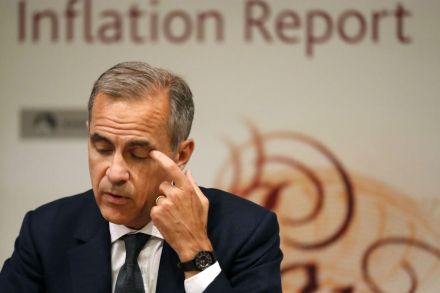
Mark Carney is often accused of being downbeat about Brexit. But the Bank of England’s quarterly inflation report is ‘more sanguine than one might expect’, says the FT. The paper points out that despite a cut in the country’s growth forecast, the Bank ‘expects stronger net trade and business investment to drive a recovery in 2019’. Yet Carney remained ‘candid’ about the damage Brexit is already doing to Britain's economy. Businesses are investing less, reports the FT, and ‘this has uncomfortable implications’. With the Bank warning that ‘the level of investment in the UK economy (will be) be 20 percentage points lower in 2020 than it forecast before the referendum’, this damage looks sure to continue.

What the papers say: Trump is good news for Britain

From our UK edition

Jeremy Corbyn might be ‘on a high’ but he shouldn’t be allowed to forget his party’s ‘highly inconsistent, profoundly confusing’ position on the issue of the day: Brexit. Labour’s stance became yet more tangled yesterday, says the Daily Telegraph, with Keir Starmer saying the party wanted to keep Britain in the single market - ‘only 10 days ago Jeremy Corbyn said the opposite,’ points out the paper. It’s time for the Tories to take the fight to Labour, says the Telegraph, which argues that while ‘young voters, have been motivated and energised’ by Corbyn this doesn’t mean they should be allowed to get away with such a contrary position on Brexit.

What the papers say: Philip Hammond must ‘belt up’

From our UK edition

Philip Hammond, of all people, ought to ‘relish’ Brexit and the opportunity it will hand to Chancellors to set their own tax rates. But in ‘yet another blunder’, says the Sun, the current occupant of No.11 has told the French that Britain won’t lower taxes. ‘Has he gone made?’ the paper asks. Back in January, Hammond said that lower taxes and limited regulation could be an important way of luring businesses to Britain after Brexit. ‘As a Conservative, that is exactly what he should be saying’. Now, though, says the Sun, ‘he has contradicted himself’. Whatever level the Chancellor plans to set tax rates, ‘why make any promises and surrender a potent bargaining chip?’, asks the Sun.

What the papers say: the hard left’s hatred of Uber is an excuse

From our UK edition

The likes of Uber and Deliveroo are shaking up the jobs market in such a way that one of Theresa May’s first acts as Prime Minister was to commission a report into the future of work. Yesterday, as the PM opted for a much-needed relaunch, that report came out. The likes of Rebecca Long-Bailey, the Labour frontbencher, made their minds up quickly: the report was a missed chance and we shouldn’t use companies like Uber until they clean up their act. Here's what the papers had to say: We should feel ‘lucky’, says the Sun sarcastically, that ‘Labour’s preachy politicians’ are leading us on the path ’towards the high moral ground of the hard-Left.

Boris Johnson tells the EU to ‘go whistle’ on Brexit divorce bill

From our UK edition

The Brexit divorce bill isn’t on the table yet but it’s already provoking plenty of debate - and quite a bit of anger. Figures bandied about have ranged from the tens of billions upwards, with some speculation the final demand could be as much as 100bn euros. Ministers have done their best to avoid being drawn on a figure which wouldn't be acceptable, with David Davis coming closest by saying Britain will not pay 100bn. Now, Boris Johnson has waded in. The Foreign Secretary told the House of Commons that: "I think that the sums that I have seen ... seem to me to be extortionate and I think go whistle is an entirely appropriate expression." What seems clear from Boris’s remarks is that there is no chance of the government agreeing to a 12-figure bill (i.e.

Damian Green calls for a new ‘grown-up way of doing politics’. Will it work?

From our UK edition

Even before the election delivered a hammer blow to the Tories, their ‘strong and stable’ mantra was coming back to bite. Now, their warning of a Labour-led ‘coalition of chaos’ is also rearing its head once again. Fresh from wrapping up their deal with the DUP, the Government is calling on the opposition to come together on Brexit and lend a helping hand. Theresa May will say the other parties should offer up their ideas and be prepared to ‘debate and discuss’ with the Government - not only on leaving the EU but on a host of other areas of policy as well. Damian Green used his Today interview this morning to make it clear that this offer isn’t just reserved for those on the Labour benches.

What the papers say: The Tories must start acting like a Government again

From our UK edition

‘Spare a thought for Philip Hammond,’ says the Times. The Chancellor once looked certain to lose his job - and yet while he might now be safe in his position, his role is only getting tougher. His Cabinet colleagues are queuing up to tell him that now is the time to lift the cap on public sector pay. In response, ‘the Chancellor is expected to fight a rearguard action’, says the Times, which says Hammond is ‘right’ to take this approach. This response also won't be in ‘in vain’ if he is able to make the point that a pay rise must come with ‘a commensurate increase in productivity’.

Boris Johnson calls for an end to the public sector pay cap

From our UK edition

One of the consequences of Theresa May’s disastrous election campaign is that the balance of power has swung firmly away from the PM towards her Cabinet. This change of fortunes means that ministers can now speak their minds freely in a way that would have been foolhardy just a few weeks ago. Boris Johnson is the latest to make the most of this new found freedom, saying it is time to end the cap on public sector pay. The Foreign Secretary is said to support a pay rise for such workers, and thinks this could be done in a ‘a responsible way’ without raising taxes.

What the papers say: It’s time for the Tories to stop panicking

From our UK edition

‘The unexpected appeal of Jeremy Corbyn’s manifesto has thrown the Tories into panic’, says the Sun. With Damian Green suggesting a ‘debate’ may be needed over tuition fees and other ministers ‘piling in every day with demands for more spending’, the Conservative party seems to be making the assumption that the best way to tackle the threat of Corbyn is to copy him. This is ‘suicidal’, says the Sun, which argues that not only would it be wrong to try and take on the ‘hard left’ on their own terms, it would also be dangerous for the economy.

The Government backs down over Queen’s Speech abortion amendment

From our UK edition

In the face of a possible rebellion over an amendment to the Queen’s Speech, the Government has backed down. Chancellor Philip Hammond announced this afternoon that women from Northern Ireland will be given the right to an abortion in England on the NHS. This wasn't a change ministers wanted, but for a weak minority Government propped up by the slenderest of margins, this is the new reality. It's unlikely this will be the last time in this Parliament that ministers relent where they would have once stood their ground. Ever since the amendment was tabled by Labour MP Stella Creasy, the Government had looked under pressure. There were reports that as many as 40 Tory MPs could rebel on the issue.