Tom Goodenough

Tom Goodenough

Tom Goodenough is online editor of The Spectator.

What should Philip Hammond announce in his Budget?

From our UK edition

Next week’s Budget could be the government – and Philip Hammond’s – last chance to snatch the political momentum away from Labour. So what should he announce? Today’s newspaper editorials have some advice for the Chancellor: Not too long ago, John McDonnell’s ‘alternative budget’ would have been announced ‘in complete obscurity’, says the Daily Telegraph. Not so now, and the Tories clearly need ‘big ideas’ to see off a resurgent Labour party. This should not mean they resort to borrowing the party’s ‘Left-wing solutions’ – or, indeed, trying to outspend Labour, however. But they cannot rest on their laurels. On housing, for instance, Hammond must ‘do far more’.
What the papers say: In defence of the Brexit ‘mutineers’

From our UK edition

The EU withdrawal bill survived its first test at its commons committee stage this week – but there is still a long way to go. And it seems some on the Tory back benches are determined not to make it plain sailing for the government. Theresa May’s ‘mandate for a hard Brexit is weak’, says the FT, which argues that parliament is well within its rights to scrutinise the EU withdrawal bill closely. ‘If ever there was a case for parliament exercising its sovereign powers, this is it,’ says the paper. So why the backlash against those in the Tory ranks who are not happy with certain parts of the bill? ‘Parliament’s admirers’ are likely to be ‘dismayed’ at this reaction to elected politicians doing their job, says the FT.

Zimbabwe ‘coup’: Robert Mugabe ‘under house arrest’

From our UK edition

Zimbabwe’s army has seized control of the country and reportedly placed president Robert Mugabe under house arrest. The Zimbabwe Defence Force insisted it had not carried out a coup, describing the apparent takeover as a targeting of ‘criminals’ surrounding the 93-year-old president. Jacob Zuma, South Africa's president, said he has spoken to Mugabe 'who indicated that he was confined to his home but said that he was fine'. Mugabe's wife, Grace, has reportedly fled the country. It is believed tensions surrounding a possible power grab by Grace Mugabe could have led to the military action overnight, which saw roads in the capital, Harare, blocked by tanks and armoured vehicles.

What the papers say: Tory Brexit rebels have some explaining to do

From our UK edition

The EU withdrawal bill survived its first Parliamentary test last night. But it still has a long way to go, and a group of Tory MPs are likely to ensure that it is far from plain sailing for the government. For those on the Conservative back benches plotting to defy the Prime Minister on this Brexit bill, the Daily Telegraph has a message: why? The paper says that Labour MPs hoping to ‘put every obstacle in the path of Brexit’ can at least make the point they are in opposition. Rebel Tory MPs have no such excuse, according to the Telegraph, pointing out that many of this group backed the triggering of Article 50 and yet now appear to have changed their minds.

Will the government’s EU withdrawal bill pass unscathed? Don’t bet on it

From our UK edition

Brexit means Brexit, but unfortunately the EU withdrawal bill – which actually does the legislative job of taking Britain out of the EU – is somewhat trickier to get to grips with. The original bill is 60 pages long, and there are now 470 amendments – running to some 200 pages – and counting. The House of Commons library predicts the bill will be ‘one of the largest legislative projects ever undertaken in the UK’. All of this will keep MPs – and the government, as it fights off the backbench rebels – very busy indeed over the coming weeks. Two days each week for the next month have been set aside to cover the committee stage of the bill, where MPs are given a chance to scrutinise the bill line-by-line and attempt to make changes.

What the papers say: It’s time for Britain to up its Brexit bill offer

From our UK edition

It once seemed a near certainty that Brexit talks would progress on to the next stage by Christmas. Now, it seems somewhat less likely: David Davis reportedly told business leaders it was a 50-50 chance of making a breakthrough by December, according to Bloomberg (although Davis denies saying this). So what explains the latest hold-up? The Brexit bill remains the big sticking point, says the Financial Times. Theresa May made an ‘opening offer’ of €20bn – and while she ‘may be frustrated’ that her bid was ‘not met by any reciprocal concession from Brussels’, she should not be surprised, says the FT. ‘The reality is,’ says the paper, ‘that the EU does not need to moderate its demands’.

The Maldives’ spotless beaches mask the story of a troubled nation

From our UK edition

The Maldives’ spotless beaches mask the story of a troubled nation. The country’s former president, Mohamed Nasheed, is in exile in Britain, having been sentenced to 13 years in prison on what are widely seen as spurious terror charges. Protests on the streets of the capital, Male, are frequent. Soldiers recently locked down the country’s parliament in an apparent bid to block a no confidence vote. Violence is also on the rise: earlier this year, a liberal blogger, Yameen Rasheed, was murdered – hacked to death in his apartment block. In the run-up to his killing, Rasheed said he has been targeted by radicalised Muslims incensed at his posts about Islam.

What the papers say: May was right to ditch Patel – but she shouldn’t stop there

From our UK edition

Another week, another Cabinet minister heads for the exit. Priti Patel’s departure means Theresa May now faces another difficult decision in choosing who should replace her. But was she right to get rid of Patel? The newspaper verdict is unanimous: ‘We like Priti Patel,’ says the Sun: ‘But she had to go’. After all, ‘fierce ambition’ is one thing – it’s quite another to hold ‘unauthorised meetings in Israel’ which show clearly her ‘over-confidence’ and also ‘no little naivety’. Priti is indeed a ‘loss to the Cabinet’, the paper says; she is a ‘working-class Thatcherite’ who, crucially for the Tory party, remains ‘in touch with ethnic minority voters’.

Priti Patel resigns from the Cabinet

From our UK edition

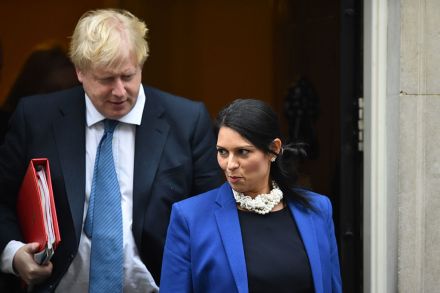
Priti Patel has resigned from the Cabinet. Patel said that she accepted her decision to hold meetings with Israeli officials during her summer holiday without the prior say so of the government meant that her 'actions fell below the high standards that are expected of a secretary of state'. The secretary of state for international development went on to 'offer a fulsome apology' to the Prime Minister. Theresa May responded by saying 'now that further details have come to light' about exactly what Patel got up to on her summer jaunt, 'it is right that you have decided to resign'. Her resignation tonight is not much of a surprise.

What the papers say: Priti Patel and Boris should go

From our UK edition

Priti Patel could well follow Michael Fallon in making a departure from the Cabinet today. If she does leave, she’ll be the second minister to go in the space of only a week. So, is this bad luck on the part of the government? Not so, says the FT. The paper says this is a 'symptom of a deeper malaise’ and ‘two domestic incidents have highlighted the sense of drift’ at the heart of the government. Boris Johnson’s blunder in suggesting an imprisoned British-Iranian citizen was ‘teaching people journalism’ is typical of his ‘blasé attitude’. The FT goes further though, saying that Boris ‘may be the least distinguished figure to occupy the Foreign Office since the second world war’. And what about Patel?

Will Priti Patel’s ‘busman’s holiday’ to Israel cost her her job?

From our UK edition

Priti Patel's vacation to Israel certainly has the feeling of a busman’s holiday to it. The international development secretary is now admitting she met several Israel cabinet ministers, as well as the country’s Prime Minister, Benjamin Netanyahu, during the summer trip which she paid for herself. Patel’s big problem doesn’t only stem from these undeclared meetings, however, but her reaction to them, which has turned this story into something toxic which could cost Patel her job in the cabinet. Last week, when it emerged she had held these meetings with Israeli politicians, Patel was adamant that Boris knew all about it. She told the Guardian: ‘Boris Johnson knew about the visit.

The Spectator podcast: The Sexual Reformation

From our UK edition

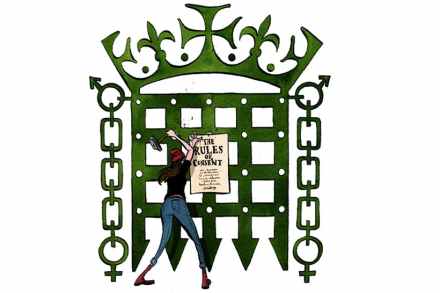
On this week’s episode we look at the sexual reformation, Donald Trump’s ties with Russia and dining with Modigliani. First: in the wake of Michael Fallon's resignation from the Cabinet last night, Westminster is awash with rumours of sexual wrongdoing. But while it’s good that victims of abuse are able to speak out, is something sinister happening beyond the current hysteria? That’s the question Lara Prendergast asks in her Spectator cover piece this week. She is joined on the podcast by Katy Balls and Douglas Murray, who also writes in the magazine on how sexual freedom has turned into sexual fear. He says: A new generation is being encouraged to redraw the lines of acceptability in a way that goes too far. What once was gauche has now become unacceptable.

New York suffers its deadliest terror attack since 9/11: what we know so far

From our UK edition

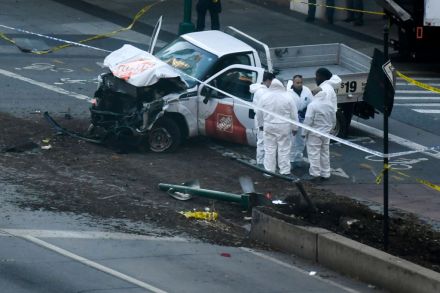
Eight people have been killed in yesterday’s terror attack in New York – the deadliest such incident in the city since 9/11. The alleged attacker has been named as Sayfullo Habibullaevic Saipov, a 29-year-old Uzbekistan national who came to the United States in 2010 and worked as an Uber driver. The New York Times is reporting that notes written in Arabic were discovered in the vehicle used in the attack pledging allegiance to Isis. It is believed the attacker drove a truck along a cycle path close to the Hudson River in Manhattan yesterday afternoon at around 3pm local time, crashing into a number of people.

Catalonia’s crisis deepens further

From our UK edition

The Catalan crisis deepens by the day. This afternoon, the region’s parliament backed a declaration of independence from Spain. Here is the moment Carme Forcadell, president of the Catalan parliament, announced the outcome of the vote: https://www.youtube.com/watch?v=BhKaB4WlPNA The country’s senate did not take long to react by voting to impose direct rule in Catalonia. This triggering of Article 155 in the Spanish constitution, which allows the government to take charge in the Catalan region, has never been done before and it amounts to something of a nuclear option (the country’s former foreign secretary Jose Manuel Garcia once likened the Articl to ‘an atomic bomb’).

What the papers say: The Czech election shows the march of the populists isn’t over

From our UK edition

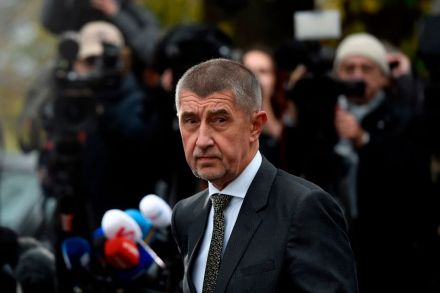
The Czech election was something of a shock to those who thought the ‘march of the populists in Europe’ is over Andrej Babis – who ‘shares the anti-migrant stance and hatred for EU refugee policy of Hungary’s premier Viktor Orban and Jaroslaw Kaczynski, leader of Poland’s ruling party’ – was the ‘clear winner’, says the FT. What’s more, the paper points out, the ‘far right’ won 11 per cent of the vote in the country's election. Yet for all the comparisons, ‘the tycoon insists he is no Mr Orban’. Although he was against the euro, Babis says he ‘is not anti-EU’. But this does not mean the Czech Republic's EU partners won't need to be ‘vigilant’, says the FT.

What the papers say: It’s time to call off the Brexit inquisition

From our UK edition

The predictions of doom and gloom about Britain’s prospects after Brexit were widespread in the run-up to the referendum. One by one, these warnings have failed to materialise: yesterday, we learned from the ONS that the economy grew by 0.4 per cent in the last quarter in a clear sign it has 'outperformed expectations again’. It's clear that ‘the only thing in recession’ is the ‘reputation’ of the doom-mongering economists, says the Sun. This economic ‘resilience’ should not be taking for granted though, warns the paper, which says that ‘certainty’ is vital for ensuring things don't turn sour. This makes comments by Brexit secretary David Davis in Parliament yesterday hard to fathom.

David Davis is stating the obvious on the timing of a Brexit deal vote

From our UK edition

David Davis’s revelation that Parliament may not get a vote on a Brexit deal until after Britain has actually left the EU has provoked a flurry of criticism. The Government has been accused of railroading Parliament and treating MPs with ‘contempt’. It’s an ‘undemocratic disgrace’, says Open Britain. Yet Davis is only really stating the obvious that there can’t be a vote on a deal that doesn’t exist. It’s also a simple matter of timing that, under the terms of Article 50, Britain will leave the EU in March 2019 – two years after May pulled the trigger. What isn’t guaranteed – especially given the lack of progress so far – is that a deal will materialise before then, if at all.

Will Labour be brave enough to properly deal with Jared O’Mara?

From our UK edition

Jared O'Mara is yet to actually speak in Parliament but when – or if – he does take to his feet in the chamber, it seems he will do so without the Labour whip. Following days of allegations about what the MP for Sheffield Hallam has written online, the party has finally acted to temporarily suspend him. It’s something of a surprise it has taken Labour this long to do so. Earlier this week, Guido reported that O’Mara – who ousted Nick Clegg at the snap election – called gay people ‘poofters’ and asked Girls Aloud for an orgy. The allegations have continued; this morning, it was reported that O’Mara made lewd comments about teenage girls attending a concert in another blog.

What the papers say: Labour’s shameful refusal to suspend Jared O’Mara

From our UK edition

Jared O’Mara is yet to make his maiden speech in Parliament, says the Sun – and ‘it might not be a bad thing if it stays that way'. The ‘disgraced’ Labour MP – who ousted Nick Clegg from his Sheffield Hallam seat at the snap election – has said sorry for his ‘crass comments’, which included making jokes about rape and calling overweight people ‘“f***ing pigs”’. But his  ‘patronising “apology’’, in which he pinned the blame on ‘“lad culture and football” — isn’t enough’, isn’t enough, says the Sun. O’Mara is so useless, argues the Sun, that it almost makes the paper ‘wish that Nick Clegg…was still in Parliament’.

Will the City thrive after Brexit?

From our UK edition

Ten years on from the crash, the banks have few friends and fewer still who are willing to speak up for them. Now, with the uncertainty of Brexit looming, there are fears banks and their staff could up sticks to the continent. Like them or loathe them, this wouldn’t be good for Britain’s economy: financial services were worth £124.2bn to the UK last year and the sector accounts for three in every 100 jobs in the UK. So what can be done to make Britain a hospitable place for banks to do business after Brexit? And how can we do that without alienating ordinary people? This was the topic of a Spectator dinner discussion sponsored by Barclays at the Labour party conference in Brighton. Guests included MPs, bankers, journalists and policy experts.