Tom Goodenough

Tom Goodenough

Tom Goodenough is online editor of The Spectator.

What the papers say: The new Brexit divide

From our UK edition

‘Remain’ and ‘Leave’ is no longer the basis of the divide over Brexit, says the Daily Telegraph. Instead, the new split is over to what extent post-Brexit Britain should ‘mirror what the EU does on trade and services’ or whether the UK should ‘plough its own furrow in the world’. 18 months on from the referendum, this key debate has not been ‘addressed by the Government’. ‘Convergers’ – those who want Britain's trade arrangements to remain broadly in line with the status quo – ‘have the upper hand’ at the moment, says the Telegraph.
What the papers say: In praise of the Tory rebels

From our UK edition

EU leaders look set to formally approve a move on to the next stage in Brexit talks today in Brussels. Yet back home, this week saw the government suffer its first defeat on Brexit legislation in Parliament. So will the actions of the Tory rebels leave the government hamstrung? The Tory rebellion may prove to be a 'momentous vote foreshadowing serious cross-party opposition’ to Britain’s departure from the EU, says the FT. Or it could just be ‘fury and thunder signifying nothing’. What it certainly shows though, according to the FT, is that Parliament is willing to stick up for itself. The ‘Brexit mutineers’ ‘should be congratulated’, says the paper.

What the papers say: Theresa May’s bitter humiliation

From our UK edition

The government’s defeat in the House of Commons last night amounts to a ‘bitter humiliation’ for ministers, says the Sun. It is also ‘a moment of shame for the Tory “rebels”’. In defeating the government, the Tory MPs who sided with the opposition ‘utterly compromised’ Theresa May as she heads to Brussels today. As well as making life difficult for the Prime Minister, they have also ‘handed a victory’ to those who want to reverse Brexit, says the Sun. Now the onus is on the PM to ‘find a solution’ to the challenge of negotiating a deal ‘without fearing Remainers in Parliament will kill it’.

Theresa May’s poll lead still gives the Tories little to cheer about

From our UK edition

Corbynistas are curiously quiet this morning about the latest YouGov poll, which puts Theresa May narrowly ahead of the Labour leader for the first time since June. 42 per cent of voters back the Tories, with 41 per cent saying they would vote for Labour. May’s success in securing a deal with the EU in the first stage of Brexit talks seems to be the clear reason for this latest small boost. For a government low on confidence and on the back of a difficult year, it is a welcome sign. But this lead, which falls within the margin of error in polling, is nothing for the Tories to really cheer about. Indeed it still shows that the party is down on its support from the snap election, when it secured 42.4 per cent of the vote.

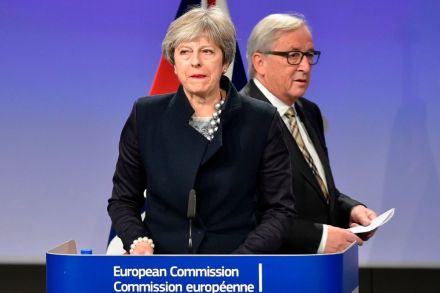
Deal agreed in first stage of Brexit talks

From our UK edition

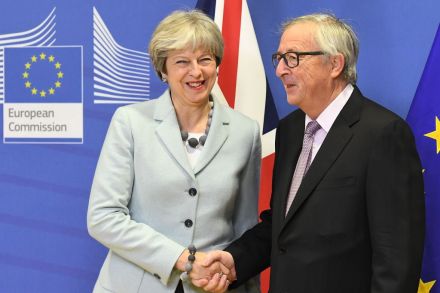
Britain and the European Union will progress to the next stage of Brexit talks following a breakthrough in negotiations overnight. The European Commission said that sufficient progress had been made in discussions on the Brexit divorce bill, the Irish border and citizens’ rights to allow trade talks to get underway. There is no doubt that the deal is good news for the embattled Prime Minister, with some suggesting that her survival depended on progress being made before Christmas. But the agreement will not be without controversy. In particular, a passage in today's text promising that the government is committed to maintaining 'full alignment with...

What the papers say: Labour must clarify its Brexit plan

From our UK edition

Another day, another Brexit warning: this time it comes from the head of Standard Chartered, who says that Britain’s imminent departure from the EU is already having a negative impact. Bill Winters said that his bank is already 'preparing for the worst'. The Sun says that the ‘same old commentators’ are repeating themselves constantly with their warnings that ‘Britain’s going to hell in a handcart’ as a result of Brexit. ‘Give it a rest’, the paper urges them. The Sun goes on to concede that yesterday ‘wasn’t a good day for the Government’.

David Davis’s words are coming back to haunt him

From our UK edition

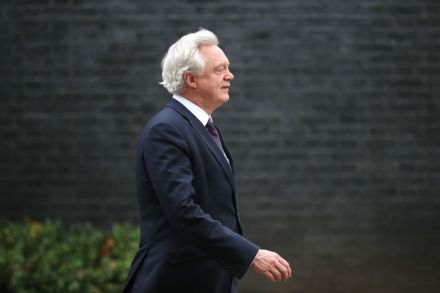
Not for the first time, David Davis’s words came back to haunt him as he was quizzed on Brexit today. The Brexit secretary, who is having something of a tough week in a year of tough weeks, told MPs that no detailed sector-by-sector analysis of what the impact of leaving the European Union would be had been carried out. He said this morning that: ‘The usefulness of such a detailed impact assessment is near zero and given how we were stretching our resources to get to where we were at the time, it was not a sensible use of resources.’ So far, so simple. The only problem? As Hilary Benn was all too keen to point out, Davis has not always taken this line. Benn picked up on comments Davis made to the Foreign Affairs Committee on September 13th last year.

What the papers say: May should ditch her plan to leave the single market

From our UK edition

17.4million people backed Brexit, but only two – at least one of whom campaigned for 'Remain' – decided that leaving the EU should also mean a departure from the single market, the customs union and the European court of justice, says the Guardian. The pair were, of course, Theresa May and her former aide Nick Timothy, who made what the paper describes as ‘fateful national decisions’ based on ‘personal interpretations of the vote’. This was a ‘reckless’ and ‘foolish’ act, says the Guardian, and nowhere is this seen more obviously in the Irish border row which has been spilling out this week.

Could the Manchester Arena bombing have been stopped?

From our UK edition

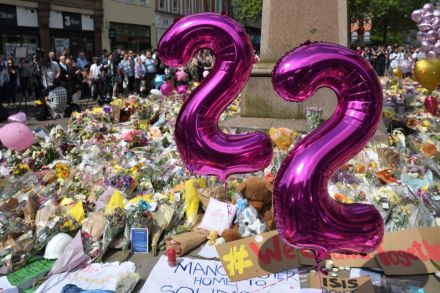
Today's report into the Manchester and London terror attacks makes for devastating reading, spelling out as it does the horrors of the murderous events in which 51 people lost their lives. The details are further daunting for making it clear just how great the threat facing Britain from Islamist terror continues to be. Much of the focus today though has rested on a question: could the attacks have been prevented? The answer is not clear but there are certainly reasons to think that at least one of the attacks could have been stopped. While there is little evidence to suggest that the Westminster Bridge attack could have been thwarted, the same cannot be said for the Manchester Arena attack.

What the papers say: How will May sell her fudge pudding to the DUP?

From our UK edition

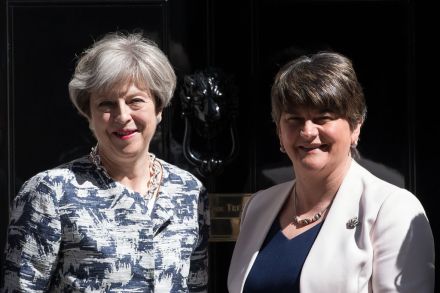
Theresa May’s plan to wrap up an agreement on the first stage of Brexit talks was scuppered at the last minute yesterday. Good, says the Sun. The paper argues that yesterday’s deadline was ‘always going to be a moveable feast’, and that ‘the Prime Minister is right not to agree a deal to meet a made-up deadline’. OK, it’s ‘disappointing’ that the PM will now need to do it ‘all over again later this week’. But the paper says May should remember that there is only one deadline that must be met: March 29th, 2019. Brexit is a process ’that will decide the future of our once-again sovereign country for decades to come’. ‘Let’s not rush it,’ the Sun concludes.

What the papers say: Should Trump’s state visit go ahead?

From our UK edition

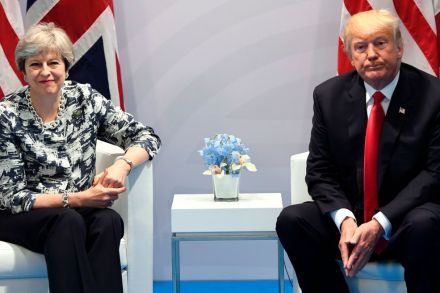
Donald Trump’s January visit to Britain now looks to be in doubt following the furore over his tweets. Diplomats in the United States are said to have put the plans on ice, according to the Daily Telegraph. Good, says the Guardian in its editorial this morning: it’s time to ditch the state visit. Tump’s decision to retweet anti-Muslim videos shows ‘again that he panders to bigots and is no friend of this country’, the paper argues. Brexit already makes this a ‘dangerous’ moment for Britain, says the paper, which goes on to suggest that further allying ourselves to a ‘thuggish narcissist’ will hardly help matters.

What the papers say: The cracks could soon show in the EU’s Brexit stance

From our UK edition

‘At last’, says the FT, Britain has ‘accepted it must pay its dues to Europe’. ‘It has been a tortuous journey’ to get to this stage and ‘months have been wasted’ along the way. Yet while progress has been made at last, the government has still failed ‘to explain to the public the…cost of leaving’. It’s also the case that while the Brexit divorce offer is now more acceptable to the EU, the bill is ‘only one of three areas in which agreement is needed to unlock talks on the future relationship’. Avoiding a hard border between Ireland and Northern Ireland remains the trickiest of these problems to find a solution to, and it remains an issue without a ‘simple resolution’.

Labour’s Brexit strategy remains as confused as ever

From our UK edition

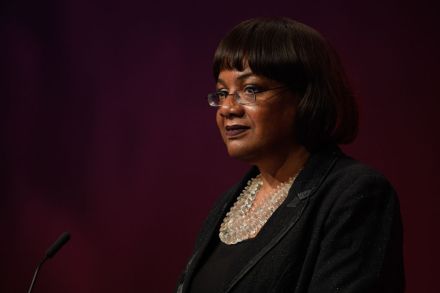
All eyes this morning are on Britain’s Brexit divorce bill, but meanwhile Labour’s Brexit strategy remains as confused as ever. Diane Abbott is the latest figure from the party’s frontbench to hint at the possibility of a second referendum, despite this being ruled out by Jeremy Corbyn in the run-up to June’s snap election. In a letter to two constituents this month, the shadow home secretary wrote: ‘I will argue for the right of the electorate to vote on any deal that is finally agreed.’ Abbott is now suggesting those remarks were ‘poorly worded’. This seems hard to believe; indeed, that sentence couldn’t have been much clearer: voters should get another say.

What the papers say: How to convince Brits the Brexit divorce bill is worth it

From our UK edition

Britain’s Brexit divorce bill offer has now risen again, if today’s reports are to be believed. 'At the very least’, says the Daily Telegraph, Britain is looking at handing over £40billion. It’s a ‘lot of money’, the paper concedes, and even though the ‘complex formula’ used to calculate the final bill will allow the government to ‘fudge’ the exact payment, ‘it will require a concerted Cabinet effort to explain to voters why it is necessary’. Doing so could be helped by presenting the bill ‘as part of an overall package’, argues the Telegraph, and the government should enforce this message by sticking to its view that ‘nothing is agreed until everything is agreed’.

What the papers say: It’s now or never for Labour moderates

From our UK edition

The warnings about Brexit could not have been clearer: leaving the EU would lead to an exodus of foreign workers and students from Britain. So far though the reality hasn’t quite matched that prediction. The Sun picks up on news today that a record number of overseas students – 70,900 – applied to study in Britain last year. ‘NHS workers from the EU are on the up, too’, says the paper, which argues that, despite the warnings, Britain will remain ‘attractive for those wanting to better their lot’. Yet the large number of people who do want to come to Britain also means ‘it is right that we take control of our borders once we leave the EU’. ‘Taking in a city the size of Newcastle every year is not sustainable’, says the Sun.

Philip Hammond’s Budget: the newspaper verdict

From our UK edition

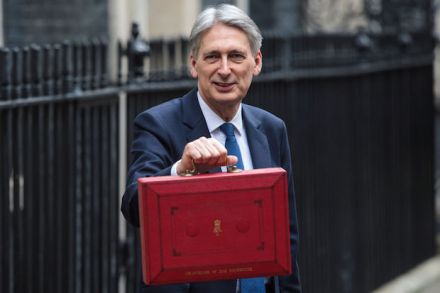
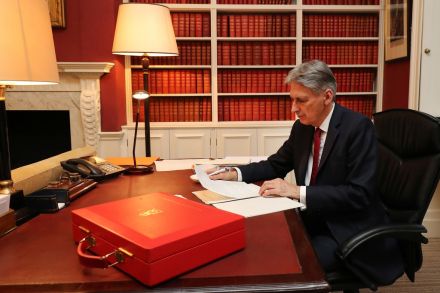
Only a month ago, in its damning editorial the Daily Mail said Philip Hammond was a ‘dismal, defeatist, relentlessly negative’ Eeyore. Today, they ‘rescind’ the Chancellor’s nickname, and the paper isn’t the only one to praise Hammond’s Budget: The Sun says that Hammond delivered his first Budget for its readers. While the paper admits that it has ‘not been kind to his previous efforts’, the Chancellor’s announcement yesterday ‘will put more cash’ in peoples’ pockets. His freezes on fuel and alcohol duty go down well with the Sun; and so, too, do the ‘decent hikes’ to the minimum wage and tax-free allowance.

What the papers say: Hammond must beware the danger of playing it safe

From our UK edition

Philip Hammond’s second Budget of the year will mean that the Chancellor has another 'bite at a not especially flavoursome cherry’, says the Daily Telegraph. The last time, his announcements ‘misfired’; since then Hammond's ‘room for manoeuvre’ has become even more limited. This means that many in the Tory ranks are not filled with ‘great expectations’ about what Hammond might say and instead, says the Telegraph, they ’are just anxious to see Mr Hammond through the day without mishap’. But playing it safe won't be enough for the Tories, according to the paper, which argues in its editorial that it doing so would ‘throw away the opportunity’ for the government to ‘take the initiative’.

Robert Mugabe resigns as president of Zimbabwe after 37 years in power

From our UK edition

Robert Mugabe has resigned as president of Zimbabwe after 37 years in power. The 93-year-old confirmed his intention to step down in a letter to the speaker of the country’s parliament this afternoon. His decision to quit follows widespread protests on the streets of the capital, Harare, in the wake of the coup carried out last week by the country’s military. In a rambling TV address on Sunday, Mugabe resisted calls to quit. But with Zimbabwean MPs debating an impeachment motion to remove Mugabe from power, the leader of the country’s Zanu PF party appears to have changed his mind. The news of Mugabe’s decision to resign was greeted with loud cheers in the chamber of the Zimbabwean parliament.

What the papers say: The EU is in the grip of chaos

From our UK edition

Donald Tusk’s jibe that Britain was no longer attempting to have its cake and eat it in Brexit talks was a clear dig at the Foreign Secretary. But now the EU is guilty of adopting the same approach, according to the Sun. Michel Barnier said yesterday that ‘he wants all his demands met’ on various issues, and also ‘wants a monstrous exit bung from Britain’. Theresa May has reportedly received the backing of her Cabinet to up this payment to £40bn. Yet this ‘won’t nearly suffice’ for the EU, says the Sun. And even if Brussels does agree, what will we get in return?

Michel Barnier’s Brexit trade deal warning

From our UK edition

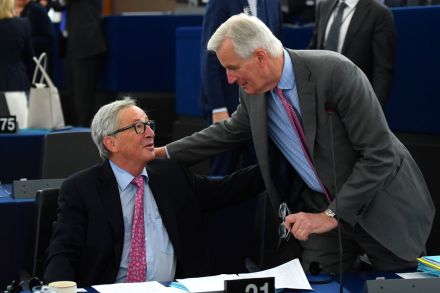
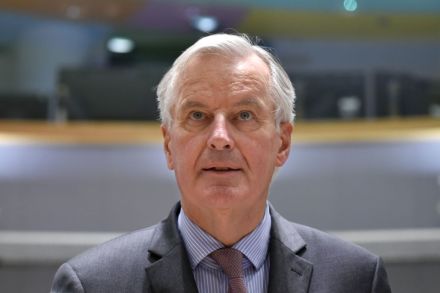
The furore over the Brexit divorce bill has been such that it is easy to forget that it isn't the only major sticking point in talks with the EU. Theresa May looks set to up Britain’s offer this week (from €20bn to around €40bn), in the hope that more cash on the table will unlock the next stage of negotiations. But Michel Barnier’s speech today should serve as a warning to the British government: things won’t necessarily get easier when the Brexit divorce bill is sorted. In fact, Barnier makes it clear that talks could get even more difficult. The EU’s chief negotiator hinted that Britain would still miss out on a trade deal if it doesn’t agree to tie itself down to a ‘European model’ after Brexit.