Toby Young

Toby Young

Toby Young is associate editor of The Spectator.

Will Starmer make the Online Safety Act even worse?

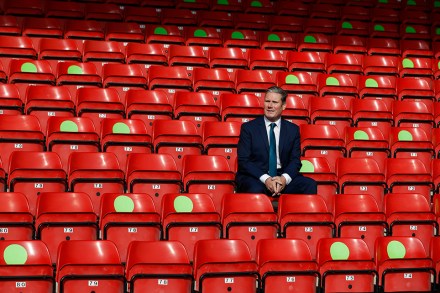
Good God, there’s a lot of guff being talked about the Online Safety Act. This was a piece of legislation passed by the previous government to make the UK ‘the safest place in the world to go online’. To free speech advocates like me, that sounded ominous, given that ‘safety’ is always invoked by authoritarian regimes to clamp down on free speech. But after we raised the alarm, the government stripped out the most draconian clauses and put in some protections for freedom of expression, so even though it’s bad, it’s not quite as awful as it could have been. What about the BBC, which got several things wrong in its reporting of an explosion in the car park of Gaza’s al-Ahli hospital? Step forward Sir Keir Starmer.

Free speech stops riots 

With depressing predictability, the riots have led to calls for more censorship. Historically, it was the authoritarian right who blamed outbreaks of civil disorder on too much free speech, but this knee-jerk, illiberal reaction is now more likely to be found on the left. I’m not just thinking of Paul Mason, who called for Ofcom to revoke GB News’s broadcast licence, or even Carole Cadwalladr, who tweeted: ‘This should be our Dunblane moment. Only with social media not guns.’ I’m thinking of statements by the Prime Minister and the Home Secretary. Is Sir Keir going to urge the police to investigate his own role in ‘whipping up violence’?

Welcome to the new global theocracy

I had a revelation while watching the Olympics opening ceremony. It was during the infamous section that I (and almost everyone else) understood to be a reference to Leonardo da Vinci’s ‘The Last Supper’. A large woman in a halo-like headdress was flanked by various avant-garde performance artists, including three drag queens. These, presumably, were the disciples. The table then turned into a catwalk and we were treated to a fashion show featuring representatives of the LGBT community, culminating in a naked man covered in sparkly blue paint. Sacré bleu! ‘This is France,’ tweeted Emmanuel Macron afterwards, apparently satisfied that this performance, like the rest of the opening ceremony, had epitomised everything worth celebrating about La Belle France.

The intersectional feminist rewriting the national curriculum

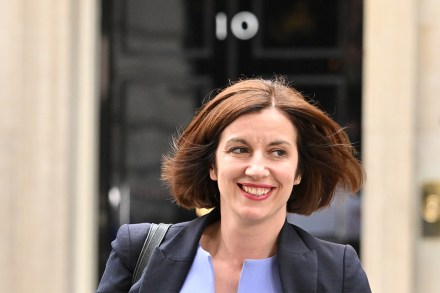
The appointment of Becky Francis CBE to lead the Department for Education’s shake-up of the national curriculum is typical of Labour’s plan to embed their ideology across our institutions – or rather entrench it, since the long march is almost complete. On the face of it, Professor Francis is ‘unburdened by doctrine’, to use Sir Keir Starmer’s phrase about how Labour intends to govern. As former director of the Institute of Education and current CEO of the Education Endowment Foundation, she has the outward appearance of a technocrat. But scratch the surface and, like so many Labour appointees, she emerges as a long-standing adherent of left-wing identity politics.

Are the Rees-Moggs ready for their new reality?

I felt slightly anxious for Sir Jacob Rees-Mogg when I read he’d agreed to have a reality show made about his family by an American television channel. I imagine most people’s reaction on hearing this was to think: ‘Are you stark raving bonkers?’ But as someone who’s appeared in several reality shows and been followed around by a BBC camera crew for a fly-on-the-wall documentary, I don’t think this was necessarily a mistake. It all depends on how the Rees-Moggs are portrayed, and while I doubt they’ll be able to control that – being given ‘final cut’ on such programmes is a rarity – they should be able to influence it.

What Labour could learn from Australia and New Zealand

I’m just coming to the end of a four-week speaking tour Down Under and have spotted some worrying signs of what our new government might have in store for us, particularly on the free speech front. During its six years in power, the Labour party in New Zealand tried to criminalise ‘hate speech’ against minority groups, and Australia’s Labor government has announced it will bring forward legislation to strengthen laws against speech that incites hatred in relation to race, religion, sexual orientation and transgender identity. Will Keir Starmer do likewise? In England and Wales, it’s already a criminal offence to stir up hatred on the basis of a person’s race, religion or sexual orientation, although Nicola Sturgeon went further.

The joys of Canada by train

There cannot be a lazier way of travelling across Canada than in the Rocky Mountaineer. There are luxury trains, and then there’s this. For two days, I sat in a sumptuously upholstered, air-conditioned carriage, looking out at the vast wilderness of Canada’s interior, as waiters plied me with wine, chocolates and three-course meals. When imagining my trip across the Canadian Rockies, I had envisaged plenty of bracing walks and fresh air. But by the end of my journey, I had gained five-and-a-half pounds. I went on a walk around the frozen lake accompanied by a guide who warned us about a bear known as the Boss who weighs 497lbs Admittedly, I was in GoldLeaf, the most luxurious section of this glass-domed, double-decker train.

The funny side of being cancelled

Douglas Is Cancelled, the new drama series on ITV, should come with a trigger warning – for me, anyway. Watching it brought back memories of my own cancellation six years ago, which I found so traumatic that I lost half a stone. Admittedly, the middle-aged white man at the centre of this drama (Hugh Bonneville) only has one position to lose – he’s a television presenter – whereas I lost five. But apart from that the similarities are uncanny. Did the writer, Steven Moffat, read the 5,000-word piece I wrote about my experience? Or do all cancellations follow the same pattern? Douglas’s trial begins when someone on Twitter says they overheard him telling a sexist joke at a wedding.

The joy of my new allotment

I was pleasantly surprised when I got an email from the Acton Gardening Association last October telling me that a plot had become available at the Bromyard allotments. I had put my name down so long ago, I’d completely forgotten. I asked if I could come and see the plot before making up my mind, and got a bit of a shock. It was strewn with weeds and discarded plastic and had what looked like a fly tip at one end. There were no crops apart from some potatoes and spring onions. I could see at a glance it would be a lot of work to get it into a fit state to plant some summer vegetables, not to mention looking after them once they were in the ground. ‘I’ll take it,’ I said. I didn’t visit again until this April, by which time it resembled a little patch of wilderness.

New Zealand’s culture wars backlash

I’m in New Zealand on a speaking tour organised by the Kiwi Free Speech Union, and in some ways it’s like visiting Britain in a more innocent era. This struck me when I went on a tour of the Hobbiton movie set, where The Lord of the Rings and The Hobbit were filmed. The Shire of Tolkien’s imagination, lovingly created by Peter Jackson, is an idealised version of rural England – and New Zealand, with its perfectly manicured lawns and open-faced, friendly people, is a bit like that. Although, to be fair, I may be viewing the country through rose-tinted spectacles because Labour was heavily defeated in the most recent election, winning just 34 out of 120 seats.

Natasha Feroze, Robert Ades, Lucasta Miller, Sam McPhail, Toby Young and Catriona Olding

38 min listen

On this week’s Spectator Out Loud: Natasha Feroze reports on the return of ex-Labour MP Keith Vaz (1:10); Robert Ades presents the case against sociology A-level (7:39); Lucasta Miller reviews Katherine Bucknell’s book, Christopher Isherwood Inside Out (15:24); Sam McPhail provides his notes on the lager Madri (23:16); Toby Young explains why he will be voting Reform (26:23); and, Catriona Olding reflects on love and friendship (31:17). Presented by Patrick Gibbons.

Why an ex-Spectator editor told me to back Reform

When I told an ex-editor of this magazine that I was planning to write about why I’m voting for Reform he didn’t react as I expected. ‘For God’s sake, don’t write another of those more-in-sorrow-than-in-anger pieces,’ he said. ‘Make it a furious, tub-thumping endorsement of Nigel and his gang.’ When it comes to the ‘War on Woke’, Farage really means it – Rishi is all talk and no pedal pushers I should say at once that this wasn’t Boris Johnson – although he does want Nigel Farage to win in Clacton, apparently. Why? Because if Nigel becomes an MP it will make his takeover of the Tories a more realistic prospect.

The Tories have failed us over debanking – again

On Saturday morning, when I was helping Caroline prepare for a lunch party, I got an urgent request for help from the leader of a populist, right-wing campaigning group. His organisation had just been debanked. He had five days before the account was closed, during which time the bank would return the money it had received in membership dues to the members and keep anything left over, effectively bankrupting the company. No reason was given, other than that it had breached the bank’s ‘community standards’. ‘That can’t be right,’ I told him. ‘Back in March, the government announced it was changing the rules to make it harder for banks to shut down accounts for political reasons.

Labour’s plans to rewrite the National Curriculum

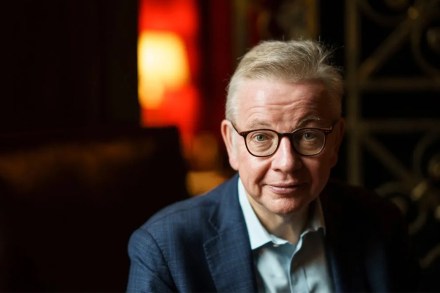
Michael Gove’s decision to stand down in this election was a reminder that the one really bright spot in the past 14 years was the education reforms he steered through between 2010 and 2014. These policies were vindicated in the most recent PISA (Programme for International Student Assessment) survey, which showed England climbing the OECD’s international league table and outperforming Scotland, Wales and Northern Ireland. In maths, England rose from 17th place in 2018 to 11th in 2022, whereas Scotland, significantly above England in 2010, fell below the OECD average. I was involved in the most successful of these reforms, the free schools programme.

The real reason Ofcom has gone after GB News

I don’t envy the people who run Ofcom. On the one hand, they’re under enormous political pressure to sanction GB News, which, in the eyes of its establishment critics, is a contaminated river of far-right propaganda that’s polluting the ‘delicate and important broadcast ecology of this country’ (Adam Boulton). But on the other, they want to preserve their status as the keepers of the ring and cannot be seen to be holding GB News to a higher standard than other broadcasters. That makes their lives complicated because, in reality, the channel’s politics are far closer to the Telegraph than they are to Fox News, and it’s no more partisan than LBC or Channel 4 News.

Confessions of a catnapper

As Christopher Snowdon recently pointed out, the past few governments have had a habit of passing laws that are either wildly ambitious or incredibly trivial, while neglecting the real problems Britain faces, such as the housing shortage, the productivity crisis and the eye-watering dysfunction of the NHS. An example of the former is the net-zero emissions law passed in 2019, as if the energy policy of a small island in the North Sea can affect the world’s climate. An example of the latter is a bill that will make it a criminal offence to get cats to follow you down the road. Believe it or not, this had its second reading in the House of Lords last week and will enter the statute books later this year.

Do voters really prefer Starmer?

Rishi Sunak has been widely ridiculed for trying to spin the local election results as bad news for Keir Starmer. While acknowledging they were ‘bitterly disappointing’ for the Tories, the Prime Minister cited an analysis by Colin Rallings and Michael Thrasher, the renowned psephologists, showing that a similar showing by Labour in a general election would leave the party 32 seats short of an overall majority. ‘Keir Starmer propped up in Downing Street by the SNP, Liberal Democrats and the Greens would be a disaster for Britain,’ he said. This was wishful thinking, according to John Curtice, the polling expert. He pointed out that the way people vote in local elections doesn’t mirror the way they’ll behave in a general.

Sean Thomas, Kara Kennedy, Philip Hensher, Damian Thompson and Toby Young

35 min listen

On this week’s Spectator Out Loud: Sean Thomas worries that Paris has lost some of its charm (1:21); Kara Kennedy reports on US-style opioids arriving in Britain (8:43); Philip Hensher describes how an affair which ruined one woman would be the making of another (15:32); Damian Thompson reflects on his sobriety and his battle with British chemists (23:58); and, Toby Young argues a proposed law in Wales amounts to an assault on parliamentary sovereignty (29:26). Produced and presented by Patrick Gibbons.

Who decides which politicians are liars? 

This week the Welsh parliament has been debating a law that would ban politicians from lying. Assuming it ends up on the statute books, any member of the Senedd, or candidate standing to be a member, found guilty of the new criminal offence of ‘deception’ will have to give up being a politician for at least four years. What could possibly be wrong with that, you ask? The vital question, as with all efforts to ban bad speech, is who decides? After all, part of the art of being a politician, dating back at least as far as the Roman Senate, is to massage the truth to promote whatever side of the argument you’re on. That doesn’t mean you’re at liberty to make things up out of whole cloth, but most successful politicians operate in the grey zone where the rules are a bit fuzzy.

Why won’t Chris Packham have a real debate on climate?

On Sunday, the BBC did something unusual. It invited Luke Johnson, a climate contrarian, to join a panel with Laura Kuenssberg to discuss net zero. As followers of this debate will know, the BBC’s editorial policy unit issued guidance to staff in 2018 saying: ‘As climate change is accepted as happening, you do not need a “denier” to balance the debate.’ Although it did allow for exceptions to this rule: ‘There are occasions where contrarians and sceptics should be included within climate change and sustainability debates.’ Presumably this was one such occasion.