Toby Young

Toby Young

Toby Young is associate editor of The Spectator.

Should free speech campaigners hope Andrew Gwynne is prosecuted?

David McKelvey, a former detective chief inspector in the Met Police, has called for the prosecution of Andrew Gwynne, the Labour MP forced to resign as a health minister last weekend for posting racist and sexist comments in a private WhatsApp group. ‘One rule for MPs, another for police officers?’ he asked on LinkedIn, pointing out that other officers have been prosecuted for sending less offensive messages. ‘The law must be applied fairly to all – no exceptions.’ The police have now recorded this as a ‘non-crime hate incident’ so as not to be seen playing favourites, but a better alternative would be not to penalise anyone for something said in a private message group, which, to be fair, seems to be what McKelvey has in mind.

The trouble with criminalising ‘Islamophobia’

When I first heard that Angela Rayner had been tasked with creating an advisory council that will draw up an official definition of ‘Islamophobia’, I assumed it was another poisoned chalice handed to her by No. 10, particularly as Dominic Grieve has been suggested as the chair. Is that the same Dominic Grieve who was leader of the awkward squad in the Commons and spent three years doing everything in his power to thwart Brexit? He’s bound to make the Deputy Prime Minister’s life just as miserable as he made Theresa May’s. If I wanted to see Rayner off as a leadership challenger, this is precisely the kind of crap I’d dump in her lap. But I suspect that is wishful thinking.

Beware this terrible new AI email feature

A friend of mine got a nasty shock last week after a Google Meet call, thanks to a new AI function that he was unaware of. On this occasion, the consequences were quite funny, but on another day his failure to get his head around this new technology could have ended his career. Had the AI continued to transcribe the call after the other two had left – and sent it to them? We’re all familiar with the poor sod who hits ‘reply all’ when responding to an email and accidentally copies in precisely the person whom he doesn’t want to read it. I’ve done it myself. I’ve also heard horror stories about people inadvertently switching their cameras on in the middle of a Zoom call when they’re on the loo or in their underpants – not something I’ve ever done, thank God.

James Tooley’s ordeal is over – but why was he ever suspended?

It's wonderful to hear that Professor James Tooley, the Vice-Chancellor of the University of Buckingham, has been reinstated after a gruelling, four-month investigation. James is a member of the Free Speech Union, the organisation I run, and we’ve been helping him navigate this Kafkaesque ordeal. The KC hired by Buckingham to carry out the investigation has concluded that all the allegations against him are without substance, which raises questions about why James was suspended from his post in the first place.

Freddy Gray, Tanya Gold, Rose George, Toby Young and Rory Sutherland

28 min listen

On this week’s Spectator Out Loud: Freddy Gray reads his letter from Washington D.C., and reveals what Liz Truss, Eric Zemmour and Steve Bannon made of Trump’s inauguration (1:22); Tanya Gold writes about the sad truth behind the gypsies facing eviction in Cornwall (7:15); Rose George reviews The Forgotten Sense: The New Science of Smell, by Jonas Olofsson, and explains the surprising link between odour disgust and political attitudes (13:07); Toby Young provides his favourite anecdotes about President Trump, having crossed paths with him in New York City in the 1990s (18:39); and, Rory Sutherland proposes a unique way to solve Britain’s building crisis: ‘Areas of Outstanding Natural Ugliness’ (23:40).  Produced and presented by Patrick Gibbons.

The Trump I (barely) know

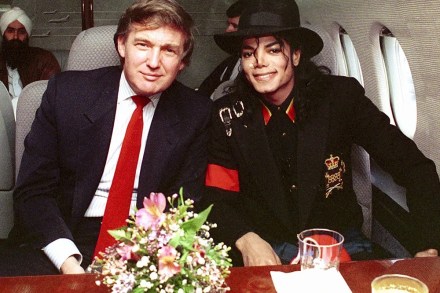
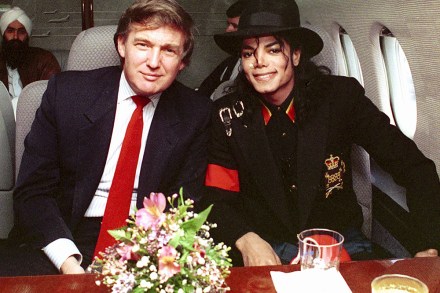
I can’t say I know the new President of the United States very well, but during the five years I lived in New York between 1995 and 2000 we were on nodding terms. That is to say, when I turned up at a party and he was there too, we would politely acknowledge each other. This was for two reasons, neither of which reflects particularly well on me. The first is that I was briefly the party columnist for Vanity Fair, deciding whose photos should appear in the monthly round-up. Donald Trump was keen for his picture to appear as often as possible, obviously, hence the nod. The second and more important reason is that my girlfriend for some of that time was Lucy Sykes, a British ‘It Girl’ that Trump had a soft spot for. He would actually cross the room to talk to her.

The highs and lows of Dry January

The first week of Dry January was relatively easy. Not falling asleep in front of the television was a pleasant change, as was waking up in the morning with a clear head. I started to remember things I usually forget, such as where I’d left my keys, and began to work through my ‘to do’ list, getting round to jobs I’d been putting off for months. It wasn’t that my willpower increased. It was that making myself perform tedious administrative tasks took less effort. My inner clerk woke up. The novelty of being calm and even-tempered wears off pretty quickly Two weeks in and I’m beginning to get bored. High on the list of benefits of being teetotal, according to the finger-waggers, is that your mood stabilises – and I’ve definitely noticed that.

Farewell Justin Trudeau, the last of the lockdown tyrants

So farewell then, Justin Trudeau, last of the lockdown tyrants. Or should that be the last of the democratically elected lockdown tyrants? After all, Xi Jinping and Vladimir Putin are still in office. But setting aside those authoritarians, it’s difficult to think of a single democratic leader apart from Emmanuel Macron who was in power during the pandemic who has survived – and Macron will be gone soon. Their decision to lock down their countries, with all the collateral damage that entailed, is surely a factor in their demise. Time and time again, these highly educated technocrats have proved spectacularly inept at navigating global crises In Trudeau’s case, inflation is the proximate cause, which rose to 8.1 per cent in 2022.

Can I be cancelled twice?

One of the biggest regrets of my life was saying yes when Jo Johnson asked if I wanted to be on the board of the Office for Students (OfS) in the autumn of 2017. It wasn’t a particularly prestigious position: the OfS was to be a new regulator of higher education in England and I would be one of 15 non-executive directors. But because it was a public appointment it would be made by the prime minister, which meant I was a political target. When it was announced on 1 January 2018, the offence archaeologists went to work, sifting through everything I’d said or written dating back 30 years in the hope of finding evidence that I wasn’t a suitable person to take up the role. The idea was to force me out, embarrass Theresa May and end my career into the bargain.

Should I become Lord Young of Loftus Road?

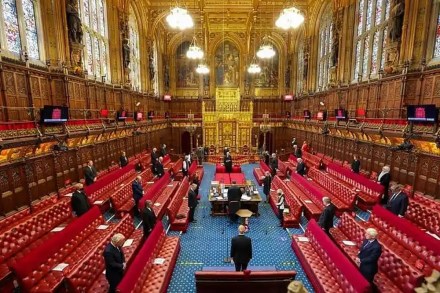
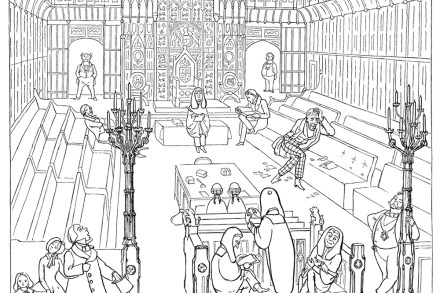
When the editor of this magazine called to congratulate me on being given a peerage, he said: ‘It’s QPR’s first win this season.’ Not quite right – we’ve actually won four games this season – but not far off. He touched a nerve because I’ve been thinking about what to call myself to maximise my chances of being appointed to QPR’s board. Would Lord Young of Loftus Road be too obvious? The other joke Michael made is that it shows Keir Starmer isn’t completely opposed to hereditary peers, given that my father was also a life peer. I hoped to be the first son of a life peer to be made a life peer and toyed with the idea of writing a piece about the hereditary meritocracy (my father invented the word ‘meritocracy’). But in fact there is one other.

Could I limit myself to 100 bottles of wine in a year?

Back in January, I wrote about my new year’s resolution to cut down on my drinking. The thought of total abstinence was too bleak, so my plan was to limit myself to 100 bottles of wine in 2024. Not quite the NHS’s recommended limit of 14 units of alcohol a week – roughly one-and-a-half bottles – but not a million miles away. I envisaged taking Mondays, Tuesdays and Wednesdays off and then confining myself to half a bottle a day for the remainder of the week. Although I also intended to do Dry January, thereby building up an eight-bottle credit. So 100 bottles in 11 months was my aim. Surely that was achievable?

Why Elon Musk shouldn’t be kicked out of the Royal Society

Bishop did not wish to be associated with ‘someone who appears to be modelling himself on a Bond villain’ In a notorious interview in the Sunday Times in 2007, the Nobel Prize-winning geneticist James Watson said, among other things, that aborting babies with gay genes was ‘common sense’ and that ‘all our social policies are based on the fact that their [blacks] intelligence is the same as ours [whites] – whereas all the testing says not really’. He also defended the explanation offered by Larry Summers of why there are fewer female professors in Stem subjects than male – there are more men at the right-hand tail of the IQ distribution curve.

At 61, it’s official: I’m ‘young old’

I read with some disappointment recently that the Encyclopaedia Britannica considers 61 – the age I am now – to be the beginning of old age. It defines ‘middle age’ as being between the ages of 40 and 60, which means that’s in my rear-view mirror. The only crumb of comfort is that some more charitable encyclopaedias describe the years 60 to 69 as ‘young old’, which is better than being an old Young I suppose. When I turned 60 last year, I told myself that you’re only as old as you feel and took succour from the fact that I’ve never spent a night in hospital, apart from when I got knocked off my bike, which doesn’t count. My energy levels remain high and I can still put in a 14-hour shift – even pull an all-nighter – when required.

Carry on Kafka: this is our Brave New World

An ex-copper who blogs as Dominic Adler – not his real name – came up with a good phrase this week to describe where Britain is heading under this increasingly authoritarian regime: ‘Like North Korea, but run by David Brent.’ It echoed my own attempts to sum up the atmosphere in Keir Starmer’s Britain in a WhatsApp exchange with Allison Pearson. I described Essex Police, who recently dispatched two hapless officers to the journalist’s door to question her about a year-old tweet, as ‘a cross between the Keystone Cops and the Stasi – Carry On Kafka’.

Must try harder, Education Secretary

The headmaster of one of the best comprehensives in the country was once asked the following question by Tony Blair: ‘If you could do one thing to improve state education in this country, what would it be?’ ‘Oh, that’s easy,’ he said. ‘I’d line up every civil servant in the education department and machine gun the lot of ’em.’ No prime minister has ever asked me that question, but my answer would be more diplomatic. It would be to insist that every incoming education secretary memorise the serenity prayer. This is the prayer that members of Alcoholics Anonymous recite at the end of their meetings: ‘God, grant me the serenity to accept the things I cannot change, the courage to change the things I can, and the wisdom to know the difference.

Did I deny my son a shot at the Premier League?

When my youngest son Charlie was seven he was talent-spotted by a QPR scout who saw him playing football in the park and invited to try out for the junior academy. I struggled to take this seriously – he still couldn’t ride a bicycle – but duly turned up at a ‘sports academy’ in Willesden, a secondary school, where the trials were held. To my astonishment, a QPR coach told me Charlie had potential and offered to enrol him in a programme that involved spending two hours every Wednesday evening at this school. This wasn’t the junior academy, but a level below. Charlie was keen and after talking it over with Caroline we decided to give it a whirl.

Will Keir Starmer get me banned from football games?

Last Saturday, I made the 400-mile round trip to Burnley with my 16-year-old son Charlie to see Queens Park Rangers play the Clarets. Quite a long way to go, given that Burnley was one of three teams relegated from the Premier League last season and are expected to go straight back up, while QPR are struggling to remain in the second tier. Nevertheless, we managed to hold them to a goalless draw, which the visiting fans celebrated as if we’d just won the FA Cup. ‘Worth the trip,’ declared Charlie as we embarked on the four-hour train ride home. The cabinet of killjoys can’t stand the fact that the beautiful game hasn’t been captured by the puritans I treasure these day trips with my youngest, crisscrossing the country to watch our beloved Rs, but there may not be many more.

A British First Amendment wouldn’t save free speech

Does the United Kingdom need a First Amendment? That’s a question I’ve been thinking about a lot recently, given the government’s unrelenting assault on free speech. If Britons enjoyed the same constitutional protections as Americans, it would have been more difficult to prosecute anyone over the summer for social media posts ‘intending to stir up racial hatred’, the crime for which Lucy Connolly, the wife of a Conservative councillor, received two-and-a-half years last week. The solution is not to pass a new law, but to repeal those laws that limit our freedom of expression But I remain sceptical. For one thing, there’s no mechanism in our constitution for creating a law that couldn’t be repealed by the next parliament.

Why is Labour axing the Tories’ most successful education policy?

By any measure, the free schools programme has been a resounding success. If you judge schools by how much progress their pupils make between the ages of 11 and 16, free schools occupy the top five positions in the most recent league table and eight of the top ten. That’s pretty remarkable when you consider free schools comprise less than 3 per cent of schools in England and Wales. A free school – King’s maths school – was the top performing sixth form in the country for the ninth year in a row in 2024 and in 2022 was designated ‘best sixth form college of the decade’ by the Sunday Times. Why is Phillipson targeting the most successful education policy of the last 14 years?

Starmer’s snowflakes’ charter

I almost choked on my cornflakes when I read that the Prime Minister had said he would slash red tape and ‘rip out the bureaucracy that blocks investment’ as part of a bid to persuade global business executives to invest in UK plc. Is this the same Keir Starmer whose government has just published an Employment Rights Bill that will tip a wastepaper basket full of red tape over employers’ heads? I know all governments pledge to ‘free up’ British businesses and then smother them in new regulations, but this wins first prize.