Toby Young

Toby Young

Toby Young is associate editor of The Spectator.

Are the cultural Marxists in retreat, or lying low?

In his Memoirs, Kingsley Amis includes a story about meeting Roald Dahl at a party in the 1970s. Dahl advises him to write a children’s book — ‘That’s where the money is’ — and brushes aside his objection that he doesn’t think it would be any good. ‘Never mind, the little bastards’d swallow it,’ he says. Then, a few minutes later, Dahl raises himself to his full height and, with the air of a man asserting his integrity in the face of an outrageous slur, says: ‘If you do decide to have a crack, let me give you one word of warning. Unless you put everything you’ve got into it, unless you write it from the heart, the kids’ll have no use for it.

Sturgeon doth protest too much, me thinks

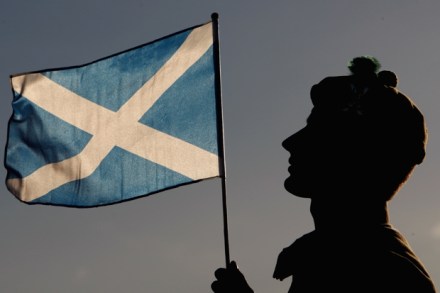
I couldn’t believe it when Nicola Sturgeon called for the resignation of Alistair Carmichael, the former Scottish Secretary, over his role in the leaked memo affair. As readers will recall, the Daily Telegraph published a confidential document during the election campaign that purported to be an account of a conversation between Sturgeon and Sylvie Bermann, the French ambassador, in which Sturgeon said she’d prefer David Cameron to Ed Miliband as Prime Minister. Carmichael has now owned up to leaking the document, which originated in the Scottish Office, but this isn’t the cause of Sturgeon’s outrage. No, Carmichael’s sin was denying all knowledge of the leak when asked about it at the time. For this, apparently, he should ‘consider his position’.

Freedom for free schools

I was disappointed to hear Andy Burnham on Marr last Sunday declare his opposition to free schools. He put plenty of distance between himself and Ed Miliband, even admitting Labour spent too much in the run-up to the recession, which is quite something given that he was the Chief Secretary to the Treasury at the time. But Miliband was spot on, apparently, when it came to free schools. He then reeled off all the usual guff about ‘experimenting with children’s education’, ‘surplus places’, ‘unqualified teachers’, etc. It’s tempting to take Burnham to task over this, since he’s the favourite to become the next Labour leader. What could be clearer evidence that he’s in the pocket of Len McCluskey than siding with the teaching unions?

You’ll regret not having a Human Rights Act when a left-wing government returns

In today’s Guardian, Matthew D’Ancona warns that David Cameron may face a successful rebellion from the 'Runnymede Tories' if he tries to repeal the Human Rights Act, led by David Davis. Not only would that be a major blow to his authority, it would make remaining in the EU a less attractive option in the forthcoming referendum. Human Rights experts insist that the two issues are wholly separate, although that’s open to debate. But there’s no doubt they’re politically linked.

Why I still have a deep attachment to the BBC

After I failed my O-levels and decided to leave school, my father suggested I go to Israel to work on a kibbutz. I’m not sure why he thought this would cure me of my self-righteous adolescent narcissism, but it worked. I returned to England determined to go back to school and make something of myself. I very nearly didn’t come back. The first kibbutz I went to was on the Israeli-Lebanese border and about a week after I arrived it was targeted by a group of Palestinian rebels. Katyusha rockets rained down from all sides and the other guest workers and I were ushered into a special air-raid shelter reserved for ‘volunteers’. It was a particularly dank and mouldy affair, with no mod cons save for an ancient, battery-operated radio.

Is satire a dying art?

I appeared on Radio 4 a couple of weeks ago to discuss the age-old question of whether political satire is dead. I don’t think it is, but it has lost a good deal of vitality in recent years and the role of satire in the general election campaign is a case in point. There has been no shortage of ‘satirical’ television programmes, but none of them have cut through. The only sign of life has been the flurry of photoshopped images on Twitter that have followed each misstep of the parties’ campaigns, such as Ed Miliband’s decision to carve Labour’s election pledges on to an eight-foot stone slab. If Stanley Kubrick was still alive he’d be suing people for illegally reproducing images from the opening scene of 2001: A Space Odyssey.

Reuniondues

A couple of weeks ago I returned to my old Oxford college for a ‘gaudy’ — posh, Oxford-speak for a reunion. This one was for those of us who came up to Brasenose in 1983, 1984 and 1985. That group includes the Prime Minister but, not surprisingly, he wasn’t there. I imagine he didn’t want to risk being photographed at a black-tie dinner with a bunch of his Oxford pals in the middle of a general election campaign — or maybe he just finds these occasions a bit of a bore. When I attended my first gaudy about 15 years ago, I assumed that the only people who’d bother to turn up would be those who’d made a success of their lives and they’d spend the entire time bragging about it. In fact, it was much more random than that.

The hazards of being a good sport

Not a day passes when I don’t look on my father’s record with shock and awe. I’m not talking about his authorship of Labour’s 1945 manifesto, his invention of the word ‘meritocracy’ or his creation of the Open University. I’m talking about the fact that he fathered a child at the age of 80. How on earth did he cope? My eldest was born when I was 40, with three more following in quick succession, and I already think of myself as an old dad. The problem is, they want to play with me all the time — rough, competitive, physical games — and it’s completely debilitating. The boys, aged six, seven and ten, are particularly demanding. I’m just not up to it. God knows how my father managed to stay alive until he was 86.

Was food poverty actually higher under the last Labour government?

I’m looking forward to tonight’s Spectator debate in which Fraser Nelson, William Cash and I will be taking on Owen Jones, Jack Monroe and Molly Scott Cato MEP over the issue of whether the rich should pay more in tax. One thing I’m sure Owen and his colleagues will do is point to figures released today from Trussell Trust food banks that seem to show that over a million people are now using their facilities. In fact, this figure is misleading, as Full Fact has pointed out: 'The claim that over a million people are using Trussell Trust food banks is inaccurate. It comes from confusing the number of different people using Trussell Trust food banks in a year with the number of times they use the food banks.

The extraordinary Green manifesto

I’m disappointed that Ed Balls’s suggestion that the Office of Budget Responsibility should audit the parties’ manifestos was never taken up, not least because we will never know what Robert Chote thinks of the Green party’s claim that all its proposals are ‘fully costed’. Believe it or not, this includes the commitment to spend £45 billion on loft insulation in the next parliament. It’s quite something, the Greens’ manifesto. No doubt you’ll have already read about some of their more reasonable measures — such as the ‘complete ban on cages for hens and rabbits’ and the insistence that ‘UK taxpayers’ money is not used for bullfighting’.

If level-headed Oxford graduates are voting Green, what hope is there?

I’m disappointed that Ed Balls’s suggestion that the Office of Budget Responsibility should audit the parties’ manifestos was never taken up, not least because we will never know what Robert Chote thinks of the Green party’s claim that all its proposals are ‘fully costed’. Believe it or not, this includes the commitment to spend £45 billion on loft insulation in the next parliament. It’s quite something, the Greens’ manifesto. No doubt you’ll have already read about some of their more reasonable measures — such as the ‘complete ban on cages for hens and rabbits’ and the insistence that ‘UK taxpayers’ money is not used for bullfighting’.

Miliband vs Millwall

I’ve been trying to think of a good football analogy to describe the battle between the two main parties as the general election approaches. One suggestion is the second leg of a Champions League game, with the Conservatives having won the first leg by one goal to nil. If we assume that the Tories are playing at home, that means Labour have to score two goals to win, whereas all the Tories have to do is not concede. Last week’s debate certainly felt like that, with Cameron playing a tight, defensive game and Miliband trying to score at every opportunity. The Conservative leader ended up winning on aggregate because the Labour leader failed to find the back of the net. But a Champions League match suggests two teams of real quality, which is where the analogy breaks down.

Ed Miliband couldn’t care less about education reform

The editor of The Spectator isn’t the only person thinking about the prospect of Ed Miliband becoming the next Prime Minister. Eighty educationalists have signed a letter in the Daily Mail today warning about the danger of a future Labour government curtailing academy freedoms. They’re concerned about Ed Miliband’s pledge that Labour would reintroduce 'a proper local authority framework for all schools' – which sounds a lot like placing all taxpayer-funded schools back under local authority control. The letter-writers flag up two freedoms they are particularly concerned about: the freedom that academies and free schools have to set their own pay and conditions and the freedom they have over the curriculum. They’re right to be worried.

Lefty myths about inequality

As a Tory, I’ve been thinking a lot about inequality recently. Has it really increased in the past five years? Or is that just scaremongering on the part of the left? By most measures, there’s not much evidence that the United Kingdom became more unequal in the last parliament. Take the UK’s ‘Gini co-efficient’, which measures income inequality. In 2009/10, it was higher than it was at any point during the subsequent three years. Indeed, in 2011/12 it fell to its lowest level since 1986. Data isn’t available for the last two years, but there’s no reason to think it has exceeded what it was when Labour left office.

How (and why) we lie to ourselves about opinion polls

A strange ritual takes place on Twitter most evenings at around 10.30 p.m. Hundreds of political anoraks start tweeting the results of the YouGov daily tracker poll due to be published in the following day’s Sun. Some of them are neutrals, but the majority are politically aligned and will only tweet those results that show their party in front. I often wonder what the point of this is, even though I’m guilty of it myself. It’s not as if anyone is going to see the tweet and say, ‘Ooh, I wasn’t going to vote Conservative, but now that YouGov has them two points ahead I’ve changed my mind.’ I can think of only two sensible reasons for doing this, both quite weak. The first is it has a mildly demoralising effect on your opponents.

I’m working to make education fairer. But I’m still not sure what ‘fairer’ means

Civitas has just published an interesting book called The Ins and Outs of Selective Secondary Schools. Edited by Anastasia de Waal, it’s a collection of essays by the usual suspects in the never-ending argument about grammar schools. De Waal points out that the two sides have more in common than you’d think. In particular, they share a common goal, which is to sever the link between a child’s socio-economic status and attainment. In 2009, according to the OECD, the variance in the scores of British children in the Pisa international tests in maths, reading and science that could be explained by their backgrounds was 13.8 per cent. By this measure, the best-performing region in the world is Macau (2 per cent) and the worst is Peru (27.5 per cent).

Could my son Charlie become a Premier League footballer?

My son Charlie was scouted by QPR last week. I say ‘scouted’, but that’s not quite accurate since he’s only six. Rather, a man claiming to be a member of the club’s coaching staff suggested I bring him along to the QPR pre-academy in Willesden. At first, I was suspicious. The man in question teaches football at the local leisure centre and I was worried that this ‘pre-academy’ would turn out to be an expensive, fee-paying affair with no official links to QPR. When the man first introduced the idea, I had to ask if he’d got the right boy. Charlie’s quite small for his age and not exactly lion-hearted.

My plan for Question Time: mug up and fail anyway

I was invited on Question Time this week, which gave me a few sleepless nights. Natalie Bennett’s disastrous interview on LBC was a reminder that appearing on a current affairs programme in this febrile pre-election environment can be a bit of a minefield. Admittedly, I’m not the leader of a political party but that’s no guarantee I won’t make a fool of myself — a moment that will be preserved for ever on YouTube. There are no opportunities for glory on Question Time, but plenty for embarrassment. The most you can hope for is to get through the experience in one piece. By now you may well have seen what happened — but I am writing this on Tuesday evening, full of nerves. My biggest fear is that someone might ask a ‘funny’ question.

If you think Britain’s corrupt now, watch what happens if we ban second jobs for MPs

Last year, I had an exchange with Hugo Rifkind on Twitter in which I bet him dinner at Clarke’s that his father would stand down before the next election. My reasoning was that, at the age of 68, his dad wouldn’t want to serve another five years in the Commons and would be happier in the Lords. I hadn’t anticipated he would depart as a result of a cash-for-access scandal. I’ve always rather fancied running in Kensington myself. Rifkind has a majority of 8,616, which makes it a safe seat, and it’s only a 15-minute cycle ride from my house. But I’m not going to throw my hat into the ring because I still have numerous responsibilities in connection with the three schools I’ve helped set up.

I don’t know why I’m against tax avoidance (and I bet you don’t either)

On the face of it, the moral case against tax avoidance seems pretty straightforward. If you’re a UK taxpayer and benefit from public goods and services, then you should pay your fair share of tax. If you’re paying less than that, then you’re a free rider. You’re breaking the social contract. But what do we mean by ‘fair share’? The standard defence of tax avoidance is that it’s perfectly legal — if it wasn’t, it would be tax evasion — and the social contract only obliges people to obey the law, not to pay more tax than they have to. To maintain that people are morally obliged to pay an additional amount of tax, over and above what they’re legally required to pay, is a tricky position to defend.