Timothy Jacobson

Around and around the world

From our US edition

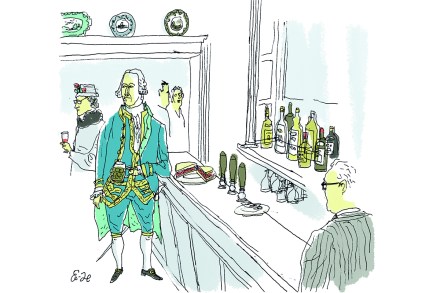
Kudos to Masterpiece’s new eight-part series Around the World in 80 Days, if only for nudging me to read Jules Verne’s original tale of an eccentric Englishman who sets out from London in 1872 on a strict deadline to girdle the globe, as well as to revisit Michael Todd’s Oscar-winning 1956 movie version. Bad translations and Disney movies long consigned much of Verne’s prodigious output to the realm of juvenile entertainment, in the popular mind anyway. Serious critics tell us that we should think again — that in a novel like Around the World in Eighty Days (1873) there is indeed a lot going on. The character of Phileas Fogg has layers beneath his serene reserve, as his passage around the world begins to reveal.

masterpiece around

Welcome to Waffle House

From our US edition

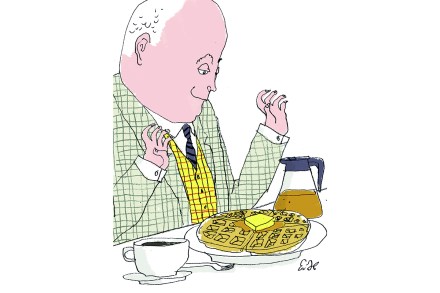
"Snack bar,” “coffee shop” and such phrases once signified small eateries where customers sat on stools at a counter or in simple booths. Their orders were taken and served by waitresses in white aprons, and prepared by a short-order cook in a white paper cap. Hotel lobbies, railroad-station waiting rooms and airports all had them: private enterprises in public spaces purveying a cup of coffee and a donut, bacon and eggs, ham and cheese on rye, a hot dog, a hamburger, maybe a milkshake or an ice cream sundae. Little of this (for most were mom-and-pops) traveled well into the age of industrialized, assembly-line, eat-on-the-go feeding signified by the phrase “fast food.

waffle

In defense of the English original sandwich

From our US edition

Hannah Moore’s June Spectator piece on sandwiches made me hungry. Then it made me think. Ms Moore makes a sound distinction between modern Britain’s plastic-boxed, triangular ‘sandwich’ and the custom-made, piled-high, endlessly imitated, seldom-matched product of a good New York or Chicago delicatessen. Why, one wonders, do the Brits put up with it? Landing in countless foreign ports over the years, for business or pleasure, I’ve always wondered, pretty much before wondering about anything else, ‘What’s the food like?’ Almost always, I’ve liked what it was like. In the age of real borders and undiluted ethnicities, food was a powerful expression of locality.

sandwiches

In search of lost French restaurants

From our US edition

Readers of a certain vintage will recall when any listing of fancy restaurants in a big city had a heavy French accent. Look at the ‘Let’s Eat Out’ section at the back of an old issue of Gourmet magazine from the 1970s for the evidence, at least for New York but, if memory serves, it was true for London as well. (The Italians probably ran second, then the Chinese, then a big falloff to other countries but still mostly European ones.) The way it worked at Gourmet — you got a listing if you bought an ad — only understated things. Lots of good places never advertised at all or simply did not aspire to the tony status that association with the likes of Gourmet conferred. Names like Le Chamberlin, La Caravelle, Le Chantilly, Mon Paris, announced their sole culinary allegiance.

French

The culinary wisdom of charity cookbooks

From our US edition

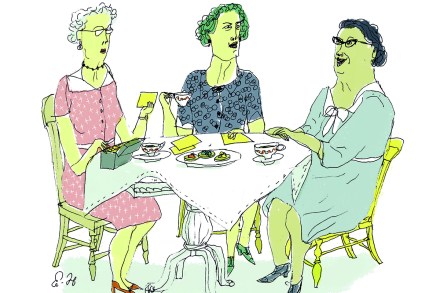
Joy’s Toasted Parmesan Canapés: mix four tablespoons grated Parmesan cheese with half a cup of grated Swiss (or any other mild cheese that will melt), add mayonnaise enough to make a spread, season with salt and oregano or basil, spread on bite-sized rounds or squares of thin-sliced white bread, top with a slice of green olive (optional), broil until bubbly, serve immediately. Caveat, sophisticates: the ‘Parmesan’ likely as not was that pale yellow powder dispensed from the green Kraft cylinder, the Swiss was from Wisconsin, the mayonnaise was aka Miracle Whip Salad Dressing, the spices dried ones from the McCormick jar and the bread courtesy of Pepperidge Farm (if you were lucky). Not a whiff of anything cordon bleu or ‘artisanal’ here, the latter a term not yet dreamt-up c.

cookbooks

Dinner with Judy

From our US edition

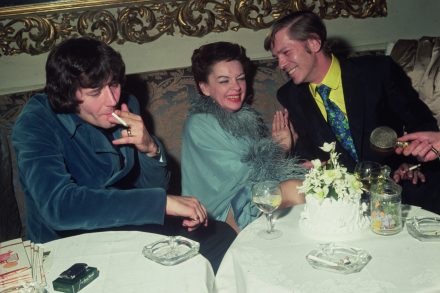
How better to lift a torch against late-winter gloom than by conjuring an evening from a time when our country was still a confident going concern, when its culture and ideas bestrode the free world? What with our plague-driven mania for virtual living, it’s hard to get anyone to come to dinner these days. And since she died in 1969, our virtual guest of honor won’t be coming either. But from an era full of entertainment giants, we pick one, the star of stars: Miss Judy Garland. If only in our minds, we invite Judy to cocktails and dinner and then, just maybe if we get lucky, to linger late into the evening around the piano and sing a few of the old songs. This is not a formal affair, just two couples on a Friday evening after work.

judy

Alexis de Tocqueville’s Christmas parade

From our US edition

According to corporate retailers, Christmas begins sometime between Halloween and Thanksgiving. From the day after Turkey Day, it’s full-bore shopping until that last lonely evergreen leaves the Boy Scout lot on Christmas Eve.Staunton, the small Virginia town where I write, is no exception to this feature of life in our great commercial republic. Shopping trumps every other reason for the season. The churches push back, but they’ve only got one day a week to do it, and that isn’t enough when you’re up against Wal-Mart and Amazon. Even so, we retain one civic observance in our age of commercial supremacy and militant multiculturalism.

staunton de tocqueville’s