Tim Shipman

Tim Shipman

Tim Shipman is political editor of The Spectator.

The latest twist of the Mandelson scandal has badly damaged Starmer

The sacking of Sir Oliver Robbins over the vetting of Peter Mandelson is a complicated affair, so I’ll try to break down what we know, what we don’t know and what conclusions we can draw. WHAT HAPPENED What we know:  – Keir Starmer has said he accepts responsibility for the ‘mistake’ of appointing Peter Mandelson as Britain’s ambassador to the US, and insisted that the correct process was followed. – On 5 February, in Hastings, the Prime Minister said ‘there was then security vetting carried out independently by the security services, which is an intensive exercise, that gave him clearance for the role.’ – The Guardian reported yesterday that the independent UK Security Vetting organisation had not passed Mandelson.

Mandelson latest: can we trust Starmer's ignorance?

Mandelson latest: can we trust Starmer’s ignorance?

20 min listen

The Peter Mandelson scandal just got more scandalous. Last night the story broke that Mandeslon actually failed his enhanced vetting before being made US Ambassador. Number 10 are pleading ignorance. Their defence sits on the suggestion that the Foreign Office’s most senior official unilaterally decided to ignore the findings and – what’s more – that he told no one. It’s a stretch and, as Tim Shipman says MPs' 'fury is overwhelming'. There are a number of outstanding questions, including: what could possibly be in it for the FCDO to withhold this key information? Now Sir Olly Robbins has been sacked, will he go public? Did Starmer knowingly mislead parliament when he said that the vetting process was followed?

Inside parliament’s ‘summer of sex’ | Cindy Gallop & Cleo Watson

22 min listen

It is a hard time to be a Labour MP. The polls are flagging, the economy is stagnating and the Middle East remains in crisis. But facing electoral armageddon in three weeks’ time, one brave backbencher has taken it up on herself to raise her party’s spirits. Samantha Niblett, the Honourable Member for South Derbyshire, is launching a campaign to make 2026 the ‘summer of sex’. On today's podcast, Tim Shipman and James Heale make sense of the story with Cindy Gallop, the sextech entrepreneur who's working with Niblett on the campaign, and Cleo Watson, former special adviser and author of novels Whips and Cleavage. Produced by Megan McElroy.

Inside parliament’s ‘summer of sex’ | Cindy Gallop & Cleo Watson

Why won’t Starmer answer the question!?

13 min listen

PMQs is back and – predictably – Lord Robertson’s intervention on the state of the armed forces dominated proceedings. The Prime Minister gave six responses to questions about defence spending, none of which addressed the criticism properly. While it was not a painful session for Starmer, it did show how little he has to say and how little authority he seems to have over such a serious matter. Why can’t he just answer the question? Does he want to be back in opposition? Megan McElroy speaks to Tim Shipman and Isabel Hardman. Produced by Megan McElroy and Oscar Edmondson.

Why won't Starmer answer the question!?

Is Rachel Reeves blocking defence spending because of ‘gender parity’?

When John Healey was asked, on stage at the London Defence Conference, whether the armed forces were ‘ready’ for war, the Defence Secretary replied: ‘Yes.’ One of those present says: ‘That was greeted with near incredulity in the room.’ Another attendee compared Healey’s plight to someone ‘playing French cricket’, with critics from all sides hurling balls at his ankles while he tried to bat them away. ‘You can’t score any runs in French cricket.’ George Robertson, Healey’s most respected Labour predecessor and a former secretary general of Nato, was not present; he was in Scotland celebrating his 80th birthday. But he returned to give a withering interview to the FT and a speech.

Keir Starmer thinks he’s Henry VIII

13 min listen

Two big stories to chew over on today’s podcast, starting with Viktor Orban’s landslide defeat in Hungary. The left have been celebrating this as a victory over populism, but have they misunderstood Peter Magyar’s politics? He’s hardly the Hungarian Ed Davey – as figures such as Zack Polanski would have you believe – and shares a lot of similarities with the outgoing leader when it comes to his conservatism. What are the real lessons from this weekend’s result? And why should Donald Trump be wary? Then, Henry VIII is back! The government is considering reviving the so-called Henry VIII powers, passing legislation which would allow Labour to change regulations without having to face full scrutiny from MPs.

Keir Starmer thinks he's Henry VIII

Hero voters: who should Labour target? with Chris Curtis MP & Deborah Mattinson

30 min listen

Labour won the 2024 general election in part by focusing on ‘hero voters’ – so called because they may have voted Labour in the past but felt the party had abandoned them. Now they risk losing them again – so how does Labour maintain their support? Chris Curtis, Labour MP for Milton Keynes North and former pollster, and Deborah Mattinson, Labour peer and polling guru, join Tim Shipman to talk about how to appeal to this set of voters. Research suggests that voters from this group that are socially liberal are switching to the Greens, while the socially conservative voters are switching to Reform. What binds both groups though is a sense of economic insecurity, and both Chris and Deborah talk how Labour can build a strategy around appealing to their sense of fairness.

Hero voters: who should Labour target? with Chris Curtis MP & Deborah Mattinson

EU déjà vu: the emergency brake is back!

13 min listen

Charles Grant from the Centre for European Reform and Tim Shipman join James Heale to reflect on the rumours about Britain's latest set of negotiations with the European Union. There are reports that the EU may be willing to accept some form of mechanism, that the UK could use, should Britain ever wish to temporarily halt the number of inbound students. Perhaps we could call such a mechanism an 'emergency brake'. Sound familiar? What does this tell us about the dynamics of the EU, how the UK-EU relationship works – and how inevitable was the result in 2016? Produced by Patrick Gibbons and Megan McElroy.

EU déjà vu: the emergency brake is back!

Will Trump pull the US out of NATO?

15 min listen

Donald Trump has said he is 'strongly considering' pulling the US out of NATO, in comments made to the Telegraph – and it doesn't appear to be an April Fool. This isn't the first time he has rallied against the Alliance so should the UK take him seriously? Plus – what is Keir Starmer's strategy? – as he tries to balance a testing transatlantic relationship with pursuing closer relations with the EU. Patrick Gibbons speaks to Tim Shipman and James Heale. Produced by Patrick Gibbons.

Will Trump pull the US out of NATO?

What if the UK hadn’t voted for Brexit?

Someone in Brussels has a sense of humour. One of the euro elves let it be known this week that the deal which the UK hoped to sign this summer has stalled over migration rules. Keir Starmer and his minister--negotiator Nick Thomas-Symonds are seeking a deal on food and agricultural products in exchange for one on youth mobility. However, the number of young people coming to the UK, Thomas-Symonds insists, has to be capped. Cue, with exquisite chutzpah, a leak that the EU is instead prepared to offer Britain an ‘emergency brake’ on the arrival of under-30s if the numbers get too much. Sound familiar? An emergency brake on free movement was exactly what David Cameron asked for in his 2015 negotiations (and even Tony Blair had talked of wanting an emergency brake before that).

Why is Britain so exposed to rising energy prices?

Why is Britain so exposed to rising energy prices?

The IMF has warned Britain is particularly vulnerable to another spike in energy prices, and is more exposed than many of its European neighbours. Why is that the case? And does the government have any real plan to shield households and businesses from the fallout? With the Tories and Reform calling for the government to drill baby drill, why is the government avoiding a pretty obvious solution? James Heale speaks to Tim Shipman and Michael Simmons.

Where does Labour’s centre of gravity lie?

30 min listen

Patrick Maguire, chief political writer at The Times, sits down with Tim Shipman for a reflection on Labour's odd year so far. From potential leadership challengers, like Wes Streeting and Angela Rayner, to cabinet heavyweights, like Yvette Cooper and Ed Miliband – where does power in this Labour government really lie? What does Keir Starmer's interview style and response to the Iran war reveal about him? And what are the implications of the local elections in just over a month – in what could be a historically disastrous night for the Party. Produced by Megan McElroy and Patrick Gibbons.

Where does Labour's centre of gravity lie?

Tim Shipman, Ben Clerkin, Maxwell Marlow & Hermione Eyre

24 min listen

On this week’s Spectator Out Loud: looking back to 1973, Tim Shipman wonders how bad the energy crisis could get; Ben Clerkin interviews Steve Hilton, the former Cameron aide running to be California’s next governor; Maxwell Marlow explains how to solve the student debt crisis; and finally, ‘disorientatingly enjoyable’ is the verdict of Hermione Eyre as she reviews David Hockney at the Serpentine. Produced and presented by Patrick Gibbons.

Tim Shipman, Ben Clerkin, Maxwell Marlow & Hermione Eyre

Ten ways Trump is controlling us all

Donald Trump is very likely the most consequential US President for the world and for British politics since Ronald Reagan, and arguably since Harry Truman. Everything he does is so, as the man would say himself, ‘yuge’, that it’s easy to overlook that he’s also the President whose actions have the most unintended consequences. Like the fluttering of the hummingbird’s wings that causes a hurricane halfway across the globe, Trump’s careening around the world stage is largely responsible for much of what is going on in British politics right now. This week is a case in point. Here are ten ways in which we are all in thrall to Trump, whether we like it or not: 1) The price of fuel is upPetrol hit £1.50 a litre for the first time in nearly two years.

Energy crisis: are we in 1973 territory?

Energy crisis: are we in 1973 territory?

10 min listen

The panic has set in around the cabinet table about this energy crisis, and fears of history repeating itself. Tim Shipman writes in the magazine about the comparisons being made to 1973 and the Opec oil shock, with the government preparing for oil prices to reach £150 a barrel. What levers are available to the government to ease the economic fallout and 1970s-style inflation? And why is it that the UK is so uniquely impacted by this crisis? Oscar Edmondson speaks to Tim Shipman and Michael Simmons. Produced by Oscar Edmondson.

The curious case of Morgan McSweeney’s missing phone

20 min listen

Questions are being asked about Morgan McSweeney's missing phone, which he reported stolen to police last year. What might seem like a minor case of petty theft actually has serious implications for the investigation into Peter Mandelson's appointment. It also raises questions about Keir Starmer's general approach to government. James Heale speaks to Tim Shipman and Cleo Watson, former special adviser to Boris Johnson, about the case – and also about how it can hurt public trust in government. Do you believe in cock up – or conspiracy? Produced by Oscar Edmondson and Patrick Gibbons.

The curious case of Morgan McSweeney's missing phone

To drill or not to drill, that is the question

15 min listen

In the final Prime Minister's Questions before Easter recess, Kemi Badenoch pushed Keir Starmer to commit to new oil & gas drilling licences. The Conservatives spot an easy win here – cost of living concerns are rising as America's war with Iran continues. Plus, with a burgeoning welfare bill, the trade-offs are even trickier for Labour to resolve. Who should Labour target? Tim Shipman and Michael Simmons join Patrick Gibbons to discuss. Come for Tim's impression of the Prime Minister, and stay for Michael's very strong response when asked if renewables are the answer. Produced by Patrick Gibbons.

To drill or not to drill, that is the question

‘We’re into 1973 territory now’: How bad could the energy price crisis get?

The energy price surge caused by war in the Middle East has sent shockwaves through Westminster. It has pushed up inflation and the cost of borrowing, causing panic in the cabinet and the recognition that government intervention could be needed on a vast scale to support the cost of living. The Prime Minister told a private audience: ‘The assumption that the growth of the developed countries can proceed steadily on the basis of cheap energy has been shattered almost overnight.’ He further observed: ‘The problem is not simply one of inflation. It is the whole structure of the economy.’ In the Treasury there is something approaching a siege mentality. The Chancellor has ‘to spend [her] time firefighting’.

It’s Ed Miliband’s world – and we’re living in it

23 min listen

Three big stories are on the agenda this morning: the war in Iran has dominated over the weekend, with Trump now failing to conceal his feelings towards Keir Starmer; Ed Miliband is also rising in profile, with those close to the cabinet briefing against him and his influence; and, finally, the Liaison Committee will sit later today, giving select committee chairs the opportunity to grill the Prime Minister. Will Keir Starmer manage to escape this week into a quiet recess? Tim Shipman and James Heale discuss. Produced by Megan McElroy.

It’s Ed Miliband’s world – and we’re living in it.

On the road with Nigel Farage

30 min listen

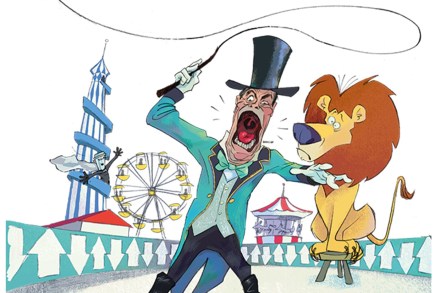
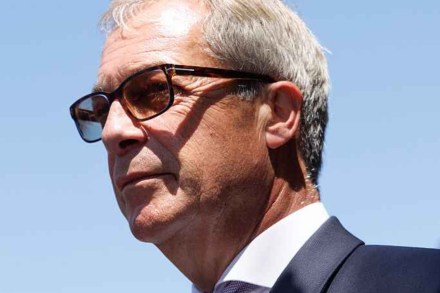
This week James Heale and Tim Shipman share a byline to tell the story of Reform since the 2024 election, and where they are going. Nigel Farage reveals he is talking to potential Blue Labour defectors, shifting his leadership style and offering a ‘less is more’ approach on policy. Essex and its resident Tory big beasts – Kemi Badenoch, James Cleverly and Priti Patel – are a major focus. Reform hopes to swallow the Tory vote come the 2029 election – ‘As long as Nigel is ahead of Badenoch,’ an adviser notes, ‘the Tory vote will disintegrate overnight.’ Also on the podcast, the Labour leadership contest (informally) started this week, with interventions from Angela Rayner and Andy Burnham. But are they right to put Labour members before the public? Tim and James discuss.

On the road with Nigel Farage