
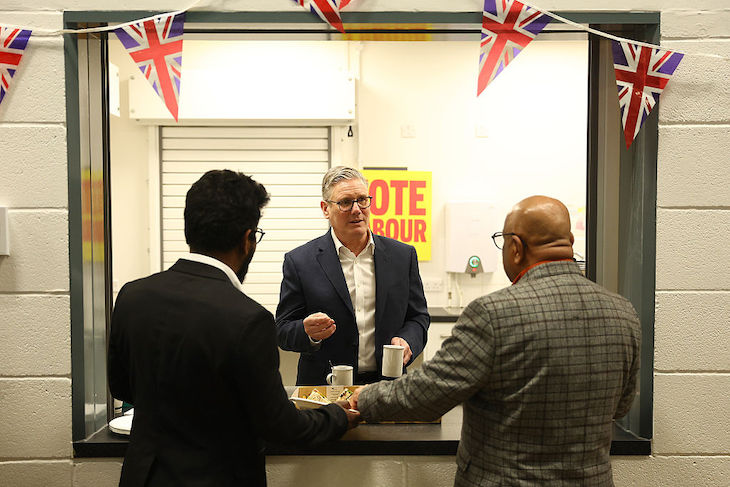
Keir Starmer has now been Prime Minister for one year and 300 days, which puts him 43rd in the list of Britain’s longest-serving prime ministers. Whether he survives the seven weeks (otherwise known as ‘a single Truss’) he needs at the helm to overtake the Earl of Aberdeen will be shaped, in part, by the local election results next week.
Those who have spent much time on the doorstep will know that Starmer is personally political kryptonite for many voters
MPs are in recess but as they pound the streets and bang on doors, they know these may be the most significant local elections for a generation. By next Friday, we will have much more idea what fate – and the electorate – has in store for our political class.
The pollsters are making their predictions, with peer Robert Hayward suggesting Labour could lose 1,850 council seats and the Tories 600, while Reform (+1,550), the Greens (+500), independents (+250) and the Lib Dems (+150) all take a step forward.
But there remain big questions for all the main parties. Here are the seven things to look out for:
1. The Red Wall
Labour’s metropolitan high command is likely to have a nervous breakdown about large Green gains in London, but more significant could be the widely expected collapse of their vote in the old Red Wall seats of the Midlands and North. While the Labour left is likely to win any battle over which way the party should pivot after the election, those who lose in red wall seats are unlikely to agree with that approach. That could pave the way for Labour to Reform defections.
2. March of the nationalists
The SNP are expected to form another government in Scotland, perhaps just short of an outright majority, which is a pretty major turnaround over the last year after Labour stormed back in the 2024 general election. The closer-run thing will be in Wales where Plaid Cymru are hoping to grab the first minister post for the first time. Plaid look like they will be best placed to form an administration in coalition with Labour and/or the Greens, but it is possible they win fewer votes and seats than Reform, who will also establish their first bridgehead in Scotland.
3. National vote share
Lots of number crunchers will look at the results and translate that into an equivalent vote share across the country – the easiest way of determining what it all means for the national picture. A Labour result just north of 10 per cent could have apocalyptic consequences for Starmer (who got 20 per cent a year ago). While Reform is expected to ‘win’ the elections, some pollsters think they will do less well nationally than they did last year, when Nigel Farage’s party hit 30 per cent.
4. Green strength
The Greens are expected to do well in London, the university towns and other wealthy progressive enclaves. But their rise will be capped if they cannot also pick up anti-Labour protest votes elsewhere. It’s the difference between being a nuisance to Labour in the general election and having the kind of numbers which would force a place in a progressive coalition. Will the multiple Green candidates who have been exposed for making anti-Semitic comments hurt the party in North London?
5. Essex
Conservatives have come to terms with another difficult set of local elections and seem resolved to fighting the general election with Kemi Badenoch in charge. But keep an eye on Essex, where Reform are very strong and have launched a campaigning blitz in recent weeks. If Farage and co make the strides they hope, the Tories could be looking at the prospect of Badenoch and other key Tory frontbenchers in Essex – like James Cleverly, Priti Patel and Alex Burghart – all losing their seats in 2029.
6. Independents
Predicted gains of 250 seats for independents (many of them campaigning on Palestinian rights in Cardiff, rather than potholes in Pontefract) are likely to pile further pressure on Labour. It will also be interesting to see, particularly in parts of the Midlands and North West, whether overtly Islamist candidates emerge as the primary challengers, or whether the Green party, which is overtly anti-Israel, manages to hoover up many of these votes.
7. Labour excuses
Last and most important will be the reasons why Labour MPs and ministers believe the party has performed so badly. Those who have spent much time on the doorstep will know that Starmer is personally political kryptonite for many voters. But the results in each patch will vary. Listen out for MPs who fear the Green surge saying that Labour needs to move to the left. Those whose seats are vulnerable to Reform will more likely urge the leadership, and any leader who may follow, not to ditch the focus on restricting migration. Anyone close to Wes Streeting or Angela Rayner who breaks cover to condemn Starmer personally is likely to signal that an imminent leadership election is on the cards.





Comments