Theo Hobson

Theo Hobson

Theo Hobson is co-editor of Created for Love: Towards a New Teaching on Sex and Marriage.

If only there were more Anglicans like Wes Streeting

From our UK edition

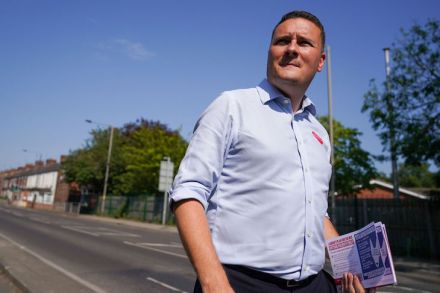
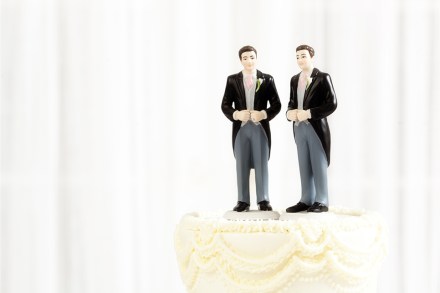
Why is Wes Streeting, the shadow health secretary, not more strident on the subject of religion and sexuality? The Labour MP has spoken in the House of Commons about his dismay at the Church of England’s feet-dragging over gay marriage. Yet in an interview with Theos think tank, ahead of the publication of his memoir, Streeting resisted denouncing the homophobes holding back the Church. Instead, Streeting was measured, and rather understated. Unlike many gay Christians, he didn’t sound evangelical about the reformist cause, but admitted that it was a profoundly difficult issue, on which people disagree in good faith. I suppose the diplomatic pragmatism of the politician is a factor in this approach, but that doesn’t discredit it.

What was it really like for the Windrush generation?

From our UK edition

This article is not about me. It’s about a woman in her late eighties called Ethel who goes to my local church; she came to this country in the Windrush era, which began 75 years ago today when 500 passengers arrived at Tilbury in Essex on 22 June, 1948. But this paragraph is about me. For most of my life I’ve felt a bit at odds with church, despite trying to join various parishes. In recent years I’ve been going, on and off, to a church in Harlesden whose congregation is mostly black (Caribbean), maybe eighty per cent. I have often felt a bit of an outsider, for obvious reasons. I tried other churches. But it drew me back, partly due to the mix of gospel-ish enthusiasm and Anglo-Catholic tradition, partly because of the calm welcome of the core members of the congregation.

Would Jesus really have joined the Bristol bus boycott?

From our UK edition

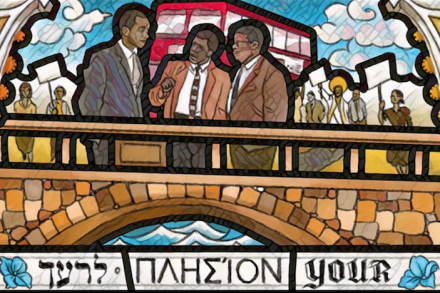
St Mary Redcliffe church, in Bristol, has removed four stained-glass windows dedicated to the slave trader Edward Colston, he whose statue was recently toppled and sunk. So far, so good. It is set to replace them with four new images of Jesus. Sort of. Most of them are not exactly images of Jesus, but modern scenes in which he is present, identified by a halo. In one, he is a child on an overloaded migrant dinghy. In another, he is hanging out in Bristol with some multicultural neighbours. In another, he is joining a racial justice protest – Bristol’s famous 1963 bus boycott. The fourth is more traditional: he is on a ship calming the storm. Depicting Jesus in a modern setting is not necessarily a bad idea, but it’s risky, and one of these windows gets it a bit wrong.

What Phillip Schofield teaches us about public morality

From our UK edition

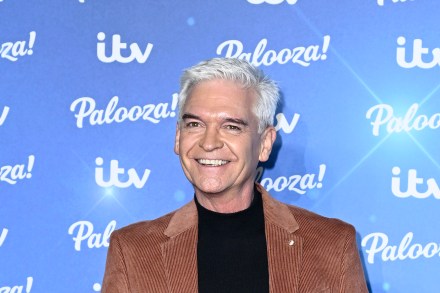
On one level it’s all fluff and gossip, but the Phillip Schofield story actually raises some interesting questions about what remains of our idea of public morality. Let’s start from the beginning. In early 2020, Schofield very publicly came out as gay. He posted a statement on social media that emphasised his gratitude for the loving support of his wife of 27 years and his two daughters. The strong implication was that he had not acted on his homosexual inclinations, that he was the utterly devoted family man, plunged into an impossible situation. ‘With the strength and support of my wife and daughters, I have been coming to terms with the fact that I am gay.

Martin Amis and the idolatry of style over substance

From our UK edition

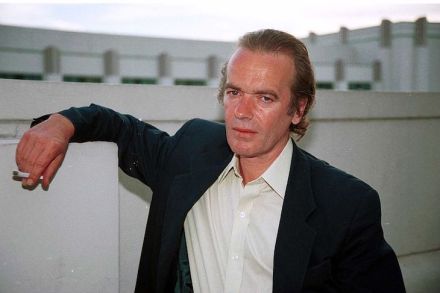
To be a bookish young man in the late twentieth century was to be a Martin Amis fan. I was sixteen when I read The Rachel Papers, and it thrilled me as much as any novel ever has. In some ways more. For here, in its narrator Charles Highway, was a whole way of life. One could be into books, in an ambitious, obsessive way, and also be a cool dude, who smoked fags, chased girls, dispensed witty put-downs, sneered at squares. Here was a comprehensive ideal, mixing high and low, art and fun, the mind and the body, tradition and now. The novel is largely set in West London, and I remember the thrill of a scene set in Notting Hill Gate’s W.H. Smith’s. I knew it well! I belonged to Literature!

Britain’s ‘theocracy’ is something to be proud of

From our UK edition

This coronation season, punditry is bristling with acute reflections on the British constitution, especially its religious aspect. Or maybe not. There is more comment on Succession (an American TV show that half-satirises, three-quarters worships capitalist excess). But is it not at least a little bit interesting that we officially remain a Protestant theocracy? The Protestantism of the coronation oath is widely seen as an embarrassing relic from a more sectarian age. The King will promise to defend Protestantism, and protect the Church of England. He won’t say anything unfriendly about Catholicism, but those in the know will know that the Act of Settlement of 1701 remains in place, excluding Catholics from the throne.  What are we meant to think about this?

Belief in God doesn’t come from a fear of death

From our UK edition

When I was a teenager someone asked me if I was scared of dying. No, I said, but I’m a bit scared of living. I want to say the same thing to David Baddiel. In his new book The God Desire he seems to be trying to present himself as a more nuanced sort of atheist, whose Judaism allows him to understand the appeal of religion, even as he decides that he is too intellectually honest to believe. But his central thesis strikes me as the very opposite of nuanced. He argues, in line with generations of middlebrow atheists, that the desire to believe in God comes from the fear of death. We believers just can’t cope with the unpalatable truth that oblivion awaits, so we perform all sorts of mental gymnastics in order to cling to the opposite possibility.

Does the Church of England need evangelicals?

From our UK edition

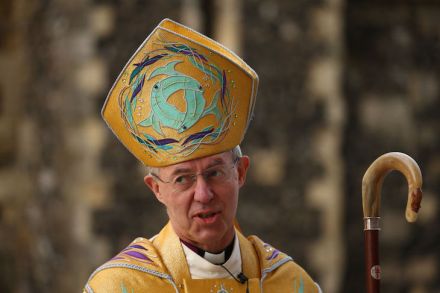
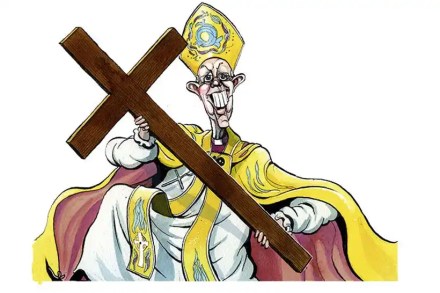
The Church of England is in for an explosive summer. In February, Synod decided to allow the blessing of gay couples, and hinted that it will lift the ban on actively gay clergy. Conservative evangelicals have warned the bishops that if they really go ahead with this they will create a split that dwarfs the division over the ordination of women. The bishops have accepted that this is on the cards: a ‘settlement of differentiation’ is likely to be needed, they have said, meaning new structures for the conservatives. Now there’s an awkward wait before the bishops’ next announcement, expected by July.  On one level, what’s new? The evangelicals have been semi-separate for decades.

Kate Forbes and the conundrum of marriage

From our UK edition

The fuss over Kate Forbes’ opposition to gay marriage shows that the concept of marriage has become a serious muddle. The depth of the muddle tends to be evaded, as pundits don’t generally want to admit that a basic thing like marriage is really confusing.  But it is. It’s oddly hard to say what marriage is. Does it still have a religious dimension? Or is it an essentially secular thing that only has a religious dimension if you’re religious? It’s oddly hard to say what marriage is. Does it still have a religious dimension? Or is it a secular thing? Until recently, such questions troubled no one. Marriage was a mix of religious and secular elements, but the ambiguity was unproblematic.

In praise of meat-free Fridays for Lent

From our UK edition

The bishop of Norwich, the Right Reverend Graham Usher, has suggested that Anglicans might like to abstain from eating meat on Fridays during Lent. We could eat fish instead, he says, in keeping with the tradition that is still observed by many Catholics, and was semi-observed by most Brits until about fifty years ago. The point of the old tradition was to encourage remembrance of the events of Good Friday, through a minor piece of abstinence. The bishop is doubtless all for the remembrance of Christ’s suffering, but he emphasises a more practical purpose. Such a practice would help to reduce climate change. If Anglicans opted for meat-free Fridays all year, there would be a reduction of 40,00 tonnes of CO2, equivalent to 60,00 return flights to New York.

Sandi Toksvig should stop picking on the Church of England

From our UK edition

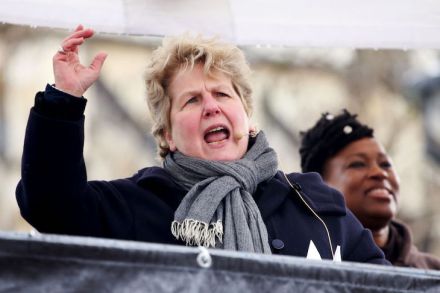
The breaking news is that Sandi Toksvig has demanded a meeting with God, over a friendly cup of tea. The BBC broadcaster has grown impatient with his vacillating human intermediaries and wants to explain to him what should happen in the religion that he allegedly launched. Love should come first, she plans to tell him. If he can’t reorganise his religion around this simple principle, he no longer deserves to be taken seriously as a modern deity. The gay vicars that I know are sanguine Toksvig is presumably unimpressed by the latest news from the Church of England's Synod. As expected, bishops have got approval for their compromise: no to gay marriage, yes to church blessings for same-sex couples. It’s not enough, say progressives, including some MPs.

The problem with a gender-neutral God

From our UK edition

The Church of England will soon launch a commission on the question of gendered language in relation to God. Is this big news? It depends what the commission proposes. Even if it proposes big changes, the synod would have to vote them through. And a two-thirds majority, voting in favour of removing the word ‘father’ from the Lord’s Prayer, seems unlikely. But that’s what some reports are suggesting, whether through clumsiness or a mischievous glee at the prospect of further Anglican division.

The C of E is right to prevaricate on gay marriage

From our UK edition

On Tuesday morning it was theology hour in the House of Commons. The Labour MP Ben Bradshaw had requested an urgent question on the Church of England’s latest prevarication on homosexuality. Ahead of next month’s synod, the bishops have decided that gay marriage will not be up for discussion, even though a full debate was expected after six years of consultation. Can the established Church continue to be out of kilter with the law of the land? Can MPs legitimately put pressure on it to reform its teaching? Bradshaw and others, including Penny Mordaunt, are muttering threats of disestablishment. Their case is weakened by the fact that parliament promised, ten years ago this week, that religious groups would not be coerced into performing gay marriages.

Did the Church of England let Prince Harry down?

From our UK edition

Prince Harry is not a Christian believer, he tells us in his book Spare. Fair enough. Every British person is entitled to choose what religion, if any, to follow. Well, almost every British person. His father has a bit less freedom to decide that traditional religion is not his thing. So does his 'arch nemesis'. The point underlines the culture of constraint from which he has freed himself. If William said the same, a constitutional crisis would ensue. It’s a good example of how unreasonable his whole crusade is. His stance only makes sense if he goes all the way and denounces the monarchy entirely. He wants to be fully royal and also fully honest - an edgy and frank royal rather than a yes-man, a square.

Lionel Shriver, Theo Hobson and John Maier

From our UK edition

25 min listen

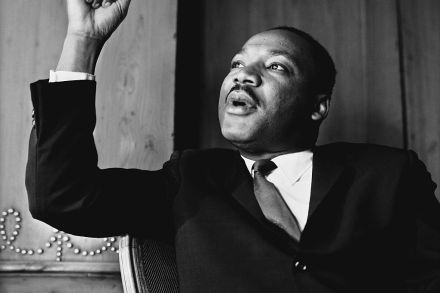
This week: Lionel Shriver asks whether we are kidding ourselves over Ukraine (00:56), Theo Hobson discusses Martin Luther King and the demise of liberal Protestantism (09:28), and John Maier reads his review of Quentin Tarantino's new book Cinema Speculation (18:11). Produced and presented by Oscar Edmondson.

The truth about Martin Luther King

From our UK edition

Why does the United States seem to be falling apart? The ideal that used to bring Americans together seems to have failed in some way. ‘Liberty and justice for all’ is the best summary. Sure, it was always a frail creed, and interpretations of it differed, but still. It semi-worked. The creed failed in a very paradoxical way. It was voiced too well, too purely. Its greatest articulator was Dr Martin Luther King, who is commemorated with a US national holiday celebrated on Monday. (Ronald Reagan signed Martin Luther King Day into law in 1983, in less sectarian times.) The problem, of course, was that Dr King was black. Half of white America found this hard to take: that the incarnation of the national ideal did not look like them.

Was Pope Benedict XVI right about Catholic tolerance?

From our UK edition

It is not for me, a non-Catholic, to say whether the late Pope, Benedict XVI,  served his Church well. But as a British (Anglican) Christian, I feel entitled to comment on any high-profile theologian, even him. For he had considerable influence beyond his Church, including emboldening neoconservative Anglicans in a stronger critique of liberal tradition. In his reflections on how religion relates to politics he often claimed to draw on the best of modern thought, to offer a synthesis of faith and reason. A year into the job he gave a famous speech in Regensburg, in which he dared to compare the political visions of Islam and Christianity.

Did Philip Larkin really hate Christmas?

From our UK edition

No prizes for guessing what the grumpiest of modern poets thought of Christmas. It was a regular target for Philip Larkin’s eloquent gloom. He aired his gripes to various correspondents, complaining that he was expected to send cards, buy presents, go to parties, and endure a whole ‘Niagara of nonsense’. He sometimes complained, or rather stoically related, that he was spending quality time with his sour mother, who habitually became ill with festive stress. In a letter of 1960, Larkin told a friend he had been depressed over Christmas: ‘Of course such ghastly festivals as the one we have just endured make life seem blacker & bleaker and generally more savourless.’ It sounds like comic exaggeration, but it isn’t.

Meghan Markle and the uncomfortable truth about Britain

From our UK edition

I’m not defending Harry and Meghan. But I think they deserve some credit, for they have put the British character under the spotlight as never before in our times. Of course, it’s mainly Meghan who has done this. Through being boldly herself, she has raised the question of who we are. How are we different from the Californian culture she belongs to, which is the dominant form of western culture? In some ways it’s obvious – we have a monarchy for a start. But she has exposed a lot of the underlying stuff that makes us different. And she forces us to ask: can we affirm this stuff? Can we defend it? Do we like who we are? It seems that Meghan was not really aware of marrying into a different culture from her own.

What Rowan Williams gets wrong about democracy

From our UK edition

Rowan Williams used his Reith lecture on religious liberty to make a plea to religious believers: don't be afraid of being an awkward misfit. The former Archbishop of Canterbury called on believers to challenge the social consensus – even on contentious issues like gay marriage. His view is that religion is not a private affair, but impinges on public life. It does so, he said this week, in ways that the liberal order will find annoying, even disruptive. Believers appeal to transcendent truths beyond the ‘prevailing social consensus’, according to Williams. As a result, he said, they are rightly wary of an order whose only basis is human law, which is defined by majority opinion.