Theo Hobson

Theo Hobson

Theo Hobson is co-editor of Created for Love: Towards a New Teaching on Sex and Marriage.

The truth about Martin Luther King

From our UK edition

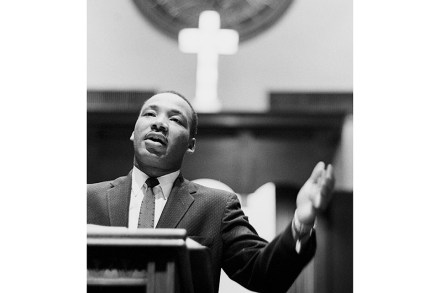
Why does the United States seem to be falling apart? The ideal that used to bring Americans together seems to have failed in some way. ‘Liberty and justice for all’ is the best summary. Sure, it was always a frail creed, and interpretations of it differed, but still. It semi-worked. The creed failed in a very paradoxical way. It was voiced too well, too purely. Its greatest articulator was Dr Martin Luther King, who is commemorated with a US national holiday celebrated on Monday. (Ronald Reagan signed Martin Luther King Day into law in 1983, in less sectarian times.) The problem, of course, was that Dr King was black. Half of white America found this hard to take: that the incarnation of the national ideal did not look like them.
Was Pope Benedict XVI right about Catholic tolerance?

From our UK edition

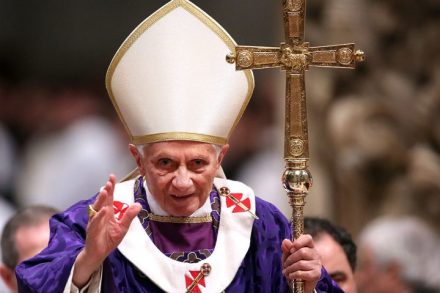
It is not for me, a non-Catholic, to say whether the late Pope, Benedict XVI,  served his Church well. But as a British (Anglican) Christian, I feel entitled to comment on any high-profile theologian, even him. For he had considerable influence beyond his Church, including emboldening neoconservative Anglicans in a stronger critique of liberal tradition. In his reflections on how religion relates to politics he often claimed to draw on the best of modern thought, to offer a synthesis of faith and reason. A year into the job he gave a famous speech in Regensburg, in which he dared to compare the political visions of Islam and Christianity.

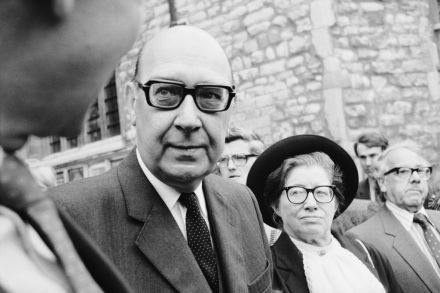
Did Philip Larkin really hate Christmas?

From our UK edition

No prizes for guessing what the grumpiest of modern poets thought of Christmas. It was a regular target for Philip Larkin’s eloquent gloom. He aired his gripes to various correspondents, complaining that he was expected to send cards, buy presents, go to parties, and endure a whole ‘Niagara of nonsense’. He sometimes complained, or rather stoically related, that he was spending quality time with his sour mother, who habitually became ill with festive stress. In a letter of 1960, Larkin told a friend he had been depressed over Christmas: ‘Of course such ghastly festivals as the one we have just endured make life seem blacker & bleaker and generally more savourless.’ It sounds like comic exaggeration, but it isn’t.

Meghan Markle and the uncomfortable truth about Britain

From our UK edition

I’m not defending Harry and Meghan. But I think they deserve some credit, for they have put the British character under the spotlight as never before in our times. Of course, it’s mainly Meghan who has done this. Through being boldly herself, she has raised the question of who we are. How are we different from the Californian culture she belongs to, which is the dominant form of western culture? In some ways it’s obvious – we have a monarchy for a start. But she has exposed a lot of the underlying stuff that makes us different. And she forces us to ask: can we affirm this stuff? Can we defend it? Do we like who we are? It seems that Meghan was not really aware of marrying into a different culture from her own.

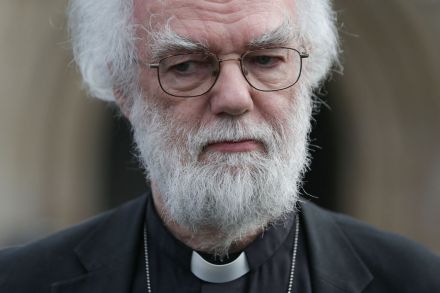
What Rowan Williams gets wrong about democracy

From our UK edition

Rowan Williams used his Reith lecture on religious liberty to make a plea to religious believers: don't be afraid of being an awkward misfit. The former Archbishop of Canterbury called on believers to challenge the social consensus – even on contentious issues like gay marriage. His view is that religion is not a private affair, but impinges on public life. It does so, he said this week, in ways that the liberal order will find annoying, even disruptive. Believers appeal to transcendent truths beyond the ‘prevailing social consensus’, according to Williams. As a result, he said, they are rightly wary of an order whose only basis is human law, which is defined by majority opinion.

It’s nonsense to say we are no longer a ‘Christian country’

From our UK edition

According to the census, British Christianity is having a disastrous century. In the 2001 census, a clear majority of people in England and Wales – 72 per cent – described themselves as ‘Christian’. In 2011, this figure fell to 59 per cent. And now, it’s another drop: a 13 percentage point drop to 46 per cent.  These figures suggest that a Christian country has imploded within the space of two decades. Will the figure continue to fall at this rate? Will Christianity disappear from this land within 40 years?  Probably not. What the census shows is that ‘cultural Christianity’ has dramatically fallen. For of course this is all that the census can tell us about. It does not delve any further than asking about people’s religious allegiance.

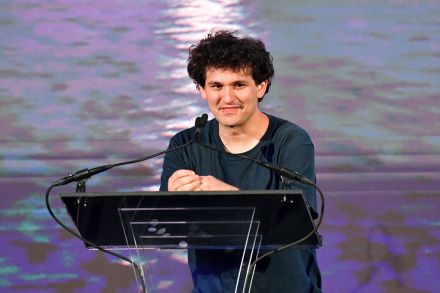
Sam Bankman-Fried and the twilight of the ‘Effective Altruists’

From our UK edition

Crypto whizzkid Sam Bankman-Fried has come a cropper. His $16 billion (£13 billion) fortune vanished overnight last week after FTX, the crypto exchange he founded, collapsed. What makes the tale of his rise and fall fascinating is that Bankman-Fried wasn’t in it for the money. Well, not in the normal way. Bankman-Fried is (or was) the poster boy of the Effective Altruism (EA) movement: a group of rational philanthropists who use their time and money in the most efficient possible way. That might involve becoming a banker, or crypto king, in order to earn millions, or in this case billions, so that they can give it away.

Don’t condemn the Church of England for its stance on gay marriage

From our UK edition

The Bishop of Oxford, Steven Croft, has come out in favour of gay marriage – the first senior bishop to do so. He has apologised to gay Christians that the Church has dragged its feet, and that his own views have been slow to change.  He is right to call for change. But I don’t think he needs to apologise that the change has taken, or rather is still taking, a long time to come. I think that the Church has been right to approach the issue super-cautiously. Gradualism is sometimes good. The orthodoxy says otherwise: ‘justice delayed is justice denied’. But in this case, such rhetoric is impatient and counter-productive. For many centuries it was firmly assumed that marriage should involve people of different sexes.

A.N. Wilson and the ‘aesthetic’ relationship to religion

From our UK edition

My first Spectator article, 21 years ago, was a rebuke to the religious attitude of certain public intellectuals whom I dubbed ‘devout sceptics’. They gave the impression, I said, of being drawn to the depth of religion, unlike shallow atheists, but also of being too intellectually honest to believe in it. To my delight, one of my targets, Clive James, wrote a self-defending letter. I had been noticed by a big beast! A.N. Wilson was another of my targets. Of him, I said that a foppish antiquarian interest in religion was just a water-muddying distraction; we could do with some intellectuals who get off the fence and set out the case for religion. I met him soon after that article and he was very nice about it. He is a charming and friendly chap.

The esoteric creed of King Charles

From our UK edition

Our new king is not, by normal standards, an important intellectual. But it would be churlish to dismiss his thinking as insignificant. Normal standards do not apply to a man who has spent his life earnestly preparing for a grand mythical role. Some princes have little trouble ignoring the religious aspects of monarchy, instead getting on with hunting, polo, or charity work. But young Charles was a sensitive soul, the sort who struggles to forge an identity. He had intellectual curiosity and a high idea of himself. Charles has shown a real capacity for melancholic detachment, self-scrutiny, angst. That’s not the whole story: as his leaky-pen petulance reminds us, he also has traits of the spoiled boy.

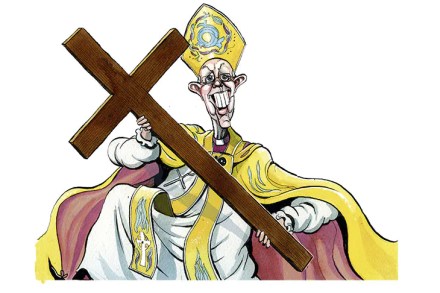
The Archbishop of Canterbury has risen to the occasion

From our UK edition

Archbishop Justin Welby has done a good job of relating the Queen’s virtues to her Christian faith. This is no easy task. The writers of the New Testament would have been very surprised by the notion that a monarch could be an exemplary Christian. And any sensible Christian leader is mindful that monarchs should be praised with care, lest religion seem cravenly reverent of tradition and worldly grandeur. She was a model of practical virtue In her life, he said in his official statement, ‘we saw what it means to receive the gift of life we have been given by God and – through patient, humble, selfless service – share it as a gift to others.’ This rightly puts the emphasis on her positive outlook – something most of us struggle to have.

What Philip Larkin can teach us about depression

From our UK edition

A couple of years ago I taught The Whitsun Weddings by Philip Larkin to some A-level students. In the last class they summed up their feelings about his poetry. ‘It’s bare depressing, innit’, said someone (this wasn’t Eton), and someone else agreed: ‘I guess it’s good poetry but I can’t lie, it’s way too gloomy for me.’ Then one young man piped up: ‘But that’s how life is for a lot of people – you know, really bleak.’ Yes, I quietly thought, and you might discover that acquaintance with bleakness awaits you, too. But hang on, aren’t today’s teenagers meant to be depressed and anxious?

Where does Justin Welby stand on same-sex marriage?

From our UK edition

Justin Welby has made a valiant attempt to placate both sides of the Anglican divide. He has insisted that the official conservative teaching on sexuality, agreed at the Lambeth Conference of 1998, is still valid. But he also said that provinces that dissent, and affirm same-sex marriage, should not be disciplined. In effect, he is calling their dissenting view an authentic expression of Anglicanism. At the end of the speech he ducks the question In the crucial passage of his speech that he delivered this week, he asserts that, ‘for the large majority of the Anglican Communion’, to question the traditional teaching is ‘unthinkable, and in many countries would make the church a victim of derision, contempt and even attack.

Oliver Cromwell was a liberal pioneer ahead of his time

From our UK edition

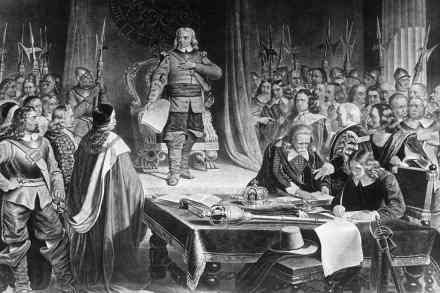
Was Oliver Cromwell a religious fanatic who loved banning stuff, or a pioneer of liberal values? Sunday’s Observer reported that a group of historians have dredged up some documents that suggest that he was seriously committed to religious freedom.  Despite his reputation for brutally suppressing Irish Catholics, it emerges that Cromwell was open to them practicing their faith, so long as they no longer posed a political threat by supporting royalists. Another document confirms his enthusiasm for readmitting Jews to England and his willingness to offer them religious freedom.

Good Luck to You, Leo Grande misses the point of sex

From our UK edition

Good Luck to You, Leo Grande, the new film starring Emma Thompson, doesn’t know what sex is. It portrays a brief liaison between a widow (Nancy, played by Thompson) and a male prostitute as liberating for her, a blessed introduction to the world of sexual pleasure. The marital sex she knew was functional, orgasm-free (for her). Maybe religion’s to blame; she was an RE teacher. I don’t know if the film specifies whether she has a religious background, but it’s at least implied. And in an interview Emma Thompson blames religion for the shame that has denied so many people sexual pleasure. Back to my opening claim. Such a plot entails a two-dimensional view of sex.

My Sally Rooney conversion

From our UK edition

I tried to dislike the writing of Sally Rooney. But I failed. I retain some resistance to Sally Rooney the cultural phenomenon, because this is largely about television adaptations of her books, which can only accentuate the negatives. I have an old-fashioned view of these things: only literature can represent a glamorous world with nuance, real satire, barbed detachment; the interiority of writer and reader is a counterweight to the allure of worldly things.  The adaptation of her first novel, Conversations With Friends, which begins this weekend, is unlikely to challenge my view. It might, for example, attempt to show that Nick is vain and selfish as well as handsome and amazing at sex, but handsome and amazing at sex will win.

Is Channel 4’s sex obsession really a ‘public service’?

From our UK edition

Is Channel 4 a public service broadcaster that should be saved from privatisation? Today's Queen's Speech, which lays the groundwork for the sale of the channel, is set to reignite that debate once again. But Channel 4's increasingly dire output – and its obsession with shows about sex – shows privatisation might not be such a bad idea. Yes, Channel 4 produces some worthy stuff, but much less than in the past – I can’t recall a really good recent documentary on the channel. Its news is useful enough, especially if you can tolerate the smug air of its main presenters. But these positives are outweighed by a massive negative that enlightened people pretend not to notice.

Boris Johnson is right about Justin Welby

From our UK edition

The Prime Minister told Tory MPs that church leaders had been 'less vociferous in their condemnation on Easter Sunday of Putin than they were on our policy on illegal immigrants'. Lambeth Palace called this 'a disgraceful slur'. So who is right? If the PM’s comment is confined to the archbishop of Canterbury, he appears to be technically correct. Welby’s high-profile sermon did attack the asylum policy in strong terms, and it had no such harsh words for Putin himself (even if he did say Easter should be a 'time for Russian ceasefire, withdrawal and a commitment to talks'). Not only did Welby say that the deal raised 'serious ethical questions'; he went into full prophet mode and declared that it would not 'stand the judgment of God'.

Dostovesky and Putin’s useful idiots

From our UK edition

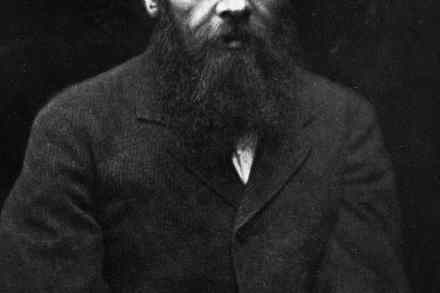
When I was 17 I heard the name Dostovesky, and was enthralled. Just the name felt so glamorously intellectual, so deep. I began to read some of his novels, and my hunch was vindicated. A bit later I delved into his ideas, and my admiration became more nuanced. I partly admired his defiance of the rational humanist arrogance of the West, but I was also wary of his reactionary mystical nationalism, his faith in the anti-liberal Russian soul.  It seems that a lot of religiously minded intellectuals struggle to get past stage one. They are so taken with the flinty glamour of this writer that their critical faculties atrophy. They allow their aesthetic admiration to influence their religious politics.

Louis Theroux and the problem with sex scenes

From our UK edition

You know the restaurant scene in Notting Hill? The Hugh Grant character defends the honour of his magical girlfriend when she is the butt of some sexist banter from some vulgar brutes, who don’t realise she is sitting round the corner. In many languages, says one, the word for actress is the same as the word for prostitute. Hugh just can’t bear it: he confronts them with an angry eye-flutter, telling them to bloody well shut up, and then Magic Girlfriend appears and tells them that they have small penises. It’s one of those scenes in which Richard Curtis helps us to understand what is good and what is bad these days.  Well, at the risk of resembling one of the nasty sexists in this scene, I want to suggest that the new orthodoxy has its limits.