Theo Hobson

Theo Hobson

Theo Hobson is co-editor of Created for Love: Towards a New Teaching on Sex and Marriage.

Are Christian holiday camps a force for good?

From our UK edition

In my first few teenage years I attended Christian holiday camps rather like the ‘Bash’ camps where John Smyth and Justin Welby prayed in the same dormitory. They were run by old boys from the school. It was a day-school, but obviously these camps had a boarding school feel. I loved it. It was like being at Hogwarts. I adored the clubby vibe, the belonging, the games, the lingo, the gossip, the praying together in the dorm, the sing-songs with cocoa. I went back for more every summer and Easter holidays for the next few years. It was a huge group of friends, still sweaty from a football game, congregating to worship.

Did Christianity create secular humanism?

From our UK edition

33 min listen

Since the election of an overwhelmingly secular Labour government, people who describe themselves as humanists have a spring in their step: for example, there's a prospect that humanist weddings will be legally recognised in England and Wales (they already are in Scotland). But what exactly is a humanist? Definitions vary and there's a heated debate about to what extent the ethical but firmly atheist beliefs of the rather loosely organised modern humanist movement are descended from Christianity. In this episode of Holy Smoke we'll hear from Andrew Copson, CEO of Humanists UK since 2010 & President of Humanists International, and the theologian and Spectator contributor Theo Hobson, author of God created Humanism: the Christian Basis of Secular Values.

Why did so many Christians vote for Trump?

From our UK edition

It’s hard to know what to say about Donald Trump. Well, maybe it’s easy enough if you’re a fan, or if you are an opponent who’s very sure that the liberal case just needs to be reiterated more forcefully. But for the rest of us it’s difficult. It’s a special sort of difficulty, a difficulty of tone. As a liberal Christian, my main response is to be aghast that most Christians voted for him – the ratio was almost two-to-one. Why don’t these people have more respect for liberal democracy, and common decency, I am tempted to ask. Why don’t they have more fear of crude bullying and authoritarianism?  The Democrats do not understand that politics retains its old religious dimension But I am aware that this response is tone-deaf.

The trouble with Guy Fawkes night

From our UK edition

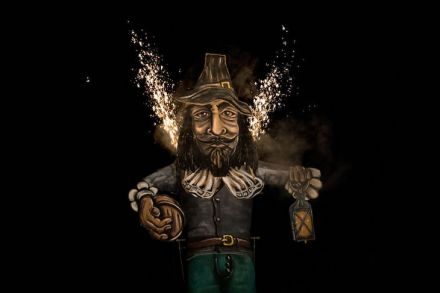
My reaction to fireworks is a bit eccentric. Lovely, I think, but can’t they be more meaningful? To be more precise, this is my view of Bonfire Night, formerly known as Guy Fawkes night. It would be nice, I think, if we could revive the annual event as a celebration of our shared values. To be fair, it retains a faint gunpowdery whiff of this. Most Britons are aware that we are celebrating a historic victory over terrorism. But the awareness is fading. Ideally, Guy Fawkes would have belonged to some obscure sect that is now safely defunct The main problem with trying to revive the meaningfulness of this festival is that it is linked to anti-Catholic bigotry. Ideally, Guy Fawkes would have belonged to some obscure sect that is now safely defunct.

Justin Welby’s homosexuality reforms could still backfire

From our UK edition

Last week, Justin Welby, Archbishop of Canterbury since 2013, started leading the Church of England. He got off the fence on homosexuality and backed a major change to the Church’s teaching. He said that that ‘all sexual activity should be within a committed relationship, whether it’s straight or gay'. This obviously goes against the Church’s existing official teaching, that sex should not occur outside of heterosexual marriage. The Church is now likely to change that teaching fairly swiftly – probably next year. I predict that Synod will affirm equal marriage within three years. This shift comes after about 25 years of painful paralysis.

Justin Welby has made a huge shift on homosexuality

From our UK edition

Forget Nixon in China. That phrase needs renaming: Welby on sexuality. For it is now at last clear that he has shifted his position on homosexuality. Talking to The Rest is Politics podcast this week, he finally came out with it. He is not, as we all assumed, a conservative in the awkward position of presiding over a Church that is pursuing reform. He has quietly changed his mind. He is not, as we all assumed, a conservative in the awkward position of presiding over a Church that is pursuing reform In the last year or two, he has hinted that he is on a journey, moving away from the conservative position that he has taken throughout his career, but he has never quite clarified.

Has Britain really entered its ‘first atheist age’?

From our UK edition

Some sociology academics have, after a three-year research project called 'Exploring Atheism', unveiled a startling discovery: there are a lot of people in Britain who don’t believe in God. I know, it’s quite a gut-punch. They do not quite claim to have found that most Britons are atheists. But they do claim that there are now more atheists than religious believers. By collating various social attitudes surveys from 2008 to 2018 they found a strong upward trend in those saying that they did not believe in God, from 35 per cent to 43 per cent. During this time, believers in God dropped from 42 per cent to 37 per cent. This has led the academics to claim that Britain has now entered its ‘first atheist age’.

The unlikely Christian conversion of Russell Brand

From our UK edition

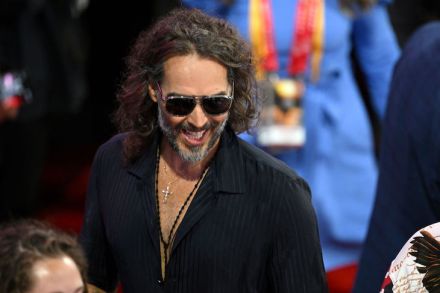
Questioning the sincerity of a fellow Christian's faith is a big no-no. It would be wrong, then, to doubt the sincerity of Russell Brand’s Christianity, just as it would be wrong to pour scorn on the boy who broke out of Sunday school into the main church during the sermon, shouting of his joyful discovery that Jesus was his best friend. Young Christians like that need some helpful shepherding in the virtues of silence, not condemnation. The YouTube-star-turned-evangelist has been increasingly vocal about his recently-acquired faith Brand, who last year faced a string of allegations over his treatment of women (which he denies), revealed in April that he had been baptised as a Christian in the River Thames.

What the Church of England should say to its conservative rebels

From our UK edition

The evangelicals really are revolting. After a lot of talk of the need to break away from a tainted, liberal, heretical Church, something significant has happened. Last month, two of London’s biggest conservative parishes – All Souls Langham Place and St Helen's Bishopsgate – held services ‘commissioning’ new leaders. It’s an obvious repudiation of the Church’s authority, and a step towards creating a new structure – a ‘de facto province’, as one of the vicars involved put it. When this new structure is authorised, they will be officially ordained into it, he said. This move doesn’t quite break canon law, as long as these leaders don’t preside at the eucharist.

Have I failed as an artist?

From our UK edition

I suppose you could say that I’m an ‘amateur’ artist, that art is my ‘hobby’. In fact no, I take that back. I’m no amateur hobbyist dabbler. I’m an artist. I’m a bloody artist. If you take something seriously, the hobby label grates. And I take art seriously. I might not be on track to making it in the art world (but who knows?), but I have gradually decided that it is a key part of my creative life, subtly joined to the other stuff. Six years ago I went back to college, part-time, for a year, to study fine art I am having this moment of soul-searching because I’m moving out of a studio space I’ve been using for a few years. But I didn’t use it all that much, to be honest: inspiration waxed and waned.

What does it mean to have a more secular House of Commons?

From our UK edition

The House of Commons has a more secular character than ever before. Roughly 40 per cent of MPs have chosen to swear in using the secular ‘affirmation’ rather than a religious oath. Only 24 per cent took the secular option at the start of the last parliament. The current secular affirmers include half of the cabinet, and of course the PM. This is a good thing, in one respect. It is, on the whole, good for democracy if MPs reflect the attitudes of the nation. And it now seems that over half of the nation are non-religious (though all such measures are made of jelly). It’s hard to say whether the new Labour MPs are less religious than their Tory counterparts. Maybe they are a bit more honest, a bit less respectful of tradition.

The C of E needs to talk about sex

From our UK edition

My friend Andy is getting married. It’s about time – he and his girlfriend have a one-year-old daughter. He wants to get married in church, so I introduced him by email to the local vicar. I was copied in to their initial correspondence. The vicar told Andy that the Church of England prohibits sex outside of marriage, so a church wedding would not be possible unless the couple repented of their sin and lived apart in the run-up to the wedding. Of course I made up the last bit. The vicar congratulated him and his partner on their decision and started talking dates. But isn’t it true that the church teaches that sex should only take place in marriage? Yes and no. The ambiguity sheds important light on the current crisis over homosexuality.

What price is too high to keep conservatives in the Church of England?

From our UK edition

Future historians of the Church of England might look back at this weekend as the beginning of the end. A selection of bishops and members of the General Synod are meeting at a hotel in Leicester to seek a solution to the impasse over homosexuality. They hope to make a plan to take to July’s Synod: a deal that keeps conservatives in the Church. That’s got to be a good thing, hasn’t it? It depends.  The story so far is that the Church decided in favour of same-sex blessings last year, and also in favour of new ‘pastoral guidance’ that is expected to allow gay clergy to marry, therefore officially condoning them for the first time. Conservatives, the large majority of whom are evangelicals, see this as false teaching, and are demanding their own structures.

What does the faith school shake-up mean for Anglicans?

From our UK edition

Why do faith schools excite such passions? Obviously people care a lot about religion, and education, but there’s something else at work too. Schools are microcultures, bubbles, little versions of society, in which the secularism of our culture can be shut out, defied. It sounds like a strange exaggeration, but if a religion has its own schools, it has a small but vital link to the old era of its cultural dominance.  The shake-up overturns the current rule, that a new faith school can only select half of its pupils on religious grounds Is this why Roman Catholics like Melanie McDonagh are so happy with the government’s decision to allow new faith schools to have a fully religious selection process?

What should we make of Russell Brand’s baptism?

From our UK edition

Could Russell Brand, who has just been baptised, become a significant Christian figure? I suppose he could become a sort of British televangelist, God help us. But significant in a good way? It’s not impossible: he’s sharp and charismatic, and taps in to a major English spiritual tradition. But it’s not likely either: our culture needs figures who model wise restraint rather than juvenile hedonism, and Brand can’t entirely undo his image. Brand can probably never lose the aura of sleazy preening libertine Brand issued a video after being baptised in the Thames on Sunday, in which he said he had found his 'path' and was left feeling 'incredibly blessed' and 'nourished'.

The CofE’s female clergy muddle is not sustainable

From our UK edition

It’s thirty years since the first women were ordained as priests of the Church of England. For ten years, there have been women bishops too. Well, at least one aspect of the Church’s reform is done and dusted.  Cue hollow laughter from those acquainted with the strange intricacy and agony surrounding this seemingly simple reform. In reality it was a Pyrrhic victory for the liberals that left them deeply demoralised. Not being much of a feminist (or a traditionalist), I was slow to tune in to this story. But its dark fascination gradually drew me, like an ecclesiastical car crash. Female clergy have been cornered into a psychological trap What happened is this: opponents of the change were allowed to stay in place.

Is Richard Dawkins a Christian?

From our UK edition

When the New Atheism thing was new, I wrote a piece saying that the people who supported it were pretentious and cowardly. They pretended to know what religion is, and said that it caused great harm. I said this was ‘intellectual cowardice’. The intellectual coward is one who chooses simplicity over complexity and difficulty. One aspect of their cowardice related to Islam. Their popularity was a result of 9/11, and the widespread fear of religious extremism that ensued, but they didn’t dare focus on Islamic extremism; they wanted to say that religion in general was to blame, that mild-mannered liberal Christians were implicated in violence. Now Richard Dawkins is trying to sound more nuanced about Christianity. A recent radio interview with LBC is the latest example.

How Justin Welby should have responded to Gove’s extremism crackdown

From our UK edition

When the government raises big questions about our national values, one has a choice: to see it as an opportunity to say something constructive, to deepen the debate. Or one could respond like a cynical intern at the Guardian, saying, in effect: how dare they try to sound all high and mighty? Where’s some holes we can pick? The Church of England is unfortunately inclined to the latter course, with the archbishops issuing a statement raising concerns that Muslims might be targeted by a redefinition of extremism.  What Michael Gove announced was hardly earth-shattering What the communities secretary Michael Gove announced was hardly earth-shattering.

Is there anything wrong with ‘Christian nationalism’?

From our UK edition

When does radical religious conservatism become a dangerous bid for theocracy? It’s a question that some American commentators are pondering, in relation to ‘Christian nationalism’. David French has argued in the New York Times that we should be wary of the term ‘Christian nationalism’, which is often attached to Trump-supporting evangelicals. There is nothing very dangerous about Christians wanting their faith to be politically expressed, he says.

Ukraine attacks the Church of England’s ‘pro-Russia propaganda’

From our UK edition

Perhaps Justin Welby expected gratitude from Ukraine, after the Church of England’s Synod debated the war this week. He certainly didn’t expect a double rebuke from the country, a sacred and secular censure. In letters to Welby that have not been published but have been shown to me, two official Ukrainian bodies have protested at the briefing document that was prepared ahead of the debate. As I argued yesterday, the briefing document is inappropriately even-handed, as if both sides in the conflict are caught up in a tragic muddle, and as if no particular religious body is more culpable than any other.