For quite a while now, intellectual movements have been nebulous things. This started with postmodernism, which everyone was talking about in the 1980s, but no one could quite define. Or maybe it started a bit earlier, with the New Left, a mix of Marxism and any other trendy shiny thing. But at least that was decidedly left.
You might suppose sensible mainstream theologians have been calmly refuting such reactionary posturing. If only
In our day, it is ‘post-liberalism’. For about fifteen years now, the term has attracted academics and pundits who want to sound edgy. At first, it was the iconoclastic banner of a few theologians and philosophers; then a few think-tank types took notice. You could call it a radical communitarianism, a claim that ‘the common good’ trumps, or should trump, liberal individualism. The bravest theorists said sweepingly negative things about liberal tradition, to blame for both rampant capitalism and hedonistic individualism. They had half a point, and made it with a lot of energy.
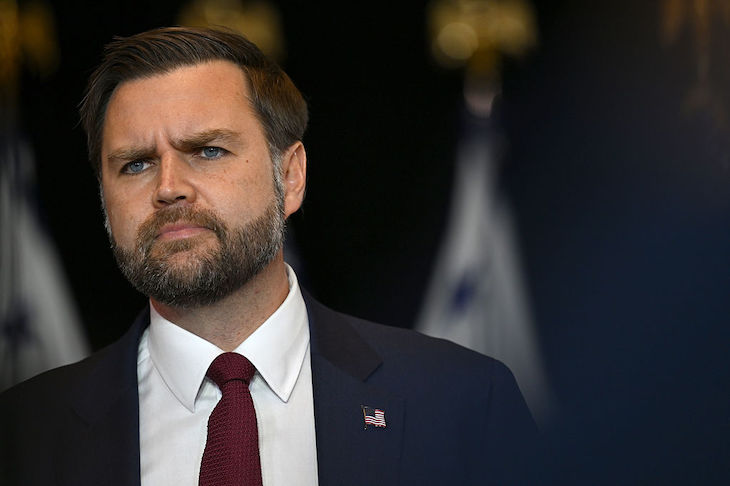
Then, about a decade ago, something changed. This perspective began to seem politically savvy, in tune with the zeitgeist (Brexit, Trump, populism). All these politicians railing against ‘the liberal elite’ – were they – are they – post-liberals? JD Vance has said he’s on the postliberal right.
Two books have just appeared that shed a lot of light on all this, both by British politics lecturers. According to Paul Kelly (author of Against Post-Liberalism: Why ‘Family, Faith and Flag’ is a Dead End for the Left), post-liberalism includes its vague penumbra: populism that rejects liberal elitism. On the other hand, he is clear that such politicians might be hazy on the intellectual basis of the movement which is ‘common-good absolutism’.
Matt Sleat takes a different approach in his book Post-Liberalism. He says that the term should only be applied to its hard core. It differs from nationalism, says Sleat, because western nations have had liberal traditions for centuries, including the free market, which a normal nationalist probably defends. Post-liberalism calls for ‘an alternative, religiously inspired, vision of politics centred around a universal notion of the common good’.
Which brings us on to theology. This movement is rooted in Catholic and Anglo-Catholic theology. One of its major streams is the ‘radical orthodoxy’ movement, led by John Milbank since the 1990s. Rowan Williams was vaguely part of it. Milbank and co enjoyed shocking the establishment, with denunciations of liberal tradition. Politics and culture should be in tune with a dominant Church, they said; the separation of church and state was an error. But this approach was so shrouded in theoretical complexity, and playful academic posturing, that critics were discombobulated.
More recently, the main players have been American Catholics. They advocate ‘integralism’, meaning the integration of religion and politics. They protest at their Church’s acceptance of religious liberty (since Vatican II in the 1960s), and call for a political culture dominated by the Church.
You might suppose that sensible mainstream theologians have been calmly refuting such reactionary posturing. If only. They have timidly allowed it to dominate. Their timidity has had real-world consequences.
It is time for a reckoning. Shame on those who seek attention, and the adulation of spotty undergraduates, by disparaging the tradition of the liberal state, when people are dying for freedom in Iran, and Ukraine and elsewhere. Shame on a whole generation of theologians who have failed to trumpet the virtues of political liberalism. Enough of this wrong turning in theology.




Comments