The Spectator

Portrait of the week: Healey’s first Budget, Burnham’s Brexit blunder and world websites crash

From our UK edition

Home In a quiet, tinkering Budget, in the face of ‘global economic storms’, John Healey, the Chancellor of the Exchequer, distributed gas bill standing charges onto unit charges and gave £100 to households in council tax bands A to D. The bank surcharge would rise by 3 per cent for 15 months. Minimum wages would rise, but people aged 18-20 would not catch up with older workers. Pensioners wholly reliant on the state pension would not have to pay income tax on the £466.40p by which it exceeded the personal allowance. Business rates would begin to come under local spending control. The business rate threshold would rise from £12,000 to £18,000. Vape shops would gain no business rate relief. The limit on cash Isas would not be reduced from £20,000. Gambling taxes would rise.

Wood Whites

From our UK edition

Day lets go of day; pheasant, partridge, snipe, Retrieved and then released, are bagged and carried home To be upended in the larder to grow ripe Under a hook: flushed flights and plummets will become The well-kept rows and columns remembered by the gamebook. The bills are mostly paid, letters mostly opened. Billiards click and thud; spades beat hearts; pawn takes rook; Scotch splashes at a tumbler; smoke puffs from its pipe; And we go on as if nothing much had happened. When you come to stay, you will be glad to see his room Quite as it was: the labelled cards and butterflies; The cups and medals, nets and jars. One might assume He still was out collecting and any minute might surprise Us all by bursting in with Fidget and some find.

Was this a pre-election Budget?

From our UK edition

So damaging was Rachel Reeves’s tenure that a Budget from her successor aimed at doing as little as possible seems almost an improvement. Under John Healey, businesses and taxpayers have escaped relatively unmolested. A glancing blow to the banks, a minimum wage – interventionist, certainly, but not socialism red in tooth and claw. Labour MPs hoping for wealth taxes and mass nationalisation must make do with £27 off energy bills and cheaper marmalade. But minimising harm is not the same as doing good. If Healey refrained from further weakening Britain’s position, he stopped short of taking the essential action required to improve our sclerotic economy.

Dumocracy

From our UK edition

I could barely watch as the white-haired Chair spoke for  the mob then voted against the motion he’d proposed –  the local equivalent perhaps of an MP winging it    about the cost of increasing coppers on the beat  or taking a bow after defending war in the name of peace.  Such bunglers, whose grasp of History and Economics  extends no further than the last time they bought  a pint, and who are as likely to govern well as find an olive on Mars, get re-elected without fail.

Dad’s Dementia Test

From our UK edition

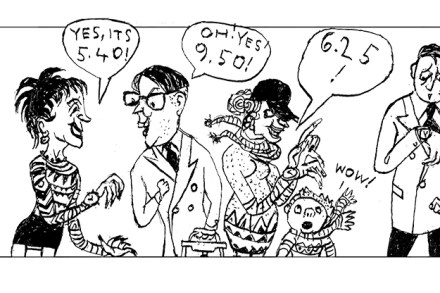
She starts the test with orientation. Where are we now? (Hospital name/street/town.) What is today’s date? (Year, month and day, please.) Then, what is the time to the nearest hour? Next up’s attention and calculation: count backwards from a hundred in sevens. Here, he struggles but can spell WORLD backwards,  taps for each A in a letter sequence. Language and visual-spatial skills try him with drawing a clock at twenty past nine but he confidently names a wristwatch and  follows the command to pick up a pen. In memory he repeats ‘ball’, ‘safety pin’, and ‘driveway’, remembers that John Smith lives at 42, High Street, Bedford, having learned this only ten minutes earlier.

Letters: Peter Hitchens is wrong about Ukraine

From our UK edition

Peter’s denial Sir: In his article ‘The warmongers’ (24 October) Peter Hitchens is too extraordinary. In fact, General Sir Roland Walker is absolutely right to emphasise the threat from Russia. That is his job, especially when what he says is entirely in line with all the warnings from our Nato allies. The abject failure of Sir Keir Starmer and Andy Burnham to do so makes it even more essential, especially when one remembers how in the mid-1930s both British and French governments avoided alerting their own countries to the threat. For Hitchens to write of ‘stoking war with Russia’ puts him in the Donald Trump school of logic, pretending that Vladimir Putin, the shameless aggressor in Ukraine, is a ‘humanitarian’, no doubt adding to his reputation from Chechnya and Syria.

Books of the Year I – 2026

From our UK edition

Clare Mulley Redwood (Viking, £25), Ben Macintyre’s latest compelling caper with consequences, tops my list this year. Set in 1980s Tehran, a city of nightingales and scattered gunfire, it reminds us that the Cold War was not just an ideological battle between communism and capitalism. Enter a disaffected spook, a few hardline clerics, many bloodthirsty terrorists and much weaponry, and you have a recipe for high drama and the potential end of the world as we know it.

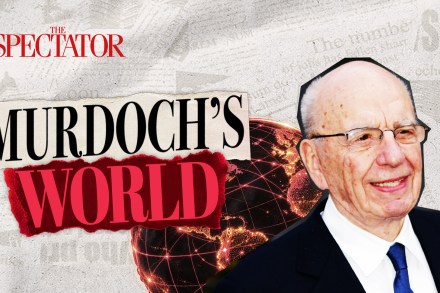
Watch: Murdoch’s World

On Wednesday, October 28 in Manhattan, we hosted Murdoch’s World: The empire that changed news, and you can watch the live recording here. Rupert Murdoch is one of the most influential media magnates in modern history. Through his distinctive character and unparalleled command of conservative media, he has shaped the political narratives through which millions understand the world. But how did he reach a position of such unprecedented influence? What did Murdoch see that others didn’t? And has he changed journalism in ways that will endure?

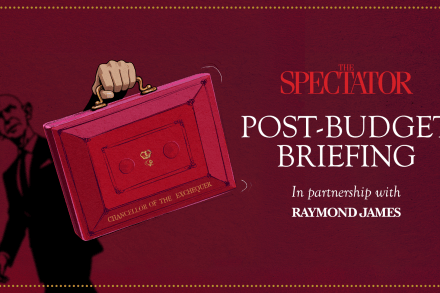
Livestream: Post-Budget Briefing

From our UK edition

On Wednesday 28 October, The Spectator’s editor Michael Gove, political editor Tim Shipman, economics editor Michael Simmons, Catherine McBride, economist and CEO of the Great British Business Council and Harry Bell, director of financial planning at Raymond James, gave their unrivalled insights into the autumn Budget, just hours after it was announced. Andy Burnham’s first few months in Downing Street have produced a striking political turnaround. But on Wednesday, Chancellor John Healey had to confront difficult choices on tax, borrowing and public spending. Watch the live recording of our post-Budget briefing to hear our panel’s thoughts.

Sally Rooney and the comfortable violence of the left

From our UK edition

Kate Evans is a dedicated and widely respected sergeant in Avon and Somerset Police. But her ability to do the job she loves has been severely compromised. On 6 August 2025 she was on duty when a 23-year-old man swung a sledgehammer against her back – while she was on her knees. Her spine was fractured and the injuries she sustained affect her to this day and profoundly limit her personal and professional freedom. https://www.youtube.com/watch?v=Z44ZraRn35w Her attacker, Samuel Corner, was a member of the proscribed ‘activist’ group Palestine Action, the group to which Irish novelist Sally Rooney would like to devote her royalties.

Changing Rooms

From our UK edition

Today I felt a need to change rooms. I’ve felt it several times before but, as things are, my study frowns and the TV numbs me with bad news.                       Ah, here’s a lovely room with bare boards. It’s full of dusks and dawns and the sound of the sea. It’s where a cramped heart walks through walls seeking to share a pasture with gazelles.

Jason and the Astronauts

From our UK edition

The rave of stars distils as soot down there on Separation Street. We’ve bagged the lucky window-seat. The heavens recede. We do or die more fiercely than the race of clay. Can awe survive another day? We tell ourselves we need not care since what we seek is something pure – beyond all count of catch and cure. We’re stripped of teapot, watch and purse. We’ve shrunk our world to find the fleece. We’ve placed our trust in hopeful peace. Our dream’s mist is the kettle’s steam. Tea-time gossip, our long-lost norm. Loose change in space – like a meteor-storm.

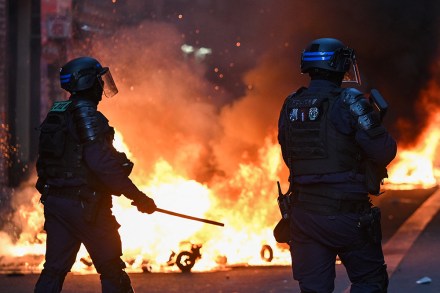
Portrait of the week: Inflation rises, France burns and the Pope calls Putin

From our UK edition

Home The government approved the Jackdaw gas field in the North Sea. Inflation rose from 3.1 to 3.5 per cent. Government borrowing rose to £24.5 billion in September. The national debt passed £3 trillion. GDP grew by 0.1 per cent in August. Banks expected to be taxed more after the Budget. The owners of Paddy Power announced cuts of 1,400 jobs, blaming tax rises. Kemi Badenoch, the Conservative leader, said Labour would not have the courage to make public spending cuts needed to bring down debt and fund defence. The Northern Ireland Troubles Bill was approved by the Commons. Jeffrey Donaldson, the former leader of the Democratic Unionists, was sentenced to 15 years for sexual abuse against two women when they were children.

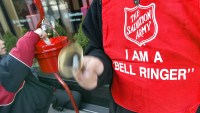
Letters: Don’t knock the Salvation Army

From our UK edition

In defence of Trump Sir: Your lead article ‘Like the Roman’ (17 October) praised some of Trump’s early achievements but roundly criticised most of his second term. Without doubt the war in Iran was a gamble, but it was also abundantly clear that negotiating with that country’s terrorist-sponsoring regime was going nowhere. As to his unconventional stand against the ‘establishment’, as here, that is much needed and long overdue. I believe that, for all his unconventional ways, his stance against migration to the US and Europe, his insistence that European Nato countries increase defence expenditure and his position on net zero would not have been adopted by anyone else in American politics and that the conventional wisdom on all three needed to be robustly challenged.

Who made the first flying car?

From our UK edition

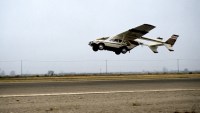
Cars might fly Elon Musk demonstrated a flying car. – The concept goes back further than most people imagine. The first flying car, the Curtiss Autoplane, was shown at the Pan American Aeronautical Exposition in 1917: a basic three-seater car which could be converted into a triplane by bolting on wings. However, it only ever achieved a short hop. One of the first serious attempts to market a flying plane came in 1971, when Henry Smolinski and Harold Blake produced a vehicle they called the AVE Mizar, which combined a Ford Pinto and the rear half of a Cessna Skymaster. They planned to start taking orders in 1974 but were both killed when their prototype crashed in California the previous year.

The Disquieting Fates

From our UK edition

We’re not allowed to believe in the fates anymore they’re out of date, not part of the story we weave, we’re convinced that destiny is only ours to explore. But the fates still watch from a distance, a bit bored by the mistakes we keep making, and often grieve that we’re not allowed to believe in them anymore. They stand in silence, though horrified to the core by all the deceit we swallow daily, unable to believe we’re convinced that destiny is only ours to explore. We can’t conceive of fate with its revolving door, enslaved in our wilful world, free but unable to leave, we’re not allowed to believe in the fates anymore.

A Special Occasion

From our UK edition

They are all young in this photograph, looking so happy to be there for a special occasion, the camera held steady and the light falling on cue. It just had to be recorded. Somebody would have said ‘I’ll get prints made if you give me your addresses, but anyway we must keep in touch.’ So young, with all the time in a world that lies in wait for happiness, then seizes the instant opportunity to freeze it in a frame. One by one they have departed now, though memory still holds them in the tight clutch of an album refusing to let go.