Exclusive Craggy Range masterclass


When the Prime Minister sets out his ‘roadmap’ for easing Covid restrictions on Monday, it will be against a backdrop that is both better and worse than could have been imagined six months ago. Worse because we have gone on to suffer a second wave of the disease that has seen almost as much excess death as the first wave. But better in the sense that we have vaccines that are in use and more effective than many hoped, with first doses given to 15 million people — almost a third of the adult population. On several occasions last year, Boris Johnson referred to vaccines as the cavalry coming over the hill. The cavalry is here, and most of those at serious risk of dying from Covid are being inoculated.

Too many bishops Sir: As a former Anglican clergyman, I have been following your articles about the current state of the Church of England with interest and sadness. I note that the recent article by the Archbishops of Canterbury and York is strong on modish phrases, such as a ‘mixed ecology church’, but it ignores two of the large elephants in the room (‘A Christian vision’, 13 February). The number of bishops over the past century has more or less doubled, in spite of the diminishing number of worshippers and parish clergy. Likewise, while archdeacons used commonly to run their own parishes in addition to their archdiaconal duties, they are now separately housed and paid, along with an army of administrators and advisers.
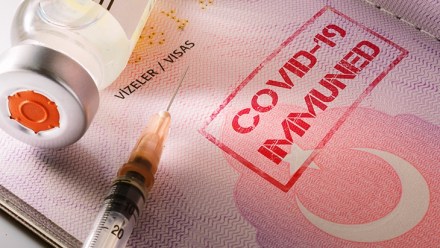

Target practice The government hit its target of giving a first Covid vaccine to 15 million of the most vulnerable people by the middle of February. Some other government targets which have been met (sort of): — 100,000 Covid tests a day by the end of April. The government did claim to have achieved this — but did so by counting testing kits which had been posted out and not necessarily returned. — There was a rise of 7,600 people applying for teacher training courses last year, which meant that the government hit its target for secondary school teachers to the tune of 106% and primary school teachers by 130%. — The target of spending 0.7% of GDP on aid has been achieved every year since 2013. The target has now been temporarily reduced to 0.5%.
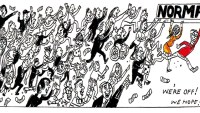
Home The target was achieved of vaccinating, by the middle of February, about 15 million people of 70 or over, together with care home residents and workers, and the clinically extremely vulnerable. But there was concern that a substantial proportion of care home workers declined the vaccine. By 16 February, more than 20 per cent of the population had been given their first dose. At dawn on 14 February, total UK deaths (within 28 days of testing positive for the coronavirus) had stood at 116,908, including 4,861 in the past week. Over the previous week, the seven-day moving average of deaths had fallen to 688 a day from 932 a day. An extra 1.7 million people were added to the 2.3 million advised to shield, entitling them to earlier vaccination.

The ten unclued lights comprise the seven primary Wombles, best known for their recycling of objects found on Wimbledon Common.
Last week, The Spectator went to the High Court in Edinburgh to seek clarification on the publication of Alex Salmond's written testimony to the Parliamentary Inquiry into how the Scottish Government handled complaints against him (nothing to do with the criminal trial). We published his evidence on our website in January as a public service. By contrast, and to our surprise, the Inquiry decided that it was unable to consider this evidence, apparently due to a court order protecting the anonymity of complainers. We welcome Lady Dorrian’s written judgment today which confirms that - as we always believed - the court had no intention of obstructing a legitimate parliamentary inquiry established to investigate government behaviour and hold it to account.
Amid the many failures of public policy during the Covid crisis, one success has gone largely unnoticed. The Universal Credit system coped with a huge uplift in applications without breaking down. In February last year 2.6 million households were signed up; six months later that had swelled to 4.6 million. Some 554,000 people made new claims in the first week of lockdown, ten times the normal levels. For a benefit which not so long ago was being damned for the poor execution of its rollout, it is remarkable that the system coped. Its unexpected success offers plenty of lessons for the future of the welfare state. The digitisation of the system, controversial at the time, enabled the service to be delivered to those in urgent need of help.
Home On Sunday 7 February, as the week began, 11,465,210 people in the United Kingdom had received a first vaccination against Covid-19 and 510,057 a second. Those aged 70 or over were invited to book a vaccination online or by telephone if they had not received one. Illegal immigrants were advised to register with a GP without risking deportation. South Africa, possessing a million doses of the Oxford-AstraZeneca vaccine, decided to suspend its use after a trial of 2,000 people (42 of whom developed Covid) seemed to indicate that it offered ‘minimal protection’ against mild and moderate cases; no one in the trial was old.

Save on bishops Sir: The Church of England is once again missing the point if its financial crisis will result in the closure of parish churches and redundancy of clergy (‘Holy relic’, 6 February). Radical action is required, but the focus should be elsewhere. A starting point would be to amalgamate the vast majority of dioceses. Why is East Anglia served by the C of E dioceses of Ely, Norwich, St Edmundsbury and part of Peterborough when the Roman Catholics manage more than adequately with a diocese for East Anglia? Time to unite and benefit from economies of scale. But it should go much further: halve the number of bishops, diocesan and suffragan, and axe some of the non-jobs with fancy names which seem to proliferate in and around the centre.

Temper, temper A Zoom video of a disruptive parish council meeting in Handforth, Cheshire, went viral. It is not the first such incident. — In December 2014 a fight broke out at a meeting of the allotments committee of Brierfcliffe parish council near Burnley, over a former parish councillor’s claim for a right to graze her sheep on council land. — In October 2015 police were called to a parish council meeting in Long Melford, Suffolk, after members of the public in attendance became an ‘angry mob’. — In November, police were called to a meeting at Hindolveston parish council in Norfolk following reports of verbal and physical abuse over a planning application.

Suggested by 30 (IKEBANA, or flower arranging), the unclued lights were all anagrams of flowers: 1A gardenia; 18 rose; 22 violet; 24 daisy; 39 lily; 45 iris; 47 orchid; 48 geranium; 8 aster; 12 freesia; 23 lupine; 25D primrose; 28 alyssum.
Best before The government plans to introduce labels on domestic appliances informing consumers how long they are likely to last. Which appliances have lasted the longest? — In 2017, Sydney and Rachel Saunders of Exeter, both in their eighties, were reported to be getting rid of appliances bought soon after their marriage in 1956 and still working. They included a Baby Belling cooker, bought for £19; a Servis washing machine, bought for £60; and a Burco dryer. — In 2013, a couple from Montgomery in New York state were reported still to be using a General Electric refrigerator which was made between 1929 and 1931. Flu away How many people took up the offer of a flu vaccine this winter compared with last?


Good conductors Sir: Yes, it is sad to see talents like Sir Simon Rattle and Mirga Gražinyte-Tyla leaving our shores (‘Rattled’, 30 January) and yes, the Brexit complications faced by British musicians are ludicrous. But both might be bearable if there were sufficient investment in grass-roots music here. At least then we could hope that the gap left by departing maestri would be quickly filled by homegrown talent. Unfortunately, the government continues to turn a blind eye to musical education, despite the many studies evidencing its benefits.

Scottish politics tends to go through long bouts of single-party dominance. In the 19th century, the Liberals were in charge. After the war, Labour reigned unchallenged, which is why, in 1997, it drew up a devolution settlement on the assumption that Scotland would always be its fiefdom. But Scottish Labour then imploded. The Scottish National party is now the only game in town. Yet there are signs Nicola Sturgeon’s party is stumbling into the pitfalls that await all parties who spend too long in office. Incumbency eventually renders even the most alert and focused political practitioners complacent. Like Scottish Labour before it, the SNP has become arrogant, secretive and controlling. Parties are at their strongest when they can see the potential for their own defeat.

Home About 80,000 people in eight places in Surrey, London, Kent, Hertfordshire, Southport and Walsall were asked in door-to-door visits to take tests after the South African variant of coronavirus was found in these areas. Another mutation was found in the Kent variant. At the beginning of the week, Sunday 31 January, total UK deaths (within 28 days of testing positive for the coronavirus) had stood at 105,571, including 8,242 in the past week. Numbers in hospital fell. The Oxford-AstraZeneca vaccine was found to have a substantial effect on the spread of the virus. By Sunday 31 January, 8,977,329 first-dose vaccinations had been given, and 491,053 second doses. All elderly care-home residents were said by the government to have been offered a first vaccination.
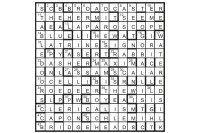
All the unclued lights can be linked with PETER, 35/38 is the paired solution.