2527: The main dilemma – solution
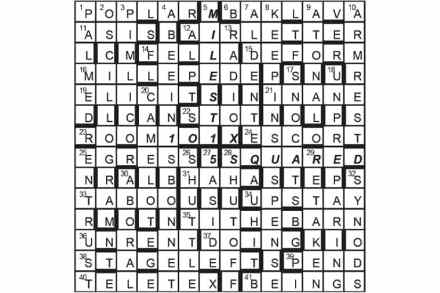
The question posed by the song is 11A/ 22A/37A. Suggested by 37A, other unclued lights were anagrams of words meaning sailor: 17A – rating; 26A – mariner; 39A – shipmate; 10D – sea dog; 27D – lascar.
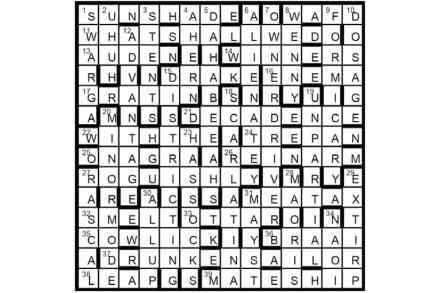
The question posed by the song is 11A/ 22A/37A. Suggested by 37A, other unclued lights were anagrams of words meaning sailor: 17A – rating; 26A – mariner; 39A – shipmate; 10D – sea dog; 27D – lascar.
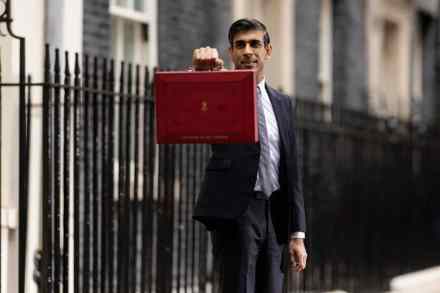
The Conservative party has always sold itself to voters as the party of low taxation, but it has now pushed taxes higher than any post-war Labour government dared. High spending was the tool the Prime Minister reached for at every turn in the pandemic, leaving Britain with one of the biggest post-Covid bills in Europe. His recovery plan was to part-nationalise care homes, taxing the working poor to protect the assets of the wealthy. Taxes are now heading to a 70-year high. Not Conservatism, it seems, but its inversion. Rishi Sunak’s Budget this week marks a potential turning point in this narrative.
Doom and gloom Sir: The depressing article by Tom Woodman (‘You must be kidding’, 16 October) confirms my growing fears about the damage being wrought by the promoters of apocalyptic climate change, which has become a dangerous cult with alarming echoes of millenarian doom which has stretched through many previous centuries. While sensible care for the environment is a good thing, the descriptions of a frightening future of the imminent end of the world through drought, flood and fire now imbues every aspect of education and politics. Constantly bombarding young people with the news that the end of the world is nigh has led many of them into completely unnecessary visions of death and disaster.
The commitment to reach ‘net zero’ emissions by 2050 is the most expensive government proposal in modern history. Yet it was rushed through parliament with minimal debate or scrutiny, thanks to a last-minute pledge by Theresa May in 2019, weeks before she left office. She had no credible plan, just a lofty ambition without costings. It has taken the government two-and-a-half years to come up with a proposal — and it is not convincing. The Net Zero Strategy document published this week opens with the Prime Minister’s trademark optimism. ‘We can build back greener, without so much as a hair shirt in sight,’ he writes.

The unclued lights are preceded by ALL (with the title suggesting that ALL is to be omitted). The paired lights are 6/19 and 9/30. First prize Guy Taylor, London EC1 Runners-up Tony Alers-Hankey, London W4; Arabella Woodrow, Riddlesden, W.
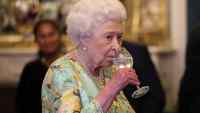
Drinks at the palace The Queen was reported to have given up regular drinking. What do we know about her drinking habits (or what she likes to offer her guests) to judge by the royal warrants she has issued? — These drinks firms currently hold warrants: Bacardi Martini; Berry Bros and Rudd; Britvic soft drinks; Bollinger; G.H. Mumm et Cie; Krug; Lanson Père et Fils; Laurent-Perrier; Moet & Chandon; Veuve Cliquot; James White drinks (tomato juice); Laphroaig distillery. Testing, testing From 24 October, travellers to Britain will no longer be required to present a negative PCR test for Covid, but will be able to use lateral flow tests. Will this mean extra cases of the disease getting into Britain?
Home Sir David Amess, aged 69, the Conservative MP for Southend West, was stabbed to death while taking a constituency surgery at Leigh-on-Sea, Essex. Police stopped a priest reaching him to administer the last rites. They arrested Ali Harbi Ali, 25, a British man of Somali heritage, who was detained under the Terrorism Act. The Queen agreed that Southend should be granted the status of a city, which Sir David had long campaigned for. Dennis Hutchings, 80, a former soldier on trial in Belfast for the attempted murder of John Pat Cunningham, 27, in 1974, died after catching Covid. In the seven days up to the beginning of this week, 830 people had died with coronavirus, bringing the total of deaths (within 28 days of testing positive) to 138,527.
Sir David Amess has died at the age of 69 after being attacked with a knife at a constituency surgery meeting. He spent 38 years in the House of Commons, serving first for the constituency of Basildon between 1983 and 1997 and subsequently for the Southend West seat. Tributes have been pouring in for him ever since. Below is a round-up of some of the messages posted by fellow MPs, politicians and long-time friends of Sir David. Boris Johnson, the Prime Minister: 'The reason people are so shocked and sad is above all he was one of the kindest, nicest, most gentle people in politics. He also had an outstanding record of passing laws to help the most vulnerable.' David Cameron, former Prime Minister: 'This is the most devastating, horrific and tragic news.

Gasbags Sir: Seb Kennedy tells us that, like Covid, our looming energy crisis came from China (‘Power grab’, 9 October). Its roots are nearer home. The capitulation of successive governments to doom-mongers such as Insulate Britain and the catastrophists who are due to fly to Glasgow in a few weeks for COP26 is just as much to blame. Britain has sufficient shale gas reserves to last hundreds of years, yet in the face of a few illegal demonstrations, the government abandoned the opportunity to secure gas supplies for generations to come. It caved in to those who opposed planning permission for shale mines in Lancashire and elsewhere. The naivety of aspiring to net zero without a realistic and costed transition plan is now hitting home.
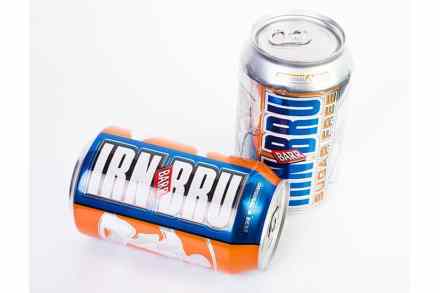
Home In an extraordinary wrangle between government departments, the Treasury accused Kwasi Kwarteng, the Business Secretary, of ‘making things up’ by saying he had held talks with the Treasury about helping companies badly hit by soaring energy prices. With the price of wholesale gas having risen fourfold in a year, businesses expected to close factories. To stir the pot of government discord, some demanded that Boris Johnson, the Prime Minister, should ‘knock heads together’, though he was on holiday in the mountains above Marbella at a villa belonging to Lord Goldsmith of Richmond Park. There were signs that prime-ministerial favour rested upon Mr Kwarteng.
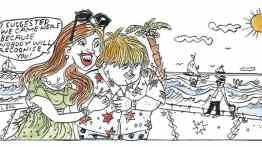
Wrong place, wrong time The name of the village of Nelson, north of Cardiff, was described as ‘problematic’ in an audit commissioned by the Welsh parliament, on the grounds that Admiral Nelson is claimed to have opposed the abolition of slavery. Some other place names that might not be safe: — Blackboys, East Sussex — Blackgang, Isle of Wight — Churchill, Devon, North Somerset, Oxfordshire, Worcestershire — Colston Bassett, Notts — Lower Bitchfield, Lincs — Nelson, Lancashire — Pett Bottom, Kent — Rhodes, Greater Manchester So much hot air The government claims that the UK has reduced its greenhouse gas emissions by 43% since 1990. Is that a fair claim?

Coronavirus may have fallen out of the news cycle but the threat of the virus has certainly not passed. Britain is once again reporting the highest level of infections of any major country. While the back-to-school surge did not materialise in England, the virus continues to spread. Thanks to vaccines, the number of infections does not present nearly the same threat it once did. But the government is nevertheless preparing for ‘Plan B’ if winter takes its toll, with vaccine passports and the reintroduction of restrictions. This makes it essential that we learn what we can from the last 18 months — especially about the decision to lock down.
The [5 Down] MILESTONE puzzle number 2525 is the product of PRIME numbers 101 TIMES 5 TIMES 5, equivalently the 101 X 5 SQUARED appearing respectively in unclued entries [23A 13D 27D 28A].
It’s a strange reflection of our times that with so much else at stake, the leaders of both main parties have been asked, at their party conferences, whether they think that only women have cervixes. Both men prevaricated. Sir Keir Starmer declared this is ‘something that shouldn’t be said’. Boris Johnson avoided the question altogether. It is a straightforward biological fact that only women have cervixes, but simply stating it was more than the Prime Minister and the leader of the opposition were prepared to do. Rosie Duffield, a Labour MP, faced such a ferocious backlash after making this statement that she felt she could not safely go to the Labour party conference.
How to stay safe Sir: Mary Wakefield is correct to highlight the opprobrium heaped on anyone who suggests sensible safety advice to women (‘Don’t mix up murder and hate crime’, 2 October). It has long been the case that this is the one area where it is impossible to give crime prevention information without stirring up a hornet’s nest. Motorists are constantly told not to leave valuables on display when they park their cars, as they may return to find their windows broken and the articles stolen.

Home Boris Johnson, the Prime Minister, said he did not think Britain was in a crisis; he wanted it to move towards ‘a high-wage, high-skill, high-productivity economy’ that was not addicted to cheap foreign labour. Rishi Sunak, the Chancellor of the Exchequer, told the Conservative party conference in Manchester that he had committed £500 million to renew job-support schemes, now that furlough and the £20 a week universal credit bonus had ended. Of the unemployed, he told Sky News: ‘We are throwing literally the kitchen sink at helping them.’ A group of people in the street shouted ‘Tory scum’ at Sir Iain Duncan Smith and hit him with a traffic cone; there were five arrests.

Whole-life sentences How many prisoners are serving whole-life sentences? — There are currently 74 prisoners in prison with whole-life tariffs; 11 had the tariff imposed by a home secretary and 63 had it imposed by a judge. There are only two women, including Rosemary West. — A further 29 people have at some point been given whole-life tariffs but have had them reduced on appeal, or been released under the Good Friday Agreement. — 22 prisoners have died while serving whole-life sentences. — The prisoner who has served the longest sentence is Robert Maudsley, who was jailed for one murder in 1977 and was given a whole-life sentence after committing a further three murders in prison.
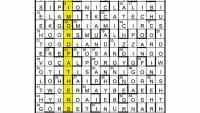
The quotation is ‘I DO WISH THOU WERT A [dog] THAT I MIGHT LOVE THEE SOMETHING’. The honest servant is FLAMINIUS. Unclued lights are dogs: TOSA (25), DINGO (28), CORGI (17) and HYENA (38). The source is TIMON OF ATHENS (in the fourth column) which was to be shaded.
It’s a strange reflection of our times that with so much else at stake, the leaders of both main parties have been asked, at their party conferences, whether they think that only women have cervixes. Both men prevaricated. Sir Keir Starmer declared this is ‘something that shouldn’t be said’. Boris Johnson avoided the question altogether. It is a straightforward biological fact that only women have cervixes, but simply stating it was more than the Prime Minister and the leader of the opposition were prepared to do. Rosie Duffield, a Labour MP, faced such a ferocious backlash after making this statement that she felt she could not safely go to the Labour party conference.
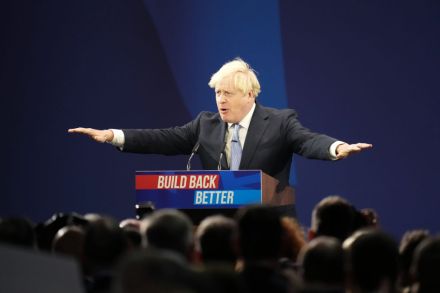
Isn’t it amazing to be here in person? The first time we have met since you defied the sceptics by winning councils and communities that Conservatives have never won in before – such as Hartlepool. In fact it’s the first time since the general election of 2019 when we finally sent the corduroyed communist cosmonaut into orbit where he belongs. And why are we back today? For a traditional Tory cheek by jowler? It is because for months we have had one of the most open economies and societies and on July 19 we decided to open every single theatre and every concert hall and night club in England and we knew that some people would still be anxious, so we sent top government representatives to our sweatiest boites de nuit to show that anyone could dance perfectly safely.